








Here’s the third and final part of my tribute to some of the surprisingly large number of drummers we lost in 2022 (and I'm not sure what's going on here, because in the first few days of 2023, the deaths of Jeremiah Green, drummer of Modest Mouse, and Fred White, the drummer with Earth, Wind and Fire, were reported) . If you are coming into this series now, Part I featured Jet Black (Brian Duffy), Jerry Allison, and Dino Danelli, and you can read that here, and Part II featured Alan White, John Hartman and Ric Parnell, and you can read that here. We’re proceeding oldest to youngest and are now beginning to get to two drummers who were pretty close to my age—and one who was younger.
Anton Fier—Fier was born in 1956 in Ohio and found his way into that city’s proto-punk scene, playing on a Pere Ubu album before moving to New York. In 1978, he joined The Feelies, and his “nervous drumming” was a highlight of the band’s great first album, before leaving. His career then moved between art rock, new wave, jazz and avant garde music, with stints in The Lodge and The Lounge Lizards he founded The Golden Palominos, a “super group” that featured a rotating and changing cast of musicians that I wrote about here.
You can see him drumming here at a Golden Palominos reunion show in 2010:
When that project ran its course, Fier played in other bands, toured with Bob Mould, and played on albums by, among others, John Zorn, Laurie Anderson, Mick Jagger, Yoko Ono, Herbie Hancock, Matthew Sweet, Los Lobos, Lloyd Cole, Afrika Bambaataa and Material.
Fier had serious issues with alcohol, which he had kicked in recent years, but injured his wrists, making it difficult for him to drum, and thus to make money. Hounded by creditors, Fier became despondent, which was exacerbated by the pandemic.
He died on September 14, 2022, in Switzerland, of what appears to have been assisted suicide. (And to eliminate any confusion, he is not Anton Figg, the drummer on David Letterman’s shows—and with others-- who is alive and well.)
D.H. Peligro (Darren Eric Henley)—An early Black punk icon, Henley was born in 1959 in St. Louis, and was influenced as a young drummer by Kiss, Bachman-Turner Overdrive, and Black Sabbath. Moving to San Francisco as a teenager, he was introduced to punk and new wave music before joining the band S.S.I. Taking the stage name “Peligro” (danger), his drumming style blended punk rock, hardcore, metal, and reggae.
In 1981, Peligro joined the Dead Kennedys, replacing original drummer Ted (Bruce Slesinger), who decided that he’d rather be an architect than a punk drummer. Peligro drummed with the DKs until their first breakup in 1986. Here he is, thrashing away (in a good way), on “Nazi Punks Fuck Off,” from a performance in 1982:
In 1988, Peligro joined his friends in Red Hot Chili Peppers, played a few gigs and contributed some writing to songs on Mother’s Milk, but was fired before the album was recorded due to his drug use. He did, however, introduce John Frusciante to the band, which worked out pretty well.
After that, Peligro played in other bands that I’ve never heard of, worked with Moby, fronted a few bands, including one called Peligro, and another with the wonderful name, Al Sharpton’s Hair, and participated in Dead Kennedys reunions albums and tours (without original front man Jello Biafra).
Peligro died on October 28, 2022, from head trauma caused by an accidental fall.
Taylor Hawkins—So, we finally get to Taylor Hawkins, the only person on this list who was younger than me, and who, by all accounts was universally beloved. Hawkins was born in 1972 in Fort Worth, Texas, and grew up idolizing classic rock drummers, particularly Phil Collins and Roger Taylor, as well as Stewart Copeland. He got a gig drumming for Sass Jordan, which led to backing Alanis Morissette on her Jagged Little Pill and Can’t Not tours. During these tours, he would occasionally be given the opportunity to show off his fine singing voice on a cover of Queen’s “We Will Rock You,” while Morissette would handle the drums.
When Dave Grohl needed a new drummer, he reached out to Hawkins for suggestions, and Hawkins suggested himself, because he preferred to be part of a rock band than backing a solo act. He quickly became an integral part of Foo Fighters due to his skill, his charisma, and his chemistry with Grohl. Over time, Hawkins began to perform the occasional lead vocal during shows and in the studio. I wrote about his cover of, yes, Queen’s rocking “Tie Your Mother Down,” for Cover Me’s “40 Best Queen Covers” article here, and you can see one performance of the song, with Hawkins singing and drumming here:
Hawkins was also reportedly a fine guitarist, bass player and pianist. In addition to his work with the Foo Fighters, he had tons of side projects, including Taylor Hawkins and the Coattail Riders, The Birds of Satan, DHC, with Dave Navarro and Chris Chaney of Jane’s Addiction, and played in a Police cover band (and another cover band, Chevy Metal), and with Coheed and Cambria, members of Queen in various projects, on one of fellow Foo Chris Shiflett’s solo albums, and with Elton John and Ozzy Osbourne, among others. And he played Iggy Pop in the movie CBGB, which I’m mostly mentioning because the movie was co-written and produced by a friend of mine (and is much better than most of the reviews I have read would have you believe).
Hawkins long had drug issues—he overdosed on heroin in 2001 and was in a coma for 2 weeks. By 2021, though, he claimed to be healthy and that he had replaced drugs with mountain biking. There are reports that in the period before his death, Hawkins had expressed concerns about the physical and psychological toll that the Foo Fighters’ long, demanding shows and lengthy tours were taking on his body and mind. It was reported that he told friends and management that he’d “had enough,” but those reports have subsequently been denied.
What cannot be denied, though, is that on March 25, 2022, Hawkins died in his hotel room in Bogotá, Colombia, at the age of 50, after reporting chest pains. The autopsy found ten “substances” in his system, including marijuana, antidepressants, benzodiazepines, and opioids. Also, his heart was nearly double the normal size, which could have caused his death independently of the “substances.”
***
With that, I think that this is possibly the last post for me here, at least for some time, and maybe forever. When I started writing for this blog just over 11 years ago, it gave me an outlet to write about music that I love, an opportunity to learn more about that music, and to expand my musical horizons. Writing here gave me a new identity—music blogger. Writer. And that separate identity helped keep me sane though some difficult work experiences and starting my own law practice. It gave me confidence to write for Cover Me, and to start my own blog, Another Old Guy. It also probably helped move me to become my college class secretary, another thing that has enriched my life.
But you might have noticed that Star Maker Machine, which used to have many writers, has, for the past few years, been down to three, and all of us have expressed concerns about having the motivation to post weekly (or even every other week). At least two of us have decided to stop, and the third is considering whether, and in what form, to keep this venerable blog alive. I encourage readers to look back at the posts over the years. We’ve had millions of views, because there’s some really great writing about music (and other stuff) in the archives.
My intention is to write more for Cover Me, and to revive Another Old Guy, which has fallen dormant. And maybe, if this blog remains alive, to post something if the spirit moves me.
Thank you for reading my work here for the past 11 years, and I hope that you check out my future writing elsewhere.
Another of my personal mighty fell at the top end of the year, one of those pillars of my teenaged infatuation with rock and prog, namely Mr Gary Brooker, lynchpin, leader and singer of the wondrous Procol Harum, one of the first bands I ever saw, aged 17 in 1974, with then a massive gap until catching them again, 43 years later. (Here's what I thought that second time, even if my maths had got the better of me.)
The original premise of the band seemed bonkers, at least to a ten year old, with the combination of churchy organ to the wail of soulful vocal. I should add, as a treble in the school choir, all organ was churchy. Thankfully I was too young to clock the lyrics, let alone understand them. (Understand them? Can anyone now?) Drugs, said my parents knowingly and I nodded back, remembering how funny my thoughts had got, when I too had been given an aspirin to quell a raging fever.
Of course the band went on, issuing a quite stellar run of initial singles. The plaintive piano melancholy of Homburg and the spooky A Salty Dog, with all the, in my mind, Lovecraftian imagery evoked; at 12 I was a precocious reader and already familiar with Cthulhu. The orchestral heft of Conquistador neither failed to delight, so, by the time I was ready for LPs, putting singles behind me, the band too were ready, Grand Hotel and Exotic Birds And Fruit firm favourites. Which takes us much to when I went to see them. At Brighton’s famous Dome theatre, which I have never actually visited since.
I sort of lost touch thereafter: the pomp of their performance no longer met my circumstance, and I was exploring other musical avenues. But the love never faded fully, the old songs still striking chords of joy into my battle-hardened heart. So it was a joy to finally get that opportunity to visit. Sure, no-one, Brooker apart, from their glory days, but it didn’t matter, as the posessor of the undiminished gritty voice, it all sounded right. And so it was. The version of Whiter Shade offered that night cast aside the decades and I was again 10, awestruck and, mindful of the years, not a little tearful.
(Not that night, but a not dissimilar vintage)
Thanks, Gary, for making a small boy and a then much older man very happy. Let’s end with a smile, with two of the barmier versions of ‘your’ song, ignoring all the hullabaloos and hubris around who else might have staked and gained a subsequent claim.
Anton Ellis
Willie Nelson
(This is my last post for Star Maker Machine. I have hugely enjoyed the challenges and opportunities offered by a tight schedule, sometimes easier to fulfil than others. All praise to my fellow writers who have buoyed me and helped bring up the distinct average of my quality: it’s been a great few years, even if I still quite mastered how to keep my font size constant.... Thanks, too, to those readers, if you have graced me with any of the moments from your precious time. See you in the ether.)
We continue featuring drummers who died in 2022. Part I featured Jet Black (Brian Duffy), Jerry Allison, and Dino Danelli, and you can read that here, if somehow you haven’t read it already. We’re proceeding oldest to youngest, and Part III should be posted soon.
Alan White—White was best known as the drummer for Yes, although I admit that I always think of him as “the drummer for Yes who replaced Bill Bruford.” Bruford is my favorite rock drummer, so White was never going to measure up, but he was a fine drummer in his own right, and played on many great Yes songs.
Born in 1949, White joined his first band at 13, turning pro at 17. In 1969, White received a call from someone claiming to be John Lennon, looking for a drummer for the Plastic Ono Band. White thought that someone was yanking his chain, but it turned out to be a genuine offer. White, given three days to prepare, performed with them for a show, and later played on Lennon’s Imagine album, the song “Instant Karma,” and George Harrison’s All Things Must Pass. This led to a brief enlistment in Ginger Baker’s Air Force, and work with Steve Winwood and Terry Reid.
White shared a London flat with Eddy Offord, who worked as an engineer and producer for Yes, and occasionally hung out at the studio with the band. Once, when Bruford had to leave a rehearsal session early, White sat in. Later, after Bruford left Yes to join King Crimson in 1972, White was asked to join the band, and again was given three days to learn their repertoire before the Close to the Edge tour started. You can see and hear White playing on “Roundabout” from that tour here:
White played drums and percussion on more than 40 studio and live Yes albums, and occasionally added piano parts and collaborated on songwriting. He also released one solo album and had a few side projects.
White was one of 8 of the myriad members of Yes inducted into the Rock and Roll Hall of Fame in 2017 (as was Bruford, who is not also in as a member of King Crimson, because that band has somehow never been inducted. Don’t get me started.)
After what was described as a “brief illness,” White died on May 26, 2022 at the age of 72. Sadly, two months before his death a large number of personal items, including musical instruments (the drum set he played with the Plastic Ono Band, for example), and platinum records, were stolen from a storage unit.
John Hartman-The original drummer for The Doobie Brothers, John Hartman died on September 22, 2022. Hartman originally moved to Northern California at the request of Skip Spence, who wanted him to participate an a revival of Moby Grape. That never happened, but Spence introduced Hartman to Tom Johnston, and eventually they, along with Pat Simmons, formed The Doobie Brothers.
Here’s Hartman playing “China Grove” on the BBC in 1974:
Hartman drummed with the band, sometimes with a second drummer, until 1979, straddling their early days as funky, bluesy rockers fronted by Johnston, to the smooth purveyors of “yacht rock,” led by Johnston’s replacement, Michael McDonald. He returned for a benefit tour in 1987, and two more Doobies albums (with Johnston and not McDonald) but retired from the band for good in 1992.
After that, Hartman attempted to become a police officer, but the drummer, described by the band at his death as a “wild spirit,” found it hard to break into law enforcement due to his previous drug use, despite having graduated from a police academy.
Hartman was inducted into the Rock and Roll Hall of Fame as a Doobie Brother, but because of COVID, plans for a performance by the original members were scotched. Interestingly, Hartman was the only living major figure from the Doobies not interviewed for the 2021 biography documentary, Let The Music Play.
Ric Parnell-You know how the drummers in This Is Spinal Tap! all died in strange ways? Remember how Mick Shrimpton spontaneously combusted? Real drummer Ric Parnell was Mick Shrimpton. When Spinal Tap recorded its two albums, and did TV performances and live shows through 1992, it was Parnell who handled the drums. But, you ask, how did he do that if Mick Shrimpton was dead? Turns out, Mick had a twin brother, Rick Shrimpton, who was also a drummer!
Spinal Tap was not Parnell’s only claim to fame. Born in London in 1961, to a drummer father and with two drummer brothers, percussion was basically the family business. In 1968, due to one of his father’s jobs at a TV station, Parnell got to see Jimi Hendrix perform on Dusty Springfield’s TV show.
Parnell had two stints with Atomic Rooster, initially briefly replacing a pretty fair drummer, Carl Palmer, and then rejoining and playing on their last two albums.
You can see Parnell’s Bonham-influenced drumming here, on Atomic Rooster’s “A Spoonful of Bromide Helps the Pulse Rate Go Down” from 1972:
After that, Parnell played in some Italian bands before becoming a sideman for artists including Michael Des Barres and was the drummer on Toni Basil’s hit “Mickey.” He was offered a chance to join Journey, but declined, which probably cost him a ton of money. But if he had joined that band, I would not have written this, because I really do not like Journey. So, he clearly made the right call.
Parnell settled in Missoula, Montana, where he would gig locally, and for a while Parnell hosted a radio show called, yes, “Spontaneous Combustion,” where he played basically whatever he wanted and told stories. (Boy, I miss doing that on the radio....)
On May 1, 2022, Parnell died at the age of 70 from a blood clot in his lungs that led to organ failure.
The reaper has reaped a grim toll this last year, many across these last few weeks of the year. Including this, which surprised me quite how much it affected me.
I guess I had always thought of myself as somewhat a casual fan of the Specials, thinking the less than a handful of discs I owned was representative more of a general broad based enthusiasm for a range of styles and genres. Until, that is, I appreciated quite how few they had made, and that I had them all. Living in the English Midlands I could hardly be unaware of them, with Coventry just down the road. Already a fan of reggae, it wasn't all that much of a jump into the actually slightly older musical form, ska, which pre-existed the slower loping rhythm I was more familiar with. This music was faster and spikier, and, as presented by the Two Tone movement, seemed an exciting mix of punk with reggae. The fact that it bridged the racial divide, black and white, at a time when racism was running amok in the UK also appealed, an aggressive eff you to the National Front, the only white lives matter movement of the day. A whole rash of singles exploded out of Coventry, a divided post-industrial city with more than its fair share of deprivation and despair, introducing The Specials, Madness and The Selecter in the first wave. Hell, even Elvis Costello jumped on board, if briefly. The year was 1979.
Gangsters
The Specials looked and sounded if they meant business, with a three man front line of two, frankly, scary black dudes in suits, shades and pork-pie hats, jumping around in a lively fashion about a sardonic looking white guy, Fred Perry shirt and scowl, he looking both out of place and time, blankly chanting his lyrics, often of alienation and angst. Behind them a four piece band, often six, with a core of goons skanking on keyboards, guitar, bass and drums, augmented by a trombone and flugelhorn pairing, each decidedly atypical instrumentation for the charts. The sardonic singer was Terry Hall, who died only weeks ago, of disseminated pancreatic cancer, itself only weeks before the band were scheduled to start their third comeback recording, a selection of reggae standards, and probably others, in their own idiosyncratic style.
A Message to You, Rudy
Gangsters was their starting point, and, boy did they look it, followed swiftly by a reprise of an old reggae hit of the 60's, A Message To You, Rudy, actually a plea for the wild youth of that day, the Kingston Jamaica 'Rude Boys' to calm down and act more responsibly. So far, so good, exciting tunes for exciting times, the first album featuring much of the same, energetic and straightforward. But, evolving into their second album, it was clear there was deeper thought than dancing and the charts. For the single, Stereotype was at a whole different level, a drawling put down of the hand that might have been seeing to feed them, a damning indictment of inner city chaotic lives. It then took the spooky cadence and worryingly prescient Ghost Town to finally place them at the top of the UK chart, the band having to have been content with five of their earlier singles being merely top 10 material. These latter two came from More Specials, an actually quite difficult album to enjoy, the singles apart.
Ghost Town
With internal frictions within, the three front men, Hall, Lynval Golding and Neville Staple jumped ship, forming the Fun Boy Three, who took the odd disparacy of their appearances further, Hall looking increasingly bizarre alongside the two West Indians. The Lunatics (Have Taken Over The Asylum) was their opening salvo, more post punk than ska, and they too became a chart staple, most memorably a brace of singles with the female band, Bananarama.
The Lunatics (Have Taken Over the Asylum)
When the Fun Boy Three also imploded, Hall took part in a number of collaborations, starting with The Colourfield, who produced a couple of well received albums, partly collaborating with Liverpool mover and shaker, Ian Broudie, of the Lightning Seeds. Further work included the trio, Terry, Blair & Anouschka and Vegas, a joint effort with the ex-Eurythmic, Dave Stewart, which bombed. A couple of fully solo albums, Home, in 1994, and Laugh, in 1997. I confess he had, by now, since the Colourfield in fact, had fallen off my radar.
Ballad of a Landlord
He came back with a bounce when the Specials decided to reform, in 2008. In fact, the band had never fully folded, and the keyboard player, Jerry Dammers, had kept the b(r)and alive as, initially, the Special AKA. Various members left and re-joined, making no great headway. When Dammers left to form his free form jazz ensemble, The Spatial AKA Orchestra, this led the door open for a number of opportunities, with first a Golding and Staple Specials Mark 2, featuring also some of the backing band, notably Roddy Radiation, guitar, and Horace Panter, bass. Lurching forward, some staying, some going, it was only in 2008 that something more concrete could emerge, when Hall again re-united. With six of the seven originals present, only Dammers was absent, he claiming he had ben pushed out and that 'his' band had been subject to a takeover.
The Lunatics (Reprise)
By 2013 they were ready to start recording, but Staple again left, followed swiftly by Radiation. Drummer John Bradbury then died, so it was a somewhat reconstructed band that produced and made Encore, in 2019, the album escalating to the top of the album chart within a week. The songs were still deeply politicised, but there was now a far greater sense of gravity. Prior to Covid the band went on a mammoth tour and experienced sell-outs every step of the way. Then, ground to a halt by the virus, the band miraculously cooked up a further album, a masterful selection of covers, entitled, in no great change of direction, Protest Songs. Here's what I had to say about it over on Covermesongs. To be honest I felt this their strongest work so far, and Hall had never sounded or looked stronger. Or more in control. No small feat for a man who had outed himself to a personal history of sexual abuse, having been abducted by a teacher at his school aged 12. Which sort of explained his odd affect and the air of melancholy that hung over him, of the deep and buried issues within.
Everybody Knows
The Specials were on a high. Never having caught them live, they were very much on my bucket list of bands to see. (Indeed, I had had even had tickets for the tour expunged by the virus.) I was looking forward to the projected reggae album, hoping for a summer tour, maybe taking in a summer festival or two. And then came the news. This description, by erstwhile bandmate, Panter, spelt it out best, presenting the facts with evident love and shock. I was shocked by how upset I felt. I still am.
R.I.P., Terry. By way of farewell, here is another cover that exemplifies his awkward and quirky charm, featuring Sinead O'Connor, unusually with hair.
We interrupt the annual In Memoriam theme for our eighth annual listing of the most viewed posts of the prior year.
Through our (usually) two-week long themes, our international roster of writers address many different kinds of music, and bring different perspectives to their pieces. This year, for some reason, our four most popular posts came from our mid-August "Don't" theme. And we have all sorts of music, albeit with more rock and less jazz than last year. We have well-known songs and obscurities, one-hit wonders and legends, and one song in Spanglish.
Here are our top 11 posts of 2022 (because No. 11 missed out by only 3 views, and we are inclusive here):
Because so many of the most viewed posts are from a small number of our many themes, below are the top posts for each of our themes not represented in the total top 11:
I’ve mentioned in the past that I’m a bad drummer, but nevertheless, I’m a member of the Drummers Club, such as it is. In 2022, the club lost a whole bunch of members, and I’m going to write about some of them, all of whom were, broadly, rock drummers, but with very different styles. As an organizing principle, we’ll start with the oldest and work our way to the youngest. I’ll break this up into a few posts, so that they don’t get too long and you get bored partway through (like with many drum solos. Yes, I said it.)
Jet Black (Brian Duffy)—Duffy, born in 1938, was best known as the drummer for The Stranglers, a band that was better known in its native England than here in the US. Before that, he was an entrepreneur, owning a fleet of ice cream trucks and an off license (look it up, Americans), and was an early proponent of home brewing. Duffy joined The Stranglers in 1974 and played with them until 2015. His playing was not particularly flashy, and had jazz influences, although he could play hard and fast when necessary. Starting in the mid-80s, Duffy moved from an acoustic kit to an electronic kit, eventually creating and patenting the “Jet Black Power Bass Drum Pedal.” He also wrote a few books about his time in The Stranglers. You can hear him here, playing on the 1979 song, “Duchess:”
Duffy had suffered from heart and respiratory issues his whole life, and often had to miss tours and performances as a result. He died on December 6, 2022, at the age of 84.
Jerry Allison-Allison was the drummer for The Crickets, and was the co-writer, with Buddy Holly, of “That’ll Be The Day,” and “Peggy Sue.” I admit to being surprised that Buddy Holly’s drummer was actually younger than the drummer of The Stranglers, but it’s true—Allison was born in 1939.
Interestingly, on songs that were credited to Buddy Holly & The Crickets, Allison’s drumming was more powerful and used cymbals and snare drums, while on the songs credited to Holly alone, Allison mostly played softer, primarily on the tom-toms. “Peggy Sue,” which was originally titled “Cindy Lou,” was renamed to help Allison get his girlfriend of that name back. It worked—they married in 1958 (and divorced in 1964). You can see Allison backing Holly on the Ed Sullivan Show on “Peggy Sue” here:
Despite (or maybe because) he was only in his teens when the early Buddy Holly songs were recorded, Allison was not afraid to try unorthodox methods in the studio, including foregoing drums altogether in favor of clapping, slapping his legs, or banging on cardboard boxes. He also had a minor hit, under the name Ivan, singing a cover of “Real Wild Child,” featuring Holly on guitar and backing vocals.
After Holly left the Crickets shortly before getting on that fateful flight, Allison toured with the reconstituted Crickets, before moving to Los Angeles and working as a studio and touring musician for, among others, Eddie Cochran, Waylon Jennings, and the Everly Brothers.
In 2012, Allison was inducted in the Rock and Roll Hall of Fame, which specially added the Crickets to rectify their mistake of inducting Holly alone in 1986.
Allison died of cancer on August 22, 2022, nine days before his 83rd birthday.
Dino Danelli- Danelli, who recently died on December 18, 2022, at 78, after a period of declining health resulting primarily from coronary artery disease and congestive heart failure, was a drummer whose work, but not name, I was long familiar with (and I’m not proud about that). Trained as a jazz drummer, Danelli played with Lionel Hampton and in New Orleans before returning to New York (near his native Jersey City). In the early 1960s, Danelli played with a number of different musicians, and even tried his luck in Vegas casino bands, along with Felix Cavaliere.
In 1964, though, Danelli and Cavaliere returned east and formed the Young Rascals, who later grew up and became just The Rascals.
Danelli’s contribution to The Rascals was critical, if overshadowed by their amazing pop songwriting. But it was not only his fine playing, but his flashy personality that was memorable. You can see that here in this clip, also from Ed Sullivan, where Danelli not only rocks away on "Good Lovin'", but spins his sticks (a schtick he, along with generations of drummers, nicked from Gene Krupa).
After the Rascals broke up, Danelli and fellow Rascal Eddie Brigati formed Bulldog, before playing as a sideman with other groups, including Little Steven & The Disciples of Soul. He also participated in Rascals reunions over the years, including in a brief Broadway run in 2013 in a production that toured North America. In addition to his musical talent, Danelli was a visual artist who designed album covers.
As Jordan Becker pointed out earlier this week, there is lots of room for celebration if you look at life with that kind of a mind-set (He wrote: "Another thing to celebrate about writing for SMM is how much I’ve learned about music because I (usually) do research ..."). Like him, I find that I find that SMM has helped me to grow - and that is one more little reason for celebration. Of music. Of the role that SMM has played for us.
Like JD Becker, I celebrate the learning that writing for SMM seems to require, which is part of why I appreciate Seuras Og's celebration of candy ("Celebrations is the brand name for a selection of miniature chocolate bars over here"). What? See? Many ways to celebrate. May your year-end celebrations be "all right", as the lyrics of this song say.
From me/this post? Kool & the Gang are still touring and making music. Producer of this song, Eumir Deodato, is also still at it, too. Like a number of groups that have managed to survive 50 years and still produce music, Kool & the Gang have made changes over the years, but Robert "Kool" Bell has been there all along, as have George Brown and Dennis Thomas. (Well, no. Thomas died not too long back, but he was there throughout.)
You may not know their songs Jungle Boogie or Hollywood Swinging, their first big hits, but you must live on another planet if you don't know Celebration. You probably also know Cherish.
The Kool & the Gang official website notes that Celebration has been added to the Library of Congress. That means it has been designated as "a work of enduring importance to American culture" and so needs to be preserved. Wikipedia tells us it is their first and only Billboard No.1 hit.
Celebration was produced by Eumir Deodato, the Brazilian pianist/composer and producer also known for work with Paul Desmond (Take Five), Frank Sinatra, Bjork.... Interestingly, he is also the grandfather of Hailey Bieber.
Kylie Minogue did a cover of the song, and the song is not surprisingly a staple at all sorts of celebratory events where you may have heard it played.
One of the joys of having written for Star Maker Machine since 2011 is that one week I can write about Lene Lovich, a quirky singer with niche recognition, and the next week I can discuss Led Zeppelin, one of the most successful, well-known and mighty rock bands of all time. (In fact, my first ever piece, a holiday post about The Roches’ version of “Deck The Halls,” was published as a guest post by former moderator Darius almost exactly 11 years ago, using my former pseudonym).
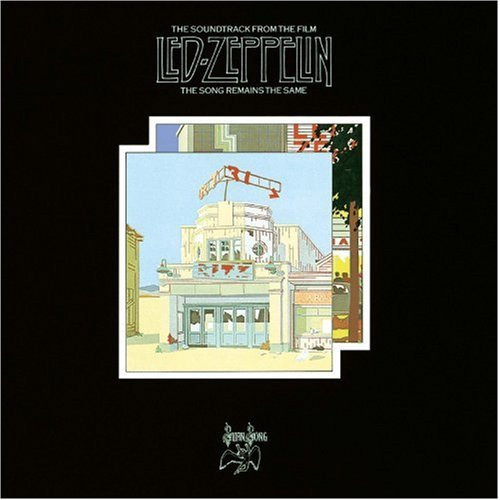
In 2014, I wrote a piece for a Thanksgiving-related “Pilgrims and Immigrants” theme about Led Zep’s “Immigrant Song,” and mentioned how seeing the oft-maligned (including by members of the band) movie, The Song Remains The Same, turned me from a Zeppelin skeptic to a fan, based mostly on the power of the live performances in the movie (which, I know, weren’t their best work. Still.....) And one of the songs that caused this change was the live version of “Celebration Day,” which was from the band’s 1973 shows at Madison Square Garden. It was on the soundtrack album, but not in the movie, but I saw the movie once and played the soundtrack many, many times. Certainly now, it’s all kind of mushed together in my mind. That’s why I’ve linked to the soundtrack album, and not Led Zeppelin III, where the song originally appeared.
Another thing to celebrate about writing for SMM is how much I’ve learned about music because I (usually) do research on the music and bands that I write about. Not research like I did for my college thesis or for a legal brief, but I do read stuff. And one of the things that I learned about “Celebration Day,” is that Robert Plant’s lyrics were inspired by his first impressions of New York City. Which immediately makes the song better, in my mind. Just a brief aside—I worked in New York City for most of my career, and my last office was near Rockefeller Center, so that at this time of year, I usually walked by the big tree, dodging annoying tourists. And after doing that for years, you can get jaded. But for the last almost 10 years, I’ve been working in Westchester County, only occasionally going into the city for work, and I kind of miss it. The other night, I went to a holiday party for my old firm, in Rockefeller Center, and walked by the big tree again, dodging happy tourists, and it was fun. It is a beautiful tree, and everyone seemed so excited to see it and be near it and take pictures of it. And I did, too.
OK, back to “Celebration Day.” Not knowing that the song was about New York, the part that jumped out at me is when Plant sings,
My, my, my, I'm so happy
I'm gonna join the band
We gonna dance and sing in celebration
We are in the promised land
I took that to mean that the song was about Plant’s joy in being in the band (but not the Band of Joy), and maybe that’s part of it.
Then there’s the music. The great producer Rick Rubin said that the song “feels like a freight train, even though it’s not one of their heavier songs.” Not surprisingly, Rubin is right. Jimmy Page’s guitar is incredible, John Paul Jones’ bass is amazing, and John Bonham was his usual brilliant on the drums.
So, most rock lovers know that Led Zeppelin basically disbanded after the Bonham’s death in 1980. Although there were occasional reunions of the survivors after that, the last one was in 2007, at a concert celebrating the late Ahmet Ertegun, who was the head of Atlantic Records, Led Zep’s label (and my ultimate boss for the summer that I worked at Atlantic). That performance, which featured Jason Bonham on drums, was filmed and recorded, and both the movie and soundtrack album were released (but not until 2012) with the title Celebration Day, although our featured song doesn’t actually appear.
Celebrations is the brand name for a selection of miniature chocolate bars over here. And, for all I know, elsewhere, but given it being the time of year when such abound, so surely worth a mention. From the house of Mars, so you can expect small versions of the ubiquitous Mars bar, Bounty, Topic and Snickers. Arguably better than the old school alternatives, Cadbury's Roses or Quality Street, originally by the long extinct choc firm, Mackintosh, which were just fairly random chocolate box offerings, where, if unlucky, every one chosen was either a sickly "creme" or a rock hard toffee. I was always unlucky. At least with Celebrations you know what you are getting.
Unfortunately I am no great fan, pre- or post-gall bladder, of chocolate, perhaps from all those bloody cremes, so that is all I have to say on the subject, beyond an excuse to roll out some appropriately themed songs for your delectation.
Mars Bonfire is the immaculate nom de guerre of the lead guitarist of the Sparrows, whom nobody remembers. However, through his brother, also a Sparrow, becoming a drummer for Steppenwolf, he got to write a few songs for that band, notably their best known song, Born To Be Wild. The Sparrows we're an interesting band as they also included the later Steppenwolf singer, John Kay, and Bruce Palmer, later of Buffalo Springfield. So you could say that Mars, Eugene to his mother, got left behind, but I am sure the royalties helped prevent too much bitterness. It is a great song and it is often claimed to have invented the idea of heavy metal into music, to describe the noise of the motor bike. Nice story. Probably apocryphal.
Bounty bars always divided the playground, with few admitting to much pleasure in the eating of them. However, via the wonder of saucy advertising, certainly teenage boys were galvanised into keeping on trying. Me, I preferred the red-wrappered plain choc version, which isn't included in the Celebrations pack. The song I am unfamiliar with but, sticking with Canada, where half of Steppenwolf evolved from, so too is the performer here, Dean Brody, a Canadian. Apart from a rapper, very few songs mention bounties. It's an OK song, and includes the now more successful than the singer, Lindi Ortega, who I have seen live and enjoyed.
Of course I am not going to dabble around the net seeking a song about Snickers. Anyone with half a brain or twice a life will know these nutty monsters are really called Marathon, still baulking at the name change. Which was back in 1990. Gulp. (US readers her may be looking confused, as it was always a Snickers over that side the pond, I understand.) And, without putting me and the rest of the post under any degree of pressure, there is also a song by a Canadian band to fit the bill. Me, I never bought into the whole Rush shtick, but I do like a Snickers, if pushed and my life depended on it. (Late joke alert: you can rush a snickers, but you can't rush a marathon! Boom boom!!)
Topic? You're joking right? Closest I can get is to evoke the old joke around hazelnuts in every bite. As in, what has a hazelnut in every bite, the pillar of Mars advertising back in the day. The playground answers related more to the genus Sciuridae, better known as the squirrel. I am uncertain quite what a cat squirrel is, amongst the family of so named rodents, but a Dr Ross, a bluesman of the mid 20th century, was sufficiently moved to write a song around one. Later covered by both Cream and by Jethro Tull, I hope he got his dues. The suggestion that is was penned by Mr Trad augurs ill that he did. As far as I can tell, he had no Canadian connection, putting paid to that promise.
We are delving deeper into the carton. Twix is next out. If that makes you think of the song featured above, the chances are that you didn't even know it was a song with a life outside the 30 second TV ad for the Twix bar in the late 1980s. Yello were, possibly still are the odd Swiss electronic duo, who make Sparks, by comparison, seem mainstream in their image. And that 30 second advert is actually a 3 minute song. (Can you make it to the end?)
Maltesers are not just the sweet you can eat between meals, they are also the folk who hail from Malta, a tiny island in the mediterranean, famous for being, the island, awarded the George Cross in WW2, for their rugged defence against the would be invading forces. They have since built up a vibrant scene of internationally known artists, so the various wiki pages tell me. World famous only in Malta, methinks, but this lot seem the least inoffensive and it is quite pleasant in a dreamy way. Stalko they are called, should you wish to dig deeper, with a couple of albums to their name. (No marks for those who point out the extra e in Malteasers. Cos there isn't one. Or that Milky Way is the one you eat between meals, with Maltesers being the Chocolate? Maltesers! one)
I bet you are beginning to struggle with what else is up for grabs. Unless you read the addendum to the last para. Or Santa has already delivered you early a box of Celebrations, in which case you will know it is now into space we head, with the doughty Milky Way, another choc bar misleadingly touted as a dietary aid to weight loss in its initial entry to the market. You might gain less weight if you eat a Milky Way a day, over a Mars. I cannot guarantee the effect on your work, rest or play, or, more to the point, your dental bills. To celebrate, SWIDT, this sweetie, lets pick an obvious culprit, and sweep up some groovy pictures of the constellation along the way. The Tornadoes band famously featured the blondly quiffed Heinz Burt, who went on to invent baked beans. What a guy!
Sticking with the heavens, last on the list and last in the pack is the cloying Galaxy Caramel. Galaxy is the brand Mars use for their chocolate bar, which is the biggest competitor to the Cadbury's Dairy Milk, I would imagine, at least in the UK. (Is Hershey really chocolate? I think not.) Most of the folk I would ever buy chocolate for seem to prefer it, it being smoother. Until you put a gloop, that is, of runny toffeee into it, sweet and sticky, capable of dissolving enamel on contact. Be that as it may, lets finish up with this track, an audio-visual presentation of the point of contact between the caramel and your mouth. You will need to brush your teeth after this one, for sure.
Back when the few/little theme was up, I had this idea that small was also a variation on Little/Few, and so had put down a few words about Small Faces. There were a couple of sentences that actually made it as far as the Blogger drafts page but ended up expiring there. Sadly - for some reason, I then deleted the draft altogether. Note to self: leave your unpublished drafts so you can use them as Leftovers. Doh. But I more or less remember what I had written and was able to recreate most of it.
What I remember is that the band started as Small Faces and then became became Faces, and that Rod Stewart was the lead singer. One of the better known Small Faces' hits was Itchycoo Park.
It would be understandable if you were to get confused about the Ronnies in the band. I did. Small Faces' original lineup included Ronnie Lane on bass (whose later Rough Mix with Pete Townshend is one of my favorite albums) When the band switched to being Faces, Ronnie Wood joined the lineup playing guitar.
The UK music scene was fairly fertile ground during this time, and the two bands provided lots of cross pollinations with bits and pieces of a little Jeff Beck, Humble Pie, the Who ...
So, to complete the circle and tie this to the original theme, here is a little collection of Small Faces:
OK, sorta kinda a contrivance here, given I have been away a week or two, with, if not a fever, the treatment for one I had earlier. Anyone here had biliary colic or cholecystitis? Not fun, right? And that was how I found myself in the casualty (emergency room) of my local hospital, some time back in the summer, ahead of a scan showing me the presence of a big old bag of stones. The bag my gall bladder, the stones painful. Cue change of diet whilst I was put on the list for the necessary surgery, to rid me of the offending organ and it's unruly passengers. Against the odds, as we have a bit of a post covid crisis in our national health system, I got given a date and underwent the knife a couple of weeks ago. Nominally a day case, they do it, these days, by laparoscope, or keyhole surgery as it is called. Instead of cutting me in half, they make four small incisions and wiggle about inside me, via levers and pulleys. A "very big" and "very dirty" bag and stone combo was thus drawn out of me, allowing me home the same day. (Actually, not, as it happened, as my other bladder took umbrage at the anaesthetic and decided not to work until the last bus had departed, meaning an overnight stay.) I was hoping to have pictorial evidence of all this, expecting I might be offered, as a trophy, the removed detritus, but no such luck. This is, apparently, no longer hospital policy. Boo.
Two weeks off work was all I was offered, expecting that to be insufficient, surprising myself by how quickly everything bounced back, and how little pain the various stab wounds gave me. They use glue, these days, to cover up all the evidence, with hefty dollops of Loctite squirted over the incisions. That was fun as it peeled away.....
So here I lie, early am on the (Sun)day before I return to work. Time for catch-up post and any of the Dr and Hospital songs I could shoehorn in, this seemed to fit best into the open ended theme of leftovers. We did "Boss" earlier in the year, and I certainly shied away from Mr Springsteen at that juncture: far too obvious. As, sadly, has the man himself become, his star irredeemably faded in recent years, tarnished by the limelight of Vegas and lacklustre material. (Don't get me started on his latest travesty, the dreadful collection of dreck, dredged up from the vault of songs even Rod Stewart wouldn't dare cover. Good songs, sure, in their own right, but despoiled by the vanity of the project.) This track first came out with '18 Tracks', the 1999 album to lure in punters to his then back catalogue, but had been originally made during the session for his second record, 1973's 'The Wild, the Innocent and the E Street Shuffle'. And isn't it good? I bought the compilation as it was released, and it has sat on the shelves, progressively gathering dust as my love affair with the Boss diminished. So, then, a timely reminder of what the man was capable of in his prime. the two live versions each coming from 1978, the first being performed by Southside Johnny and his also containing Steve Van Zandt band, with Bruce as a guest. Both traffic versions.
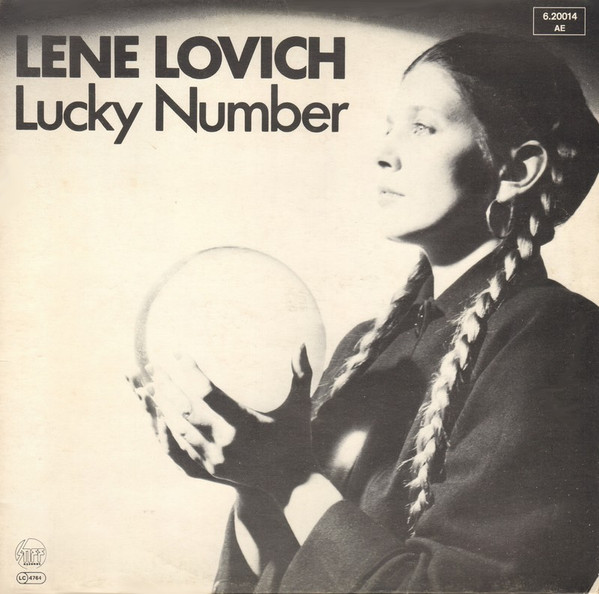
When I started thinking about the Leftovers theme, I was reminded of something I heard a few days after Thanksgiving, about throwing away leftovers when they were no longer fresh. So, in that spirit, I decided to write a piece that I had planned for our most recent theme, “Luck,” about Lene Lovich’s quirky new wave hit, “Lucky Number.” But I never got around to writing it.
Lately, I haven’t really been feeling like writing here. I’m not sure why, but I’ve missed themes, or just written once rather than twice. It might be the fact that for the last month or so, the World Cup has been on, so my TV has been tuned to soccer, distracting me from music blogging. Or maybe it’s been work, which has been intermittently busy. Or maybe it’s just a periodic malaise that sets in when you’ve committed to try to write once a week (as a hobby). That’s why I’ve started taking summers off (sort of), to allow me to recharge my writing batteries.
I still haven’t broken free of my lack of motivation. So, I thought I’d try a trick. A bunch of my friends have been playing with ChatGPT, an AI tool that responds to prompts, and posting the results on Facebook, Because I still didn’t want to write this myself, I instructed ChatGPT to “Write a blog post about Lene Lovich's song "Lucky Number" Here’s what came out;
Lene Lovich's 1979 hit song "Lucky Number" is a classic example of the singer's unique blend of punk and new wave influences. The track, which was released as the lead single from Lovich's debut album Stateless, quickly became a fan favorite and remains a popular choice among fans of the genre.
The song begins with a catchy guitar riff and Lovich's distinctive vocals, which are full of energy and attitude. The lyrics tell the story of a woman who is looking for love in all the wrong places, trying to find her "lucky number" in the hopes of finding happiness. The chorus is infectious, with Lovich singing "Lucky number, lucky number, where can you be found? / Lucky number, lucky number, where can you be found?"
One of the standout features of "Lucky Number" is Lovich's use of yodeling, which adds a unique and unexpected element to the song. This unusual vocal technique is used throughout the track, and it helps to create a sense of playfulness and fun.
In addition to Lovich's vocals, the song also features some impressive instrumentation. The guitar riff is catchy and energetic, and the rest of the band provides a solid foundation for Lovich to build upon. The overall effect is a high-energy track that is both fun and infectious.
Despite its popularity, "Lucky Number" has not always received the recognition it deserves. It was not a chart-topping hit, and it did not receive much radio play at the time of its release. However, the song has remained a favorite among fans of Lovich and new wave music, and it continues to be played at concerts and events.
Overall, "Lucky Number" is a classic example of Lene Lovich's unique blend of punk and new wave influences, and it remains a fan favorite to this day. The song's catchy guitar riff, energetic vocals, and playful use of yodeling make it a must-listen for fans of the genre.
That’s actually pretty good, if not perfect. Stylistically, it’s a bit repetitive, and the writing is flat, but it has the basic facts about the song, and Lovich (born Lili-Marlene Premilovich, in Detroit), right. Most egregiously, the quoted lyrics are not actually in the song (and don’t appear to be in any song). I’d argue that this error means that the bot gets the song’s message wrong—I don’t think it is about someone looking for a lucky number, but rather that the singer was once happy alone, but now prefers being part of a couple.
It seemed like an appropriate time to take a look at a musician I confess I know virtually nothing about. Shame on me for not knowing more, considering the recent awards and media coverage she has earned.
Further shame on me because I have a couple of Taylor Swift songs lurking in my [pirate] music collection that I never listened to. That small collection courtesy of YouTube actually includes Lucky One. However, like our own Seuras, I have always held a sweet spot for Bonnie Raitt (and of course, Luck of the Draw)
The live version of Taylor Swift's Lucky One that I came across above further solidifies my appreciation of what it means to be a "star". Dire Straits' Money for Nothing once had me thinking that what many people envision as a life of excess/luxury wasn't all that desirable. The lyrics of this song help cement that understanding. Rampant fame is probably not the kind of luck you want to achieve. I mention the live version because - in comparison - I feel that I can really see the effort that Taylor Swift must put in in order to appease an enormous stadium of "fans". She does a good job, but it comes across to me as a job/a struggle.
I’m a big fan of Bonnie Raitt. Always have been, from long before her eventual break through, the one heralded, I guess by the song that entitles this piece. Before then she was a doe-eyed vixen who confused the biz as where best to place. Sure, the blues was her bag, but, in the 1970s blues was not deemed the domain for wee slip of a girls from Burbank, California. Yes, she was admired for her bluesy based formula, drawing in roots from folk, country and rock music, but nobody much bought her records. Being also, in her earlier years, a bit of a booze hound led, sometimes, to an inconstancy of performance that perhaps baffled and beguiled those responsible for her career, with any number of producers throwing different prisms her way, through which her light might get seen to shine.
Making her live debut on stage at the 1970 Philly Folk Festival with Mississippi Fred McDowell perhaps
accentuated the quandary, the contrast between the grizzled old bluesman and the fresh faced girl somewhat remarkable. Her first solo release followed a year later, critics recognising her star, her bottleneck guitar play already to the fore, together with her distinctly yearning vocal timbre. Success, however took a while, it taking seven years, six albums and five producers before anything like a hit. And, when it came, a cover of Del Shannon's 'Runaway', it wasn't even all that typical, a, frankly, boogie by numbers chug, a very good boogie by numbers chug, mind, but it got her her hit single
Now signed to a major deal, this should have been plain sailing, but their expectations were higher than her sales, resulting in a brutal dump, shortly after the completion of what would have been her 9th album, were it not shelved. Without a label, and despite her affinity for substance abuse getting increasingly in on the act, her profile was kept high by touring and activism: if there was an 'Aid' between 85 and 88, the chances are she was involved, so Sun City, Amnesty International, Farm Aid. But her luck outed, or maybe her determination, as, by 1987, she was clean and open again for record deals. Capitol signed her and 1989 saw 'Nick of Time', a presciently entitled LP if ever was, sweep her to overnight superstar. I guess the time was right for efficiently smooth grown up music, with enough experiential heft to be valid to a market then beginning to open the boundaries of what might be considered marketable. Her 10th record, not only did it dent the charts, it hit the top, becoming, in time, 230/500 in the Rolling Stone list of all time. With the title track her own, along with two others, the rest was a shrewd mix of songs by other artists of more pedigree than presence; John Hiatt and Jerry Lynn Williams for two. And what a stellar cast of musicians: Crosby and Nash, Don Was and the Was Not Was singers, Herbie Hancock. And the first appearance of her later near constant rhythm section, Hutch Hutcherson on bass and the ex-Beach Boy, Ricky Fataar, on drums. A great album. And let's not forget her duet, 'I'm in the Mood', with John Lee Hooker, for which they gained a Grammy, for his late life smash, 'The Healer'.
But, astonishingly, not as great as the next, the one that inspired this piece. I'm biassed, of course, but not alone, as it did even better, sales wise, than its predecessor. Why my greater love? Down, actually to the choice of songs. Again, a mix of hers and those by celebrated writers in their own right. So, with four of hers, there are another John Hiatt, a Womack and Womack, a Chip Taylor and two by fricking Paul Brady, including the title track. I should add I was on a big Brady binge at this sort of time, so for her to be playing his songs was enough to guarantee my attention. It also included the song, which has become most associated with her, much re-covered subsequently, if never quite so well, the sublime 'I Can't Make You Love Me'. She also provided a cover of Richard Thompson's 'Dimming of the Day' round about this time, for the tribute album, 'Beat the Retreat', which I habitually include as part of LotD, when I play it on my laptop. Paul Brady and John Hiatt were among guest musicians this time, as was Thompson, so getting on for being a dream team. I remember buying this disc in 1991, and it still holds up a a personal favourite. I'll bet it also Brady's, he continuing as a presence throughout the rest of his career, adding songs, having his own profile (and income) boosted as a result.
Seven albums have followed, allowing her to crest the wave of acclaim she had found. If never quite as successful as the double whammy of 'Nick' and 'Luck', she has maintained an elegant presence, a stateswoman for the blues and the older woman in rock music. I saw her live, for the first time, some time before the pandemic, 2016, actually, I discover with a shudder, and she was terrific. As was her Fataar and Hutchinson inclusive band, with the great George Marinelli her now regular guitar sidekick. Realising it was so long ago alerts me to the fact she tours the UK again next year. I should go. Before she does, to capture that skill, her effortless guitar, a slide to die for, and that voice, the elixir of smoke and honey.
Let's finish with Bonnie and Richard, hoping their day never dims.....
At the time (early 70s), ELP was big. Their 1977 US tour was notable for its size as they went on the road with an orchestra. Said Emerson, "what you hear on the record is what you expect to hear when you buy the ticket to the show." The size of Emerson's bank of keyboards was noted to "resemble a fortress".
I honestly do not recall the last time I listened to Emerson., Lake & Palmer - or even thought of them. But there was a time (way back when) that they were on my "play-list". That would have been mid 70s - their "heyday". with songs like Lucky Man. Since they tended (like Pirates) to lengthy songs not suitable to pop radio, their charting would have been limited. This one times in at around 12 minutes.
The song lyrics are a story in themselves. not short story or novella, but considerably longer than "normal" radio play accommodates.
How fortuitous in some way, that Seuras Ogg beat me to the modern day pirating issue. Back in the late 60s early 70s, I, too, as an American living outside America looking to listen to the latest US songs, tuned in to Radio Caroline on short-wave frequencies .Not FM or AM. Short-wave, where the sound goes and comes, but the airwave connection did allow you get the gist of things. Equally fortuitous that Seuras also previously mentioned Papa John, who for some reason also conjured up images of pirates in my mind.
For anyone who has been online as long as I have (mid '90s) the concept of pirating music has greatly evolved. I am of the generation where we read horrifying stories about grandmothers who were subjected to court cases for "inadvertently sharing" music files: taken to court for violating "laws" and subjected to fines amounting to thousands of dollars. Grandma music pirates.
Navigating and explaining the changing legal positions as a teacher of Digital Citizenship during those years was a difficult ."What's legal and what isn't?". Students wanted to know if sharing a YouTube video was legal. If posting a cover of a song was legal. More often than not, the legalities of sharing were a bit hazy, and it changed over time as record companies figured out the market. Today, I can 'pirate' most any song I want via YouTube.
20 years ago, there was also the Pirate Bay file sharing site out of Sweden, which the web tells us "... still works in 2022.." I confess I made not infrequent piratical use of the rather complex, devious method to get access to music that is now "free" via Spotify, YouTube... Wasn't it Stevie Wonder who sang about the power of music to find a way to get its message across?
Is this purely a UK thing, I wonder, with pirate radio a real nostalgia trip for anyone of a specific vintage? (Yup, I do mean old. Boomer.) I remember pirate radio, even if I don’t clearly recall the stagnant status quo that begat it into being and necessity. As a child of the late 50’s, I had a elder sister, a deeply entrenched denizen of the swinging 60’s, a dolly bird with ironed hair, Mary Quant panda eyes and micro skirts. She made damn sure I was up to speed with the hit parade of the day, and it wasn’t courtesy Auntie Beeb. (In truth, looking back, I wonder just quite how much she was responsible for my enduring obsession with music, a blessing I have been cursed with as long as I recall.)
The British Broadcasting Corporation was a bit blindsided by pop music. With, in the 1960’s, two radio stations available, the Home Service and the Light Programme. The Home Service was all the serious stuff: news and current affairs, whereas the Light Programme catered for everything else, thus encompassing comedy, soaps, quiz shows and music, of any and every genre. Which, reluctantly and, whenever the schedule would allow it, pop music, surely a passing fad and one, if studiously ignored, might go away. It was to the huge swell of young people, a relatively new invention, that the pirate’s addressed themselves, as the mainstream certainly was in no hurry.
Radio Luxembourg was the one I was first most familiar with, which, in Luxembourg, was an entirely legit organisation. So what was it doing broadcasting English language programming, not an official language in the state? Answer: trying to get around the loopholes the UK put in place around broadcasting. And, whilst legal and with an official licence, their practice was deemed infra dig by the stiff upper lips of the establishment. We used to listen to Lux under the bedsheets at school, after “lights out”, but it was always a tad soul destroying, courtesy the dreadful signal and the (deliberate?) interference.
Far better was Radio Caroline, a fully illicit operation, broadcasting into the UK from outside maritime borders. From boats. OK, big boats, if not necessarily all that sea-worthy.This was wall to wall pop music, with trendy, hip DJs, who would eventually take on board the widening references of the then nascent music scene, embracing non chart music and the “album” market: underground music, it was called, perhaps equating to, or heralding, FM radio, and the birth of AOR- adult oriented rock, in the US. Caroline were huge and presented a huge threat to the constitution. In 1967 came an Act of Parliament to constrain their activities. At much the same time, arguably not unrelatedly, the BBC rejigged their formula, with the initiation of Radio 1, 2, 3 and 4. The Home Service, broadly, became R4, although a lot of light entertainment went there too, comedy, drama and the like. R3 became the domain of “proper” music, the classics, and R2 of inoffensive bland fare for the intellectually ininquisitive. R1 was the new station for young people, and quickly signed up the seasick jocks from Caroline and the other pirates.
As the years have passed the boundaries and channels have blurred and expanded. I am now core R2 demographic, maybe not daytime, but enjoying their evening shows for lovers of specific sub- genres: blues, folk, all of that. Indeed, as clearly no longer a young person, R1 is far too strident and brash for my refined ears, however much I might baulk about being subsumed into the cloth eared original prime audience.
The pirates are still there, largely niche now, but there are the new opportunities opened by web radio, and there are many a tiny operation, blasting ultra specialist grooves out of tower blocks, UK wide. Occupying, perhaps, the role Radio Caroline had in the 60’s, for those with a yearning for the myriad emerging genres that have yet to become mainstream. Taking advantage of that, so too have many an opinionated mouthpiece taken it upon themselves to broadcast to audiences numbered in dozens. Given half the chance, know what I’m saying?
Final point might be to catch the Richard Curtis film, The Boat That Rocked, set on one such floating pirate radio station. Critics didn't think it his best. I loved it, especially the late night jock, with whom I could strongly identify. (And I am still open to offers!!)
Star Maker Machine does not accept music submissions from artists or promoters. However, most of the contributors here do accept submissions for our own blogs, listed below. Please visit our blogs, take the time to listen to what we post, and then feel free to contact us if you feel that your music would be a good fit.