Saturday, August 7, 2010

Me Last: Willow Weep For Me


Stanley Jordan: Willow Weep For Me

[purchase]

It's late night back East, so let's begin the week's phase-out with something mellow and dreamy: jazz-fusionist Stanley Jordan's half-improvisational live cover of jazz standard Willow Weep For Me, the tune almost unrecognizable amidst the slip-and-slide of Jordan's signature two-handed guitar-tapping technique. Can you dig it? I knew that you could...

Friday, August 6, 2010

Me Last: The P.J. Harvey Edition


P.J. Harvey: Rid Of Me (4-track demo)

[purchase]


P.J. Harvey: Rid Of Me

[purchase]


P.J. Harvey: Send His Love To Me

[purchase]


Desert Sessions feat. P.J. Harvey: Girl Like Me

[purchase]


I only realised how brilliant P.J. Harvey is so recently that I'm almost embarrassed to admit it. For over a decade I only thought of her as that weird looking chick in the sparkly dress singing something about "big fish and little fish". I knew she was every critic's darling, but I couldn't see what was so great about her.

Three years ago I decided to dig a little deeper and bought 1993's Rid Of Me, 1995's To Bring You My Love and 2004's Uh Huh Her to see what all the fuss was about. Within no time at all P.J. had completely wiped the floor with me. The next day I bought the rest of her discography and I haven't looked back since.

Truly one of the great musical geniuses of our time.

Me Last: All of Me


Louis Armstrong: All of Me

[purchase]

All of Me was written in 1931, and since then, it has been recorded over 2000 times. Ella Fitzgerald, Frank Sinatra, and Willie Nelson have all recorded the song with vocals, and some of the greatest names in jazz have done instrumental versions. So I think it’s safe to call the song a standard. I found two different recordings by Louis Armstrong, and there may have others. Armstrong came from New Orleans with a small group that was moving jazz from Dixieland to the next style. Soon enough, he was working with the big bands, and, as musical fashions changed, Armstrong would even record with a full orchestra, trying for a Sinatra approach. But this recording of All of Me presents Armstrong the way I love to hear him. It was the mid 50s, and the big band era was over. Be-bop would never have worked for Armstrong, but here he is working once again with a small group, and recalling the New Orleans sounds that first brought him to fame. Only here, the recording technology of the day makes it possible to hear everything much more clearly than on Armstrong‘s early recordings. This is a live recording from 1955, from a concert in Italy.

Thursday, August 5, 2010

Me Last: Fall Apart With Me


The Posies: Fall Apart With Me

[purchase]

I grew up listening to Seattle pop kings The Posies and when they announced in 1998 that their fifth album Success would be their last and after a farewell tour they would call it a day, I was more than a little bummed.

But it was probably time for the two singers, guitarists, frontmen and songwriters Ken Stringfellow and Jon Auer to go their separete ways at that point. If songs like Every Bitter Drop, Fall Apart With Me, Looking Lost, Farewell Typewriter, Who To Blame and Fall Song are anything to go by, all was not well within the group. The signs had been there for a while - the song Please Return It on 1996's Amazing Disgrace was written by Ken during a period when Jon contemplated leaving the band.

Success could almost be categorized as a "divorce album", it has a quite bittersweet feel to it and even if you weren't aware that it was the band's last outing you could probably tell intuitively.

After a while though, the formerly inseparable childhood friends gravitated back towards each other and started doing acoustic gigs as a duo, once again as The Posies.

Soon they had recruited a new rhythm section and released new material. To be honest, by then I had outgrown them. Their recent stuff is great, but nothing touches those first five albums that shaped my teen years.

Me Last: Stand By Me


Ben E. King: Stand By Me

[Purchase]

This is a great song, and a touching one that also manages to keep a good beat and be fun to sing along with. All winning elements that helped it get into the top 10 charts, not once, but twice, decades apart.

The song was released in 1961 and hit #1 on the charts, but then in 1986 a movie by the same title was released and renewed interest in the song getting back into the top 10 once again. Admittedly, that's when the song made an impression on me. Of course, I was only 7 years old at the time, and wasn't allowed to see the movie when it came out, but the song was on the radio, and I loved it.

Despite the song being pretty much the theme song for the movie (though it doesn't appear until the credits at the end), it was released in 1961 and the movie takes place in 1959.

Wednesday, August 4, 2010

Me Last: Before You Accuse Me


Eric Clapton: Before You Accuse Me

[purchase]

Magic Slim & The Teardrops: Before You Accuse Me

[purchase]

I’ve been posting here for more than two years now, and this is the first time I have run into this situation. Here are two covers of Before You Accuse Me, which obviously fits our theme. However, Bo Diddley’s original version does not, because he added in parentheses (Take a Look at Your Self). So I could have posted the original two weeks ago, but not now. No matter. Neither Eric Clapton nor Magic Slim recreate the original, but both honor its spirit and deliver versions that ring true.

Magic Slim was part of the original Chicago blues scene of the 1950s, when big names like Muddy Waters, Little Walter, and yes, Bo Diddley were defining the sound of a city. Magic Slim was barely into his twenties at the time, and he could not compete. Like so many of the blues stars of the day, Slim had come up from the south, but unlike his more successful peers, Slim gave up on making it in the Chicago scene, and returned home to Mississippi to improve his skills.

By the mid 60s, British musicians had embraced the blues. They were inspired by the Chicago sound of ten years earlier, but their music also had a rock n roll bite to it. Many of these British blues musicians finished honing their skills in John Mayall’s band the Bluesbreakers, and the most famous of these was Eric Clapton. Also in the mid 60s, Magic Slim returned to Chicago. His skills had improved, he had put together the best band he had ever had, and the Chicago of the mid 60s was less competitive. This time, Slim was a success.

Another 25 years went by. Magic Slim kept doing his thing, and became a fixture on the Chicago blues scene. Clapton, like so many of his peers, strayed far from the blues. He sought and found pop success, both as a singer and a songwriter. Clapton even stopped playing lead guitar during this period. But then, Clapton’s pop fortunes began to wane. He could adapt to the pop tastes of the 70s, but the 80s were another matter. Finally, the blues called Eric Clapton back.

In November of 1989, Eric Clapton released the album Journeyman. It was his return to the blues, and Clapton still had it. His version of Before You Accuse Me comes from that album, and Clapton attacks the song as he might have done in his youth. He returns to playing lead guitar, and he shows why he was regarded as a guitar god. But it’s not just show; as it always did, Clapton’s solo is built on the feel and emotion of the song.

Three weeks later, Magic Slim & The Teardrops released Gravel Road. Slim takes a very different approach to Before You Accuse Me. Where Clapton emphasizes the emotion of the song by hitting the beat hard, Slim sings around the beat, tugging at it, and achieving the emotional tension that way. There are solos here, but the emphasis is on the group sound. The feel is more relaxed, but no less emotionally true. Personally, I’m glad to have the song done both ways.

Since 1989, Clapton has gone back to making pop music, but he stops back and still makes a blues album from time to time as well. I get the feeling that the blues will never entirely leave him again. Slim just kept on doing what he was doing. In recent years, age has caught up to him, and he is no longer so active. But, whatever happens, has created a great body of work to inspire another generation of blues artists yet to come.

Tuesday, August 3, 2010

Me Last: Don't Let Me Get Me

Long-time reader Mike contributes the following guest post, reminding me that pop icon Pink has been around longer than we think...


Pink: Don't Let Me Get Me

[purchase]

So I’m not a self-conscious teenage girl with a poor body image, which is clearly what this song is about, though neither is Dallas Austin, the co-writer of this song. But that doesn’t really matter now, does it? It’s a catchy song, from an at-the-time budding pop powerhouse, Pink. To say that her album, Missundaztood, is my favorite album that she’s released might come off as sarcasm but I will assure you that it’s not. Her follow-up album, Try This, comes a close second, but this record, which came after a time period when Pink saw moderate success in the R&B market, and then decided to try her hand at something more genuine, more familiar to her, is my favorite Pink record.

“Don’t Let Me Get Me”, the second single from the afore mentioned record. And despite being about and not written by angsty teens, it is actually a fairly relatable song to most people who have ever felt at all marginalized, left out, not pretty enough, or un-cool: basically, everyone.

It’s important to note that in this song, Pink outlines that she dated teachers, wants to be someone else, was promised success and fame so long as she disingenuously changes the only things she likes about herself, and, that she obviously finds Britney Spears pretty, though resents the comparison.

I wish this song ended on a higher note, metaphorically, because if you don’t want to be your own friend “no more”, then who’s friend can you be, to wit, if you wish to be someone else, who would you choose to be?

Guest Post by Mike

Monday, August 2, 2010

Me Last: The Sun Surrounds Me


Beachwood Sparks: The Sun Surrounds Me

[purchase]

There was a time in the early part of the decade when Beachwood Sparks were poised to be my new favorite band. Especially on their second Sub Pop album, 2001's Once We Were Trees, they had all the right influences, and interesting and sometimes downright catchy songs. But a follow-up EP was a let down, and aside from a few live shows, the band has been silent ever since.

It's a shame, because songs like "The Sun Surrounds Me" are the stuff that keeps this music junkie alive. Musically, it's a direct descendant of Gram Parsons' "Cosmic American Music", with a splash of The Band in the bridge. Lyrically, it's an interesting song. With a title like "The Sun Surrounds Me", you're expecting some sunshine pop, but in the context of the song, the title becomes decidedly darker ("the sun surrounds me, and all I'm seeing are the dark times").

But, as it turns out, this song about a relationship in trouble is full of optimism after all ("I'm telling you lover, so we can see it through", "we're gonna turn it around"). One can't help but extrapolate the meaning of the lyrics to the state of the band itself at the time (indeed, in the final chorus, "I'm telling you lover" becomes "I'm telling you brother"). So hope remains, that they can "see it through" and realize the potential they showed back in 2001.

Me Last: Take on Me


Reel Big Fish: Take on Me

[purchase]

Take on Me was, of course, the huge hit that was the only thing anyone ever heard by the band A-Ha. The video featured some great animation, but the song was typical of the synth-pop hits of the time, catchy and danceable, but somewhat emotionally sterile. Apparently, I’m not the only one who thought so. Reel Big Fish demolished the original with their punky ska cover. Here, the instruments are all real, and so is the excitement. I don’t think the guy in this version is as clean-cut and respectable as the one in A-Ha’s video, but he’s a lot more real. That could be good or bad, depending on how you look at it.

Sunday, August 1, 2010

You First / Me Last: You And Me


Neil Young: You and Me

[purchase]

Because even though this 1992 Neil Young song sounds suspiciously like a whole bunch of other, older Neil Young songs, I just couldn't resist the terse transitional perfection.

It's still good, of course. And to be fair, the allusion to the obvious is deliberate, with quotes in lyric and melody. It's just that it's so derivative, I can't help but imagine this song would be even better if you'd never heard Old Man.

Saturday, July 31, 2010

You First:: You Are the Everything


Redbird: You Are the Everything

[purchase]

I have been a fan of Kris Delmhorst since my friend Stephen/Mosh turned me on to her music in the fall of '98, and I had a chance to see her live at the February '99 Folk Alliance in Albuquerque, in a small hotel room with the mattresses pushed up again the walls, with about six other people - the following year she was one of the Top Twenty songwriter competition finalists for our South Florida Folk Festival and, but for a poorly-timed snowstorm which delayed her flight out of Boston, I would have presented her in a house concert a few days before her festival performance...

Kris has always been a favorite, and it was a delight to see her last week, a decade later, at Club Passim a few days before I headed to the Falcon Ridge Folk Festival - she was solo, but I was reminded of her collaboration with Peter Mulvey and husband Jeffrey Foucault as the trio Redbird. She spoke that night of culling through many past concert recordings to choose tracks for their upcoming live CD... and even recreated Rubber Ducky for our benefit - it seemed fitting, because now she and Jeffrey have a two-year-old daughter!

This love song is an R.E.M. cover, and they've done a gorgeous job with stunning harmonies and stripped-down instrumentation - I look at her and I see the beauty of the light of music (thanks, Kris!)...

photo credit: Stephen Moshkovitz, 7/20/10

You First: You Love the Thunder


Jackson Browne: You Love the Thunder

[purchase]

You Love the Thunder comes from one of my favorite albums, Running on Empty. This is not a live album, but a tour album. So the songs are split between examples of Jackson Browne’s live sound at the time, as heard here, and songs about the life of a musician on the road. You Love the Thunder is a live track, and it hints at the “life on the road” theme, as it tells of a troubled relationship. Thunder is the oldest metaphor there is for a turbulent relationship, but I’ve never heard it stated better.

Friday, July 30, 2010

You First: You Gotta Move


Cassandra Wilson: You Gotta Move

[purchase]

You Gotta Move is an old song, originally by Mississippi Fred McDowell. There are any number of cover versions, done as gospel, blues, and rock n roll. The Rolling Stones and Aerosmith have both done versions. And yet, at its heart, this is one of the simplest songs you will ever hear. There is barely anything to the lyrics, and the song moves along on a slow blues groove that is almost unchanging. So what is the appeal?

Actually, the simplicity is the source of the song’s power. You Gotta Move is a chant, a plea for mercy at the moment of judgment. Cassandra Wilson understands this, and strips the song down to its essentials. There is the groove, played first on solo guitar. When the percussion joins in, it’s not even a full drum set, but just a plastic tub, playing not much more than a heartbeat. There are handclaps, echoing the heartbeat, and that’s it for instrumentation. The background vocals make this a shared experience, but also emphasize that the song is a chant. Nothing else is needed. The power of the song comes through loud and clear.

Thursday, July 29, 2010

You First: You Will Always Be The Same


Ryan Adams: You Will Always Be The Same

[purchase]

The last time I posted a Ryan Adams song here at Star Maker Machine, I said just about all I have to say about his softer, more acoustic side:

Though it's somewhat blasphemous to say so, I'm a much bigger fan of Ryan Adams the sensitive folkpop artist than Ryan Adams the alt-country rocker. It's not that I don't understand the appeal, really -- the man can write a hook in any form, and his heavier side makes for some danm good listening. I just think there's few other artists recording today who can hit the emotional nail on the head with such heartfelt quietude. And the tangled web of confused loss and longing which frames Cry On Demand makes it one of the best pensive, brooding acoustic ballads in his catalog.


Adams himself has said that the quieter songs on Demolition, a 2002 album cobbled together heartbreakingly from an unreleased three-album run in 2001, "belonged to better records". Which leaves little to say about this song. Except to note that it's utterly heartbreaking, and proves my thesis perfectly.

You First: You Can Leave Your Hat On

you can leave your hat on
art by Michele Hyacynth


Randy Newman: You Can Leave Your Hat On

[purchase]

Joe Cocker: You Can Leave Your Hat On

[purchase]

Tom Jones: You Can Leave Your Hat On

[purchase]

Marc Broussard: You Can Leave Your Hat On

[purchase]

Let's call this post "Four Decades of Soft-Core Sexual Suggestion."

Got your attention now?

I'm going to declare Randy Newman the King of Intellectual Musical Wit (the heir-apparent, though, might be Steely Dan). Here's a test for our clearly above-average Star Maker Machine reader: did you get all OMG offended! at his epic song 'Short People' and lobby your state legislature to make playing it on the radio a crime (as Maryland attempted), or did you see it as the anti-prejudicial statement it really was? In other words, do you get Randy Newman?

'You Can Leave Your Hat On' is another in Newman's wink-wink-nudge-nudge repertoire. The title phrase seems to be the only item of clothing the narrator doesn't want removed. Newman released his version in 1972 (on 'Sail Away'); it was picked up in a big way by English blues rocker Joe Cocker in 1986 and featured in a strip scene in the film '9½ Weeks'. Tom Jones, the Welsh crooner, did the same favor in 1997 for the film 'The Full Monty'. (And he sang it live in 2002 at 'Party at the Palace', a pop concert at Buckingham Palace honoring Queen Elizabeth's 50 years on the throne. Somehow imaging Queen Liz shaking her booty to this tune keeps crawling into my brain. Bad! Bad!) Finally, blues-rock artist Marc Broussard paid homage to it on the 2006 Newman tribute album, 'Sail Away: The Songs of Randy Newman'.

You give me reason to live…You give me reason to live…You give me reason to live…

You First: You Ain't Goin' Nowhere


Bob Dylan & The Band: You Ain't Goin' Nowhere

[purchase]

Bob Dylan (with Happy Traum): You Ain't Goin' Nowhere

[purchase]

Nitty Gritty Dirt Band (with Roger McGuinn and Chris Hillman): You Ain't Going Nowhere

[purchase]

Shawn Colvin, Mary Chapin Carpenter, and Roseanne Cash: You Ain't Goin' Nowhere

[purchase]

Cracker (with Adam Duritz and Joan Osborne): You Ain't Going Nowhere

[purchase]

Folks who know me well know that my current favorite pastime is sitting around with other musicians playing and singing songs. In the past few years, I've found several groups of people to play with on a regular or semi-regular basis. With every group, I've brought this old Dylan song. Some people know it, some don't, but it always goes over well. It's easy to play (just three chords), fun to sing, and offers plenty of room for solos.

Dylan first recorded it with what became the Band during his 1967 Woodstock time-out, but the first released version was by the Byrds, who countrified it for their groundbreaking Sweetheart of the Rodeo the following year. Bob's version was eventually released on The Basement Tapes in 1975, but before that, he recorded a radically different version with Happy Traum on banjo for his Greatest Hits, Vol. 2 album (complete with a dig at Roger McGuinn for messing up the lyrics on the Byrds' version).

Since then, the song has been covered by many, and it's usually the Byrds' version that's followed, and that's the template used by The Nitty Gritty Dirt Band (with Byrds Roger McGuinn and Chris Hillman), Cracker (with Adam Duritz and Joan Osborne) and the trio of Shawn Colvin, Mary Chapin Carpenter, and Roseanne Cash.

You First: You Avoid Parties


The Posies: You Avoid Parties

[purchase]

My first encounter with The Posies was a radio broadcast of a live show in early 1996 at the club Gino (R.I.P.) in Stockholm.

Having read glowing reviews of their then current album Amazing Disgrace, The Posies had gotten my attention and I made sure to tape the show (I still have the tape!) and I've lost count of how many times I've listened to it. From the opening chords of Dream All Day to the Nirvana/Jimi Hendrix/The Who style instrument demolition at the end of Burn & Shine, every second was mesmerizing.

I soon bought Amazing Disgrace and two of the previous albums - Frosting On The Beater (1993) and Dear 23 (1990). While all three are great Dear 23 have always had a special place in my heart. It's so wonderfully overproduced, glossy and pretty even your grandmother would like it.

Wednesday, July 28, 2010

You First: You Can Call Me Al


Paul Simon: You Can Call Me Al

[purchase]

Ahhh, Graceland. What an exhilarating thing it was when I first heard the album. Yes, Paul Simon had already been around forever at that point, but this was a brand new sound. But, because I read world music magazines, I soon had to deal with the question of cultural imperialism.

The idea is this. There is some pure version of the music of every tribe in the world. This purity is destroyed when native musicians are exposed to music from outside their culture. Somehow, the villain in this is always western music. Paul Simon, in this construction, committed a worse sin by actually having these musicians play with him.

But here’s the thing: in these same magazines, I learned something of the history of South African music. The township sound that Simon was so drawn to in the first place was heavily influenced by doo-wop. So was Simon, but he took it in a different direction. Elsewhere in Africa, King Sunny Ade and Fela Kuti were influenced by the music of James Brown and Miles Davis. Now take it back even further, and you find that the music of James Brown and Miles Davis evolved from the music of Africa. Music doesn’t stand still, and musicians are influenced by whatever is available to them. It is fascinating to hear music that retains its cultural purity, and has been unchanged for centuries. But it is just not that likely to happen in the modern world, and the music that replaces it is just as fascinating. I offer You Can Call Me Al as a fine example of what I mean, and I don’t think Paul Simon has anything to apologize for.

Tuesday, July 27, 2010

You First: You And Your Sister


Chris Bell: You And Your Sister

Chris Bell: You And Your Sister [country version]

[purchase]

The song has high potential as a sappy power ballad, as evidenced by the ultimate posthumous release of the so-called "country version" and the even cheesier "acoustic version" of the song. But the original offers raw redemption, with Chris Bell's broken delivery and slightly off-tune bass holding it together until the highly orchestral, swirling atmospheric bridge kicks in and all is lost to summery teen angst - just as the heavy-hearted homosexual, heroin addict, and struggling Christian himself was lost to a late night car crash in '78, the same year the song was first released as a non-album single.

Big Star fans note: that's fellow Big Star founder Alex Chilton on the harmonies, himself lost this past year to a March heart attack. And This Mortal Coil also does a stunning hushed harmony cover of You And Your Sister, which is still live at the March tribute to Chilton / Big Star I posted over at Cover Lay Down.

Monday, July 26, 2010

You First: You You You You You


The 6ths (featuring Katharine Whalen): You You You You You

[Purchase]

Perhaps it's a bit overkill for the theme, but really, I adore this song and it just doesn't get any more You-ier than this. Do I get bonus points?

The 6ths are one of Stephen Merritt's (of Magnetic Fields fame) side projects. On this record he has different guest vocalists on each track. This track features Katharine Whalen (of Squirrel Nut Zippers). It's simple and charming, not unlike the Magnetic Field's 69 Love Songs collection, and despite the song maybe being a little TOO sweet and clingy considering she says they've just met in the first line, it's one of the more straight forward and optimistically romantic songs you can imagine coming out of the pessimistic Merritt.

Sunday, July 25, 2010

You First: You Are The Sunshine Of My Life

Stevie Wonder


Stevie Wonder: You Are The Sunshine Of My Life

[purchase]

There are three compelling reasons to post this song:

1. It was a number 1 hit, on both the Billboard Hot 100 and the adult contemporary charts.

2. It won a Grammy for Best Male Pop Vocal Performance.

3. It comes from one of Stevie Wonder's most productive periods of his career. The song is from 1972's "Talking Book'. By the way, those two vocals in the beginning are by James Gilstrap and Lani Groves, something I just learned today.

Imma shut up and let Stevie do the rest.

Saturday, July 24, 2010

Parentheses / You First: You Make Me Feel (Mighty Real)

Jimmy Somerville


Jimmy Somerville : You Make Me Feel (Mighty Real)

[purchase]

You might have noticed by now that I have a great affection for male vocalists who have ranges pitched higher than usual. That explains my affection for Jimmy Somerville, former lead singer for the 80s synth pop groups Bronski Beat and the Communards. Even among these select singers, Somerville's voice is a flat-out falsetto, which I think suits the dance floor perfectly. He's had a string of club dance hits, commonly covers of R&B songs ("Don't Leave Me This Way", "I Feel Love", "Never Can Say Goodbye").

Apart from that awesome voice, Somerville is noteworthy in being one of the first openly gay recording artists, a rarity in the early 80's. Bronski Beat featured all gay performers, and their music reflects this—their first hit single, "Smalltown Boy", and its follow-up, "Why", both express the sting of anti-gay prejudice.

"You Make Me Feel (Mighty Real)" was a disco hit for Sylvester James; Somerville recorded it in 1989 for his first solo album. Sylvester himself was also gay; his music flourished in the San Francisco discos in Harvey Milk's Castro District.

Parentheses: Stay (I Missed You)


Lisa Loeb & Nine Stories: Stay (I Missed You)

[Purchase]

Some music fans are lucky enough to grow up in households where music is prevalent and important, and others have to find it on their own. For me, I was a casual music listener, but mostly just heard whatever was on the radio until I had an epiphany in 1996. This epiphany came in the form of a hit single on the radio called "Stay (I Missed You)". As for the theme, the song in question lost it's parentheses for the album, but the single was definitely called this, as was it on the Reality Bites soundtrack, where it was first heard.

Cliche almost now, but at the time the song grabbed me and wouldn't let me go. I was in high school and music was just "fun" to me and didn't get much deeper than that. But then I heard a song by a girl, and I related to it, it felt conversational, confessional, and enlightening. I bought Lisa Loeb's debut album shortly after that and didn't listen to anything else for nearly 6 months. It led me to buy soundtracks and compilations that led me to other bands that were equally enlightening. It was a side of music I didn't know existed, and it led to sides of me I hadn't known how to express before.

Obviously, others felt similarly about the song, as it became the first song to hit #1 by an unsigned artist. Since then Lisa hasn't made an album that hit quite like that first one did, but we can never really replace the feeling of a first love.

Parentheses: Whole Lot Of Shakin' In My Heart (Since I Met You)


Smokey Robinson & The Miracles: Whole Lot Of Shakin' In My Heart (Since I Met You)

[purchase]

I'm in a bit of a hurry, about to head out and make the town quiver with excitement, being Saturday night and all. I just want to squeeze one more post in before tomorrow.

I will only say that Smokey Robinson is one of the most consistently amazing performers of the last 50 years.

Friday, July 23, 2010

Parentheses: Voodoo Chile (Slight Return)

angelique kidjo


Angélique Kidjo: Voodoo Chile (Slight Return)

[purchase]

Voodoo Chile (Slight Return) is the version that everyone seems to know, but there actually also was a non-parenthetical "Voodoo Chile" on Hendrix's 1968 LP, Electric Ladyland, which is a 15-minute slow, soulful burn. But the (Slight Return) version's the one that's got all those covers by rock's best guitarists, including Stevie Ray Vaughan, Buddy Guy, Kenny Wayne Shepherd, and Eric Clapton.

You've heard all those, though. I thought I'd share a non-guitar-focused version by West African artist Angélique Kidjo from her 1998 album, Oremi. In this cover, the rhythm and vocals become the focus.

Parentheses: That’s Right (You’re Not From Texas)


Lyle Lovett: That‘s Right (You‘re Not From Texas)

[purchase]

Do you remember the movie Urban Cowboy, and the mechanical bulls that were everywhere for a time? Did you ever wonder how native Texans felt about this? At a time when seemingly everyone in the United States wanted to pretend they were from Texas, Lyle Lovett wrote this song. Lovett dealt with the whole situation with good natured humor, and he also included, in the second verse, a heartfelt tribute to Uncle Walt’s Band. The music is Lovett’s take on one of Texas’ great contributions to American culture, western swing. I can hear in my head a high pitched “aww haww” from Bob Wills as I listen to this.

Parentheses: Exit Music (For A Film)


Radiohead: Exit Music (For A Film)

[purchase]

OK Computer, an album which tends to be in the top 10 whenever someone feels like summing up the best albums of 1990s. Overhyped and overrated some people would say. I however is not one of those people - OK Computer is exactly as great and monumental as the critics claim.

It was immediately hailed as a masterpiece, a concept album perfectly capturing the essence of the spiritually detached modern man's search for a sense of purpose, the very embodiment of the zeitgeist. The Dark Side Of The Moon of the 90s, you might say. A study of the difficulties to stay sane and human in an increasingly technological and stressful world.

The band dismissed this and claimed there was nothing zeitgeist-y about it, and that it was most definitely not a concept album.

I don't know about that, but I do know it captured my zeitgeist. I bought both OK Computer and Chuck Palahniuk's Fight Club on the same day in the fall of 1997, and they were exactly what that spotty 16 year old needed at that point in his life. I can't explain it in detail, but both just sort of fit. They opened my eyes and spoke to me in a way nothing has, before or since. Things actually made sense for a change, and the world wasn't the same the next day.

Both gave me a sense of direction at a point in my life when I needed it the most, and pushed me down the right path just as I was about to head down the wrong one. As corny and juvenile as it might sound, I've always felt I became a better person on that rainy September afternoon thirteen years ago.

Thursday, July 22, 2010

Parentheses: This Must Be the Place (Naive Melody)


Shawn Colvin: This Must Be the Place (Naive Melody)

[purchase]

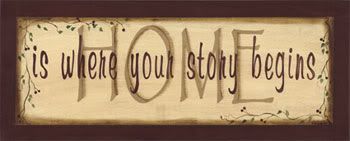
Home is where you hang your hat. Home is where they have to let you in. Home is where the heart is. Home Sweet Home. There's no place like home...

Home is less a physical location and more a state of mind - home is where you feel comfortable and loved and wanted...

I have left one home in South Florida for another in the hills of New York - I departed with deep kisses and I will arrive to warm hugs (Boyhowdy and Darius and Fil, oh my!), to name but a few I look forward to crossing paths with this weekend...

I still have never heard the original Talking Heads song, but as soon as I listened to Shawn Colvin's version on her Cover Girl CD, it quickly became a favorite - it defines home (i.e. love) as valuable yet vulnerable, faithful yet fleeting, secure yet sensitive...

We who have it, wherever however whoever, realize how lucky we are and how little we can take it for granted - we count our blessings while keeping a vigil...

Home is where I want to be
But I guess I'm already there

Parentheses: The 60's British Edition


The Beatles: Norwegian Wood (This Bird Has Flown)

[purchase]


The Moody Blues: The Afternoon: a) Forever Afternoon (Tuesday?) b) (Evening) Time To Get Away

[purchase]


The Zombies: Butcher's Tale (Western Front 1914)

[purchase]


Being the incurable anglophile that I am, I just had to squeeze in some old favorites of mine, by three bands all groundbreaking and trendsetting in their own way.

Wednesday, July 21, 2010

Parentheses: The Philly Sound (of the Delfonics)

delfonics


The Delfonics: La-La (Means I Love You)

[purchase]

The Delfonics: Didn't I (Blow Your Mind This Time)

[purchase]

Soul music in the 60s centered around two major cities: most people think of Detroit—Motown—right off the bat, but Philadelphia was equally important in delivering quality soul music to an eager audience. Artists that define the Philly Sound, with its lush harmonies and rich, string-laden arrangements, include Harold Melvin and the Blue Notes, the Stylistics, the O'Jays, the Spinners, Hues Corporation, and our featured group, the Delfonics.

Two of their biggest hits have parenthetical titles. Listening to both, I can easily hear the roots of the style known a decade later as Quiet Storm. Both were written by Thom Bell, who also came up with the equally wonderful "If You Don't Know Me By Now" and "Me and Mrs. Jones."

Parentheses: Until I Met You (Corner Pocket)


The Manhattan Transfer: Until I Met You (Corner Pocket)

[purchase]

If you saw my posts for our Joni Covers week, or if you’ve looked at Oliver di Place recently, you know that I love jazz singing. If you’ve heard of The Manhattan Transfer, you may remember The Boy From New York City, and wonder why I’m bringing this up. But The Manhattan Transfer was the group that introduced me to jazz vocals, and they have done quite a bit of it in the course of their career.

In high school, I sang in the choir, and the conductor, who was used to non-musical kids who took the class for an easy grade, was happy to have a bass who took it seriously. When one of the basses in the elite choir broke his leg in a skiing accident with a concert coming up, I got the call. The first piece we worked on was Java Jive. I wanted to find a recording of it, and that’s how I found The Manhattan Transfer. I was hooked, and I was still following their career when they got around to recording this one. Until I Met You is often recorded as Cherry Pink and Apple Blossom White, while Corner Pocket was a standard for Count Basie back in the day. Together, they form a love story, told from both sides of the relationship. I would like to dedicate this one to my wife Janice, on this our anniversary.

Tuesday, July 20, 2010

Parentheses: (It's Good) To Be Getting Better


Oasis: It's Getting Better (Man!!)

[purchase]


Oasis: (It's Good) To Be Free

[purchase]

I've had a soft spot for Oasis since the day they hit the scene in 1994. It's shame they haven't really released anything noteworthy since 1998, but that's okay. When they split for the millionth and possibly last time in 2009, I wasn't too bothered.

We'll always have those first three albums, Definitely Maybe, (What's The Story) Morning Glory? and Be Here Now and the b-sides compilation The Masterplan, all of which should have a prominent place in everyone's record collection. Be Here Now has gotten an unfairly bad reputation for not living up to everyone's expectations at the time, but it's actually very good.

Though I admit some songs are too long, and it's also a good early example of what would later be known as "the loudness war". It's a very brickwalled record, definitely one of the loudest mixes I've heard, which makes it quite tiring to listen to after a while. A real shame, since some songs, like Magic Pie and My Big Mouth, are among the band's best.

Yes, Noel Gallagher stole bits and pieces from every part of rock history, but what he did with his loot is the important part and I don't think his skills as a songsmith can be questioned with any real authority.

Monday, July 19, 2010

Parentheses: Happytown (All Right with Me)


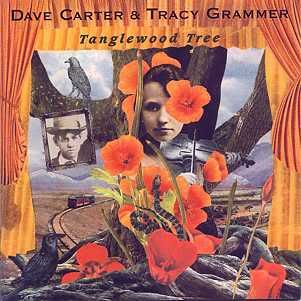
Dave Carter & Tracy Grammer: Happytown (All Right with Me)

[purchase] - scroll down to Tanglewood Tree

Eight years ago today, the world lost a charming man and a brilliant songwriter - Dave Carter suffered a fatal heart attack a month shy of his 50th birthday...

He and Tracy Grammer, his "partner in all things", released three in-my-opinion perfect CDs, and she coordinated a fourth posthumously - the legacy remains, through Tracy's continued touring of the songs as well as others' covers (beautifully spotlighted recently on Cover Lay Down)...

Here is a link to my post to the Dave-and-Tracy list the day after he left this earthly plane - not a day goes by when I don't think about/listen to the music of Dave Carter. This day is doubly hard now, because it is also the anniversary (one year ago) of my mom's passing - Happytown is inspired by Dave's experiences with Transpersonal Psychology... but I'll always remember it for my own personal interpretation of "endless summer":

he says the primal quest ain't nothin' but a second guess
sometimes you just do your best to compromise

Parentheses: (Watch Out for Yourself) Mr. Jones


The Orange Electric Squidders (Fleetwood Mac): (Watch Out for Yourself) Mr. Jones

[out of print]

When Danny Kirwin joined Fleetwood Mac as it's third singer/guitarist in 1968, second singer/guitarist Jeremy Spencer became the odd man out. As Kirwin and first singer/guitarist Peter Green started exploring new sounds, Spencer's repetitive Elmore James impersonations were getting old. In concert, he only played on his songs, sitting out while the rest of the band jammed on. The shows often ended with Jeremy and the band transforming into Earl Vince and the Valiants for an encore of '50s rockers, but that hardly qualified as a new direction.

So when the band assembled to record Then Play On, Spencer didn't participate. A plan was floated to include with the album a free EP of Spencer's sarcastic takes on current popular music, but the record company didn't go for it. The EP (recorded in '68 while the rest of the band were working on the chart-topping instrumental "Albatross") was conceived as a mythical U.S. TV program, "The Milton Schlitz Show". The five tracks were eventually released in 1998 as part of the now-out-of-print outtakes compilation The Vaudeville Years - 1968 to 1970, and they're a hoot.

Spencer parodies doo-wop, British bluesmen Alexis Korner and John Mayall, and Lightnin' Hopkins, but the highlight of the set is Jeremy's take on "heavy" psychedelic rock, "(Watch Out for Yourself) Mr. Jones," performed by "The Orange Electric Squidders." Although the fake band name was meant to evoke the likes of the Electric Prunes, the music has more in common with Cream. Had it been released as a single at the time, one wonders how it would have fared.

Jeremy released a whole album of spoofs in 1970 (including "Take a Look Around Mrs. Brown", a song that would not have been out of place on a Dukes of Stratosphear album) and one more album with the Mac (Kiln House) before unexpectedly leaving the band for a religious cult while on tour in America. Surprisingly, after being considered a lost cause for decades, Spencer resurfaced in the last few years playing the blues again.

Parentheses: Land: Horses/ Land Of A Thousand Dances/ La Mer (De)


Patti Smith: Land: Horses/ Land Of A Thousand Dances/ La Mer (De)

Purchase:

Patti Smith was a writer before she was a musician, having published two books of poetry and having written for a couple of music critic magazines before ever standing on the stage at CBGB. She has said that she was inspired equally by Rimbaud and Ginsberg as she was by The Rolling Stones and Dylan. I think these odd cross currents of influence are no where more clear than on Land: Horses, the sprawling, nervous, beat-punk climax of her debut album, Horses. The story that the song tells is disturbing, to say the very least, and the music further sets the listener on edge. The unnatural juxtaposition of Smith's story of a teenage physical assault with the lyrics to Chris Kenner's Land of 1,000 Dances only adds to the disconcerting feeling.

After numerous internet searches I still can't say with any authority what the parenthetical "(De)" at the end of the title refers to. It might be a reference to Debussy, who wrote an orchestral composition called La Mer, but that's just one person's idea.

But a great song is a great song and a parenthesis is a parenthesis.

Sunday, July 18, 2010

Parentheses: Abilene (The Eisenhower Waltz)


Peter Mulvey: Abilene (The Eisenhower Waltz)

[purchase]

Abilene (The Eisenhower Waltz) doesn’t sound like a political song. It was recorded in 2005, when the Iraq war was much more in the news and the public’s awareness than it is now. Peter Mulvey evokes a period 50 years prior to that, even taking the phrase “Iron cross” from an Eisenhower speech in 1953. He presents Eisenhower as a man who had gotten the country into a tight spot, and took responsibility for it. Mulvey says not a word about the events of 2005 in the song. And his silence says it all.

Saturday, July 17, 2010

Hand Claps: Birds in Perspex


Robyn Hitchcock and the Egyptians: Birds in Perspex

[purchase]

Posts happen. Sometimes they happen by accident. I wasn’t going to post any more songs for our Hand Claps theme. In fact, I took out my copy of Robyn Hitchcock’s Perspex Island because I was considering this song for my Bird Songs post on Oliver di Place. There was just one problem: the song isn’t particularly about birds. But there, in the middle instrumental break, were those hand claps. I had completely forgotten they were there.

Birds in Perspex is a perfect example of Robyn Hitchcock’s uncanny pop instincts. There is the wonderfully jangly guitar sound, like the Byrds at their best. And there are the Beatle-y vocal harmonies. This one is easy on the ears, and sounds like a hit. But this is also a perfect example of why Robyn Hitchcock never made it big. Birds in Perspex is probably a love song. It feels that way to me. But the lyrics are a collection of dreamlike images and ideas that make less sense the more awake you become. In his later career, Hitchcock has become a more direct lyricist, but he has become less interested in making pop sounds. He’s always worth paying attention to, but he probably never will have that hit. And I think he’s OK with that.

Hand Claps: My Boyfriend's Back


The Angels: My Boyfriend's Back

[purchase]

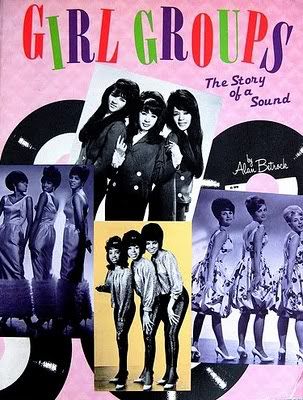
I've always been a fan of the girl groups of the 60's: The Shangri-Las, The Dixie Cups (as mentioned below), the Ronettes, to name but a few - how could I resist the 2-disc compilation I found in the cut-out bin years ago, "whose words and music", the liner notes state, "were all about first dates, teenage crushes, dance crazes, parties, boyfriends good and bad, and parental concerns about daughters growin' up too fast"...

A bit of research
speculates the form wasn't all fluff - the liner notes also suggest "girl group music influenced British Invasion bands, paved the way for the mass entry of women into rock and roll, and helped tear down color barriers on radio, on the charts and in concert venues."

Even more digging unearthed this wonderful article of how My Boyfriend's Back came to be written, recorded and performed - "the sassy spoken-word, punctuated by firecracker handclaps, is arguably the most famous song intro in popular music"...

P.S. Although the songs are no longer available for download, I posted others previously which qualify for this theme: Unsquare Dance by Dave Brubeck... and What I Like About You by The Romantics - I also thought about posting Moxy Fruvous' Spiderman this week, but saw Darius already did a while back...

Friday, July 16, 2010

Hand Claps: Bye Bye Love


Simon & Garfunkel: Bye Bye Love

[purchase]

When I was a young tyke in the early '70s, we didn't have much contemporary music in our home. My Mom liked Patsy Cline, and my Dad liked Glenn Miller.

But we did have Simon & Garfunkel's Bridge Over Troubled Water on 8-track. My siblings and I (I'm one of six) played that thing to death. While their version of "Bye Bye Love" was not one of my favorites from the album (I preferred "Baby Driver" for the sound effects and "Cecilia" for the crazy rhythm), it still embedded itself in my consciousness. Apparently, I'm not alone. Whenever I sing this song with other people, they invariably use the Simon & Garfunkel phrasing, rather than the Everly's.

The S&G version was recorded live in Ames, Iowa in 1969, and it's the audience who provide the enthusiastic hand claps throughout the song.

Hand Claps: Iko Iko


The Dixie Cups: Iko Iko

[purchase]

I was being stubborn. For some reason, I’ve always felt that I should not enjoy The Dixie Cups’ version of Iko Iko. Of course, the song is a New Orleans classic. It is the best answer you could possibly have if anyone ever asks, “What is the second line rhythm?” The song has been recorded by everyone from Dr John to the Neville Brothers to Buckwheat Zydeco to New Orleans jazz great Donald Harrison. The song has traveled well beyond New Orleans, becoming a concert staple for the Grateful Dead, and even making it to Africa in a version by Zap Mama. And I tried out all of these versions and more, and I can recommend them all. But I kept coming back to two things. For whatever reason, no one else seems to have recorded the song with hand claps. And The Dixie Cups’ version really is great. Those hand claps seem like such a natural part of the song that it’s hard to understand why no one else has used them. So this version may not be the most authentic, and I don’t know if The Dixie Cups even understood the New Orleans slang terms in the lyrics. But it works.

Hand Claps: Close to Faith

GeorgeMichael


George Michael x The Cure (DJ Tripp): Close to Faith

[acquire]

I've got these two songs, see. And they both fit the theme, clap clap clap. They're both big hits from the 80's. They're both catchy as hell, nice beat, danceable. They're both by British artists. You'd like both of them, I'm sure. But I can't decide which one to post…

I know! I won't decide at all - I'll give you a mashup. It's two…two…two songs in one! Or, to be exact, it's a digital remix created from pieces of two or more songs.

Songs have been joined in one form or another for years. We've all heard medleys of tunes, one following the other, or clever songs with the lyrics of one sung to the tune of another (I'm thinking of that great version of Stairway to Heaven sung to the theme of Gilligan's Island). But in the past decade, the art of the mashup (aka "bootlegs") really flowered as PC-based software became cheap enough and powerful enough for folks to try this at home. Which they've done, all over the world. And dance clubs are reverberating with the results.

The most common type of mashup is A vs. B, or the tune of one song laid against the words of another (more or less), and that's the style used in this mashup. I wonder if the remixer, DJ Tripp, got the idea to mash these two songs together because of the dual handclaps?

Thursday, July 15, 2010

Hand Claps: I'll Be There For You


The Rembrandts: I'll Be There For You

[purchase]

So no one told you life was gonna be this way

CLAPCLAPCLAPCLAP!!

Your job's a joke, you're broke, your love life's DOA
It's like you're always stuck in second gear
When it hasn't been your day, your week, your month, or even your year but..

I'll be there for you
When the rain starts to pour
I'll be there for you
Like I've been there before
I'll be there for you
'Cuz you're there for me too

Wednesday, July 14, 2010

Hand Claps: Stuck In The Middle


Stealers Wheel: Stuck In The Middle

[purchase]

Cineastes recognize this song from its prominent placement in 1992 crime flick cult hit Reservoir Dogs, where it provided an ironic counterpoint to a policeman's torture. But long before it took on the underground, this summery seventies folkrock tune was a classic rock staple - one that sold over a million copies upon its release, charted in the single digits in both the US and the UK, and lingered long afterwards on a thousand retro radio playlists. Though that's surely where Tarantino found it, I think it's time we allowed it a chance at redemption.

Hand Claps: Let X = X


Laurie Anderson: Let X = X

[purchase]

Music? Performance art? Spoken word? It’s tough to know what to call the work of Laurie Anderson. Sometimes it just depends on the piece. One thing that can be said is that her narrative style reminds us that Muse and musing are derived from the same root. Anderson’s pieces ramble around to a point, express it, and then ramble away from it again. Her gift is in making us feel that this is natural and comfortable.

There is always music as part of these pieces, and Let X = X boils it down to its essence. In Laurie Anderson’s works, technological and organic sounds find a way to coexist. Here, it is just a synthesizer and handclaps, plus a percussion instrument I can not identify, for most of the piece. There is a band that comes in briefly towards the end, threatening to disrupt the equilibrium that has been achieved. But then the balance is restored at the end. It will sound strange to many ears, but this piece is entrancing.

******************************************************

Note to readers: last week, for our Joni Covers theme, I posted a version of God Must Be a Boogie Man. There was a problem with the file, and it would not play. My apologies. The problem is fixed now, and the song is now available as intended for your enjoyment.

Hand Claps: Six Senses

KAT-TUN


KAT-TUN: Six Senses

[purchase]

It's been a while (for me, anyway) since I got the chance to post something Japanese. The song I've chosen is a must for this week's theme, though, because you can tell these guys worked re-e-e-e-ally hard getting those handclaps super-perfect. Such persistence should be rewarded.

It also gives me the chance to talk a bit about Johnny and Associates. Wiki calls it a "talent agency," which is correct in the same sense that McDonalds is a "restaurant." Since its formation in 1962, Johnny's has grown to be a huge Japanese entertainment conglomerate, and what it specializes in are boy bands. Johnny's is like a blend of Disney's Hollywood Records (including a Mickey Mouse Club clone, The Shounen Club) and Lou Pearlman (not including, thankfully, the Ponzi schemes or the skeevy sexual predation).

Johnny's discovered our featured boy band, KAT-TUN, in the same sense that the Monkees were "discovered." Talented boys are hand-picked to join Johnny's stable of artists, are trained and groomed and combined into groups, and when they're deemed ready, they debut, first in small venues, then successively larger halls. Look at them, aren't they kawaii (adorable) – if you were twelve, you probably wouldn't tear your eyes away from their picture to even bother to read this bit. KAT-TUN is as big in Japan as the Backstreet Boys were in America.

This song is a perfect J-Pop gem. The lyrics are a seemingly random mix of English and Japanese, which is also typical of J-Pop. My internet friend, Travis, has kindly translated them if you'd like to try singing it on your next karaoke night. You're on your own, though, for the hand clapping.

Tuesday, July 13, 2010

Hand Claps: 1969


The Stooges: 1969

[purchase]

Iggy Stooge (as he was then known) and the boys perfectly captured teen malaise ("It's another year for me and you/Another year with nothin' to do") on this track from their debut album. Ron Asheton's fuzzed-out wah-wah guitar takes center stage, but loose hand claps accompany the entire song.

The album was originally producing by John Cale. But the band and label were unhappy with Cale's mix, so Iggy and Elektra boss Jac Holzman remixed the album. Their instincts were in the right place. When the Cale mixes were finally released, they revealed a much thinner, tinnier sound. The raw power of the recordings were lost.

This, on the other hand, is the way they were supposed to sound.

Hand Claps: Take The Money And Run


Steve Miller Band: Take the Money and Run

Purchase:

I had a couple of ideas for this week, which I will still get to later, but this morning my iPod was on shuffle and all of sudden there they were: The most iconic succession of five hand claps from my early adolescence.

They headed down tooooo old El Paso... clap! clap! clap! clap! clap!


In 1976 I was nine years old. Just old enough to be cognizant of the fact that every older kid in my town, it seemed, knew every word to this song. As far as I could tell it was required curriculum at the Junior and Senior High Schools. I distinctly remember being in our kitchen with one of my older sister's totally hot friends when she sang along with this song and laughed as she clapped those five claps.

Steve Miller was never consistent enough to transcend the 70's in any meaningful way. But his handful of hits were so mercilessly catchy that they have remained on most respectable classic rock rotations, and most people over 40 remember where they were when these songs were being played every 10 minutes on the radio.

Monday, July 12, 2010

Hand Claps: The Boy With The Arab Strap


Belle & Sebastian: The Boy With The Arab Strap

[purchase]

Belle & Sebastian's biggest hit, 1998 tune The Boy With The Arab Strap is quite possibly the poppiest song ever written about disappointment, desolation, prison, frustrated masturbation, and life in squalor.

Of course, most fans agree that the backstory seems to refer to the time when the band was on tour in London with sadcore indie band Arab Strap, a central part of Glasgow's influential late 1990s music scene, and band member Isobel Campbell slept with their lead singer as her relationship with Belle and Sebastian lead singer Stuart Murdoch turned to shit. But it's also worth noting that Murdoch was a chronic fatigue syndrome sufferer at the time, that an Arab Strap is an erection aid, and the term seems to be used here to mean both. Wheels upon wheels, in perfectly upbeat danceable time.

Sunday, July 11, 2010

Hand Claps: Up For the Down Stroke


Parliament: Up For the Down Stroke

[purchase]

Last week, we surveyed the songs of Joni Mitchell. These are songs with poetic lyrics, songs that move the heart. But this week is another matter entirely. We’re clapping our hands, dancing maybe. What’s called for are songs that move the body. And nobody ever did that better than Parliament/ Funkadelic.

George Clinton was the master of ceremonies, and Bernie Worrell, Bootsy Collins and Maceo Parker were just some of the notable musicians who worked with him. Parliament and Funkadelic were basically the same band, but using both names allowed Clinton to maintain recording contracts with two different labels, thereby preserving his creative control. He used that control to create a funk orchestra, with intricate interlocking parts in the songs. The handclaps in Up For the Down Stroke are just one element in the larger whole. Don’t bother trying to sit still for this one; it can’t be done.

Hand Claps: Ponta De Lança Africano (Umbabarauma)

Paraguay Brazil Wcup Soccer


Jorge Ben: Ponta De Lança Africano (Umbabarauma)

[purchase]

I had to jump on this week's theme so that this song would be timely for the FIFA World Cup Final on Sunday. Remember, it's futbol, not soccer, and sadly for South America, none of their teams made it to the final two. Instead we've got an European face-off between Spain and the Netherlands.

Jorge Ben is one of Brazil's musical treasures. This upbeat song, with its blend of Brazilian and African rhythms, was released in 1976. It pays tribute to an African futbol player and the beautiful game. Let's put our hands together and join in! Joga Bonito!

Play ball, I want to play ball, ball player
Jump, jump, fall, get up, go up and get down.
Run, kick, find a hole, thrill and give thanks.
See how the whole city empties out
On this beautiful afternoon to watch you play.