








Thursday, October 25, 2018
Homecoming: Take The Long Way Home
Supertramp: Take The Long Way Home
[purchase]
What exactly was Supertramp, anyway? They started out as a prog band financed by a modern day Medici, Dutch millionaire Stanley August “Sam” Miesegaes, but only became successful when they lost their patron and, over the course of a few albums, gradually tempered their proggier influences with radio-friendly pop, only to lose a key member at the height of their long-sought popularity and drift into obscurity and irrelevance. In addition to the tension between longer, complex songs and catchy pop tunes, the band also had to deal with the fact that its two main songwriters, Rick Davies and Roger Hodgson, had different personalities and different musical styles—one harder and jazzier and the other more folky and melodic—which ultimately led to the breakup. (If you are dying to know who wrote which Supertramp song, because most of the songs were credited to both Davies and Hodgson, look here.)
I became aware of Supertramp with their 1977 album, Even in the Quietest Moments… an album that, to my mind, is their most successful balancing of the various influences. It had a hit single, “Give a Little Bit,” but it also had an excellent ten and half minute song, “Fool’s Overture.”
My college radio career began during the early part of 1979, and in March of that year, Supertramp released Breakfast in America. It was, for the most part, a swing toward the pop side of their personality, and it was a huge hit—reaching number 1 on the Billboard pop album chart, and containing four hit singles, and a couple of other songs that might have been contenders. I remember playing it, but having the sense that Supertramp was really moving away from the kind of music that we were playing on the station in those days (and we still played a pretty good amount of prog rock). Although I think that we were less doctrinaire about shunning hits than many other college stations of the time, there definitely was the sense that Breakfast in America was maybe just too commercial. I did continue to play my favorites from Quietest Moments and took the opportunity to investigate their prior two albums, which had songs that I have to believe I heard on WNEW when I was in high school. For some reason, possibly bad reviews, I never spent any time with the band’s first two albums, which were unsuccessful full on prog records (which led to the loss of their benefactor). Although in preparing to write this, I discovered that the guitarist and lyricist on Supertramp’s self-titled debut album was Richard Palmer, who, as Richard Palmer-James later wrote the lyrics for three of King Crimson’s best albums—Larks’ Tongues in Aspic, Starless and Bible Black, and Red, so maybe I’ll go back and check it out.
I think that “Take The Long Way Home” is my favorite of the hit singles from Breakfast, and I think that it holds up better than some of the others, maybe in part because the song uses what sounds like a real piano, and not the dated sounding electric one that many of the band’s songs relied on. (Although the title track also sounds good after having not listened to it for a while) And maybe it is because that while it is still a pop song it lopes along, taking, I guess, the long way home. Or maybe because of its ambivalent message. Hodgson, who wrote the song, has said that it is about
home on two levels. I mean, I'm talking about not wanting to go home to the wife, take the long way home to the wife because she treats you like part of the furniture, but there's a deeper level to the song, too. I really believe we all want to find our home, find that place in us where we feel at home, and to me, home is in the heart and that is really, when we are in touch with our heart and we're living our life from our heart, then we do feel like we found our home.
After that blockbuster came a placeholding live album, and an even poppier studio followup, which while having a couple of hits, really was a pale imitation of Breakfast. At that point Hodgson left the band to record some mostly forgotten solo albums. Davies kept the band together, releasing some more experimental records that had some initial chart success, but not for long. Both Supertramp and Hodgson continued to record and tour occasionally (and separately), and no real reunion ever bore fruit. In 2015, Davies was diagnosed with multiple myeloma, forcing a tour cancellation, and the band’s website simply says “There are no upcoming tour dates scheduled currently.” Hodgson’s website, on the other hand, shows a vigorous touring schedule through the rest of 2018 and 2019.
Posted by Jordan Becker at 8:00 AM View Comments
Labels: Homecoming, king crimson, Rick Davies, Roger Hodgson, Supertramp
Wednesday, October 24, 2018
Homecoming: Sweet Home Alabama
purchase [Sweet Home Alabama]
If you are talking about coming home, you cannot dismiss this. Granted, I already have a name for posting the obvious, but this one belongs here.
The song was mired in the polemic Neil Young raised about what does the "South" mean - both to Southerners and to those outside, What does it mean to fly the Confederate flag? And then ... in response, Lynard Skynard was trying to send Neil Young (and the world) a message. 40 years down the road, so much has changed (not just in rock), but I do wonder what these guys were thinking when they penned these lines:
Watergate does not bother me
Does your conscience bother you
You could not survive that line these days, but we <forgive> it as a classic,
The linked video is relatively amazing for its time ('74): it is pretty close to synced on time as it cuts from scene to scene (No small feat for 1974), and it includes modern features such as focus on the lead guitar during the solo (all recent innovations back in the '70s)
As to the theme ...
There are few things more hurtful than an attack on your home. And I don't know if that is what prompted the song, but it sure seems so, The lyrics say as much: F*&ck you Neil Young, we have our own narrative of our history. Because, after all the "truth" of history left to later generations is in the words that the present generation chooses to write - fake or not...
And what to make of the very discernible female backing vocals that are equally not visible anywhere in the clip. A classic piece, that, like most of its associates, falls far short of today's standards.
Posted by KKafa at 11:28 AM View Comments
Labels: Homecoming, lynyrd skynyrd, Neil Young
Monday, October 22, 2018
Homecoming: Blue Bayou
Our Homecoming theme got off to a great start, but then seems to have wilted. So I propose to define it as “songs about coming home, or wanting to.” That means two things: the song does not have to have the word Home in the title; and I can post this gem.
Linda Ronstadt: Blue Bayou
[purchase]
I first heard Blue Bayou when Linda Ronstadt released her version in 1977. My oldest brother was, and still is, a music snob, and one of his rules at the time was that no artist was worth your time unless they did original songs. (The musical gods would later have their revenge on him by making him love jazz, where many classics are covers) But, getting back to 1977, I knew I disagreed, because I had already discovered folk music. Blue Bayou was and is a powerful expression of yearning for home. Ronstadt completely sells the emotion of it, belting it out without oversinging. The song became an early hit for Ronstadt that really jump started her career, and it is easy to hear why. She completely sells the lyric. As you listen, you want to find out what happened to keep her from feeling that she can go home again.
Roy Orbison: Blue Bayou
[purchase]
What did happen was that Roy Orbison, 14 years earlier, had become a star whose livelihood meant he had to live his life on the road, away from the places and people he loved. Orbison was at the peak of his career in 1963, when this was released. Ironically, where Blue Bayou would mark the commercial arrival of Linda Ronstadt, it would mark the beginning of a commercial decline for Orbison. This version charted, but not in the way Orbison had become used to. It peaked at #29 on the pop charts, staying there for only one week. Soon after, the Beatles would arrive in the US, and Orbison would have to scale back his career. This original version of Blue Bayou features a great vocal, and it has a bass line that sounds great. Ronstadt’s version replaces that bass line, and I could not find another version that does it this way. That said, the female background vocals are cheesy, even for their time, and the song would have been better without them. Blue Bayou became a minor part of Orbison’s catalog, and I could find no other versions until Ronstadt’s. It is Linda Ronstadt who is being covered by everyone who comes after her.
Faith Ako: Blue Bayou
[purchase the album Kulaiwi here]
Blue Bayou usually works best with a soaring high tenor or soprano vocal. Faith Ako however makes it work beautifully with her rich alto. Ako is my great discovery for this post. Most of her songs are Hawaiian, as she is, but this one breaks the language barrier to allow those of us who don’t speak Hawaiian to appreciate her artistry. The instrumental flourishes here are stunning, and this arrangement works in any language.
The Cox Family: Blue Bayou
[purchase]
Even though Linda Ronstadt’s Blue Bayou is the standard, her arrangement sounds dated. In particular, the way the electric piano is used became a terrible cliché by the time the 70s were over. The Cox family strips the song down to a wonderfully spare acoustic arrangement, and then adds gorgeous vocal harmonies. There is a great live version live version of the Cox Family doing this one with Allison Kraus available on YouTube. I did not include it here because it is not available for purchase.
Raul Malo, Pat Flynn, Rob Ickes, and Dave Pomeroy: Blue Bayou
[purchase]
Finally, I had to include this version. Thanks to Linda Ronstadt, the vast majority of artists who cover this are women. I think there is also another reason why versions with male vocals are rare: there are very few male singers who can do justice to the song. I could think of only two who I would want to hear. One is Chis Isaak. I suspect that he has heard comparisons to Roy Orbison way too often, and wants nothing to do with it. The other is Raul Malo of the Mavericks. In fact, The Mavericks have done the song live, and Malo has also performed it with his own band. But the only recorded version I could find is this stunning acoustic version. As I suspected, Malo is a great choice to sing it, and the arrangement is great too.
Posted by Darius at 4:42 AM View Comments
Labels: Dave Pomeroy, Faith Ako, Homecoming, Linda Ronstadt, Pat Flynn, Raul Malo, Rob Ickes, Roy Orbison, The Cox Family, The Mavericks
Tuesday, October 16, 2018
HOMECOMING: TAKE ME BACK HOME/SOULSAVERS
OK, so it was only when the facebook link to my last post alerted me that I realised Homecoming to be peculiarly and specifically an american concept, relating to (high) schools inviting back past alumni, for a dance to celebrate the existence of the institution in question. And football?! Who knew? Certainly not me, although I suddenly get a whole lot of references from "Romy and Micheles High School Reunion" to the Monkees. Anyway, this piece too, like those of my colleagues, is nothing at all to do with that. (Except, arguably, on a metaphysical level.........)
Soulsavers are a remarkable concept, the idea of Rich Machin and Ian Glover, two british producers who somehow have conjured a knack of getting some of the most distinctive vocalists around to sing on their electronica take on what I would broadly categorise as gospel music, possibly not (but probably) including in any religious sense. Perhaps if a little veiled as to any particular divinity. Sorry, sprawling intro, but it is tricky for modern musicians to overtly ally themselves to any accepted spirituality beyond the vague. Or maybe difficult for me and my generation, avowedly secular, to accept such. I can find little back story as to how these two honed their craft. 2003 saw their first record, 'Tough Guys Don't Dance', the template immediately set out with sombre and dark sounds, sombre and dark imagery and sombre, dark, often lugubrious vocals. Here's 'Love' from that record, a style remaining and in no need of change. The singer is Josh Haden, son of Charlie, and erstwhile lead singer of the short lived 'Spain', well worthy of recommendation in their own right.
Second album, 'It's Not How You Fall, It's How You Land', saw them bring in Mark Lanegan, whose gothic tones have increasingly added a little black, or is it white, magic to any number of artists, as well as building up quite a catalogue of his own. With his back story of gaol and addiction, who better to sing of a curiously old testament redemption and revival?
Third album, 'Broken', again included Lanegan, amongst others including Jason Pierce, whose 'Spiritualised' had been mining, and still do, a similar vein. This took deeper still the atmospheric, exemplified by this version of this Will Oldham (Bonnie Prince Billy) track, he also appearing on this and the last record. (And here's Billy's version.)
The song featured in this article comes from number 4, 'The Light the Dead See', which, on the back of the critical breakthrough achieved by 'Broken', had the genius of recruiting Dave Gahan in the Lanegan role. Perhaps as famous for his overdosing near-death experiences as for his fronting of electro-band Depeche Mode, interviews had already revealed his deep melancholic beliefs. When Soulsavers were chosen to support Depeche Mode on a 2012 tour, it was perhaps inevitable he would end up writing and singing with/for them. Not for nothing was the title of his main bands 1993 album 'Songs of Love and Devotion'.
'Take Me Back Home' is one of many highlights from this remarkable album, the references aplenty as to where that home may be. It can move me to impossible places, to states akin to a mystical reverie, almost damascene in intensity. It is only my hard fought for cynicism that enables me to pretend I hear not the beseechments to (a) god. Or to God? As intensity goes it can go little further. And it can't get more overt than the song below.
Gahan has stayed on board a while longer, to the extent of the next release coming under the Dave Gahan & Soulsavers soubriquet, a step backwards for me, experientially, even if the songs, on 'Angels & Ghosts', were nearly as powerful. Strangely, the giving of a name extruded a taste of Mammon. Some of the magic was gone. Perhaps indicatively, the next release was back to the core duo, and instrumental, a film soundtrack, 'Kubrick', no clues in the lyrics, and fewer from the subject matter of the film. But no mistaking the music.
I remain an atheist. I think.
I could just point you toward the named track. Hell, or is that heck, hit the main page.
Posted by Seuras Og at 5:11 PM View Comments
Labels: Bonnie "Prince" Billy, Charlie Haden, Dave Gahan, Depeche Mode, Homecoming, Josh Haden, Mark Lanegan, Soulsavers, Spain, Spiritualised, The Monkees
HOMECOMING: Homeward Bound
purchase [Homeward Bound]
OK. Sorry. With this post I show my age, but I can't help myself.
Simon & Garfunkel's [Parsley, Sage...] was among my first LPs, and for those of us of that generation, it was momentous. It bridged a gap between generations by making folk ... popular. If not exactly rock. That came next.
For those of my age, Simon & Garfunkel was/were integral - our entrance to the world of pop.rock.
The theme of [Going home/homecoming] carries more baggage for Americans if not for other cultures (maybe think Spring break in Florida).
My choice may be no high school homecoming (that's a separate realm all to itself), but it touches on the theme of going back. Back to a past that you recall, but is probably no longer the same.
The American Homecoming weekend tradition plays upon these emotions: bringing you together with those days (in the hopes that you will stay connected/subscribing)
Posted by KKafa at 1:32 PM View Comments
Labels: Homecoming, Simon & Garfunkel
Homecoming: A Sort of Homecoming
U2: A Sort of Homecoming
[purchase]
“A Sort of Homecoming” is a strange song in the U2 canon. It was not a hit, it is rarely played live (more on that, later), but it has long been one of my favorites—and in researching this piece, I found that there are many U2 fans who really love the song. As most of us know, U2 burst upon the scene with their remarkable debut, Boy, in 1980. I remember hearing it and playing it on WPRB, and being struck by the uniqueness of their sound, their earnestness, and their confidence, despite the fact that they were so young. The next album, October, was a minor stumble—not terrible, but somehow not fully realized. Their third album, War, was, start to finish, a great album, filled with anthems and love songs, delivered with passion, bravado, and musical talent. I saw them on that tour, at the Pier in New York, and was blown away. The album was a huge hit, and the album spawned hit singles—it was U2’s breakthrough into mass popularity.
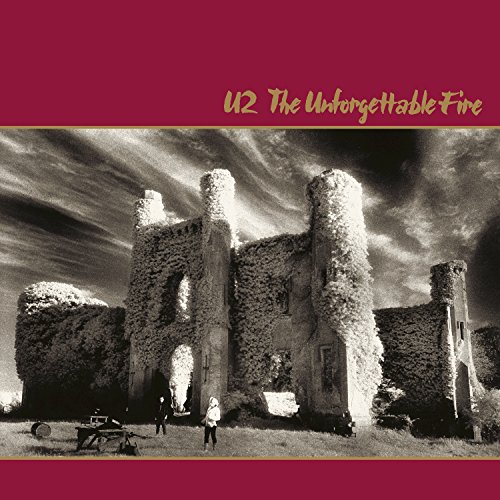
When the band prepared to record its follow up, though, they wanted to move in a different direction, with less bombast and sloganeering. They wanted to work with Brian Eno, who initially was unimpressed by the band, and was planning to fob them off on his engineer, Daniel Lanois. Ultimately, though, Eno was convinced, and he agreed to work with U2 (along with Lanois), and try to create a more mature sound for the band. Not surprisingly, considering the production team, the collaboration resulted in The Unforgettable Fire, which was a more atmospheric and subtle album, but without losing the power of War. The two records are probably my favorite U2 albums (most critics probably go with The Joshua Tree or Achtung, Baby!, and I like them, too, but not as much).
“A Sort of Homecoming” is named after a line by poet Paul Celan, who Bono had been reading, in a speech he delivered on October 20, 1960, about five months after Bono was born, when Celan was awarded the Georg Büchner Prize. In that speech, Ceran discussed Büchner’s work, art, and poetry, and in his view, the circularity of poetry. He went on to say (in German, but I found a translation):
Is it on such paths that poems take us when we think of them? And are these paths only detours, detours from you to you? But they are, among how many others, the paths on which language becomes voice. They are encounters, paths from a voice to a listening You, natural paths, outlines for existence, perhaps, for projecting ourselves into the search for ourselves. . . . A kind of homecoming.
I’ll bet you never thought that we’d be discussing German literature when you started reading this music blog post, did you? But critics note that this song, and the whole Unforgettable Fire album, show a more Celan-like spiritual doubt as compared to the more certain religious themes of their prior work.
Although I've never read Celan (but have read a little Büchner), what grabbed me about the song was the sense of yearning, both lyrically and musically, that is palpable from its quiet, polyrhythmic opening, to its more intense end. Note that the song is not called just “Homecoming,” it is “A Sort of Homecoming,” so it is fitting that lyrically it works on so many levels—as a personal homecoming to Bono’s native Ireland, as the “homecoming” of his late mother, as a return from war (possibly the violence that was engulfing Ireland at the time), and as a spiritual renewal. And maybe more. Ultimately, though, the song ends with the comforting thought:
Oh don't sorrow, no don't weep
For tonight, at last
I am coming home
I am coming home
U2 played the song pretty regularly from 1984-1987, as they toured in support of The Unforgettable Fire and its follow-up, The Joshua Tree. There’s an excellent, if more triumphant and less atmospheric, live version from 1984, released on 1985’s EP Wide Awake In America (which is an odd title, because the song was actually recorded at a soundcheck before a show in London, with the crowd noises dubbed in later). But they basically ditched it from their setlist until a performance in 2001 at Slane Castle, in Ireland, which was described on one site as “somewhat shambolic, with Bono struggling to remember the lyrics.”
It made another appearance that year under very unusual circumstances, in Oakland on November 16, 2001. A devoted U2 fan and guitarist, Scott Perretta, had seen U2 pull people out of the audience on occasion to play guitar, and decided to see if he could make that happen for him. He went to the show on November 15 with a sign that said Me + Guitar = People? Knockin? Watchtower? Anything! and planted himself by the stage. U2 security asked if could actually play, because the band got pissed off when poseurs were selected and couldn’t. Assured by Peretta’s friends that he was legit, the security director said that if Bono was interested, he’d give Peretta a signal. But it didn’t happen.
Until the next night, when Peretta could see Bono and the Edge checking out his sign, and they invited him onstage. Peretta started playing the opening to “Homecoming,” which surprised them (since it wasn't on the sign, and wasn't as noted above, a regular part of their set), but they went with it, despite the fact that Bono couldn’t remember the lyrics. He started ad-libbing about the song, crediting Van Morrison for its inspiration, before turning it into a prayer for the United States, which only two months before had suffered the 9/11 attacks. The crowd went wild. Here’s the audio of the performance. Here’s Peretta’s detailed recollection of the night, and here and here are short audience videos showing him onstage.
As Peretta wrote about that night: “I can die happy now.”
Posted by Jordan Becker at 8:00 AM View Comments
Labels: Bono, Homecoming, The Edge, U2
Sunday, October 14, 2018
HOMECOMING: FEEL LIKE GOING HOME
In truth I know little about Rich beyond this song. This version featured here is a late career 1993 reprise which, give or take the choir, exudes just a bit more pathos than the 1973 original or the better known 1975 version. It was quite a shock to discover this song was actually the work of a then quite young man. He first cropped up on Sun records, starting out, nominally, as a rocker, ahead of cementing his name in the Nashville 60s 'Countrypolitan' movement. I have also discovered he was behind this shocker of a song, an ear worm that can destroy any moment: I usually find myself singing it as I go shopping or mow the lawn, then finding it sticks with me for days, to the eternal annoyance of all I come into contact with. (And, no, I am not going to grace it by name, for fear of triggering another bout.) In fact, he had a number of careers, across a number of labels and styles, although all broadly within the country canon. It is also fair to say he was a colourful figure, that euphemism so beloved of obituary writers for unrepentant boozehounds. He died, fairly suddenly, of a pulmonary embolism, in transit for, ironically, not home, but going on vacation.
It is a song that hasn't had that many covers, the ones I have being on a Jools Holland country LP, featuring sometime popstrel Sam, daughter of Joe, Brown and on Mark Knopfler's early side project, the Notting Hillbillies. The first, clearly more a showcase for the bandleader's ivory tinkling, the latter just a bit too slow for comfort. But the one that stands out for me is the one below, as performed by Scotland's majestic Battlefield Band, where the song seems to be drenched in hues of expatriate regret, almost a genetic memory of the homeland, tugging ceaselessly at the heartstrings of the vast scots-irish diaspora, no matter how many generations since the auld country became little more than a distant dream.
Rich.
Battlefield.
Posted by Seuras Og at 4:20 PM View Comments
Labels: Battlefield Band, Charlie Rich, Feel Like Going Home, Homecoming, Joe Brown, Jools Holland & his Rhythm & Blues Orchestra, Sam Brown, The Notting Hillbillies
Wednesday, October 10, 2018
Leaves: Headstones and Dead Leaves
Glossary: Headstones and Dead Leaves
[purchase]
I’m trying hard to write about bands that I haven’t written about before, and this is a bonus, because it seems that Glossary has never been written about on this site. I can’t be sure, but there’s a good chance that I heard about the band from a now defunct blog called Nine Bullets, which was founded back in 2006 by a gentleman who went by the name Autopsy IV, who championed the kind of Americana roots rock that Glossary played so well. (Longtime readers of this site may remember that Autopsy IV was a contributor here back in 2008-2009).
Often compared to Lucero (with whom they have toured, and shared members and a record label) or Drive-By Truckers, because they actually do sound like those bands, Glossary, from Murfreesboro, Tennessee, had their own style, and released a handful of albums from the late 1990s through the 2010s, all of which are worth checking out. Led by legally blind singer/songwriter/guitarist Joey Kneiser, Glossary focuses on character-driven and personal songs that are well-written and well-played, often featuring harmony vocals from Kneiser’s now ex-wife Kelly (with whom he continues to perform).
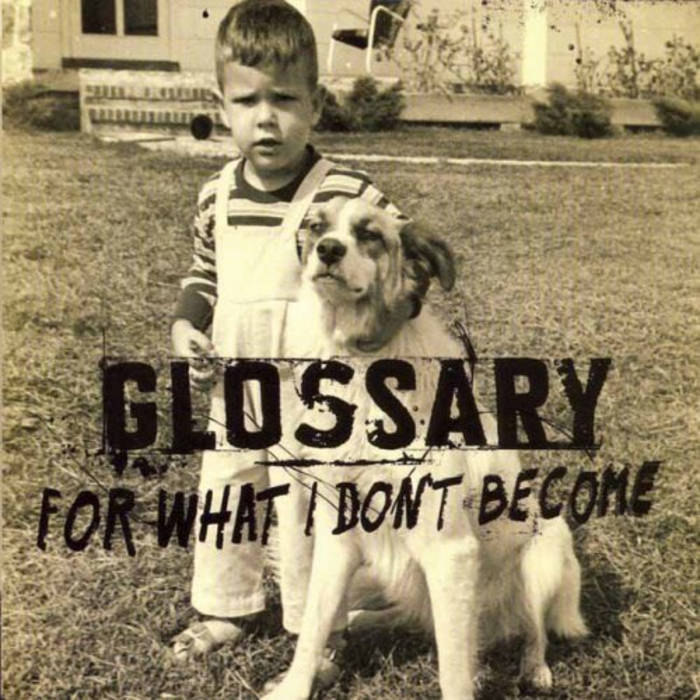
“Headstones and Dead Leaves,” from 2006’s For What I Don’t Become, is a perfect song for the theme, and for this time of year, as we head into the Halloween season, although despite its title, it is a hopeful song. The singer tells his partner that he doesn’t want her to die for him, or give up anything for him, because the world is cruel enough. He continues:
And headstones and dead leaves
Are just reminders of
What happens to living things like us
In the end, though, he says that together, they can bury their regrets and “walk away alive.”
It appears that Glossary went on hiatus in 2013, when its drummer hurt his shoulder, but reformed in 2017 for some anniversary shows. Kneiser has released some fine solo albums, some more music with Kelly (now) Smith, and tours as a solo and duo act.
Bottom line—if you like this sort of music, Glossary is one of those bands that you might have missed, but it is never too late to catch up.
Posted by Jordan Becker at 8:00 AM View Comments
Labels: Drive-By Truckers, Glossary, Joey Kneiser, Kelly Kneiser, Kelly Smith, Leaves, lucero
Monday, October 8, 2018
Leaves: Autumn Leaves
Cannonball Adderley: Autumn Leaves
[purchase]
During this theme, there has already been a mention of “the elephant in the room.” To me, the phrase refers to an obvious choice that everyone is ignoring. Indeed, it sometimes seems to me that one of our themes is more difficult than it needs to be, because everyone is rejecting a song as too obvious, My rule is that the first song that comes to mind is first for a reason: its quality. So here is my post of Autumn Leaves.
I know the song as a jazz standard. Cannonball Adderley’s version was released in 1958, one of three versions that year that established the song as a jazz classic. The passionate playing here of especially Miles Davis and Adderley show why. Although the song would become one of Davis’ signature tunes, available in at least four different live versions dating from 1958 to 1966, this is the only studio version of it that Davis made. Davis introduces the song, and his soloing stays close to the melody. This allows Adderley to make his entrance soloing, without restating the melody at all. So this version becomes a showcase for Adderley, which would explain why it is on his album, not Davis’. But make sure to listen all the way through to this one, for Hank Jones’ startling second solo near the end.
Yves Montand: Les Feuilles Mortes
[purchase]
In researching this post, I discovered something I never knew: Autumn Leaves has words! In fact, it has two sets of words, in French and English. The French lyric is the original. It started life as a poem, Les Feuilles Mortes by Jacques Prevert, and it was set to music by a Hungarian, Joseph Kosma. Yves Montand was the first to record it, in 1945. The French poem is quite different from the English lyric. Here is one translation I found:
Oh I would like you so much to remember/ The joyful days when we were friends./ At that time, life was more beautiful/ And the sun burned more than it does today.Fallen leaves can be picked up by the shovelful/ You see, I have not forgotten…/ Fallen leaves can be picked up by the shovelful,/ So can memories and regrets./ And the north wind takes them/ Into the cold night of oblivion.
You see, I have not forgotten/ The song you used to sing me./ This song is like us./ You used to love me and I used to love you/ And we used to live together/ You loving me, me loving you./ But life separates lovers,/ Pretty slowly, noiselessly,/ And the sea erases on the sand/ The separated lovers’ footprints
Karrin Allyson: Autumn Leaves
[purchase]
Karrin Allyson’s Autumn Leaves is the only version I could find sung in both languages. Allyson takes the French lyrics in the original tempo, and then switches to double time for the English lyrics. At both speeds, she finds all of the emotional power of the song. The English lyric is almost a new song. Johnny Mercer wrote it in 1950, and his wife at the time, Jo Stafford, was the first to sing it. There is, in my mind, no good name for the musical genre that Stafford worked in. I have heard it called “Standards”, but that term can refer to any song that is performed by multiple artists. I have also heard it called “pop music”, but again the term has broader application. At any rate, I am referring to the musical genre where the singer performs with a full orchestra, and the arranger is just as important as the singer. Frank Sinatra and Nat King Cole are examples of artists in this genre, and both would record their own versions of Autumn Leaves. Whatever this genre should be called, it is one of my least favorites, which is why I did not include Jo Stafford’s Autumn Leaves in this post.
Paula Cole: Autumn Leaves
[purchase]
In the jazz world, there are two ways to perform Autumn Leaves, fast and slow. Karrin Allyson does both, but I wanted to conclude with a great slow sung version, and Paula Cole of all people nails this one. Actually, the choice of Cole for this one makes more sense than I expected. I knew Paula Cole as a major label artist who had sung with Peter Gabriel and then had solo hits with Where Have All the Cowboys Gone? and I Don’t Wanna Wait. But it turns out that Cole was jazz singer before any of that happened. She records on her own label these days, using Kickstarter for funding, and her most recent album, Ballads, marks a return to her roots.
Posted by Darius at 4:22 AM View Comments
Labels: Cannonball Adderley, Karrin Allyson, Leaves, Miles Davis, Paula Cole, Yves Montand
Friday, October 5, 2018
Leaves: All I Want Is To Be (Is By Your Side)
Peter Frampton: All I Want Is To Be (Is By Your Side)
[purchase]
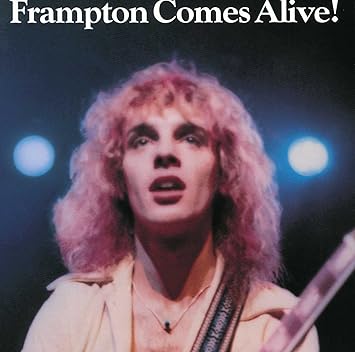
It is far from an original thought to note that Frampton Comes Alive! came out of nowhere. Up until its release, Frampton, a talented guitarist, a passable singer, and a good looking guy with great hair, had experienced some minor fame with various bands, notably The Herd and Humble Pie, and as a sideman, but his pre-Comes Alive! solo career was generally underwhelming. A&M co-founder Jerry Moss had signed Frampton to the label when he was 19, because "He had a cool face, he didn't mind working, and he had a great attitude.” Frampton toured relentlessly and was one of those artists whose songs seem to work better live than on vinyl. And there was the talk-box effect.
So, when he recorded a live album, mostly at the Winterland in San Francisco, but also at the Long Island Arena and SUNY Plattsburgh, there really wasn’t much expected—it was released in January, 1976, after the holiday buying season—and A&M had its collective fingers crossed that it might sell half a million copies and be certified as a gold record. Instead, the album turned into the ultimate “grower.” It charted at No. 51 its second week, then rose to No. 22, No. 6, No. 4 and No. 2, where it stalled throughout March, before hitting No. 1 in April. And it showed staying power, bouncing around the top 10 for the rest of 1976, logging a total of 10 weeks at No. 1, and selling a shocking 6 million copies, which broke Carole King's sales record for Tapestry. Ultimately, it has sold more than 11 million copies worldwide.
Why? I’m not really sure. It is not a great album; much of it is really pretty ordinary (which is why his prior solo albums were not big hits). There are a handful of really good rock songs on the album—songs that rocked hard enough, but not too hard to be offensive—filled with hooks and tight playing. As a high school student in 1976, I can tell you that rock radio played the crap out of the record, and it certainly was a part of the soundtrack of my high school years. Mostly, we heard the singles: "Show Me The Way," "Baby, I Love Your Way," and "Do You Feel Like We Do," but some stations went a couple of tracks deeper than that. So, it might just have been a case of the right album at the right time—a solid product, well promoted, that probably became discussed as one of those things that you had to buy, because everyone was buying it--sort of a pre-Internet version of going viral.
In addition to the rockers, a number of the songs on the live album were acoustic, which were included at Moss’ insistence. They showcased Frampton’s fine playing and made for a nice contrast from the heavier tracks. One of the best of these is “All I Want To Be (Is By Your Side),” originally from his debut solo album. It’s a nice, bluesy, love song, although I find the lyrics a bit confusing—“I don't care if they cut my hair/All I want to be is by your side.” Huh? But it satisfies the theme by being one of approximately a billion songs that mention four leaf clovers. Yeah, I could have gone with the Old 97’s, but I’m trying to write about artists that I haven’t featured before.
Comes Alive! was, by far, the pinnacle of Frampton’s career. His next album, rushed out to capitalize on his new-found superstardom, was generally substandard, marred by a cheesy, cheesecake album cover and a truly sappy title track. It sold reasonably well, but was generally mocked, including by Frank Zappa. He then starred in the critically panned Sgt. Pepper's Lonely Hearts Club Band film, and was in a serious car accident. A few years later, all his guitars were believed to be destroyed in a cargo plane crash that killed three people, including the black Les Paul Custom that appeared on the cover of Comes Alive! (although it was found years later and returned to him).
Since then, Frampton has released albums, toured with his childhood friend David Bowie (who had been an art student of Frampton's father) and others as a sideman, released an unsuccessful Frampton Comes Alive! II, and has generally stayed active musically, even if most people don’t realize it. And, like many of us, he no longer has great hair.
I think that it is fair to say that if the universe hadn’t aligned to give Peter Frampton one of the bestselling albums of his era, he’d probably have continued, putting out a series of albums that would have bubbled under the radar of most listeners, maybe occasionally having a radio hit, before being pushed aside from the public consciousness by new generations of musicians, like, say, Foghat, or Pat Travers. That certainly doesn’t mean that they are not good—to the contrary, such artists, including Frampton, are fantastically talented, but still, the incredible, massive, success of Comes Alive! is an anomaly.
Posted by Jordan Becker at 8:00 AM View Comments
Labels: Carole King, david bowie, Foghat, Frank Zappa, Humble Pie, Leaves, Pat Travers, Peter Frampton, The Herd
LEAVES: Leaf and Stream/Wishbone Ash
There is always going to be an elephant in the room of this theme, what with the sort of leaf and leaves seeming to be of, um, such appeal to musicians and music lovers. And I don't mean tea. So I have deliberately looked away and have not inhaled today, celebrating the more pastoral side. As in ain't nature wonderful, which, of course it is. This too has also provided a rich vein of inspiration, especially in my home land and especially in the more whimsical days of the hippy/folk/prog interface. Wishbone Ash, who would have hated any of those epithets alone, let alone collectively, actually and amply epitomise this union. Songs about a mythical mystical past? Check. Gentle melodies sweetly sung? Check. Rippling, dual lead guitars, playing tunes rather than shredding the notes. Check, double check. All so Game of Thrones, but without any of the troublesome cussing or titties.
Wishbone Ash were the cool band to have an album of tucked under your arm. 'Argus', from which this song is plucked, and/or 'Pilgrimage' seemed to be the peak of teenage dudedom in the early 70s, at least at my school. Not too popular or chart-bothering, a little bit niche, certain to pop up on the Old Grey Whistle Test TV show or in NME, the inky weekly hipster's bible . Yup, I fell for all of this, hook, line and sinker until the great awkwardness of the punk wars came along, sweeping all with hair and melody away in the tsunami of year zero. Which I also loved, transferring my passions, cutting my hair and narrowing my trousers. I don't suppose I ever listened to anything of theirs again. But they didn't go away. Nobody did: they all play on and probably at a theatre near you soon. Ash, as their faithful called them, did better, or was it worse, musical differences, always musical differences, causing them to become 2, or is it 3, bands, each with some claim to the name. Ugliness and the courts intervened and so there are currently at least 2 versions on the road, Wishbone Ash, featuring one original member, Andy Powell, and Martin Turner's band notallowedtobecalledWishboneAsh (which they probably wouldn't be allowed to be called either), which contains, ironically not only Turner, who actually founded the original band, but often also another original member, (no relation) Ted Turner and the long serving drummer of those epochal recordings, Laurie Wisefield. The Powell helmed band have continued to release new material, the Turner version ploughing the classic furrows of yesteryear. Such is life, and I would probably see either band as having equal right to the name and to perform, without, to be fair, me taking the time and trouble to seek out either. (Would either, could either surpass the records?)
Here's the nearest thing to making that decision, a near-unplugged from the official Ash, in 2017, Andy Powell sadly not wielding the flying V that was as much their trademark* as anything else, but it is visible behind him, stacked against the drum podium. (*And maybe why the courts gave him the band?)
And here, from the year before, is Martin Taylor's.
Buy the original, when all is said and done, it is a beautiful song.
Posted by Seuras Og at 7:16 AM View Comments
Labels: Judy Tzuke, Leaf and Stream, Leaves, Martin Turner band, Ted & Majella, Wishbone Ash
Tuesday, October 2, 2018
Leaves: Simon and Garfunkel: Leaves That Are Green
purchase [ Leaves ]
As the theme generator, I fuss with the Blogger tools to check previously-used themes. I keep my own Excel file of used/unused themes which I try to keep up to date. [It's hard after 20 years]
That means decisions about <fall> or <autumn> or, this time, <leaves> as a substitute to fall, since that is the season.
That said, the first song that came to mind for the <Leaves> theme (considering my age and time-frame) was: Leaves That Are Green, a classic <folk> hit from the 60s that almost qualifies for "pop", but not rock.
The Simon and Garfunkel duo made millions (I trust) from their 60s albums that blurred the boundaries between "[pop] songs your Mom approved of" and the simultaneous raucous rock that was brewing underneath. Theirs was a kind of acceptable pathway to the inevitable cacophany of the latter half of the 70s: "Pop is not so bad/probably OK. If moderated."
I don't mean to take away from their later forays: Garkunkle's <My Home Town> has its high points and verges away from their <folk> format, to some extent.
Simon has done some very positive expositions of alternative [African] vibes - to everyone's benefit. But they [individually and combined] are generally relegated to a status less than they really deserve for what they have given/left us.
I cannot re-create the atmosphere of the mid-60s for you, a time filled with Motown, emerging Stones and Beatles, short-lived acts like Manfred Man, the Monekeys and more.
However, Simon and Garfunkel kept it up - both through the psychedelia (without going down that path) and then for at least another generation ... well a decade or two ..., each in their own way.
Leaves That Are Green .. somewhere between rock and the future ....
Simon & Garfunkel go back far enough that there are visual/video records of their first appearances, and there is one of their earliest <Leaves That Are Green> shows available online.
And .. summer moving into fall - we've got green going to brown.
Enjoy ...
Posted by KKafa at 1:40 PM View Comments
Labels: 1960's, Art Garfunkel, Leaves, Paul Simon, Simon And Garfunkel
Wednesday, September 26, 2018
AMAZE: WOW/KATE BUSH
For someone who barely dented America until fairly late in her her career, KB has certainly had her fair share of posts here over the years. Which is amazing. And amazing is the word that comes to mind whenever I think of her, although not perhaps for the reasons the by now middle aged matriarch would necessarily wish. And it isn't for that picture either!
Poor Kate was an easy target. With her speaking voice as individual as her singing voice, and a tendency to describe all in superlative led to her becoming fair game for parody. The parody above has not aged as well as the original, I suspect, but the clip shown displays her "incredible" and, of course, her "amazing". (Pity the poor woman, mind, where an appearance on TV is more to discuss some 3rd rate telly rather than her own work.....) I was sure she was also bestowed the honour of a Spitting Image puppet, but was unable to find any proof of this, so you will have to make do with this, which lampoons the ridiculous age, 20-30 years ago, of several then active rockers.
Anyhow, there is actually purpose to this meandering reminisce of time bygone, namely the song, lyrically rammed with the archetypical.
What I hadn't realised at the time was the content of the song, I now musing as to possibly any autobigraphical content to the description of the proximity to the "amazing" performer portrayed. I note also that there seems to have been an air-brush of the final line of the song, a sly reference to presumably more than the capability of vaseline to just prevent chapped lips. I read of a sly pat to her buttocks as that line was sung, but cannot find it, the BBC having censored that aspect for broadcast, it seems.
"We're all alone on the stage tonight
We've been told we're not afraid of you
We know all our lines so well, uh-huh
We've said them so many times
Time and time again
Line and line again
Ooh, yeah, you're amazing!
We think you're incredible
You say we're fantastic
But still we don't head the bill
Wow! Wow! Wow! Wow! Wow! Wow! Unbelievable!
When the actor reaches his death
You know it's not for real, he just holds his breath
But he always dives too soon, too fast to save himself
He'll never make the screen
He'll never make the Sweeney
Be that movie queen
He's too busy hitting the Vaseline......."
Actually that was quite amazing for 1979. Who do you think it might be?
Buy it here.
Posted by Seuras Og at 7:03 AM View Comments
Labels: Amaze, Kate Bush, Spitting Image, Wow
Tuesday, September 25, 2018
Amaze: Awesome John
purchase [ Nazar Degdi]
Taking some liberalities with the theme, I replace Awesome with Amazing. (Hey... J. David said as much: relatively slim pickins for the current theme.)
However, the theme does leave us open to post songs that have some aspect - by the blogger's definition - of amazing to them, and this fits the bill by my definition.
I have previously taken the liberty to flog Turkish musicians which few of you are likely to have encountered.
So, here's another.
Nigh on 20 years ago, a celebrity to Turks (but essentially unknown outside) made the decision to return from a life in the U.S. to ostensible fame in his home country. Initially, he was feted at home: his own TV show, DJ gigs and some stage time playing guitar. But it never really panned out to the big time. Yeah, his son has since made some millage from the father's name - but more on his own credits (aside from the inherited name & fame)
The man's name: Asim Can Gunduz.
Few of you are likely know him. Fewer still are aware that he played Jimi Hendrix in <Jimi and Janis Together> on Broadway, as well as playing various NY bands, including Concrete Sky and Katawba, playing the Bottom Line and as an opening act for Deep Purple, Leslie West, Billy Cobham and more.
You might be amazed that Turkey produced someone as amazingly talented as Asim Can - 20 plus years ago.
Now, Internet ASCII character representation makes it hard to display the Turkish undotted i, and pronunciation guides don't help a lot, but this musician's moniker "Awsome John" helps sort it out. The undotted Turkish i in his name makes the two words (Asim and Awesome) sound very similar. It's up to you to decide if he is in fact awesome.
One of the most accessible YouTube videos for the man (died 2016 age about 60) is an original called Boku Yedik, clearly translated as "We ate S*#t", or "we've been had".
Asim Can's son continues his father's musical tradition - granted, in his own style.
Posted by KKafa at 1:37 PM View Comments
Labels: Amaze, Asim Can Gunduz, Turkish
Monday, September 24, 2018
Amaze: We’re Gonna Win The Series
[purchase]
I know that I write about the Mets way too often, most recently a few weeks ago, but whether they are good or bad, they have long been an important part of my life. In fact, I’ll be going to an otherwise meaningless game later this week, with my wife, son, daughter-in-law, and her parents (giving me yet another opportunity to mention that English lacks a word for your child’s in-laws, which at least Yiddish and Spanish do), because it is likely to be the last game that David Wright will play in. It tells you something about the Mets that Wright, probably the greatest non-pitcher in team history, is probably not even a Hall of Famer, but he was a great player for the Mets for a long time, until a series of debilitating injuries essentially ended his career in 2016. He has fought back to be able to have a cameo at the end of an otherwise forgettable season, and it will be a very emotional game for us. Wright, who never played for any other organization, and grew up a fan of the team, has been a great servant to the Mets, as the English football commentators say.
In addition to watching the team most nights, at least for some of the game, for the past year or so I have been privileged to have assisted my friend Wayne Coffey, a sportswriter generally referred to as “award winning” or “New York Times bestselling,” who has been writing a book about the 1969 Mets. As good a writer as Wayne is, and he is a very good one, he is an even better person. The book, They Said It Couldn’t Be Done, is coming out next March, keyed to the 50th anniversary of the team, dubbed the “Amazing Mets,” winning the World Series. You can order the book here.
Wayne did all of the hard work, doing the research and the writing, while I’ve been a sounding board (I’m pretty sure the title was my idea, but it is hard to remember), I’ve connected him to people to interview, and most interestingly for me, I’ve reviewed many drafts, from early to pretty much final, making all sorts of suggestions, and occasionally doing research, some of which actually made the book. As an amateur writer, it has been really fun to see how the pros do it, to get a peek behind the curtain at the process of writing what I hope will be another New York Times bestseller. So, I can tell you, from having read the thing many, many times, that it is very, very good. Did I mention that you can order the book here?
My involvement with the book has also been a great opportunity to reconnect with Wayne, who used to live across the street, but moved to the next town, making our connection somewhat more tenuous. The period of working on the book has coincided with Wayne’s younger daughter, an amazing soccer player (and an incredible young woman), attempting to make the United States Under 20 Women’s World Cup Team, and just falling short. The team disappointingly (maybe not to everyone….) crashed out of the tournament much earlier than expected, in part because it lacked certain qualities that Wayne’s daughter has in abundance. As I write this piece, she is currently leading NCAA Division I in assists and is in the top 10 in total points (and yesterday, her team defeated the No.7 team in the country). So, maybe the U.S. coaches made a mistake. I’ve watched her play for the National Team and for her college, and then Wayne and I discuss the games, adding to our connection.
One thing that Wayne was adamant about was not to use the word Amazing (or Amazin’) or Miracle in the title of the Mets book, because that team won because they were very good, and deserved to win, not because of some miracle (although Wayne and I disagree about what does constitute a miracle). Using those words are easy clichés, and Wayne’s book is more than just a rote recounting of the season. Maybe it is also because the Mets were originally dubbed “Amazing” by their first manager, Casey Stengel, when they were one of the worst teams in the long history of baseball, and Casey’s diverting circumlocutions known as “Stengelese” distracted from the bad play. So, why would you want to connect an excellent baseball team with a mocking superlative?
But you cannot argue that the Mets were World Champs in 1969. As Casey would say, “you could look it up.” And, for some reason, someone convinced the members of the team, and their coaches, to record an album the day after they clinched the National League East championship. The night before, the team was drinking champagne in the locker room, as you can see here and here. And who knows what they did after the cameras stopped rolling and they headed out into the night. But record an album they did. It’s a bunch of standards, mostly rewritten to relate to the Mets, and is very silly, but not terrible. As was the fact that the album cover billed the performers by their legal names, such as Darrell Harrelson, Frank McGraw, and Lawrence Berra, better known, of course, as Bud, Tug, and Yogi.
Our featured song is a rockin’ and prophetic “We’re Gonna Win The Series,” set to the song “Kansas City,” by Lieber & Stoller, first made famous by Wilbert Harrison, and covered by pretty much everyone. (And unrelated to the fact that the Kansas City Royals beat the Mets in the 2015 World Series, much to my chagrin).
Shortly after winning the Series, the team assembled on the Ed Sullivan Show to sing “Heart,” (from the musical Damn Yankees, a sentiment I utterly agree with) mostly looking young, earnest, and uncomfortable, except for a couple of the jokers (I'm looking at you, Frank McGraw), and a very unhappy looking Nolan Ryan. As Casey would have said, “Amazin’, Amazin’, Amazin, Amazin’….
Posted by Jordan Becker at 8:00 AM View Comments
Labels: Amaze, Jerry Lieber, Mets, Mike Stoller, Wilbert Harrison
Thursday, September 20, 2018
AMAZE: AMAZING GRACE (USED TO BE HER FAVORITE SONG)/AMAZING RHYTHM ACES
Two for one here, a band with amazing in their title and amazing in the song, which is, um, amazing. And my "research", the search button in the top right of this page, suggests they haven't been here before, surprising if they are indeed up to their modest entitlement. And are they? Let's see.....
I was a bit of a country nerd in the early 70s, or country rock more accurately, that hybrid of long hair and pedal steel, disowned, largely, by each of its parents at the time, yet proving enormously resilient and robust. Now given I was living and raised in East Sussex, in the south of England, my cowboy credentials were pretty slim, but I dug hard and deep to nail my colours to the (confederate?) flag. So it was way more than the Byrds or Burritos for me, more, much more than the New Riders and Poco. I would rifle through the vinyl at record shops for hours until I could find something yet more arcane. And there were a host of trinomials, bands with 3-word names, Atlanta Rhythm Section, Pure Prairie League and these guys, but I could never remember which was which and who sang what. Indeed, I still had to look as listening was no great differentiator. The League I thought were great, ARS were a little bland, with the Aces somewhere in between. The featured song, their sole chart botherer of any great note, is typical of their style, a 4:4 harmonied croon with appropriately wailing steel and lyrics about drinking and crying. It's actually held up quite well, I think. It comes from their 1975 debut, "Stacked Deck", which is probably the best introduction to the band. It contains also another song you may recall, especially if you are Canadian, the number one in Saskatchewan hit, Third Rate Romance, which has dated terribly, the product of when other influences get chucked into the pot. They lasted until 1980, successive albums producing limited returns. (They reformed in the mid to late 90's but that need not trouble us here.)
More interesting to me is what happened to the erstwhile piano tinkler, James Hooker, not realising he had been in the band. A decade or so on from crate digging in dusty record shops, I was married and living, by chance and to my glee, next door to another country rocker, although Paul was slightly more attuned to the country than the rock. He had a bigger collection than me and introduced me to many an act I hold dear to this day, Steve Earle and Nanci Griffith, to name but two. Back then Earle was only beginning to revive his career after his drug habit had led to incarceration. But Nanci was in her prime and, being someone with a bigger european audience than at home, toured the UK regularly. I just have seen her play half a dozen times in those late 80s, always with faithful Hooker alongside, playing piano and leading her band, the Blue Moon Orchestra, which would also showpiece whichsoever hip young guitar slinger she had unearthed in the country & irish clubs of Dublin. Her shows were a delight and could have me alternately yelping and weeping, not least in the song below, co-written with Hooker, the much covered Gulf Coast Highway. Live, Hooker was always given due credit for his overall role in the Griffith sound, he seeming quiet and unassuming, smiling in embarrassment as attention was drawn to his pivotal position and exquisite playing.
Life intervened in so many ways and Paul and I lost contact. I stopped going to Nanci Griffith and indeed any shows for actually quite a long time, picking up again roughly 15 years ago. Hooker had however kept busy, and I was astonished to see he had worked with and was on so many records I love. Like John Hiatt's "Slow Turning"and ex-Brinsley Schwarzer Ian Gomm's "Rock'n'Roll Heart", both as organist. Also that he had, full circle into and within my trajectory toward the Rhythm Aces, been a latter day Flying Burrito Brother, or at least appeared on a couple of albums, albeit far from their heyday. (And, fact fans, original Rhythm Aces drummer, Jeff 'Stick' Davis, was a member of the 'Sneaky' Pete Kleinow/Garth Hudson collaboration, Burrito Deluxe.)
Hooker is now seemingly retired and was certainly never a returning Ace. As I look back over my years of gigging, he has certainly always seemed one of the good guys. And, through appreciating his later work, suddenly I find myself listening to 'Stacked Deck' with a whole lot more enthusiasm.
Stack yours!
Posted by Seuras Og at 5:45 AM View Comments
Labels: Amaze, Amazing Grace (Used to be Her Favourite Song), Amazing Rhythm Aces, Ian Gomm, James Hooker, John Hiatt, Nanci Griffith
Wednesday, September 19, 2018
Amaze: I'm Amazed
Purchase My Morning Jacket's "I'm Amazed"
I have to be honest: I don't really get My Morning Jacket. I like what they do; I appreciate the wide-ranging canvas they use and the infinite mixture of texture, sounds and compositions they spread across it. But, I've never been able to pin down who they are, or more distinctly, what kind of band My Morning Jacket actually can be labeled as or named. Are they folk, are they rock--no, too simple. Are they a jam-band? Are they progressive? Are they...I don't know what to call them.
Then, someone told me: "Man, MMJ is neo-psychedelic. That's all you need to know."
This bit of information came during the lead up to a Pearl Jam gig in Camden, back in 2008. Outside the show, gathering with the faithful in the parking lot, someone was playing MMJ and rather then wonder why he wasn't playing Pearl Jam, my curiosity was piqued. The sound was interesting, the descriptor, more so.
I can agree with that classification. And, strangely, I have since listened to MMJ with a lot more understanding. Neo-psychedelic is a freeing idea, and trying to define what doesn't fit into my readily categorized listening ideals (punk, hard-core, pop-country, metal, hair-metal, etc...) can be more rendered, annotated and analyzed with the addition of that all-encompassing and opportunistic prefix, neo. Attributing the unknowable or category-defying with the label of neo helps the sound make sense, essentially blending the misunderstood into the realm of "hard to figure but still cool, because, you know, it's "Neo, man. You don't need to understand it; just go with what you feel." And remember, because it's new, it doesn't need to make sense.
Or something along those lines. There's a freedom that comes from ignoring definitions and genre. Music can be tribal, just like politics, fetishes, area codes or passports. It's fun to defy boundaries and traditions, even if the results are confusing. But with music, sometimes confusion leads to the delight of discovery. Or, amazement. As in: amazement at new sounds and the way a band creates a fresh, aural landscape, unlike you've ever traveled through.
I'll admit again, I'm very light on knowledge of MMJ. I haven't gone over the brochures or read the maps closely yet. I'm an unseasoned traveler. And those of you who count yourselves among their (very, very) faithful, I'm probably coming across as a bit of an apostate. My apologies; I'll get there, I promise. There's a lot of ground to cover, so give me some time.
Yet, as undereducated as I am, I do love MMJ's "I'm Amazed", off their 2008 release, Evil Urges. I saw them perform this on Letterman and was...amazed by the song. There was a great energy to the song, anthemic and urgent, stadium-ready. Up until then, I'd only known one thing about MMJ: they had done an epic cover of the Who's own mini-epic, "A Quick One While He's Away" while touring with Pearl Jam. That version, recorded live in Italy, with Eddie Vedder sharing vocals with MMJ's Jim James, was fervent and faithful to the original and glorious in its celebration of sound, rhythm and movement. When I told a friend (ever allegiant to The Who, as one should be) that I thought MMJ's version of "A Quick One" was actually superior to the original, he refused to pay for the beer he had just said he'd buy me. I admire him for his loyalty, and for sticking to his principles.
There's a familiar sort of giddiness to "I'm Amazed" and the soaring chorus, and equally angelic vocal delivery that revels in the highs and joyful proclamations, down to the vigorous power chords and church organ melody line. It's a great song, the kind that needs to be turned up loud, equally brilliant on the car stereo as it would be live and loud. And what makes the song all the more brilliant is the irony of the lyrics. While the huge-tempo, upbeat major chords would lend a natural happiness to your head bobbing and foot stomping, the song is really about being amazed by the frustrating behaviors of others: the lies we take in without thinking for ourselves, the hypocrisy we swallow from our leaders; the division of our united nation; our misguided devotions and "the lack of faith" and the "love that we're rejectin'." The song traffics in disbelief and incredulity more than the traditional joyousness of amazement. MMJ is using irony of connotation and like the best writing, the title tricks us towards one belief, but asks the listener to accept a truth that might not be as easily accepted. For a song that came out 10 years ago, it not only sounds fresh, but the sentiment of disbelief at our national discourse and seeming inability to ease our grip on the ideas (anger) we cling to and allow to separate us, is more than pertinent. A simple sentiment, delivered with a deceptively joyful sound. But sometimes simple is what you need.
Posted by Andy La Raygun at 6:30 AM View Comments
Labels: Amaze, I'm Amazed, My Morning Jacket
Tuesday, September 18, 2018
Amaze: Amazing Grace
The Dirty Dozen Brass Band: Amazing Grace
[purchase]
I feel like I need to hurry if I want to write about this song for this theme, because it seems like a pretty obvious choice—and I can’t think of too many other relevant songs to write about. And hey, if other writers want to feature the song, have at it, and I’ve already handled the history for you.
“Amazing Grace” is a hymn, and the lyrics were written by the English poet and Anglican clergyman John Newton, way back in 1772 or 1773. Before Newton had those highfalutin’ gigs, he was a seaman. In fact, in 1743, he was pressed into naval service by the Royal Navy—think, walking down the street, being kidnapped and tossed onto a ship.
During his service, he was flogged, recovered, and was transferred to a slave ship. He was so disliked by the crew that they left him in West Africa, with a slave dealer, who turned Newton over to his wife, a Princess of the Sherbro people, in what is now Sierra Leone. She promptly enslaved Newton. After three years of abuse and servitude, Newton was rescued by a captain who had been asked by Newton’s father to find him.
During his trip back to England, Newton had a “spiritual conversion,” because he believed that his prayers convinced God to save his ship from a storm. From March 10, 1748, Newton “avoided profanity, gambling, and drinking.” However, when he got back on dry land, he quickly returned to sea on a slave ship, apparently not recognizing irony in any form. Newton continued to become more religious, and continued to work in the slave trade until 1754, when, it appears, God intervened by giving him a stroke, keeping him from trading in humans. Although he did invest in slaving ventures.
In the late 1750s, he ecumenically applied to be a minister in the Anglican, Methodist, Independent, and Presbyterian churches, before being ordained as an Anglican priest in 1764. It seems as if he was a pretty good one, too, and not adverse to non-Anglican views. In 1788, he publicly admitted that the whole slave thing was bad, and supported ending the trade, which England finally got around to doing in 1807 (about the same time as the US did, although as we know, that was small comfort to those already in bondage).
Newton’s hymn, based on his own life experiences, "1 Chronicles 17:16–17, Faith's Review and Expectation" led off with the killer opening stanza:
Amazing grace! (how sweet the sound)
That sav'd a wretch like me!
I once was lost, but now am found,
Was blind, but now I see.
The hymn failed to chart in Britain, but was a smash hit on this side of the pond, especially during the Second Great Awakening in the early 19th Century, and has become a standard African American spiritual song and was a civil rights anthem.
Nobody knows what, if any, music was used when Newton first led his congregation in the hymn, and there were many different tunes that were used over time, before “New Britain” stuck, and has become the standard version. Although “House of the Rising Sun,” works pretty well, too (better than the theme to Gilligan’s Island).
For reasons that are quite boring, today, I’ve been thinking of my father, who for some reason often remarked that he wanted a New Orleans-style funeral when he died. I wonder if that is where I got my love of New Orleans brass band music, although I doubt it, because I never remember him actually listening to any of it.
Not too long before he died, I bought a copy of The Dirty Dozen Brass Band’s album Funeral for A Friend, which includes many of the songs that are played at New Orleans funerals—in fact, the album is dedicated to the memory of founding member Anthony "Tuba Fats" Lacen, who passed away shortly after its completion. To quote Allmusic at length, because reviewer Thom Jurek nails it, stating that the album:
is resolved in the celebratory gratitude for mercy in "Amazing Grace." But this review does nothing, literally, to describe the sheer power of the transference of emotion that Funeral for a Friend does. This is easily the most heartfelt, honestly rendered, and stunningly captured moment of the DDBB's recording career; it belongs in every household where the celebration of life and its transition from the sorrow of death to the eternal afterlife is honored. It is not only a classic in the genre, but will come to be regarded as a jazz classic, period.
I’d note that the version is instrumental, so it really is “New Britain,” but that’s being picky.
In lieu of the full on procession, we played the album as people entered into the celebration that we had for Dad’s life, and I think he would have been fine with that.
Posted by Jordan Becker at 8:30 AM View Comments
Labels: Amaze, Dirty Dozen Brass Band
Sunday, September 16, 2018
Amaze: McCartney- Maybe I'm Amazed
purchase -[Maybe I'm Amazed]
I recently came across a lengthy interview with Paul McCartney in GQ mag (Untold Stories of Paul McCartney) that added perspective to the post that I had already decided would fit my choice for the new <Amazed> theme: Maybe I'm Amazed
The original recording, appearing on 1970s McCartney (the one with the cherries bowl on the album cover), was very much a home-studio effort, but was later incorporated into the Wings collection in a more elaborate production.
For me, it is the home quality of that entire McCartney album that endears it to me: pure McCartney in many ways. End of the Beatles, but an indication of what the man is capable of - even in a home studio.
But as for Maybe I'm Amazed, it is supposed to be a paen to Linda, who helped him make it through the Beatles break-up. "In the middle of something he doesnt really understand ..."
It's as good as any of McCartney's Beatles work: lyrics, harmony, timing.
Posted by KKafa at 11:36 AM View Comments
Labels: Amaze, Beatles, Paul McCartney
Saturday, September 15, 2018
WIne: Cream-Sweet Wine
purchase [ album ]
purchase [ album ]
For me, Fresh Cream was seminal and gound-breaking music, but mostly in hind sight. I came across Disraeli Gears before I heard Fresh Cream. By that time, Cream had already made its name, so my purchase was essentially filling in the blanks of the Cream repertoire.
Fresh Cream was Eric Clapton moving on from his roots in the Yardbirds and John Mayall. But the album established Cream as a band to be reckoned with. We're talking mid-to-late 60s and their style of music was pushing the limits of what most people listened to (Soon to come: Jimi Hendrix, who blew it all open, way beyond run of the mill Top of the Pops, which generally would not include Hendrix and Cream until a few years later, under popular pressure) I was there, listening, and I can attest that it was nothing like you had ever heard, Fresh Cream included. Cream (and Hendrix) took rock to a new level.
Cream (see my last post) was one of the bands that moved popular music from its "more or less acceptable if dubious" status position to money-making and hence acceptable endeavors. Fresh Cream - in retrospect- had what it takes too move the rock genre forward, but it was both a bit early and not as well marketed as it might have been.
This video is from nigh on 50 years after the real Cream, but it includes the essence of the original - with modernization of Clapton's evolution.
Posted by KKafa at 1:28 PM View Comments
Labels: Cream, Eric Clapton, Wine
:format(jpeg):mode_rgb():quality(40)/discogs-images/R-8835299-1469781134-7475.jpeg.jpg)