The break-up song, even the break-up album, is such a rite of passage for both performers and listener. For every song of love and fulfilment there are a legion of songs displaying dismay and despair. For every couple sharing "our tune", strip back the facade and each will have at least one song to recall their earlier disappointments in getting there.
But nobody, nobody, has better portrayed the randomness of the teenaged victim of cupid than Billy Bragg, about whom I have written before. And over a consummate acoustic guitar backing, by Johnny Marr, no less, playing a version of the Four Tops
classic, Bragg says all that ever needs to be said.
Breaking up is evidently hard to do here at Star Maker Machine, so let me get us off to a somewhat late start with this one. Mankind may have invented pop music as a type of mating ritual, with a man or woman singing the praises of the object of their affection, or boasting of all the reasons to “pick me”. The breakup song may have followed soon after. Here was a form that could allow you to plead for sympathy from your next intended conquest by showing how you were suffering, or simply blow off steam by venting your anger at how you were treated so badly. I have no doubt that I could, with a little digging, find a seventeenth century madrigal that would fit our theme, but there are many fine examples with a more recent vintage.
Dear Madam Barnum is a fine example of a venting or brushoff song. If anything, this kind of song is a warning to others not to get involved with the woman who has hurt the narrator. This one is indeed about a woman, but there are just as many warnings in pop music about mistreating men, and I am sure we will get to some of those as well.. While I don’t know the background of this song in particular, it would not surprise me to learn that it was addressed to the same woman as XTC’s Mayor of Simpleton a few years earlier. The older song has a narrator rushing headlong into a new romance with his blinders fully on. But now, he is thoroughly disillusioned. Some of the anger in Dear Madam Barnum may well be self-directed, wondering how he got himself into this situation in the first place. The clown metaphor was established in pop classics like Cathy’s Clown and Tears of a Clown, but those songs are pleas for sympathy. This is the only song I know of that takes that concept as the basis for a brushoff song. It works very well indeed, so I would have to think there are other examples. Perhaps we will hear some of those before this theme is done.
A last minute entry as we switch themes - on the assumption that any post is better than no post.
Songs in the Key of Life vies with Talking Book as my favorite Stevie Wonder album. Saturn is one of its least known songs.
The 1970s, when the album came out, were full of dreams of the opportunities that space presented us Earthlings: working forward from the 70s, we had Skylab and Mir and then the current ISS. In the 70s, NASA still had a fair amount of PR mojo - hype and hope for humans in space. It was hard not to be influenced by the vast possibilities open to us. Today we have Elon Musk and his cohorts.
The 70s mark a point in Wonder's career where he both changed management and musical style. Gone was the [limiting/limited] image of the somewhat coddled boy-wonder: here was a man in tune. Actually, a man leading a musical revolution. Talking Book matches chronologically with Exile on Main Street, Thick As A Brick, Close to the Edge, Ziggy Stardust, Eat a Peach, Can't Buy a Thrill - just to give you some perspective.
Nice picture, eh? Sort of a Phillip K. Dick-ian vibe, which in turn leads me on to discover that Electric Sheep is the name of a company that makes the fractal variations many computers have as their screen savers. Go take a look, it is fascinating. If nothing either to do with the picture. Or indeed the song. (And had you known or remembered that Bladerunner, the film, recently reprised as Bladerunner 2049, was based on the book in the link? Any excuse to have a bit of Vangelis.....)
OK, to business. Lamb. Lamb are a longstanding UK band of some 20+ years standing, with a blend of electronic styles leavened by the organic vocals of the singing, the mix of the pastoral with the pulsatile. An on-off existence has seen the duo, Andrew Barlow and Lou Rhodes, electronics and vocals respectively, break up innumerable times, always then seeming to find the incentive, or funds, to rise again like a phoenix. The last such 'final' performance, for they also tour and perform live, was towards the end of last year. I missed the London dates, but don't feel the chance gone forever. Plus, a bonus for me, as an out of the closet and unashamed folkie, as it allows Rhodes to pick up her solo career in the downtime, being more reflective of her upbringing in the world of folk clubs, the daughter of singer Annie Burton. Below is an example of her solo oeuvre, from 2006's solo debut, 'Beloved One'.
'Alien' is from the 2nd Lamb album, their highest charting release thus far, in 1999, hitting the lofty UK peak of 37. It captures the amalgam of drum and bass rhythmic with a more trip-hop dynamic overlying, perhaps why they have tended to blend more with the Bristol scene of Massive Attack and Portishead than of other Manchester bands, from where they hail. Probably the best known song by Lamb is below, 'Gorecki', a paean and tribute to the 20th century Polish composer, which samples his 3rd Symphony, perhaps helping to usher in the expanding respect for his work, especially within the neo-classical movement, enriched and fed by modern electronic composers such as Nils Frahm, Olafur Arnalds and Colin Stetson. (It seems almost facile to try and explain the wonder of Gorecki, the man and the composer, in a piece such as this. Forgive this feeble mention and explore elsewhere.)
Finally, with no apology, a brief redux of my opening para and 'Bladerunner', with it's memorable Vangelis soundtrack. The 2049 version has just as memorable and incisive a soundtrack, largely via Hans Zimmer, orchestrated by Benjamin Wallfisch, if that is the correct phrase. Here is an excerpt, the links between Vangelis, Zimmer and Lamb being all too apparent.
Aliens, UFOs, little green men in carbon zoot suits, come down to Earth to collect rocks, or kidnap people and probe them for info. Maybe probe our livestock, too...
What comes to my mind when the topic of aliens arises stems from the movies. I've never been much of a sci-fi reader, but I do love a good, ol' fashioned flying saucer flick. There's the old standbys, like Sigourney Weaver in her underwear and vicious little creatures pulsing out of chest cavities in a shower of gore. But, what else? What other little green men walk through the halls of my imagining? Invaders destroying everything they encounter with death rays, ala Mars Attacks!; strange, long fingered and round-eyed curiosity seekers, peeking through windows, like ET: The Extraterrestrial; or Donald Sutherland recognizing Veronica Cartwright upon exiting his pod and becoming part of the Invasion of the Body Snatchers...
And, my personal favorite, and original encounter with the wonders of R-Rated films, the spaced out aliens on their way to Earth via a blissed out Venice Beach, California, in a giant, smiley faced orb, from 1981's Heavy Metal... Heavy Metal, with its excessive cartoon gore and oversized, lampoon nudity, it's oddly-shaped plot and disconnected framing devices, devil's cabinet of bizarre characters, and overall bizarrely full blown technicolor beauty, was my first R-rated film. I saw it for the first time as one half of a double-feature on a sleep over, in a dark basement, under the snoring, un-watchful (probably snoring) noses of a friend's mom and dad (the other film was John Carpenter's The Thing).
And not to understate things, but at the first sign of cartoon boobs, zombie tail gunners, and the glowing green menace called the Loc-nar, among many, many more glorious oddities, I was pretty much hooked, for good. On comic books, nudie mags, and most of all rock n roll, and maybe heavy metal--the magazine and the sound. And, while the only real metal on the soundtrack was a cut from the Ronnie James Dio led Black Sabbath, the movie was a pulsing, stereo blast of day-glo guitar fever, a romp through the wildest kind of imaginings.
My memory of the film is tied directly to the sound: the imagery is forever tied to the music in the film that played over the scenes, a roving scoped-out freak show of atmospherics. Slashing guitars, thrumming, angry keys, phasing drums, Sammy Hagar's howling vox, Don Felder's space trip title track, a dobblering car horn from a UFO speeding past, and the strange incantations of Blue Oyster Cult's "Veterans of the Psychic Wars." But, by far the standout cut from the soundtrack is Cheap Trick's "Reach Out". The song is driven by a purely 80's inspired keyboard march, one that sounds like a bank of spaceship computers pumping out data and coordinates. It's powerpop at its finest, with soaring vocals and churning guitar, but the song is also a spaced out symphony of great early Cheap Trick, with ethereal melodies from a galactic orchestra, laying layers of sound over a staticky transmission.
Aural association is a potent force for me, and just a few seconds of a sound byte will send my imagination and my memory tumbling end over end to not only a movie, but the entire span of an era. The sounds of a song pulled from a memory come with all sorts of weight. And I love the impact, the immediate and and total sensation of nostalgia, when you hear a song from your past.
As I grow older, to continue the metaphor, I often feel alienated from my past--not the places or the people, but the emotional aspects of who I was. My sense of wonder, my curiosity, my willingness to be expansive and expanded by what I saw and heard, and the avenues of discovery I could wander so easily--this all before my psyche began to feel bent and worn down from taking on the weight of too many daily burdens. Hearing old music will especially take me back to being a less complicated, more easily awed kid, bowled over and blown away by all the oddness of the universe, rather than buried beneath the weight of it all.
I still scan the sky for UFOs, eager to catch a lift to places unknown. I signal with a flashlight, I signal with a lighter (Incubus), I dream of concerts on Mars, and I know that aliens can get Pearl Jam tickets a lot more easily than me (The Simpsons), and while I have many more alien references, I feel like I'm beating this metaphor into stardust...Sail on, space cowboys. I'll see you on the dark side of the moon...
EXTRA-CURRICULAR READING: A great write up on the soundtrack from Crave
Reading my music writing probably might give you the impression that I listen to prog rock all the time, but I don’t. More than anything, I listen to what would be classified as Americana music, but I am clearly an unrepentant lover of progressive rock. But just because I enjoy the music, that doesn’t mean that I can’t mock some of its excesses. And maybe the easiest things to make fun of about the 70s prog that I enjoy are the concept albums, with their often bizarre narratives. I mean, there are some pretty straightforward ones, like Rick Wakeman’s Journey to the Center of the Earth, essentially a dramatization of the Jules Verne novel, or Gryphon’s Red Queen to Gryphon Three, about chess (a hidden gem, by the way), or even Pink Floyd’s The Wall, basically a story about a person's difficult childhood and life.
But then there are the crazy ones, like Gong’s acid-fueled three album Radio Gnome Trilogy, or pretty much anything by Magma, or Genesis’ The Lamb Lies Down on Broadway, which purports to be about a Puerto Rican youth living in New York City, but turns surreal (and is one of my favorite albums, anyway).
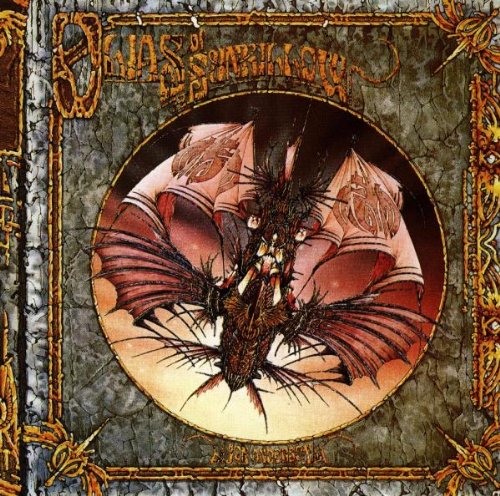
This genre of music, which is often tied up with fantasy and science fiction, is ripe for stories of aliens and interplanetary travel (although as we have seen, other genres go there, too.) And thus, we come to Jon Anderson’s Olias of Sunhillow, the Yes singer’s solo debut, released in 1976, after Yes released Relayer (an album that I have zero memory of) and before Going For The One (which I enjoyed more), during a period when the band’s members were all releasing solo albums. Wikipedia describes the album as telling:
the story of an alien race and their journey to a new world (the story printed in the LP jacket calls it "the earth", lowercase 'e') due to a volcanic catastrophe. Olias, the title character, is the chosen architect of the glider Moorglade Mover, which will be used to fly his people to their new home. Ranyart is the navigator for the glider, and Qoquaq (pronounced 'ko-quake') is the leader who unites the four tribes of Sunhillow to partake in the exodus.
Now, let me start off by saying that I like this album, and particularly the featured track, very much. Anderson is credited with all of the voices and instruments on the album, which took two years in conception, and 8 months of work, to record. There have long been rumors that Vangelis, who had unsuccessfully auditioned for Yes at that time, and who Anderson collaborated with, played some of the parts, but both men have denied this, and unless Devin Nunes has a memo to the contrary, I see no reason to dispute that (actually, if Nunes had such a memo, it might be more likely that I’d take a contrary position, but I’m going off the rails here).
If you want a chuckle, go ahead and read the whole elaborate story, which was printed on the inner album sleeve. And because most of you won’t buy the album, here’s a link to a website devoted to Olias of Sunhillow which contains the story, and more.
Meanwhile, it appears that Anderson has been working on a sequel to Olias since 2001, to be called The Songs of Zamran: Son of Olias, and as recently as 2014, Anderson confirmed that he is still working on it. Based on his comments over the years, it will be a multi-hour work, and possibly released as an app, including visuals. Here's a preview, from 2013. And why not, I say?
Leon Russell could have made our In Memoriam list this past year: he passed in November, age 74. I saw him once back in the 70s - must have been in Philly, just after I had arrived in the US of A. This would have been at the Spectrum, which has been through a number of name changes over the years.
I bring up the rather personal "just arrived in the US" because it leads into my choice for the Aliens theme. Now, I didn't fit the legal definition of an alien in the US, having been born with an American passport. But I had spent most of my first 15 years outside the US, so I certainly felt like an alien - I had virtually none of the prerequisite cultural references of my peers - except maybe music.
When I saw him back in the early 70s, it would have been about the time of Mad Dogs and Englishman. About the time that I heard him on Dave Mason's Alone Together - you know? the LP with the mad swirling vinyl? And then again in the Concert for Bangladesh. For 2-3 years, I followed him closely up until about the time of Carney - he was all over the musical charts, playing with anyone who was somebody.
So, while the song isn't about extraterrestrials, it is about being an alien. Well, actually, it's about seeing the world with a different, compassionate eye - and one that isn't all that pleased with what he sees.
Leaders take us far away from ecology With mythology and astrology Has got some words to say About the way we live today Why can't we learn to love each other It's time to turn a new face To the whole world wide human race
Stop the money chase Lay back, relax Get back on the human track Stop racing toward oblivion Oh, such a sad, sad state we're in And that's a thing
For me this was always the consummate Byrds track, given as it is one of the earliest outriders, 1966, for their later more overt country influences. Undoubtedly a yee-haw hayride of a tune, yet coupled with, literally, spaced out lyrics, it was ideal for the time; the Byrds still in their first flight of success, together with the race for the moon being in full pelt. Too 'and western' for the UK charts it bombed in my home-land, but did better at home, no little assistance coming from the phased psychedelia of the instrumental middle 8. Indeed it is still argued as to whether it was forerunner more of psychedelia or of country-rock. Both, say I.
The video represents it's first airing, on the Smother Brothers Show, with a 4 member band, the legendary rotating door of this band already in full swing. Whilst writer of the song and singer Jim (later Roger) McGuinn is clearly still present, along with Chris Hillman and Michael Clarke, on 12-string rickenbacker, bass and drums respectively, David Crosby is conspicuously absent for the first time. Especially as he was, arguably, the biggest space cadet and sci-fi freak in the band. And Gene Clark, in or out of the band depending on whether there was a plane trip expected, and who was nominally only a supporting musician for the recording, is there, pretending to play Crosby's guitar. It seems certain his is the key second voice in the harmony however, miming though they all are. A memorable tale from the time was that the band famously took out a million dollar insurance policy, with Lloyds of London, against being abducted by aliens. They didn't of course. And weren't. Although, with Jim to Roger, who's to say?
It remained a staple of live performances over the years, as members came and went, McGuinn the sole staple, but the style of the song fitting well with the directions driven by later members Gram Parsons and Clarence White. There is a nice video filmed in the desert featuring the former, but with the original recording still the one playing. Various reunions of the earlier line-up also featured it, as have various off-shoots of the original band, notably the equivalently ever changing Flying Burrito Brothers, who probably featured every other living Byrd, McGuinn apart, at some stage. McGuinn also trots it out at the drop of a hat, it often being the song chosen should he make a guest appearance, as he here does with Wilco.
Don’t feel bad if you never heard of this one. Two Little Men in a Flying Saucer is one for Ella Fitzgerald completists. It comes from 1951, fairly late in the swing era. The soldiers have been back from World War II for some time now, and rock and roll will be unleashed on an unsuspecting world very soon. The songwriters on this one were Arthur Pitt and Elaine Wise. I could find no other credits for Pitt, and Wise wrote two other songs also recorded in 1951, and then disappeared from pop music history as well.
Having said all that, this is a fun song, and Fitzgerald sings it with the perfect light hearted tone. Before we are done with our Aliens theme, we may well hear a song that takes the concept of humans seen through alien eyes far more seriously. It’s a device for criticizing humanity that can be very powerful. But Two Little Men has fun with the idea. Not knowing the rules of baseball, for example, these planetary visitors simply shake their heads in a non-judgemental way and leave Earth. There is a little gag about politicians here, but it is nopartisan and played for laughs. I am not going to tell you that this is classic Ella Fitzgerald, but it is a fine example of her playful side, and it makes me wonder why there weren’t more songs recorded by Pitt and Wise.
In 1976, it seemed that Beatlereunionmania was rampant. Lorne Michaels famously had offered The Beatles $3,000 to reunite on Saturday Night. Later that year, Capitol Records, The Beatles’ label, released an album of Beatle-ish pop, 3:47 EST (called Klaatu in the US), from a band called Klaatu, with no identifying credits, and rumors began to spread that Klaatu was, in fact, The Beatles. If anything, Capitol did nothing to squelch the rumors, because they led to increased sales of albums from an unknown band. Of course, Klaatu wasn’t The Beatles; they were a Canadian band, heavily influenced by The Beatles, and named after the extraterrestrial character in the film The Day the Earth Stood Still, consisting of John Woloschuk, Dee Long, and Terry Draper. None of whom were ever in The Beatles.
If you are interested in reading more about the whole rumor thing, which is amusing mostly due to the level of analysis that people went through to try to convince themselves that there was actually a secret reunion (including, for example: “While there are 8 trees pictured right at the very bottom of the front cover of the band's first album, only 7 have their roots showing. There are 7 letters in the name Beatles”) click here or here.
Klaatu's debut album led off with a 7:22 long slice of psychedelic pop entitled “Calling Occupants of Interplanetary Craft.” According to Woloschuk:
The idea for this track was suggested by an actual event that is described in "The Flying Saucer Reader", a book by Jay David published in 1967. In March 1953 an organization known as the "International Flying Saucer Bureau" sent a bulletin to all its members urging them to participate in an experiment termed "World Contact Day" whereby, at a predetermined date and time, they would attempt to collectively send out a telepathic message to visitors from outer space. The message began with the words..."Calling occupants of interplanetary craft!"
As far as we know, the message didn’t result in any alien contact. Or at least, that’s what they tell us.
“Calling Occupants” definitely has a Sergeant Pepper’s feel, but also some more prog influence, with heavy use of Mellotron and synthesizer. Also, drummer Draper was reportedly a fan of the first King Crimson drummer Michael Giles (as well as Ringo), and some of the drumming sounds a bit like “In The Court of The Crimson King.” A single version, edited to 3:23, nosed around the bottom of the charts. Klaatu’s next album, Hope, was a concept album about aliens, and their next three albums moved more toward pop and away from psychedelic experiments. By 1982, Klaatu was essentially defunct, except for a few small reunions and the creation of a record label to re-release their material.
Now, if you were alive in 1976, and were asked to name a musical act that was the opposite of adventurous psychedelia and prog, you might have suggested The Carpenters, the sibling duo with the squeaky clean reputation, and an output of mostly sugary ballads and bland pop, enhanced, though, by Karen Carpenter’s voice, and her brother Richard’s arranging skills. So, it was a bit surprising when they decided to cover “Calling Occupants.” Their version, released in 1977, a lush, orchestral pop song, featuring over 150 musicians including the Los Angeles Philharmonic Orchestra and a choir, was originally over 7 minutes long. As a result of their popularity, and the coincidentally recent release of Close Encounters of the Third Kind, a film about space travel, The Carpenters’ cover, edited down for single release, was more successful than the original.
Draper, Klaatu’s drummer and co-writer of the song, said this about The Carpenters’ version:
Not only did they do a great job, it was such a stretch for them, they were really stepping out of their comfort zone and doing what could possibly be described as prog rock although I like to call it progressive pop.
Also, it probably made him a few bucks, which couldn't have hurt, particularly since he wasn’t a Beatle.
One of my minor pleasures is when I get to write about a band that I like, but which has never been featured here. The Dixie Dregs fit that bill. And speaking of Bill, the only time I saw the Dregs was, inexplicably, in a dive bar in Kingston, New Jersey in August, 1981, with some fellow WPRB staffers, including my friend Bill Rosenblatt. (Inexplicably, because setlist.fm shows that a couple of months before that show, they played Pier 84 in New York, a fairly large venue, the night after playing the Mann Music Center in Philadelphia, another large venue, and a couple of weeks later, they played the Lakeland, Florida, Civic Center, which holds 8,000 people.)
My memory of that show is basically limited to the fact that they were incredible, especially in a place the size of a large living room, and that I was able to talk with them, go “backstage” (the kitchen, if I remember) and drink their beer. Bill’s more detailed memories of the evening can be found here. We did promote some other shows at the Tin Lizzie, but this was the only “big name” that I remember being there (although the Internet has evidence that Jorma Kaukonen played there about a year later, after I graduated).
It is also fun to be able to follow my first post in this theme, about a ska-punk song, with a sunny, fusion song. The Dixie Dregs were one of the best fusion bands of the 70s and early 80s, and as is my habit when someone else has written something better than I could, I’ll quote Rosenblatt:
The Dixie Dregs were a band from Georgia that played jazzy instrumental rock in a style that sounded sort of like Kansas without the vocals, or Lynyrd Skynyrd meets Mahavishnu Orchestra.. . .Their leader was guitar virtuoso Steve Morse, who would later join Kansas and Deep Purple when those bands reached their “playing the zoo” stages.
Although they were mostly from Georgia, they really came together as a band at the University of Miami, at a time when musicians such as Jaco Pastorius, Pat Metheny (and future members of his band, Dan Gottlieb and Mark Egan) and Bruce Hornsby were studying and/or teaching there. After self-releasing an album of demos, they were signed by Capricorn Records, the Allman Brothers’ label, and released their first official album, Free Fall. The title track, which leads off the album, is a good example of their music—generally upbeat, complex but not annoyingly complicated, impeccably played, and with a southern twang. And no vocals (until an early 1980s bad experiment with guest vocalists…..). I found a review of the album that refers to the song as "a jazz-country-funk breakdown with a digital synth alien laser beam
effect solo, whilst a footstompingly good delay-drenched electric violin
follows up with a pentatonic jam."
The Dixie Dregs (briefly officially shortened to The Dregs late in the game) continued to release a string of similarly excellent albums, despite some turnover in personnel, until 1982, without much commercial success despite critical acclaim and a few Grammy nominations. Because instrumentals are a hard sell anyway, and certainly during the 80s. There were a few reunions in the late 1980s and early 1990s, but basically, the band has been quiet. Until now—a tour of the Free Fall lineup has been scheduled, and it doesn’t look like they are playing any place like the Tin Lizzie.
I always thought ELO was a space age band. The strings and the crystalline keys bring to mind the same kind of spaceships and endless starry sky landscapes of their album covers. The harmonies and the choir of voices sounded like a beautiful alien broadcast, reaching us from the end of some lost nebula. Jeff Lynne is one of my favorite voices in modern pop music. His production values are the sounds of bright places in the night sky.
When I was young, the strange notions of meaning in music came to me mostly in terms of the visuals that accompanied it on pre-MTV television. This is what I saw from performance, not the abstract visual imagery of a video. It was most often from shows like Solid Gold--MTV, while amazing, kind of took some of the wonder away, as the stories of the songs were there for you, no imagining necessary. David Bowie was creepy; I wished the Buck Owens could be my grandfather; KISS terrified me; Pat Benatar made me feel strange; in the same way, so did the Solid Gold dancers... And, ELO made me think of spacemen come down to Earth for a visit. To their celestial rock and operatic roll, I watched the skies for UFOs, scratchy vinyl whirling on my pawnshop turntable as accompaniment to my hopeful survey. I was eager for an encounter. I was sure anyone that reached out to us from afar would bring good news, and even better music.
And that sound: the lilting, moon-hop harmony and extra-terrestrial chorus, still takes me back to being wide-eyed and full of wonder, not just about music, but about the whole world. Beautiful sounds coming from the radio, my parent's vinyl collection, what ever I could pick up for a nickel-a-piece at yard sales, all of it provided the constant soundtrack to my life. But music has never sounded as sweet as it did back then, when I was just a junior astronaut, floating along in the vastness of my own universe, Jeff Lynne and his Electric Light Orchestra my mission control, buzzing endless gentle guidance in my ears.
Bonus:
Looking back (and watching videos on youtube), I imagine this live version of ELO's mega-hit, "Livin' Thing", had something to do with my associating the band with aliens and space travel. Snazzy silk jumpsuits and a lighting scheme from a decidedly alternative-life-style-friendly Death Star...what else would I have deduced other than there was a whole weird universe out there, entirely different from my own ?
“Harry, I have no idea where this will lead
us, but I have a definite feeling it will be both wonderful and strange,” says
Special Agent Dale Cooper to Twin Peaks’ Sheriff Harry Truman.
After an entrancing season and a half of
cherry pie, strong black coffee, the whisper of Douglas Furs, donuts spewed
with parrot blood and a trip into the surreal Black Lodge, Twin Peaks presumably
ended with Cooper’s own fall. The final image is of our beloved Coop smashing
his forehead into the mirror and then raising his head, grinning sickly. Bob is
now in the building.
After solidifying itself in its first season
as the most wonderfully strange visual and psychological treat network
television had ever hosted, Twin Peaks took a fall in its second season,
misdirected away from its uncompromising fusion of soap opera, hard-boiled
mystery, melodrama, teen drama, doo wop 50s cool and horror.
It says a lot about a character if you can say
he made you a better---and more interesting—person. Coop did. What seemed banal
about my hometown became creepy and full of clues. Sunday night walks in Winter
Wisconsin brought me as close as lawfully and uncreepily possible to huge
picture windows and dark family rooms with huge televisions flashing the
Cartoon Express, professional wrestling, 20/20, Andy Griffith. Sauce and bones from
chicken dinners on paper plates, half gallon ice cream containers on laps, six
pack cans balanced on feet.
The opening song of Twin Peaks is the ethereal
“Falling”, composed by Angelo Badalamenti. For television, it is an
instrumental. Single guitar notes, warm keyboard. Bird twitches its neck,
dissolves into the mill with smoke billowing up on a cold day. An airy, heavily
melodramatic keyboard progression lifts the song into the air like Coop himself
lifting Laura’s body up and then letting it rise and float away on its own
once her killer has been revealed. Gather yourself and come back down, dissolve
to a winding road, a welcome sign to Twin Peaks, the mountains, a waterfall and
the forest, which houses the owls who are not what they seem. A brook.
Julee Cruise sings vocals on the alternate
version of “Falling”, with David Lynch himself writing the lyrics. The chorus
takes the ironic turn of rising with painful beauty as Cruise sings, “Falling,
Falling, in love.” Earlier, we get a few clues that have led Twin Peaks freaks
on a trail for the persona behind them.
“Don’t let yourself be hurt this time.
Don’t let yourself be hurt this time.
Then I saw your face.
Then I saw your smile.”
Revisiting the lyrics, it could either be from
Laura’s or Cooper’s point of view. If it’s Laura, she’s looking down on Cooper
who never allows himself to get as close to anyone as he does to a case itself.
I was always touched by his integrity as he attributed his lack of taking a
romantic leap to his job (bureau policy he always said). But if it’s Laura
speaking to Coop, maybe she’s saying the warm distance he maintains is actually
because of the pain he suffered in his last relationship with Annie Blackburn. Now
I’m getting as melodramatic as the music. Or maybe it’s Coop speaking to Laura
from a dream where he meets her in the Black Lodge.
I crapped my pants when news came out that
Lynch and Mark Frost were bringing back their fallen show 25 years later, the
same time span Black Lodge Laura Palmer had indicated would be the next time
she and Coop would see each other. I’m only on episode 5, and I’m admittedly
disappointed in myself for not falling in love with it again.
For kicks, here are my favorite Twin Peaks
moments.
1. “Tracker?” Cooper inquiring about Deputy
Hawk
2. Benjamin Horn entering the room of his bonded daughter at ONe-Eyed Jacks and reciting from Shakespeare’s the Tempest: “Such stuff as dreams are made
on.”
3. Cooper admonishing Harry Truman to accept a
daily gift, whether it’s a piece of cherry pie or a cup of coffee.
4. Cooper asking for the names of the
wonderful trees. (Douglas Furs)
5. The boy holding cream corn in his hands at
Harold’s apartment.
6. Log Lady saying to Major Briggs, “You wear
shiny objects on your chest. Are you proud?” and Briggs responding,
“Achievement is its own reward. Pride obscures it.” And then she asks whether
Briggs has met the log and he says, “I don’t believe we have met.”
7. Leland Palmer having a fit at the Great
Northern and having a fit which is then turned into a dance by Catherine
Martell so as not to scare the guests.
8. Cooper giving a thumbs up to the Giant
Bellhop after the Giant Bellhop delivers a glass of milk while Cooper nearly
bleeds to death.
9. Hank getting his butt kicked in the dark at
the diner by Josie’s handler.
10. Albert setting Harry Truman straight about
what he stands for, citing MLK and ending with the phrase, “I love you Sheriff
Truman.”
You have heard of Michael, I hope. I mean, you must have, he, and this album, were in everyone's best of list for 2016, weren't they? Wasn't it? (Seemingly not.) Well, it should have been, and, as we don't do naughty MP3s any more, now I can praise other than grizzled road warriors of the last century, (much as I love grizzled road warriors of the last century). Certainly 'Love and Hate', the parent record that contains this track was mine, and that of a lot of my chums.
Listened yet? Ain't that the best vocal since, well since Marvin Gaye, since you ask? So who he? A young british african of ugandan background, barely 30 years old. 'Love and Hate' is his 2nd record, following the well-received if somewhat earnest 'Home Again' of 2014. Great songs but lousy production. OK, classic production, but nothing applicable to waking anyone up. So it took Brian Burton, aka Danger Mouse, to pick up on the promise and give it a good kicking into shape and speed. If you can't listen to the first 3 tracks in a row and feel exhilarated, well, then you have no heart and no soul. This is track 3. You are going to have to find the first 2 for yourself. Not difficult, it's true, but I'm not spoon-feeding here today.
Back in 2003, my then 13 year old son was in a punk phase, which I kind of liked. He wanted to go see Rancid, the great ska-punk band that was playing at Roseland in midtown Manhattan. Not surprisingly, I agreed to take him. At the time, I was vaguely aware of Rancid, probably from hearing their 1995 song “Ruby Soho,” and maybe a couple of others. The band's early days came at a time when I wasn't listening to as much punk rock as I had when I was in college. Although there are some who have criticized the band for being derivative, particularly of The Clash, I think that criticism was misplaced (although the Clash influence is unmistakable). There is very little in music, particularly rock music, that doesn’t build on the work of prior artists, and to me, at least, Rancid’s ability to write anthemic, catchy songs, mostly but not exclusively with a ska and punk base, while addressing social and political issues big and small make them special.
And, more to the point, they put on a great show. That night, we saw two opening acts, psychobilly band Tiger Army, which I enjoyed greatly (and who I enjoyed again the following summer at Warped Tour), and hardcore band Roger Miret and The Disasters, fronted by the former Agnostic Front singer, which I did not like. But Rancid put on a great show, and we were dancing (and my son was moshing) the whole time. The Internet doesn’t seem to have a setlist for that show, but considering that it was a single from the band’s then-current album, Indestructible, I’m pretty sure that that they played “Fall Back Down.” I couldn't find any video from that show--in 2003, not everyone had video cameras in their pockets--but here's a video of them playing the song live, a few months earlier, which gives a sense of how good Rancid is live.
“Fall Back Down” is one of those anthemic songs that the band is so good at. Written in response to the divorce of singer/guitarist Tim Armstrong from The Distillers’ Brody Dalle, Armstrong and co-writer, singer/guitarist Lars Fredricksen, crafted a tribute to the power of friendship in the face of adversity. It peaked at number 13 on the US Modern Rock charts, and in addition to being somewhat more pop than punk, the video for the song contained appearances by a member of Good Charlotte and Kelly Osborne, which led to complaints that the band had “sold out.” The song was also used in a bunch of video games, and even as the theme to a reality show.
This theme was inspired by the effect that the racist-in-chief’s recent racist comments have had on the reputation of the United States, so this song, about friendship and support, doesn’t completely fit. And yet, if you cut out a few lines from the lyrics that directly reference the divorce, it actually kind of works pretty well, as both a reflection on the almost exactly one year since inauguration day (and its tiny crowd), and as a recognition of how we can, with our friends, make it through:
You see it's our style to keep it true I've had a bad year, a lot to go through I've been knocked out, beat down, black and blue * * * If I fall back down, you're gonna help me back up again If I fall back down, you're gonna be my friend
The easy way to address our new theme would be with songs about falling in love. There is nothing wrong with that approach, but I am more interested in what else falling can refer to. In When You’re Falling, the falling is quite literal, especially in the notorious official video. I have used a live version instead for two reasons. First, the sound quality is better, allowing you to really hear all of the moving parts of a great song and band. And second, some people may react to the official video in exactly the way the record label feared at the time, and that would be an unfair distraction from a fine song. Let me explain.
On the commercial strength of Sledgehammer in particular and the album So in general, his label Virgin let Peter Gabriel start his own vanity label. Others, like Prince with Paisley Park, would use such labels for their releases and those of friends. Gabriel, however, launched Real World as a home for contemporary world music, as opposed to the more traditional forms. Afrocelt Sound System caught his ear with their amazing fusion of Irish and African music. It sounds unlikely until you hear it, but Irish traditional music has a percussiveness that the band uses as a bridge to the music of another world, and the result is infectious and very danceable. The band had released two albums of instrumentals that are well worth seeking out, before deciding in 2001 to broaden their appeal by working with guest vocalists. Gabriel was an obvious choice. When You’re Falling sounds like Gabriel must have written it, but in fact his only role was singing it.
I mentioned the official video, which I called notorious. It depicts a man falling out of the sky, into a city that appears to be New York. He falls through the sidewalk and through the earth itself, and out the other side into space. Along the way, he is observed by three separate characters played by Peter Gabriel. One of these characters is an airline pilot. The video came out briefly in the late summer of 2001. Of course, then 9/11 happened, and the label pulled the video for fear that people would associate it with the tragedy. Hence the notoriety I mentioned. For Afrocelt Sound System, this meant that the wider fame and popularity they were seeking eluded them. They deserved better.
Purchase The Great 28 A lot of people claim to have invented rock 'n roll. But, that's a prodigious bit of boasting, to say you invented the genre, when the very mythology of the origin is so varied, so colorful, so joyously populated by gods and heroes. So, where was rock 'n roll made, and where and what from? To be sure their are ethnographic explanations and tracing the origins of the sound make for great myth-making and listening. But, the argument pertaining to its exact origin remains as varied as the source materials. No amount of explication or analysis or research can answer the question and assign a singular forefather to the origins of rock. No Cronus, just many, many Titans. And the myths are there for you to pick and choose from, but in reality, the birth of rock 'n roll is a singularly personal thing. What we lack in historical consensus, we make up for in in the purely individual. It's about a gut feeling, a deep vibe, a startling, life-altering chord change inside you that get not so much strummed as lit up and electrified and sent shivers all up and down your spine. Rock 'n roll was invented when you heard your first truly, foot shuffling, head bobbing, heart throbbing, "pants dropping" (Springsteen), earth shaking, heart attack making, soul quaking song. So, who to believe? I believe Little Richard when he said "The blues had an illegitimate baby and we named it rock 'n roll." I believe Alan Freed was spot on when he adopted an African-American slang phrase for having sex and used it to describe the new sound that he was spinning--a sound that mixed rhythm, blues and something swinging and new. Freed broke racial barriers by playing black artists on the mainstream airwaves and putting those same bands on stages together in racially mixed concerts. I believe Jack Newfield, who said in a 2004 article from the New York Sun that rock 'n roll was a "Black and White alloy" of many, many great players, from Ike Turner to Jerry Lee Lewis. I believe Elvis Presley, who was humble about his part in rock's invention and insisted that he simply took his influences and added something of his own and what came out was what he loved. I believe he truly was the King
Rock 'n roll has its origins, to be sure--historic, cultural, geographical. And it has its legends. Like any great monolith of our dreaming that holds sway in our fascinated imagining should--Rome, the Vikings, the Great Wall of China--the great ideas and events are bigger than even their own definition.
But I think the real inventor of rock 'n roll resides in the listener's own heart. No amount of explication or analysis or research can answer the question and assign a forefather to the origins of rock. It's about a gut feeling, a deep vibe, a starting, life-altering chord change inside you that is not so much strummed as lit up and electrified, sending shivers all up and down your spine. For me, it was Chuck Berry. Blistering guitar licks, snazzy suits, a ridiculously athletic and unselfconscious strut--called the duckwalk--that he employed on stage. Chuck Berry. He made me want to pick up a guitar. I could never master his leads when I played guitar, but I tried hard to learn "Johnny B. Good". His car crusing a road rhythms were easier for me, and I still love that sound. When a Chuck Berry song comes up on shuffle, I inevitably get the same rushing excitement that I did when I first heard that ripping, siren call sound of his Gibson hollow-body. I heard that sound, and I thought, that is rock 'n roll. That is where it comes from. The heart of rock n roll is an embodiment of spirit--something wild inside you that might be unattainable. It is all gut, a stirring fire that burns from your inner-self all the way out. What it makes you feel is what truly defines it. That's a wonderful little covenant to enter--if you don't love music, don't feel the almost indescribable thrum down in the part of your soul that speaks most closely with the gods--it won't matter to you who invented rock 'n roll. Extracurricular reading: Who Really Invented Rock 'n Roll?, from the New York Sun
weheartmusic has one of the most extensive lists of musicians who died in ...whatever year. The site goes back a ways and it's worth a visit- very eclectic -music styles all over the place/great resource [I feel like Mr Trump saying so, but this one is not fake news]. Nearly any musician who has made a name of some sort ends up here. Granted, no one could keep up with the list of all musicians, but the site does a commendable job - ranging across the globe. Visiting the site, you get the impression that any musician tagged by some contributor or other gets researched and listed: if they missed someone, let them know and they'll make amends. At a rough estimate, the site has more than 30 x 12 entries for (2017 =571). That offers up too many choices for the current theme. Their compilation for 2016 actually had a few more: 603 to 571. One of their entries for December 2017 is Charles (Charlie) Manson, who apparently aimed for immortality via the rock-star path, but then veered off to other avenues of (in)famy. Not chosen for SMM beyond curious mention. Little Peep? I acknowledge his impact. Tom Petty? I actually performed his <YouGotLucky> this fall, totally by chance before I heard of his death. Fats Domino? Always in our memory. But the weheartmusic site includes music related names you may know but had not heard had died this year: ⦁ Nat Hentoff (Village Voice [and more] -journalist) ⦁ Anita Pallenberg (Rolling Stones muse [and more]) ⦁ J Geils (founder - J Geils Band) ⦁ James Cotton (seminal mouth-harp blues player) ⦁ Tom Edwards (of Adam Ant - edited thanks to Geomel) ⦁ and that's just a few cursory personal interest-related names.
Above, a random choice from their 2017 list - RIP bassist Steve Wright from the Greg Kihn Band.
I hate
singers who spend most of their songs whisper-singing. They either have a crap
voice, haven’t figured out who they are or have nothing at all to say. These
days? Cigarettes and Sex is a culprit. I don’t know where this trend came from
and I’m sure it’s defended as a means of making the vocals just another
instrument. Yuck.
Grant
Hart hurled his heart into the untrammeled blaze of Husker Du’s music. Whereas band
mate Bob Mould sang like a pissed off, hung over prisoner smashing his coffee
cup against the bars, Grant Hart was a dude in a straight jacket in a white
room desperate to be heard. He was raw, melodic and heart breaking. Vulnerability
slammed around the walls of just about every song Hart sang. Check out “The
Girl Who Lives on Heaven Hill”, “Keep Hanging on”, “Don’t Want To Know If
You’re Lonely” or “The Last Days of Pompeii” from his work with Nova Mob.
Hart met
Bob Mould while working at Cheapo Records in St. Paul, about 15 years before I
moved to the Twin Cities. (Yeah, a great band was formed by guys hanging out
and working at a record store. That won’t happen again, will it?) I usually arrive late on the scene. I was in my
early teens and too young and scared to drive when Big Black and Naked Raygun
were regular playing in Milwaukee. I have a friend who saw Husker Du twice
though and she said that sonically it felt like she was in a crappy, open-top car
with her hair blowing back and her heart splitting thanks to the band's sheer volume and thanks to their unapologetic vulnerability driving every song.
I
treasure vulnerability. Part of adulthood is learning how to hide your
weaknesses or worse, how to pick up and store away others’ dirty mistakes when
they make the mistake of opening up to you. The urgency of Grant Hart and
Husker Du is still there when I listen. He opens up his jacket, points at his
heart and lets you take a shot.
The
reason for their demise was often attributed to Hart’s abuse of drugs and Mould and Hart's infighting. According to a Rolling Stone
article written by Daniel Kreps in September of 2017, Husker Du broke up because
Mould told Hart that he would never let a Husker Du record have equal songs Mould and Hart and thus the album Warehouse: Songs and Stories had 11 Mould songs and 9 Hart songs. Yuck number 2. Husker Du never reunited. Hart died due to liver cancer.
In 1991, when Axel Rose was asked about some of
his favorite new bands, he said “The singer of Soundgarden has a beautiful
voice.” I had figured Rose to be a tasteless idiot whose well-publicized love
of the Sex Pistols I had dismissed as naive and more about a juvenile liking of
the name than the music. At the same time, his comment had also given me a
weird feeling of hope.
Two years later I was twenty years old and in
Prague on a spring break after studying in a small city in southern Germany.
Room and board inside somebody’s home cost about 9 dollars a day. Three things
are especially vivid from the week I walked around Prague in my ripped jeans,
flannel and Joy Division shirt: two raggedy U.S. street performers who recycled
6-8 songs all day, including VU’s “I’m Waiting for My Man” and Pete Seeger’s
“Which Side are You On?”; two cleanly dressed prostitutes parading around the
main square (I held a competition with myself to see how long I could ogle
before getting embarrassed and looking away); and a ticket table for Guns and
Roses with special guests Faith No More and Soundgarden. 14 dollars a piece.
Rose had backed up his comments and had brought
both bands on a year-long tour. Who knows if the attention he had given to
Soundgarden had anything to do with Seattle’s ascendancy and the brief
improvement of commercial radio in the early to mid 90s? After three days of
indecisiveness, I spent the money and watched the gig in what was then the
world’s largest stadium. There were no :assigned seats. They opened the gates
and you ran. I made it to the third row and had to pee by the middle of FNM’s
set.
Soundgarden’s Chris Cornell’s first words when
he came on stage in Prague were nothing creative or insightful, something like,
“Man, anyone want to play football?” Then Soundgarden followed with a
stunning set that managed within its short 40-minutes to both dig deep and
climb to an epic peak that humbled G n R, who was good in their own right but
nowhere near as enthralling as Soundgarden.
Cornell was an entrancing figure on stage: long
brown curly hair, jade green eyes, olive skin, hair throwing around in the
wind. Sexy as hell. He was wearing a long-sleeve black shirt, unbuttoned,
showing off some nice abs for a guy on a year-long tour. And that voice, that
‘beautiful voice’ as Rose had called it. Growling and bluesy, Cornell’s voice
has always made me think of what it would sound like if the devil came above,
winked and sluiced up the world with some songs he’d been working on with a few
of his friends down below.
Look at recent videos of Soundgarden and Cornell
hardly looks any different. The music hasn’t lost its dark, romantic growl
either. If you want to step back into the Soundgarden catalogue, start with Badmotorfinger.
The swirling, frightening “Jesus Christ Pose”, the dark, Sabbath-like ooze of
“Slaves and Bulldozers” and the psychedelic, yet fragile “Room a Thousand Years
Wide” showcase a band growing so confident in itself: heavy and sexy, just
slightly vulnerable and musically better than anything else in the grunge
scene.
Cornell died under peculiar circumstances after
a show in Detroit, Michigan on May 8, 2017.
Star Maker Machine does not accept music submissions from artists or promoters. However, most of the contributors here do accept submissions for our own blogs, listed below. Please visit our blogs, take the time to listen to what we post, and then feel free to contact us if you feel that your music would be a good fit.































:format(jpeg):mode_rgb():quality(90)/discogs-images/R-1747798-1379438544-8868.jpeg.jpg)


