Friday, April 3, 2020

ALONE: ALONE IN THE DARK/JOHN HIATT

John Hiatt is just terrific, one of the best, if not in sales, certainly in terms of influence and output, up there, in my book, with Neil Young and Bruce Springsteen. When he's good, he's very, very good and when he's bad, well, I haven't encountered that yet. And Bring the Family, the album from which this song comes, is possibly one of his best, positively enhanced by the backing band on hand. Backing band? O, just Ry Cooder, Nick Lowe and Jim Keltner. And yet it was born out of near desperation, a banknote or so away from ruin. Alone in the Dark, the feature song of this piece, epitomises the tight but loose feel of the disc, and is often overlooked amongst some of the other goodies on board. The lyrics may reflect a differing loneliness and a differing dark from these dangerous days, but the mood sure fits.


Ahead of this time, Hiatt had been a slogging workaday singer-songwriter, starting his career as a pen for hire. When Three Dog Night hit the top 40 with one of his, a recording contract beckoned, although, over the ensuing seven discs, scattered across various labels, more money came from royalties recouped, as the likes of Roseanne Cash and Willie Nelson recorded his songs, than he made from his own originals. Even the mighty Geffen label tried and failed to break him. This was arguably not helped by Hiatt being a drunken cuss who hadn't endeared himself to label bosses. So, newly sober, with a bunch of songs he had lost faith in, straits were indeed dire. Luckily the maverick UK label Demon still believed in him, and could offer a threadbare budget to record them. (The story of Demon makes for interesting reading, established by the earlier team behind Stiff records, Radar and F-Beat.)


Bring the Family, released in 1987, is a joy, from start to finish, the four musicians laying down a lean muscle honed from their collective road and studio experiences, Hiatt's holler a celebrant to his limited range: who needs more notes when you can do this much with these? Plus the songs, ten gems that can crack open a smile just from memory. Even if you don't know them, you know them, and even if you do, even over know them from the myriad cover versions of many, the freshness and vitality of the originals stand head and shoulder over most of those. It is hard to believe the whole project took only four days, Lowe sharing a motel room with Hiatt to keep costs down, Cooder delaying his departure a few hours as the final song was hastily written.


Neither the schedules of the four musicians, nor, then, the budget could allow this line-up any time on  the road. True, Hiatt rounded up some likely culprits, including perhaps the only man who could reasonably ever deputise for Cooder, bayou slide master, Sonny Landreth, and they hit the trail.  Following in the slipstream of Bring the Family, this crew, the Goners, produced a second deal breaking LP for Hiatt, Slow Turning, only a whisker away from being as good as its predecessor, being merely excellent. Hiatt was on a roll, with these and his next seven records all making substantive waves in the Billboard chart.


But the dream team were not done. In 1992 the diaries of Hiatt, Lowe, Cooder and Keltner finally realigned, and they went back into the studio. This time a band, Little Village, also the name of the sole studio offering, having ditched the earlier, and better, working title of Hiatus, and this time a pooling of resources, rather than just a backing band for Hiatt. The songs were all co-writes between the four, and whilst Hiatt sings the majority, Lowe took lead on two, Cooder on one. Perhaps there was too much hope, but the lightning failed to strike twice, and it was a deeply disappointing set. Nick Lowe later said they were given too much time. The subsequent tour was a little better, live sets testifying to that, allowing a presentation of some Bring the Family favourites, as well as scattering of Cooder's solo repertoire. One could sense a simmer of "sibling" rivalry, maybe some resentment that Hiatt was drawing more focus over Cooder's own sense of entitlement. It all ended, apparently, in tears.


Hiatt remains on the road, as do his former compadres, occasionally sharing a bill with one or another, all now senior statesmen and rightly so. Hiatt's recent work is, in my opinion, still of top quality and can stand close to the height of this period. Give him a go.

Monday, March 30, 2020

Alone: Spotify Playlists For The Current Situation


Like most of us, I'm working from home these days, and generally am staying at home, except for the occasional trip for food or walk to get some needed exercise.  Luckily, I'm stuck at home with my wife, so I have someone to talk to who I happen to love.  But, like many of you, I've been looking for ways to connect with friends and family.  So, I've been engaging a little more than usual on Facebook, for one thing.

But I've also spent a good part of my downtime trying to foster online engagement among my fellow members of the Princeton Class of 1982.  I'm the class secretary, among other things, and so I've been posting information to our class Facebook group and through emails.  But most notably, with a few classmates, we've been creating online gatherings.  The first one, last Sunday, was keyed to our class' unofficial holiday, "'82 Day," which falls on the 82nd day of the year.  The last few '82 Days were celebrated with gatherings of classmates around the country, but this year we moved online through the now ubiquitous Zoom platform.

The event was a huge success, despite a few technical glitches.  Nearly 150 classmates participated, and we had a panel discussion about the coronavirus featuring a doctor, a journalist who has been covering the virus for months, and a classmate who wrote his senior thesis on the 1918-19 Influenza epidemic.  Other doctors, including one who works at the CDC, also contributed.  To keep things light, we also had a Hollywood studio executive discuss things to watch while stuck at home, and a prominent astrophysicist give us pointers on things to look for in the night sky.  All of whom are classmates.  We're shooting to have similar gatherings every two weeks.

In addition, I discussed a few playlists that I had created to circulate among the class (although I later posted them on Facebook and elsewhere).  Keeping the "82" theme, I called them "COVID-82," and they each contain 82 songs.  It's pretty clear why most of the songs were put on the list, although a few of them are a little outside the box.  And I was focusing really on the titles, not the lyrics.  But people seem to like them.  Each of them have a bunch of songs that would fit this theme, so rather than try to pick one, I'm just going to share them here.

Enjoy--and there are more playlists coming!

Sunday, March 29, 2020

ALONE: ALONE TOGETHER


purchase [Alone Together]

Up until about 30 years ago, I had a 6-foot-long collection of 33 1/3 RPM LPs purchased between 1967 and 1978. I wasn't listening to them and my better half pushed to have them disappear: they were given away to a local radio station. All except for about 1 foot's worth.
If you know your history, 30 years ago is when the SONY Walkman appeared on the market, and the LP collection was duly re-populated with hundreds of cassettes. Slightly less space consumed, but no less unruly.

The 50 or so that I kept included original copies (well used) of classics like Sgt. Peppers, Are You Experienced, Axis: Bold As Love, Blind Faith and Clapton's first solo ...

And Dave Mason's first solo album <Alone Together>. Even if I don't actually spin them any longer these days, I would never get rid of Dave Mason's Alone Together. For the music, and for the archaeological value of the copy I have: it's the marbled vinyl version with the hang-on-the-wall cover. Not the "anniversary edition", it appears to be worth a "bit" more than I paid for it at Tower Records in downtown Philly in 1970.

Mason had gone off on his own following his on-agin/off-again stint with Traffic, and all songs on the album were written by him. Apparently part of his frictions with Traffic stem from writing material that he wanted the band to perform/conform. Out on his own, he became free to do his thing his way.

There are critics that weren't altogether impressed ("more potential than realization" and "trivial lyrics"). Over his later career, I wouldn't argue with the trivial lyrics argument, but I have always felt that the album's sequence - from start to end - worked well as a "whole". Even today, there aren't any songs that I would skip over/fast forward to the next in line. That makes it a bit tough to pick the one that best suits our "Alone" theme. Let's try these 3 (selected lyrics that seem to me to highlight <alone>):

Cant Stop Worrying:
Who am I talking to it's just myself


Waitin on You:
Well there's no one that I can believe no, no
It's all because I couldn't see
That the best friend that I have is me


Look At You, Look At Me:
But I'm happy just to be a part of all I see


ALONE: SPLENDID ISOLATION/WARREN ZEVON


Actually, I am neither isolating, much, nor even distancing a whole lot, bar maintaining the antisocial 2 metre rule. I am purportedly front line. But not, as yet anyway, the trenches of ICU and the emergency room, touching washed and wiped wood, given my day job is a primary care physician. As yet I am not seeing the sick, as in C-19, not knowingly, anyhow, my role being to keep the show on the road for the rest: the old, those with chronic conditions, those with new acutes of other origin. And the worried. Lots of those, often struggling with how the new societal expectations inflict upon them, upon their loved ones and their livelihoods. We "see" each other on the phone, on-line and by e-mail: it is remarkable how much can be done remotely. Sure, some greater level of risk assessment, a constant coin flipping in the air, but it is, anyway, largely what we do, sift the grey of the majority into the black or white of algorithms often more intuitive than proscribed. Antibody testing for me and my colleagues is promised, the sooner the better.


Warren Zevon has been a frequent cipher on these pages. I see I have already written about him, so this ain't the time to reprise the old terrific songs/nasty guy schtick, but he seems to have songs for the moment, any moment. Splendid Isolation jumps out as one for the now. OK, this wasn't written from any experience thereof, it was more a desire to attain it. How many of us at the moment, I wonder, wished we might have been more careful in our wishes ahead of lock-down? Cos we now have all the time to do do those things put off until we wished we had more time. So, how's the garden looking, those shelves in the kitchen, playing the piano, learning a language? To be fair, I am aware that these are the things many actually are belatedly turning to, whilst many others frantically scour the social media for anything and everything, anything other than to stop and take stock. Maybe that's harsh. My i-phone tells me of a stratospheric rise in my own i-time, but I confess to a little seeping in of ennui. Do I really need to check the news and the updates every other minute? Once or twice a day being arguably enough, say ten times for expediency's sake.

So, back in 1989, Zevon was quite the ticket. The song comes from his eighth album, Transverse City, a big budget endeavour to regain the high ground of his earlier work, as he drifted within turmoils of his recurring personal life crises, booze, drugs and relationships. The supporting cast was stellar: Hot Tuna/Jefferson Airplane bassist Jack Casady, jazz keyboard maestro Chick Corea, Little Feat's Richie Hayward and guitars scattered between Jerry Garcia, Jorma Kaukonen, Neil Young and David Gilmour, fer chrissakes.... On the song itself, only Shakey from the above list appears, on backing vocals, the guitar duties being handled by erstwhile Tom Petty associate and current Fleetwood Mac-er, Mike Campbell, no mean slouch himself. The lyrics are typically the Zevon mix of the erudite and the snarky, referencing both the painter Georgia O'Keefe and Michael Jackson, with sufficient room to ascertain that, yes, he probably would like some time alone and off the treadmill. The album bombed against the expectation invested, Virgin records promptly dropping him from their roster, echoing the dumping of him by Asylum in 1982, following album number six, The Envoy.


Whilst I enjoy  the studio version of the song, I confess to a greater love for the live solo version on Learning to Flinch, his twelve string guitar a glorious shimmer, alone on stage seeming a better setting for the song. Indeed, given the decidedly variable content of, frankly, much of his output, some killer and more filler, it is this album too which I return as often as any.


I finally point you to the direction of Enjoy Every Sandwich: the Songs of Warren Zevon, a 2004 tribute album, songs performed by friends and family. The bemusing album title comes from an interview with the already dying Zevon, when, in response to a question asking as to the lessons he was learning about life in death, gave an answer around having not earlier understood the need to enjoy every sandwich. Gulp. Here the song is tackled by Pete Yorn, perhaps unfairly better known for his musical collaborations with Scarlett Johansson, than for his own eminently serviceable fare.


Here's a slew of versions. Sure, I commend them, but, in these trying times, however much solace there is in recorded music, spare a thought for the musicians still trying to eke a livelihood from their muse, performing home concerts on the various platforms. Let's support these artists too. If there hasn't yet been a new version of this song, I guess it can't or won't be long. Go search Bandcamp.

Friday, March 27, 2020

NON-SENSE: IN THE MADNESS/STARRY EYED & LAUGHING

In the Madness

I'm going to stick with the sanity and sense delineation, not least as there is seeming so little about of late. And whilst this song may be about the madness of love, let's just enjoy the tune as we rue the madness of life. And, it's a good song isn't it? So what little seam of Laurel Canyon did it seep from, which L.A. valley, which neighbourhood in the SanFran diaspora about? Answer? None.

Lady Came From the South

Starry Eyed and Laughing were a british band of the 1970s. Yes, the 12 string jangle might seem to be that of the Byrds, and, yes, the name is most certainly lifted from a song by Bob Dylan, but it was in unglamorous Bedford, north west of London that the band first came together. And, whilst their roots were as a covers band playing the music of Bob Dylan, the Beatles and the Byrds, it could always be argued the signature instrumental timbre they lifted was that of the Searchers, doyens earlier still of the Rickenbacker electric 12 string sound. Unfortunately success never knocked that hard, and they seemed destined to be part of the ranks of second stringers, permanently second on the bill to the bigger hitters of the day.

Chimes of Freedom

First album, the eponymous SE&L, came out in 1974, and was an agreeable anglo-country-rock jaunt, with additional support from BJ Cole on steel to fill further out the sound. A year later and their second disc dropped, Thought Talk, but even with the weight of CBS records behind them, and a punishing US tour, supporting acts as disparate, with audiences ill-suited and prepared, as Weather Report, the J.Geils Band and Toots and the Maytals, they failed to crack much of a market overseas or at home. Limping on as the abbreviated Starry Eyed, abbreviated also to a 3 piece, they eventually disbanded in 1976.

Flames in the Rain

That might well have been that, but it wasn't. Rumbles of appreciation from longterm fans allowed the belated release of live material and of unreleased material and compilations, dripping out over the past 15 years, and all keeping the flame alive. So then, what of Tony Poole, the 12 string maestro of the group? He moved into production and helmed albums by, amongst others, Steeleye Span and The Men They Couldn't Hang, unsurprisingly both also bands I enjoy and have featured in these pages. However, the performing and writing itch was still extant in him, so it was a delight when I began to hear good words about a new trio, Bennett Wilson Poole. Robin Bennett, Danny Wilson (Grand Drive) and Tony Poole. Despite it being forty odd years since he left the stage lights, Poole is again chiming a glorious jangle based sound. Making a lot of happy men feel very old. And feeling alive.
With somewhat prescient lyrics that might very well fit with the madness of now.

Lifeboat: Bennett Wilson Poole (2018)

Laugh, whilst the nonsense unravels.


Thursday, March 26, 2020

Non-Sense: Rubber Biscuit


The Blues Brothers: Rubber Biscuit
[purchase]

If you knew that the original version of this song was released in 1956 by The Chips, then a tip of my fedora to you. Because I suspect that most of us first became aware of this song from its recording and performance by The Blues Brothers, a band fronted by Saturday Night Live performers John Belushi and Dan Ackroyd, and featuring some of the best studio musicians around. Their debut album, Briefcase Full of Blues was a chart topping success, and both “Rubber Biscuit” and Sam & Dave cover “Soul Man” were top 100 singles—and their first movie was a huge hit, commercially, if not completely artistically (although, this is still one of my favorite scenes).

Some critics had reservations about the quality of the music—mostly focusing on Belushi, who sang lead on most songs—and whether or not it was a ripoff (or, as we might call it today, “cultural appropriation”). But others pointed out that Ackroyd and Belushi highlighted a number of obscure songs (like “Rubber Biscuit”), revived interest in the genre, and probably got more than a few performers and songwriters unexpected royalty checks or gigs. To quote the Allmusic review of Briefcase,

The guardians of popular music have always been entirely too reverent and humorless, however, and it wasn't long before they were leveling charges of rip-off against the Brothers and complaining that John Belushi couldn't sing as well as Otis Redding. So what?

“Rubber Biscuit” was Ackroyd’s showcase, and featured him on lead vocals. Ackroyd loved blues music and had performed it on and off since his college days, sometimes sitting in with the Downchild Blues Band in Canada, and even played the drums behind Muddy Waters at a show. Here's a video of Ackroyd performing with them at their 50th Anniversary show last year.

The song is filled with nonsense scat singing, interspersed with spoken comments by the singer. Interestingly, much like the song featured in my last Non-Sense post, “Rubber Biscuit,” despite its silliness—and it is silly—has an underlying serious message. It is about poverty and hunger—the spoken part of the lyrics refer to “food” such as a “wish sandwich,” which is “the kind of a sandwich where you have two slices of bread and you wish you had some meat,” or a “ricochet biscuit,” which is “the kind of biscuit that's supposed to bounce off the wall back in your mouth. If it don't bounce back, you go hungry.”

Saturday, March 21, 2020

NON-SENSE: SYD

Of course there is nonsense and nonsense. It can vary from, at one extreme, merely that with which you disagree, through entertaining whimsy before finally arriving, quivering and juddering, at the howling at the moon of full blown madness. It is just over fifty years since Roger "Syd" Barrett, onetime face and voice of the then The Pink Floyd, released his first solo record, having been ejected from the band. Having enriched the band with his Edward Lear-like eccentricities of lyrical source material, knicker nickers and the like, this release now gave agonising insight into the perilous state of his psyche.


The reports weren't good. Attendees at his later performances with Pink Floyd would speak of no shows and, worse, shows where he may have been there, but was clearly somewhere miles away at the same time. Drugs, mainly the psychedelics, LSD predominantly, deemed the culprit, either by a de novo tripping of the switch or by bringing earlier to the surface that which lay anyway beneath. I don't suppose we will ever really know, but my view, professional opinion, if you like, as a practising medic, is the latter.

Terrapin/The Madcap Laughs (1969)

I remember well my first exposure to The Madcap Laughs, as the record was entitled. The cover alone was disarming enough, certainly to a 13 year old boy, just beginning a lifelong exploration of music in all its varied hues. In truth, it had been out for a couple of years, so I would have been 15, tipped in that direction by, first, the cheapo Pink Floyd compilation, Nuggets, on the Music for Pleasure label (which also put out similar curiosities by other acts as disparate as the Beach Boys, the Monkees and Donovan), and later by full price immersions in Atom Heart Mother and Meddle. A chum of mine, with preternaturally deep pockets, seemed to able to buy up anything that much cooler and on the fringes than the rest of us. We has also learnt there was a record player in the school music building, and how to get in to it out of hours. He had bought Madcap and the strange Roger Waters/Ron Geesin soundtrack of Music From The Body. The poop song apart on the latter, we agreed it held little appeal. But Madcap was deeply disturbing. None of the songs seemed complete; there seemed often a mismatch between the vocals and the backing, sometimes just with a rambling talking voice taking exit of any earlier structure mid song. And the lyrics? What was this? More a random placement of words than any storyline, words jumbling together based on their sound or upon whatsoever garbled thought processs could conjure up on the hoof, live in the studio. I later, during my psych training, learnt that this freeform word (dis)association, Knight's Move Thinking, can be a symptom of schizophrenia. OK, there were a couple of clearer and more orthodox songs, clamoured towards the end of the second side, dripping with the sense of a necessary medication having taken place. And with some relief, given at an earlier stage, in a segue of live studio tape seemingly just running, you can hear the anguish of a brain frying in real time. Shocking, heady stuff, and deeply disturbing, if likewise compelling. Of course I had to have a copy.

If It's In You/The Madcap Laughs (1969)

Dark Globe/The Madcap Laughs (1969)

"Oh where are you now 
pussy willow that smiled on this leaf? 
When I was alone you promised the stone from your heart 
my head kissed the ground 
I was half the way down, treading the sand 
please, please, lift a hand 
I'm only a person whose armbands beat 
on his hands, hang tall 
won't you miss me? 
Wouldn't you miss me at all? 

The poppy birds way 
swing twigs coffee brands around 
brandish her wand with a feathery tongue 
my head kissed the ground 
I was half the way down, treading the sand 
please, please, please lift the hand 
I'm only a person with Eskimo chain 
I tattooed my brain all the way... 
Won't you miss me? 
Wouldn't you miss me at all?"

I later bought his second LP, the less dramatically presented and titled Barrett. A gentler affair, with structure more firmly moulded upon the songs, even if as a later thought and at a latter time. His old buddy and his band replacement, David Gilmour here responsible for gilding the lily and gelding the mania. Some good songs and a smoother ride, that would later be brought back to mind by the closing scenes of the film version of Ken Kesey's book, One Flew Over The Cuckoos Nest, the sadness of seeing the madness constrained and controlled.

Love Song (Barrett, 1970)

Neither the time or place to reiterate all the later trajectories, all well documented and widely elsewhere. A journey of little sense from nonsense to no sense at all. A tragedy and a majesty combined. The old adage is that genius needs a touch of madness. I don't know about that, and certainly Syd didn't need it, nobody should or would choose psychosis. But we got to get the outcome, and for that I will always be grateful to that legacy being granted us.

Rest in peace, not pieces, you Crazy Diamond.
No laughing matter.

Friday, March 20, 2020

Non-sense: Heartbreaker (Doo Doo Doo Doo)


(the video and audio do not match, but the combination is an interesting mix)

purchase [Goats Head Soup]


Had enough of the doo-doo we're publishing? Well, here's another.

Actually, if I had done my homework well last week, I would have posted a version of the Stones performing <Da Doo Ron Ron>. Here.


I would stand up for the Stones like many Pres D.T. supporters do: well, maybe not even if Mick shot someone on Broadway, but just about through thick and thin. Thin includes their version of <Da Doo Ron Ron>: it's even worse that most of <Between the Buttons>, but then... that was a long time ago.

<Goats Head Soup>, the album that included "Heartbreaker" faced a fair amount of headwind: it came out the year after <Exile on Main Street> - a rather hard feat to beat. That said, it includes some of my favorites (in addition to "Heartbreaker"): Angie, Winter, 100 Years Ago. Not too shabby IMHO.

As for the non-sense aspect:
we could go back to the "doo-doo head" aspect of the lyrics, but that is probably not what Jimmy Miller, the producer had in mind. This seems more like of case of "we need filler lyrics" and <da da>, <doo doo> is what might come to anyone's mind. ie: no meaning/non-sense. Mission accomplished.

Having missed my prompt for other versions of "Da Doo Ron Ron", here's more:


Tuesday, March 17, 2020

Non-Sense: De Do Do Do, De Da Da Da


The Police: De Do Do Do, De Da Da Da
[purchase]

Would it surprise you to find out that Sting believes that this song, with its nonsense title and refrain, is actually a very serious song? Look, we all know that Sting can be very pretentious, but he knows that—even embraces it—and I think that you have to give him credit. And as I’ve mentioned before, I have no problem with pretentious music. It’s just that you wouldn’t expect that from a song with that title. But here’s what Sting said about the song in a New Musical Express interview in 1981:

I think my songs are fairly literate - they're not rubbish. 'De Do Do Do', for example, was grossly misunderstood: the lyrics are about banality, about the abuse of words. Almost everyone who reviewed it said, Oh, this is baby talk. They were just listening to the chorus alone, obviously. But they're the same people who would probably never get through the first paragraph of Finnegan's Wake, because that's 'baby talk', too. I know that sounds pretentious, but in that song I was trying to say something which was really quite difficult - that people like politicians, like myself even use words to manipulate people, and that you should be very careful. It's quite a serious song, but because it's by The Police it was just written off as being garbage.

In 1993, in Q, Sting said about the song:

God, I got flak for that one. I always thought it was an articulate song about being inarticulate. The first thing you have to consider is that this was a huge hit on both sides of the Atlantic. I was intrigued with why songs like that worked. Why 'Da Doo Ron Ron', why 'Doo Wah Diddy Diddy', why 'Be Bop A Lula', why 'Tutti Frutti' worked. I came up with the idea that they worked because they were totally innocent. They weren't trying to tell you anything or distort your vision - it was just a sound. So in the song I try to intellectualise and analyse why that works so effectively which is self-defeating in a way but it was still a massive hit. Some people might think that the man who wrote 'De Do Do Do, De Da Da Da' is a stupid twat but...I'm living here. 

And, according to Wikipedia, Joni Mitchell, a pretty fair songwriter, loved it. 

It is hard not to listen to the song, and Sting’s explanation, without thinking of our remarkably inarticulate president, who nevertheless uses his simple (minded) words (and his lies and insults), to manipulate people—somehow getting millions of people to vote for him for a job that he is profoundly unqualified for. And to maintain their blind loyalty despite his consistent lies, corruption and failures. His actions in response to the current coronavirus emergency—for which the Police song “Don’t Stand So Close To Me,” comes to mind, although the subject of the song, about an affair between a school girl and an older man is more fitting for the social lives of Trump and his friends—have been dangerous and incoherent, but hasn’t yet seemed to erode the support of his base. Sadly, though, in this era or hyperpartisanship, he could stand in front of a podium, say “De Do Do Do, De Da Da Da,” and walk away, and his sycophants would somehow declare it brilliant.

Eventually, though, I’m hoping that another Police song, “Truth Hits Everybody,” becomes appropriate—hopefully, before November 3, 2020.

Monday, March 16, 2020

Non-sense: Da Doo Ron Ron


purchase [Da Doo Ron Ron]

There are two ways to look at a non-sense song:
(1) it makes no sense to anyone, but that's the whole point of it
(2) it makes no sense to you and me, but it had meaning to thems that wrote it

The story goes that Phil Spector chose the nonsense lyrics "da doo ron ron" because they were "dumb enough" not to interfere with the actual lyrics telling the girl-meets-boy story (and that Sonny Bono was there to give his approval).

Among the various options to the <non-sense> theme, this one seemed particularly appropriate because ... welp ... we need some diversionary non-sense to help us survive these days of gibberish from all corners of the world, and <da doo ron ron> makes as much sense as everything else we are hearing. And because the song just brings bouncing happy feelings whenever I listen to it.
I wonder if I have an element of the Trump "things were better back in those days" virus, or if things really were better back then (just see how many "old" songs are still covered)

The Crystals were no one-hit group; Phil Spector made sure of that. Wikipedia reminds us that they were "one of the defining acts of the girl group era in the first half of the 1960s". Another of their hits you probably know is <Then He Kissed Me>.


Speaking of non-sense, Phil Spector's tactical games flip-flopping the Crystals and the Blossoms is one step short of non-sense and likely would not fly far these days.

Friday, March 13, 2020

superstitions: ubangi stomp


purchase [Ubangi Stomp ]


A confluence of auspicious days as I write/post. Today is Friday the 13th. Sunday is the Ides of March. Both of which go back a ways in history. One online source says Friday the 13th began being propagated in the 1300s, but is linked to the time of Jesus (the 13 disciples).

Personally, I am of two minds about superstitions - based on my experiences from a couple of decades in this world. No: I don't believe in them. On the other hand ... I wouldn't want to be on the wrong side if in fact one or more of them turns out to be "true".


I noted to the SMM team that there are some pretty weird superstitions in Turkish culture: spit on your new-born to ward off the evil? Again, I confess that my car sports the <de rigeur> blue bead/evil eye. I mean ... why not?

You've likely heard the term "Ubangi".  Maybe (like me in the days before politically correct took over) Ubangi Warriors, Maybe from  the "Bozo" (that's the clown) Travels the World recording? (Appears at about the 8 minute mark) Probably not in a positive light in these times, but it was perfectly acceptable when I was a kid: imitate the accent of a Ubangi warrior, imitate Ivan from Russia's limited English/accent. Aren't they the tribe that put plates in their lips to make them huge? Pretty wild, huhn? Did you know that they stomped on deformed babies to kill them? Welp... not so, but they had some such superstition that reverberated around the world.

Credited to Warren Smith, Ubangi Stomp is a [very classical] rock and roll piece that stems from the Ubangi stomping on deformed children superstition. Believe it or not.


Tuesday, March 10, 2020

SUPERSTITIONS: KNOCK ON WOOD

Now that we all know that it is often hard surfaces that carry the droplet particles we excrete contracted coronavirus out and about into the population, arguably this ain't such a good good luck charm. Unless we ritually wash our hands thereafter, for the required two minutes whilst singing a suitable song. So may I assume that given as an adjunct to this post?


As to why knocking on wood, or even just touching wood, should confer positive outcomes, this stems back to the days when it was believed that spirits and deities lived in trees, and so a way of making contact. Somehow seems a more tactile expression of faith than just projecting your thoughts into the ether, maybe why christianity appropriated the superstition, with a slight sleight, with the idea of it stemming from the tapping the wooden beams of the cross of the crucifixion. Made from, thus, a dead tree, clearly giving a mixed message to the noviciates transferring over from paganism.

Be all that as it may, clearly the authors, Steve Cropper, guitarist of Booker T's MGs, and soul singer Eddie Floyd, thought it a potent totem for their 1966 chart hit, themselves then muddling matters up with its talk of thunder and lightning, forgetting what also "touches" wood in a thunderstorm. But their luck duly held, the song was a hit for Floyd, hitting number 28 on the Billboard chart, even better, 19, in the UK., and is now an acknowledged star in the Stax firmament.


But it didn't end there, with, to date, well over a hundred and twenty covers, spanning many styles and genres. Cropper himself reprised the song for an often overlooked album, Jammed' In, a trio effort between himself, Pops Staples and Albert King. I commend the album. Floyd also repeated himself, as part of the Blues Brothers circus of films and tours. (And, yes, I am sure that is also Cropper in that clip, his face often inconveniently masked by the neck of the bass guitar.)


David Bowie, on his exit from the Ziggy/Aladdin years, famously went funky, or his manifestation thereof, and David, Live, the live showcase of the Young Americans style, produced this version. The backing is all a bit loopier than the precision of original Muscle Shoals studio setting, the vocals all over the shop. Not originally included in the album, it was released as a single in Britain, hitting a very reasonable number 10 in the chart during 1974.


Which wasn't a patch on the 1978 version by Amii Stewart, made during some down time from musical touring duties in London's theatreland. This never more disco, syndrums to the fore, version became a worldwide smash, a number one in her American home territory. Whilst I was way too cool to ever then admit to liking either her version or disco music in general, I certainly recall her performance/outfit enlivening episodes of Top of the Pops. So huge was the song in the clubs that, when the film of Studio 54, 54, was made, in 1998, it was Stewart's showstopping performance that was reimagined as a set piece performance for the film, if pseudonymised. I have never worked out quite why a song with such subject matter should be so successful with the often largely gay clientele of such clubs, most of the surrounds being metallic. (Yeah, right.)

I would have liked to have found a really out there version to finish with; sadly this wasn't to be. So iconic is the song and so distinctive the riff that none seem to stray from the rigidity of the template. However, I confess to liking this version by James Taylor, as much for the smile on his face as he sings it, acknowledging just how great a song it is.


Knock, knock.....

Wednesday, March 4, 2020

Superstitions: An Cat Dubh/Into The Heart


U2: An Cat Dubh/Into The Heart
[purchase]

When you think about U2’s great debut album, Boy, “An Cat Dubh/Into The Heart” is probably not the first thing that you think of. Maybe, like me, you think about how the album’s unique sound, earnestness and confidence, despite the young age of the band members, was impressive. Or about how “I Will Follow” blew you away. Or maybe you think about how this album launched U2 to the heights of the music business. Is it the best U2 album? No. Is it my favorite U2 album? No. Was it a groundbreaking, remarkable debut? Yes.

Nevertheless, these two joined songs are strong, even if they weren’t my go-to tracks when I played this album on WPRB, which I did many, many times. (The second half, “Into The Heart,” is about childhood, maturity and the loss of innocence.)

“An Cat Dubh” means “The Black Cat” in Irish, and so we have officially satisfied the theme. Now, when I think about the black cat superstition, I think about bad luck. But because I care about you, the Star Maker Machine reader, I do research. Not exhaustive research, but at least a look at Wikipedia (I know…) And it appears that in Celtic lore, black cats can be lucky! Also, according to that article, pirates believed that if a black cat walks towards someone, that person will have bad luck, but if a black cat walks away from someone, then that person will have good luck—although in the UK, the belief is the opposite. So, if you see a black cat, it could be good luck or bad luck, and depending on the way that it walks, it could be good luck or bad luck. Or the opposite. Here’s another article. Look—superstitions aren’t real, so it doesn’t matter, knock on wood.

Meanwhile, the song “An Cat Dubh” is really about sex. It was written about a short relationship that Bono had while separated from his then-girlfriend, now wife Ali. The lyrics of the song, though, are a little more obscure—they are about a cat that kills a blackbird and then sleeps beside it. I guess that’s what we call a metaphor. And you can decide whether the black cat is lucky or not—I’m pretty sure I know how the bird thinks, though.

SUPERSTITIONS: WALK UNDER LADDERS/JOAN ARMATRADING

"I'm Lucky, I'm Lucky", sang Joan Armatrading, "I Walk Under Ladders", on the song that gave the title, Walk Under Ladders,  to the 1981 LP that, for me, cemented her reputation. Produced by Steve Lillywhite, the go-to producer of the 1980s, who also went on to deliver the business for music as diverse as U2, Morrissey and his then wife, Kirsty MacColl, it had the muscle to present Armatrading's heartfelt songs in a convincing sheen of new wave. Gradually moving along from her earlier singer-songwriter and coffee shop soulstress modes, by the 80s she could hold her own with Joe Jackson and Costello, with sharp invigorating songs, underpinned by any style from a broad shelf of those available.


I guess I came as an early adopter: John Peel, the disc jockey and UK arbiter of taste for all spotty teenage music nerds for  decades, even as those teenagers hit their thirties, celebrated her very early on, long before the eyes shut swayathons of Love and Affection and Rosie. I saw her at Reading Music Festival in 1976, remembering, in truth,  little more than you were supposed to like her. And then she became the civilians darling, beloved of all the womenfolk, it seemed, in the world. At least any I had an eye upon. I sort of just went along with that, attending many a gig. But, rather than resting on her laurels, she evolved almost in front of my eyes. Suddenly, with Me, Myself, I, I was the one paying attention. She was suddenly cool, really. Blondie producer, for chrissakes, Richard Gottehrer produced that one, full of electric guitar based songs, rousing songs, not ballads, not that she couldn't still bring a corker or two of this out of the hat. And she played an electric guitar. On stage. Girls just didn't, or at least not very often.


I think the copy of Walk Under Ladders I had access to was on cassette tape originally, but my shelves show me I have the vinyl as well. An astonishing array of stellar musicians had been assembled by Lillywhite: the credits reveal XTC whizz Andy Partridge, synth boffin Thomas Dolby, eternal sax machine and session man Mel Collins, Tony Levin, later to be a Peter Gabriel and King Crimson acolyte. These were big fry. And I haven't included the ska dream team brass section of Rico Rodrigues and Dick Cuthell. Or only bloomin' Sly and Robbie! Impressed already, the excitement could only up.


Opener, I'm Lucky, seemed so apt, whether referring to the feet she had landed on or to the ears of the listener. A Dolby synth riff introduces the song, ahead of, first, Joan's exuberant vocal, with then the drums and bass kicking in and we're off. Second track, When I Get It Right, hurtles in with frantic sax, before skanking through verses, each ended by a never more power-pop chorus. She got it right. Three in a row with Romancers, the ska influences far more obvious than I remember at the time, every song so far clocking in at an economical sub four minute mark. Can you tell I'm smiling as I write, Spotify propelling me back the years? Birmingham Odeon may have been all seats but I but I sure wasn't sitting ten, either. I Wanna Hold You, a straightforward romp, all scuzzy guitars and anthemic chorus keeps up the momentum, wondering how long this can go on. It can't. Because it is time for Uber-Joan, her pinnacle, the song that ensures her place on the pantheon, no matter how she maybe later became. Oh. My. God. Just how good, how heartbreaking is The Weakness In Me? Don't answer, just accept, the setting a perfect placement for this hymn to the pain of infidelity, planned or even merely imagined.


Side two, remember I told you this was vinyl, is the second killer ballad, No Love, perhaps the wrenching downside or the kick of reality to the foolishness of juggling love and lovers, the inevitable aftermath: "If I Had No Love, I Wouldn't Give It To You". Ouch. No wonder next track, Going To The Hop, is such slight fare, if only by comparison. Any thoughts of slight fare, however, become immediately dismissed, as the splendour of I Can't Lie To Myself judders into earshot, a dubby, if dub-lite, lurch of roots reggae, the bass and drums of Sly Dunbar and Robbie Shaakespeare unmistakeable, the choppy guitar of Gary Sanford, well worth a link, her regular guitar man, not half bad either. But it is the descending duh duh duh duh duh bass that gives most joy. That and Joanie on fire. An ear worm that will stay for days, this has to be the high water mark of this already all the levees broken album, yes, even above The Weakness In Me. Straightforward synth-rocker Eating The Bear, no, me neither, follows with some unnecessary basso profundo BVs, making it the most disposable track on the record. But just as you'd have been happy to have ended it all the track before, another tearjerker is pulled from the bag, an almost gospel hued number, Only One, all fretless bass and more synth twists, a reasonable and satisfying winding down of proceedings.


So what happened next? I kept up for a record or two, but it seemed harder work. With Lillywhite still largely on board, The Key had its moments, before another whizz producer, Mike Howlett, even more foot wedged in the door of electro-pop, took over for Secret Secrets. The songs still good but the formula a bit tired and, especially now, dated. I sort of stopped checking after that, she fading from my radar, if still a name in lights, at least for a while.


I rejoined a lot later. 2007's Into The Blues burst her back into the limelight, if a different one from before, hitting all the blues genres best of's of that moment. Which was odd, as it seemed to echo no semblance of blues of which I was aware, being, to my ears, a muddy stodge. It was another 8 or so years before I could face her again, upon her supposed farewell tour, a solo retrospective project. My wife, also a fan, although more of her earlier stuff, came too, ahead of each leaving disappointed. Here's why.


The moral? Don't turn back, never turn back? Maybe. I have to say the rest of the audience seemed ecstatic. I just wished I had left after my last live sight of her, probably 1987. My wife, maybe 1980.
But I have the records, so maybe I'm lucky too. And this is and was the best.

Superstitious?

Thursday, February 27, 2020

VALENTINES: CUPID COME/MY BLOODY VALENTINE

So, looking ahead to next year, how can I and how will I serenade my significant? Of course, I wouldn't dream of singing myself, my Funny Valentine would be decidedly more funny peculiar than ha-ha, but all this kerfuffle has had me thinking time for a mixtape. (Don't panic, not here.) Browsing my cache I can find nine different songs entitled Valentine, in all styles and genres. Expanding that search  into wiki and there are hundreds. Too much choice. Way too much choice. But, brainwave, how about bands? Ditching the Valentines, the band, as too obvious (and too kitsch, Bon Scott or not), I suddenly realised what could be more romantic than Kevin Shields and My Bloody Valentine?! But, sez you, MBV never sang a song about Valentines, read the brief. When do I ever, sez I, but, clever dick, what about this? Well, sort of.

Cupid Come (Isn't Everything) 1988

Cupid Come, from their first album, 1988's Isn't Everything, epitomises the paradox of the band, the meld of coruscating guitars, all a sonic maelstrom of dissonance, with angelic vocals and ethereal melody floating over and through the storm. Is that shoegaze, then? I quite never got that term, it seeming always to suggest more a winsome introspection and shyness. Only now, the shame, do I understand it was less the avoidance of audience eye contact it referred to, more the necessary concentration of the array of footpedals, the integral tools of distort. Me, I aways just saw this style as a natural transition from Phil Spector and the Beach Boys, a bit of Byrds even, through to the Ramones and, later, the Jesus & Mary Chain and Teenage Fanclub, the tunes never more pop as the backing goes progressively post nuclear. That works for me.

You Made Me Realise (lead single from Isn't Everything) 1988

It could never be said the band were prolific. With, so far, but three long players to their name, their legacy, influence and allegiances cast a longer shadow. Coming together in Dublin during the early 80s, primarily lumped around Shields and karate buddy Colm O Cíosóig. A fairly fluid line up and a string of releases on minor labels gradually built up their name, ahead of catching the ear of Creation records boss, Alan McGee, he and his label then the pinnacle of the indie scene. A clutch of EPs followed, the sound and the membership still evolving, ahead of that 1988 release. The critical response completely overshot the anticipation: the relatively limited initial pressings soon swamped by demand, cementing their move from obscure favourites to cult treasures. (In truth, overall sales were low, outside the aspirational concept of the indie chart. I don't think many copies made their way across the pond at all.)
The main change was the vocals, now almost exclusively female led, this role provided by Bilinda Butcher, also second guitar, with Deb Googe, another woman on bass, alongside O Cíosóig's drums. Shields, writing a majority of the material was second vocals and lead pyrotechnics, on guitar. The dreamy vocal style was, arguably, a by-product of the recording process, working all hours with little sleep, all thus in a state between tired and comatose.
The band followed this with a repackaged reprise of their earlier fare, with some taster EPs then gradually dropping, to fill the unfeasibly lengthy, and expensive, time being spent in a follow-up. Creation bosses were becoming increasingly concerned, not least by the fact that Shields, increasingly troubled by tinnitus, seemed to be the only one much evident in the process, playing all the guitar and bass parts, with pre-recorded drums acting as the click-track. Butcher still added vocals and the band was still nominally a unit, but this was now increasingly Shield's baby. Fearing a dud, it was with no small relief when it came out in 1991. Loveless was  acclaimed with even greater praise than its predecessor, if still only denting the UK and Irish markets. And strangely those of Korea and Japan.
Taken on tour, it was a sign of the acumulated tensions that led to both the band promptly imploding and being dropped by the label. It was all too destructive.

Only Shallow (Loveless) 1991

Shields carried on relentless. Rapidly gaining a reputation as a tortured genius, think Brian Wilson or Syd Barrett, most of this come to nought. Constantly working on and revisioning earlier tapes, adding, subtracting, morphing and melding, it was a full 22 years before it arrived at fruition. Entitled m b v, all four band members are credited, but the participation was often either historical, dating back to the early 90s, or later short term drop-ins to lay down some drum parts or add some vocals. The momentum and demand, the reputation of the band having peaked exponentially during the silence, was sufficient to crash the band website, revived especially for the occasion of downloading the new material. The US press were now on board, avidly avowing, if belatedly, the importance of the band in influencing any number of far more successful and far more famous bands, Smashing Pumpkins and Hole, for two, and made it a feature of many best of lists of 2013. They even toured the States that year, following UK and European dates, if their record-buying heartland of SE Asia had the earliest shows. And, yes, it was the trusty four of Shields, O Cíosóig, Butcher and Googe who regrouped in the live delivery.

In Another Way (m b v) 2013

Since then it has, again, been all promises and hope, several releases projected, including a Shields solo, but never quite making it. But spirits remain undashed, after all, 7 years isn't that long by MBV standards.....

In the meantime, here's an interesting 'explanation' from Shields as to the how and why.


Wednesday, February 26, 2020

Valentines: Blue Valentines


purchase [ Blue Valentines ]

I've been turning this idea over in my head for 10 days: do... don't do .. do. I can't believe that SMM hasn't previously hit this one: it seems so obvious.

30-40 years ago, Waits was a lot rougher (around the edges - edges being the area he staked out with his style - a gravely voice and his choices of themes and lyrics). Where most of us paint our valentines red, he painted his blue. Blue as in blues? Blue as in the pained psychology of his protagonists.

The commercialization of valentines (yes, my family also bought those poke out valentine albums of the 60s, and I still buy my wife Hallmark cards marked <For Her> before February 14th so that I am "armed" for the day) has jaded the meaning of sending a valentine.

Do you remember the Peanuts/Charlie Brown's where he never got a card and/or debated the risk of sending <the read haired girl> a card? The anguish? I remember actually making my own - paper, scissors and colored pens. And searching for the "right" message for each person. Days gone by.

history.com has an interesting (well ... I like history) article about the history of the day, if you want to pick up some trivia facts.

So ...Tom Waits' pointed themes and lyrics tend to cut deep. A valentine meant/not sent... or sent and lost to time or without heartfelt value. A blue valentine. (He's also got a song called "Christmas Card ...", too.)
More poet than "vocalist", he sings:
Baby, it's the thistle in the kiss
It's the burglar that can break a rose's neck
It's the tatooed broken promise
I gotta hide beneath my sleeve
I'm going to see you every time I turn my back

Billys Band does it, too:

Tuesday, February 25, 2020

Valentines: My Funny Valentine


Miles Davis: My Funny Valentine
[purchase]

What makes a standard a standard? Clearly, there has to be something timeless about the songwriting, and there probably has to be a performance of the song that captures the imagination of other musicians, and through them the interest of their audiences. Certainly, “My Funny Valentine” qualifies as a standard. According to Wikipedia, the song, written by the great team of Rodgers & Hart for the 1937 musical Babes In Arms, appears on more than 1300 albums performed by over 600 artists, ranging from Chet Baker to Miles Davis, to Frank Sinatra, to Ella Fitzgerald to Chaka Khan, to Linda Ronstadt, to Elvis Costello. Apparently, it has become a song that many jazz musicians are sick of; yet it continues to be performed and recorded (although I read somewhere that in the 50s, one New York club owner banned the song).

I think that what makes the song so compelling is that while it is a love song, it isn’t a song where the singer objectifies his or her love. To the contrary, the song is a catalogue of physical imperfections that nevertheless do not detract from the ardor that the singer professes. And since most of us aren’t perfect and fall in love with imperfect people, there’s a universality in this sentiment.

It appears that it took almost two decades for the song to move from Broadway to the Great American Songbook. In fact, when Babes In Arms was made into a movie in 1939 featuring Judy Garland and Mickey Rooney, the future classic wasn’t even used. But a gentle, quiet version of the song, sung in 1954 by the trumpeter Chet Baker (who had performed on an instrumental version with Gerry Mulligan the prior year that was so good that the Library of Congress added to the National Recording Registry in 2015) made the music world reconsider “My Funny Valentine.” Sinatra recorded it the same year, a couple of years later, Miles Davis recorded it with his quintet, and it was off to the races.

In fact, in 1957, the song appeared in the film Pal Joey, which was loosely adapted from Rodgers and Hart's 1940 musical of the same name, despite the fact that it hadn’t appeared in the musical. Sort of a musical make up call.

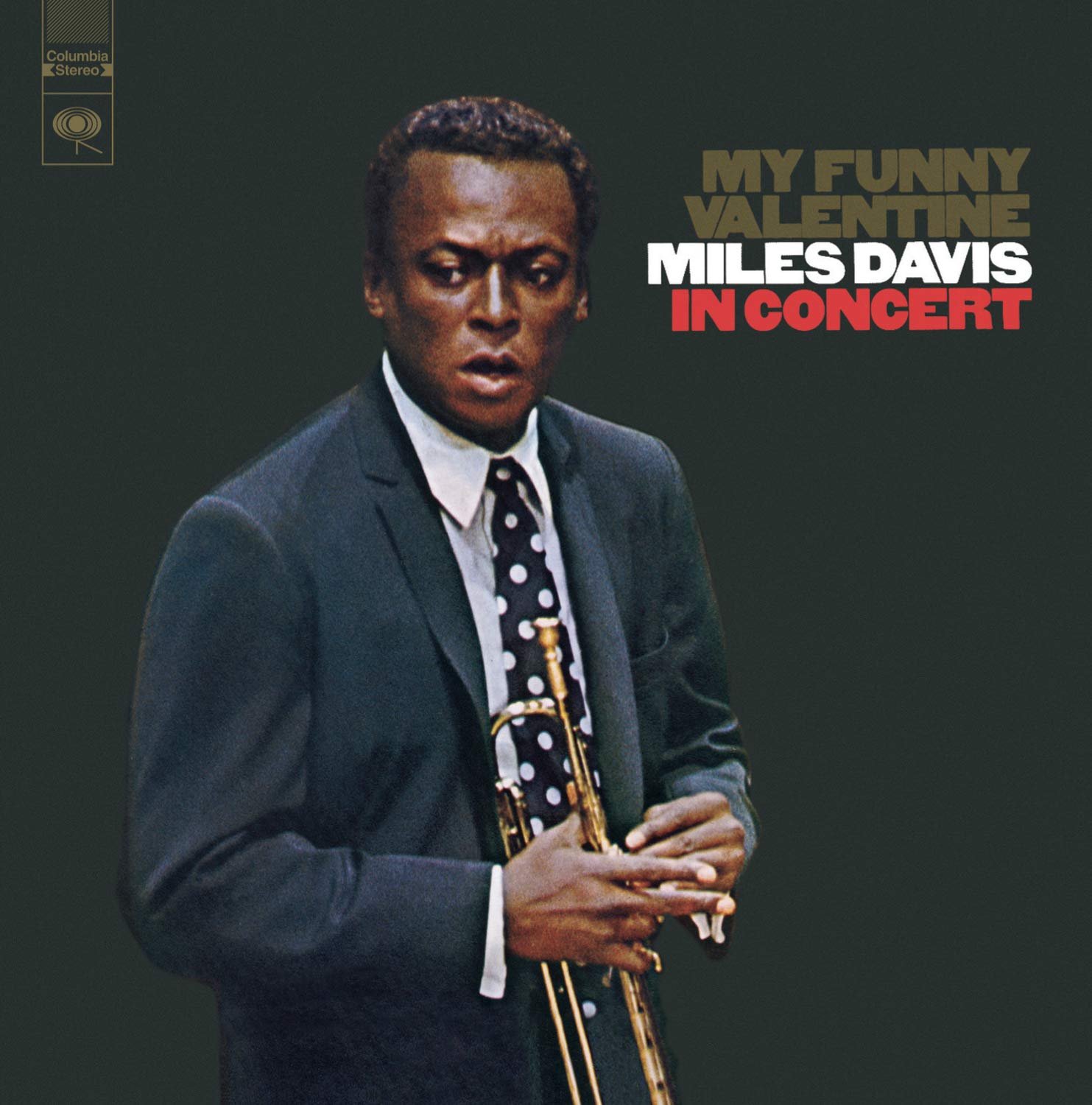
The version featured above, though, is from My Funny Valentine: Miles Davis in Concert, recorded on February 12, 1964, at the Philharmonic Hall of Lincoln Center in New York City, and in addition to Davis, features Herbie Hancock on piano, Ron Carter on bass, Tony Williams on drums and George Coleman, whose sax solo is remarkable.

I don’t think that we post many 15 minute jazz pieces here, so, when we do, it better be good—and this really is.

Saturday, February 22, 2020

VALENTINES: VALENTINES DAY IS OVER

Answering to the earlier post, oddly I think it apt we cover the event after the event. Valentines Day, or the Feast of St. Valentine, has never quite resonated for me. Yes, I have received cards over the years, nearly as many as I have sent, but it has never been a delivery that would damage the postie's back. And, as my wife pointed out this year, we seem somehow to be missing the point, babysitting the grand-daughter this year, and entertaining my brother last year. Somehow you old romantic not.

My defence is that, in restaurants, Feb 14 is a date to avoid, all pink prosecco, heart shaped salmon pieces and blood on the carpet. (Blood on the carpet? Well, there's always at least one couple whose sense of duty has overshot the tint on their spectacles.) Nope, like New Years Eve, Mothers Day and St Paddy's day, I'm staying in, ta!


The song featured is by an artist I have mentioned before, making no apology there around. Hell, I even used this same song, for which I will have to apologise, but read on, I will explain. From agit-prop spiky solo bard of Barking to the only slightly less spiky older statesman of political song commentary, Billy Bragg has always lightened my heart, both musically and intellectually. Having little time for Twitter myself, his feed is actually a presence worth following, being, variously witty, acerbic or just plain right. (Sure, it helps if you are a goddam lefty pinko as well, to keep the Valentine colour theme alive.) Coming from his 1988 LP, Worker's Playtime, it is a rancorous song of bitterness. Confession time, I always took it be allegorical: the phrase is often used to describe the bursting of any bubble, but it is a much darker piece, as I learnt from this excellent article. Gulp. 

Little more to say than that, really. And, should you not have found the above sufficiently chilling, here is a sparser still version, from a John Peel session.


Unable to leave you staring bleakly into your consciences, not all injuries being just physical, here's another favourite, two really, June Tabor and the Oysterband, from the first of their occasional collaborations, an altogether more upbeat version of the same song. But it is the same song, and I really must learn to listen harder to the lyrics.


Um, I hope you all did have a good day, if the opportunity arose. After all, the card industry can't support itself.


(Postscript: I noted the link to the earlier Tabor/Oyster piece commented on the two of my weddings. I have since had a 3rd, so maybe the old romantic after all, yes? Maybe we should go out next year...)

Friday, February 21, 2020

Valentines: Valentine

Old 97’s: Valentine
[purchase]

We’ve had a tough time getting this theme started, maybe because it began after Valentine’s Day. So, before we get to a weekend without any new SMM posts, I thought I’d see what I could come up with.

A song called “Valentine,” by Old 97’s, a band that I really like, and which I have written about, at length, a few other times.

But there are a couple of things that set this song apart. First, it is not sung by Rhett Miller, but by Murry Hammond, the band’s bass player, who usually sings a couple of songs on each album. Hammond’s songs often display a sense of humor, although to be fair, lots of Old 97’s songs are funny. He’d have been a good candidate to have been the subject of a post when we did the “Other Guy” theme back in 2013 (one of my faves, by the way).

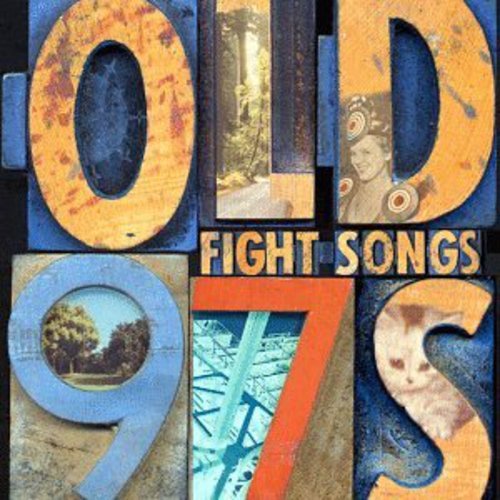
Another thing that distinguishes “Valentine” is that it is not a love song. It is, in fact, a lost love song, written not to a current "valentine,” but to one who turned out to be "wrong," and about the heartbreak and despair that comes from a broken relationship, but also the relief that something that wasn’t working ended. Back in 2015 Paste did a “12 Best Old 97’s Songs” feature, and placed “Valentine” third (a ranking that I’d quibble with—I’m not even sure it’s the third best song on Fight Songs). They quoted Hammond as saying: “It was a toxic relationship and, predictably, not a good breakup. But after all the pain and emotion of tearing it apart, I felt a simple moment of compassion and empathy for both of us. I felt a kindness toward her and tried to put that into words. She was a valuable and great human being, but one I would never know again. The girl who’s moving on."

So, maybe it really is fitting for a Valentines theme that takes place wholly after the holiday.

For the most part, Fight Songs, the album that “Valentine” appears on, is filled with more upbeat, poppy songs, for which it is sometimes criticized, but it was my introduction to the band, and I loved it then and now. But ending such an album with a mellower, more introspective song really works. Of course, that assumes that the listener would actually be listening to the entire CD, in order, an assumption that was more likely to be accurate back in 1999 than today (unless you are my wife).

Saturday, February 15, 2020

Rocket/Space: Rocket in My Pocket


purchase [Time Loves a Hero]

The phrase <rocket in my pocket> is pretty suggestive. The lyrics themselves ... not so much.
He takes her out, she seems not to be too interested but he's got some interest (the rocket in his pocket?) phish.net gets a little more explicit: if you're not hot, you better have something in your pocket that is: [finger in the socket.]

The phish.net article, commenting on the slide guitar from one of their performances of the song notes " no matter how skilled you are with a reasonable electrified facsimile, it just isn’t as arousing as the real thing". Hmmm. Is that the rocket or the slide guitar being referenced here?

Little Feat were unparalleled in their mix of innovation to the standard I-IV-V format of AM radio music. Lowell George's slide guitar was a major part of their success.He just wasn't as keen on how Feat were beginning to get into extended jazz fusion around the time this one came out. He was into other things, wasn't he?

The song was included on Little Feat's 1977 <Time Loves a Hero> album, which also included the song of the same name. Lowell George is on his way out by this time (d. 1979) and his presence in the output is somewhat lacking. <Rocket> is the only song he wrote for this album although he sings and plays on several others.