Tuesday, August 31, 2021

BIGGER STRINGS: DANNY THOMPSON

Well, strings don't  come much bigger than Victoria. Who she? Victoria is the stand-up bass guitar Danny Thompson bought for a fiver (£5) in around 1954, when he was fifteen. And who Danny Thompson? Shame on you for asking, but I guess not all tastes are as rarified as mine. Sir Danny of Thompson, as he has yet become officially recognised as, an MBE having to suffice, is the fella who has gone as far as most in making stand-up bass other than an old fogey associated item. If you are familiar with Pentangle, Nick Drake, John Martyn and Richard Thompson, the chances are that you are familiar with his work. If you have watched the Transatlantic Sessions, live or on TV, the chances are that you have seen him, an avuncular presence, holding all the virtuosi musicians also featured in check, more that likely with a beatific beam on his face, itself usually under a hat of some intrinsic coolness.

With Martin Simpson, 2014

I used to hate the double bass, it encompassing everything old and fuddy-duddy of the pre-rock era. All these bloody b&w jazzers, with the bass perpetually walking up and down in the background, whilst the usual focus of attention showed off in the foreground, besuited drummers tip-tapping away politely alongside. Sometimes they crossed over into my awareness, notably in the Seekers, my father's favourite band, courtesy the comely charms of Judith Durham. They could always be relied upon to turn up on BBC Saturday night variety shows, I finding the grinning buffoon on bass an offence to my pre-pubertal sensitivities. (Apologies thus due, now, to Athol Guy, the player in question, even if I have not the heart to go back and actually check out his playing.) This prejudice took forever, a bit like trumpet, to rid, but, boy, when I did....

With Richard Thompson, 2001

Thompson was the man from the start, even if I was slow to get up to speed. As an RT freak, it was when he first started appearing alongside Richard, his Thompson 'twin', that I got up to speed. You know how it is, when you sometimes 'get' something, the scales fall from your eyes like roof tiles in a hurricane. Suddenly I was hoovering up John Martyn and, even, if a bit later, Nick Drake. (His vocals still alienated for longer than I care admit.) Suddenly big ol' bass was cool, she even when one Gordon Sumner came on board, I was already, o yes, on message.

So, Daniel Henry Edward Thompson..... Like the recently deceased Charlie Watts, he too was an alumnus of Alexis Korner's Blues Incorporated, taking over bass duties from Jack Bruce. Following that four year period, 1664-7, he became a member of Pentangle, that undersung folk-jazz hybrid, ploughing their idiosyncratic acoustic vibe at the same time as Fairport and Steeleye were inventing an electric folk tradition. He and Terry Cox, drums, both crossed the then gulf between traditions, joining nominal folkies Bert Jansch and John Renbourn, with the consummate purity of Jacqui McShee on vocals. 

With Pentangle, 1972

The John Martyn years, which followed, were as famous for their onstage "dynamic" as for the often mercurial music, both not averse to the occasional pre-, per- and post-stage snifter. Thompson was able to take a longer view, and withdrew. Martyn, sadly not, his death as much to do with the ravages of alcohol as anything else, if sober at the time of his death. 

With John Martyn, 1977

A solo career beckoned, or at least as bandleader, his band, 'Whatever' a sonic free for all, genre-wise, with some astonishing material. When this expanded to into an even wider ubiquity, as 'Songhai', featuring flamenco purists, Ketama, alongside Malian kora maestro, Toumani Diabaté, any sense of categorisation became redundant.

Songhai, 1988

Round about the same time he hooked up with kindred spirit, Richard Thompson: each had embraces Islam, possibly, in part, as an escape from the hedonism of the musical life. For several years he was the right hand man to his namesake, whether in a band format or as a duo. An interesting memento of that time comes with 1997's 'Industry', a joint production, encompassing both the songs of RT and the music of Whatever. It's a worthwhile listen.

Industry, 1997

A jovial presence, he was also getting work as an amiable onstage presence at Fairport Convention's Cropredy Festivals, as host and master of ceremonies. I remember my horror, I think in 1998, as it was announced from the stage that Thompson had sustained a stroke. The audience were invited to sing Danny Boy, so that, by phone, he could hear their well wishes. I thought that the end, but he made a decent recovery and was soon playing again, seemingly as well as ever. The couple of times I caught the Transatlantic Sessions tours, in the early 20 teens, he was terrific, the cheer for him, when introduced, as big as for any of the other performers. Grab a look at his website for a list of records he has appeared on, a ridiculously large roster, encompassing jazz, folk, blues, world, everything, including a number of surprises. Did you know he played on Cliff Richards' Eurovison winner, 'Congratulations'? Or with artists as diverse as T.Rex, Kate Bush and David Sylvian, let alone most of Donovan's recordings. Not bad for an old jazzer!

Transatlantic Sessions, 2016
Back with RT, 2019

Here's rather a good interview, from only a year or so ago.

Get this!

Monday, August 30, 2021

Bigger Strings: The Black Angel’s Death Song


Velvet Underground: The Black Angel’s Death Song
[purchase

John Cale is another musician whose work I’m aware of and have enjoyed, but never (until now) spent much time learning about his life and career. I knew he plays the viola, among other instruments, that he was one of the founders of the Velvet Underground, put out some solo albums, at least one of which I played back in my WPRB days, and did an album with Brian Eno a couple of decades ago (gasp!). This turns out to be, somewhat embarrassingly, a pretty pathetic summary. So, in brief (and admittedly, mostly gleaned from Wikipedia), Cale was born in Wales in 1942, adopted the viola as his primary instrument and studied music at Goldsmiths College, University of London. Cale once described the viola as the “saddest instrument of all and, no matter how adept you get at it or no matter how fast you play it, you can’t get away from the character of it.” 

Cale quickly became enamored by the more avant-garde and experimental classical music becoming popular in the 1960s, including organizing a Fluxus concert in 1964 and conducting the first U.K. performance of a John Cage piece. He obtained a scholarship to work with Aaron Copland at Tanglewood, but they “fell out,” and Cale then moved to New York where he participated in an 18 hour performance of an Erik Satie composition and joined La Monte Young’s Theater of Eternal Music. 

OK—enough with the classical music (I mean, really, two posts in a row writing about classical music which I know basically nothing about…. I’m really not trying to pull a Metal Machine Music and alienate you all). 

Cale also liked rock music, and joined up with Lou Reed to found what became the Velvet Underground in 1964. Cale’s taste for the experimental, particularly drones, when combined with Reed’s penchant for rock and poetry (and manager Andy Warhol’s Andy Warhol-ness) resulted in early albums that were kind of all over the place. 

One of the more experimental songs from the debut album, Velvet Underground & Nico is the cheerily named, “The Black Angel’s Death Song,” which, for the most part, features Cale’s droning and dissonant electric viola with Reed and Sterling Morrison each playing away on guitar, while Reed chant/sings wordy lyrics in a style that had to be influenced by Dylan. There’s also what sounds like feedback, but was actually Cale hissing into the mike. I know that description doesn’t make it sound all that appetizing, and the song got the band fired from their residency at Manhattan’s Café Bizarre. But while it isn’t something that I’d listen to regularly, there’s something intriguing about it that made me glad that I checked it out again for this piece. 

So, what’s the song about? It is hard to say. Reed himself has said that “The idea here was to string words together for the sheer fun of their sound, not any particular meaning.” But the imagery is so strong, I find that hard to believe. I’ve seen claims on the Internet that the song is about life’s choices, heroin, suicide, the Holocaust, and Communism. Check it out, and let me know what you think. 

Eventually, Reed and Cale fell out over the direction of the Velvets, and Cale was replaced by Doug Yule (I guess you had to have four letters in your name). Cale went on to a career as a producer (for, among others, the Stooges, Jennifer Warnes, Patti Smith, The Modern Lovers, Squeeze, and Alejandro Escovedo), collaborator (including with Reed on Songs for Drella in 1990), and solo and soundtrack artist.

Friday, August 27, 2021

Bigger Strings: I Could Have Used More Cello


I always remember the spring of 1989 as the season where I discovered thrash metal. Inspired by repeated viewings of MTV’s Saturday night all-metal show Headbangers Ball, I purchased a copy of Anthrax’s State of Euphoria. The biggest shock to my 11-year-old brain was not the album’s bone-crunching riffs nor the numerous f-bombs, it was the fact that the opening track “Be All, End All” started off with a cello riff. These days, it’s fairly common to associate classical stringed instruments and heavy metal. After all, Metallica has released two albums performed in conjunction with the San Francisco Francisco Symphony. But at the time I purchased the Euphoria album I found the inclusion of the cello to be almost a form of sacrilege. “How dare these headbangers defile their album with a classical instrument,” I thought. Okay, I didn’t quite put it in those terms, but you get the idea. Thirty-plus years later I’m happy to admit I was wrong. The short, stringed section of the track is actually one of the most memorable parts of the album. So much so that even today, I can easily hum it. “Ba-Da, Ba-Da-Da-Da, Da-Da.” It was the first song that popped into my head when I associated the words “cello” and “rock n’ roll.” Kind of like Blue Öyster Cult’s “(Don’t Fear) The Reaper” and “cowbell.” Surely, I’m not the only Anthrax fan who feels this way. There’s a clip of the band performing the track at one of the fabled Big Four concerts in 2010 (which featured Anthrax, Metallica, Slayer and Megadeth) where vocalist Joey Belladonna encouraged the crowd to sing the melody in unison. Such a precise performance by the audience was no doubt inspired by that wonderful cello.


Studio version:


Live 2010:


BIGGER STRINGS: CHOPPER

Should you ever wish to seduce me, let me give you a tip: whilst food would help, and I am really quite flexible in my tastes there and needs, likewise with the alcohol I would also expect to be plied with, when it comes to the music, one sure fire guarantee is the cello. I adore the warm mellifluous tones of a cello, sweeping emotion into my breast and out through my heart. No great fan of the classics as a whole, it all being a bit too clever for me, a Bach cello concerto can fully stir my loins. and, for a long time, that was the only place you could find this instrument, in orchestras and string quartets.


Things sort of got better in the whatever it was, as Roy Wood and Jeff Lynne revoked the Move and came up with the Electric Light Orchestra. I confess I loved much of the debut, ahead of Wood jumping ship. I then found the band all bit much, sawing away in abandon, substituting schmalz for the searing angst the instrument can evoke, all the songs sounding, ultimately, the same, orchestral gloop. Never mind, nice try, thought I, going back to guitar and keyboard based musics. Folk became my go to as the 1980s beckoned, and I became a subscriber to influential magazine, Folk Roots. (Later FROOTS, and sadly, as of a year or so ago, no longer.) They had a flexidisc on an early edition, a thin bendy 45rpm record, which included a bevy of artists from the nascent Cooking Vinyl record company, including Oysterband and Michelle Shocked. Each appealed enormously.


Moving ahead a little, as I have touched on this band a few times before, as it is but one part of their joyous clatter I wish to concentrate on here. And that is the part of one 'Chopper', or Ray Cooper, as his mother called him, not, by the way, the percussionist, had to play. Oysterband have always had an issue with their rhythm section. Initially drummerless, once they added drums, they have got through a number, the current incumbent being number, I think, five. Bassists have fared slightly better. Chopper was their second, in the band between 1989 and 2013.


Let's retread a little. Prior to joining the Oysters, Chopper had been part of the extraordinary faux-balkan world music collective, 3 Mustaphas 3. Predominately the brainchild of Ben Mandelson and Lu Edmonds, together with a changing cast of additional musicians, they played a bizarre blend of ethnic musical styles, often from the eastern Mediterranean and beyond, treating the concept as part parody, yet tackling the core of the music with all seriousness and with an obvious affection. Sort of if the Bonzo's came from Albania. Chopper, if then under the pseudonym Oussack Mustapha, was their cellist for a while, including on the song above. Perhaps an acquired taste, they were then only on the fringes of my awareness. (Edmonds, who had earlier been in th Damned, is now the extravagantly bearded guitarist in John Lydon's Public Image Ltd.)

So, no surprise, when he was drafted into his new band, he brought his cello with him. I must have seen them a dozen of times during his time with them, increasingly playing more and more cello, rather than the bass he had been employed to play. A wonderful sound, and, I believe, contributory to the increasingly common presence of a cello in rock, folk and, increasingly, even country music. Here, below, are a couple of songs that well display his mellow tones. Unsurprisingly, when he left the band, they, clearly, had to be able to replicate that part of their repertoire, and it actually took two musicians to fill his gap on stage and on records, one on bass and another on cello.


Was that the end of Chopper? Or Ray Cooper as he was increasingly again becoming known, and the answer is a definite no. A resident of Sweden, he has now released four records in his own name, all sturdy singer-songwriter fare of a recognisably rootsy origin, at times not dissimilar to his old band, but encompassing a wider range of influences, often those of his adoptive Scandinavia. Again, a couple of clips, the first to show off his stellar technique on a traditional air, the second a song, the title track, from his latest project. I had been due to see him a month ago, my first projected post lockdown concert. Sadly, it had to be postponed, given the still travelling embargo  between Sweden and the UK. Pity. I have a ticket, instead, for next year.


Monday, August 23, 2021

Bigger Strings: Maya Beiser-Epitaph

Maya Beiser: Epitaph
[purchase

I’m not sure where I first heard about Israel-born, avant-garde classical cellist Maya Beiser, but it might well have been from this piece by Cover Me founder Ray Padgett about her awesome cover of Led Zeppelin’s “Kashmir.” Beiser’s 2014 album Uncovered is a collection of ten rock songs completely reimagined by Beiser and arranger Evan Ziporyn, a fellow member of Bang on a Can All-Stars. The songs run the gamut from Muddy Waters to Janis Joplin, to Hendrix, Led Zeppelin, AC/DC, Nirvana (which I wrote about here), and my favorite of them all, her cover of King Crimson’s elegiac “Epitaph,” from their debut album, In The Court of the Crimson King

“Epitaph” was written by Robert Fripp, Ian McDonald, Greg Lake, and Michael Giles with lyrics written by Peter Sinfield, and those lyrics, were sung beautifully by Lake, who explained that the song “is basically a song about looking with confusion upon a world gone mad.” It features heavy use of Mellotron along with woodwinds and dramatic tympani, giving it a symphonic feel. 

It was this complex, symphonic sound that attracted Beiser, whose classical training did not prevent her from consuming and appreciating popular music throughout her life. In an interview for Classical Voice, Beiser said:

I was very much entrenched in classical music, and none of my teachers knew anything about Genesis, King Crimson, Brian Eno. It was not part of my education. I started to listen to this music and it completely transformed me. Pink Floyd were totally revolutionary, creating a symphonic like piece. King Crimson’s ‘Epitaph’ is one of my favorite songs of all time, and it lends itself to cello because their thinking was symphonic — classical. 

She continued: 

Part of my motivation for doing this album is for people to see how this is great music, how the masters of our time are just as great as but different than Beethoven and Schubert. … All classical music performances are covers. 

Continuing this approach, Beiser recently released a version of David Bowie’s last album, Blackstar, re imagined as a cello concerto. 

To create her cover of “Epitaph,” Beiser overdubbed and processed her cello, and Ziporyn added just a hint of clarinet and bass clarinet. Beiser slows down the tempo a little, and if anything, her instrumental version is even sadder and statelier than the great original. 

As a brief aside, since this is a piece about the cello and King Crimson, about five years after the debut album, a mostly different lineup of King Crimson released Red, one of my favorite albums, and it includes a cellist (and acoustic bass player), who are uncredited, and whose identity appears to still be a mystery

One more aside--the punk record label Epitaph Records, home (at times) of bands such as Rancid, Bad Religion, Descendants, The Distillers and Social Distortion, was named after a lyric from this decidedly not punk song.

Monday, August 16, 2021

Muscle Shoals-I'll Take You There

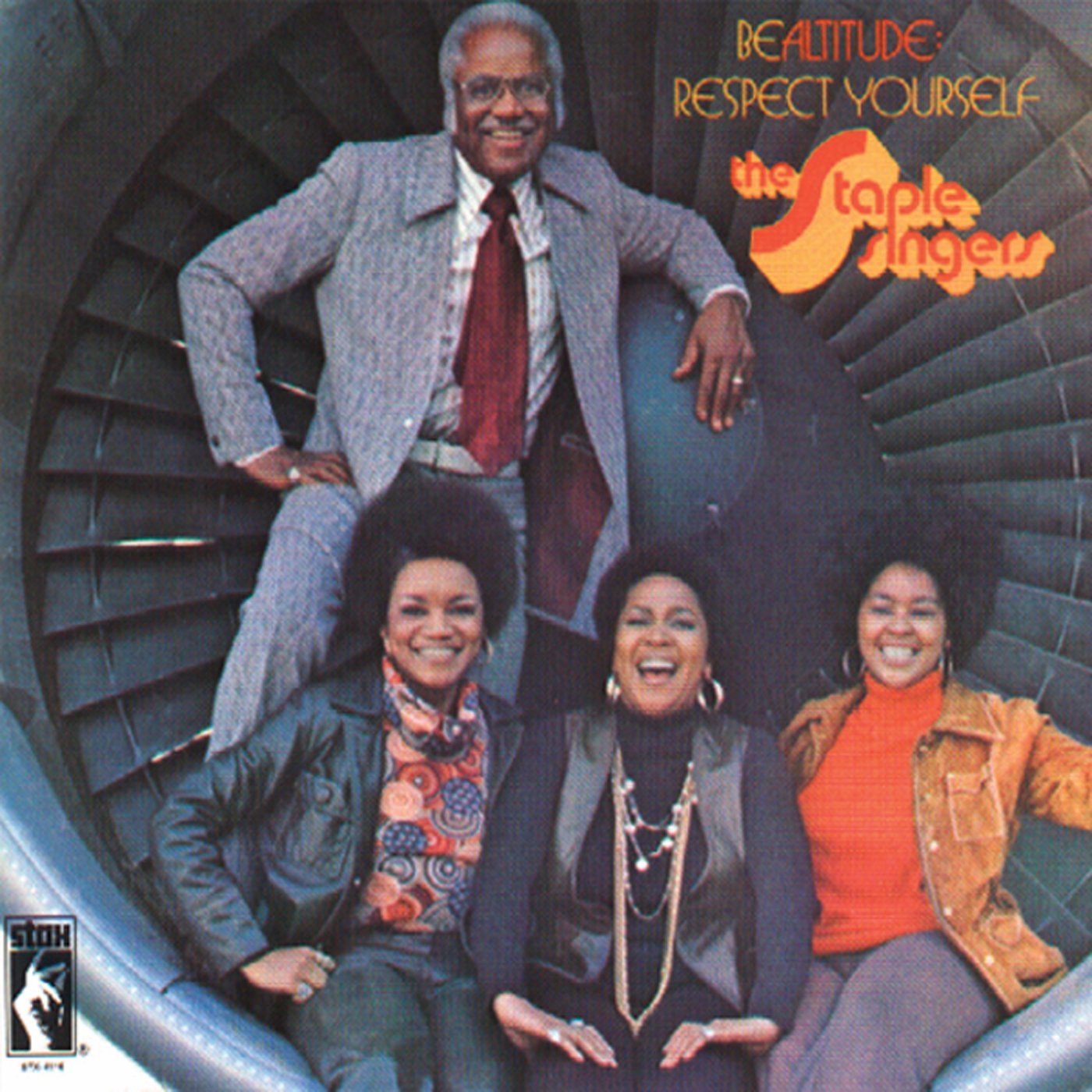
The Staple Singers: I’ll Take You There
[purchase]

I’m a little surprised that I’ve never devoted a post to the great Mavis Staples—although she is mentioned at length in the In Memoriam piece that I wrote in January 2019 honoring her sister Yvonne. I’ve seen Mavis perform a few times, and every time she simply blew me away. She’s in her 80’s, has recorded amazing music her whole life—including a bunch of great albums over the past few years, and as I write this, is on tour, with dates scheduled in North America and Europe through next summer. If you get a chance to see her, do it, because sadly, she isn’t going to be around forever. And go see Mavis!, the movie from 2015 about her life, which is streamable. And while you are at it, make sure you see Summer of Soul, in which the young Mavis duets with her idol Mahalia Jackson, maybe the best performance in a movie filled with incredible performances. It’s on Hulu, but should be seen in a theater, unless you have a huge screen and big speakers. 

What makes Mavis Staples so great goes beyond her voice, or even her ability to interpret a song. She somehow is able to mix the gospel music she grew up on, with secular soul music and the protest and message music of the 1960s and beyond, and do it in a way that is both uplifting and surprisingly sexy (without being trashy). 

Her first No. 1 pop hit, “I’ll Take You There,” with her family group The Staple Singers, is a great example of this mix—and more. Recorded at the Muscle Shoals Studio and featuring the Muscle Shoals Rhythm Section (Eddie Hinton on lead guitar, David Hood on bass, Barry Beckett on piano, Roger Hawkins on drums, with additional guitar from Jimmy Johnson and Raymond Banks), with the Memphis Horns dubbed in later, its message can be interpreted as laying out the path to heaven, or to a world where the civil rights movement—still active when the song was released in 1972—had succeeded. And there’s something in Mavis’ delivery (much of which was ad libbed), which indicates that maybe she’s offering to lead to somewhere more private. 

What I didn’t know is that the introduction to the song and much of the melody and arrangement, are borrowed from/influenced by a reggae song, “The Liquidator,” by the Harry J Allstars. Check it out here. Al Bell, one of the owners of Stax Records, who wrote and produced the song, had brought a copy of “The Liquidator” to the sessions and played it for the musicians, who thought it was a demo, and not an actual released song. David Hood said, "The Liquidator thing, we didn't know what that was. As I recall, [Bell] came in and brought what they call a dub. It was like an acetate or something, a disk that you put on the record player and play. And it had no lyrics on it. We just thought it was an instrumental track that somebody had done for a song. And it was only years later when I found out that that had been a record." 

As we know from Seuras’ piece about the Muscle Shoals/Traffic connection, members of the rhythm section, including Hood and Hawkins, toured with Traffic, who regularly listened to Island labelmate Bob Marley and the Wailers’ album Catch A Fire, and as Hood recalled, "We kept hearing that. I thought, 'Wow, this is the greatest, wildest music I've ever heard.’" In fact, reggae influences permeate the entire album that “I’ll Take You There,” was on, Be Altitude: Respect Yourself.

Finally, here’s a nice piece by David Hood’s son Patterson, who you probably know from his regular job with Drive-By Truckers, about growing up in the Muscle Shoals area (including finding out that his father was the bass player on “I’ll Take You There”), and much more. Patterson’s a fine prose writer, as well as a great songwriter (which you probably know, if you’ve read my stuff here and elsewhere).

Friday, August 13, 2021

MUSCLE SHOALS: SWAMPERS/TRAFFIC


How to even begin to cover the enormity and importance of this influential studio, musically, culturally and even politically, apropos race relations, seems impossible, and I am not even going to go very much into much of that. That the music that has come out of it, and the individuals that have shaped and formed that music, have enriched and enhanced my life is inescapable, and the older I get, so the more I am intrigued in the looking back to the origins of the pioneering styles emanating therefrom. Again, this is not the place. Today I am going to illustrate how I, then a teenage boy in England, came to first discover the music, and musicians, of Muscle Shoals.

Traffic are/were about as english a group as you could ever find. From their early psychedelic whimsy to the whole getting together in the country folk/jazz vibe, Steve Winwood seemed an ambassador for tweed and corduroy. The combination of his soulful vocals and swirling hammond, with an equal adeptness for melodic guitar solos, and Chris Wood's mournful sax and flutes was visionary, the backbeat of Jim Capaldi's drumming a constant and reassuring presence. I confess I preferred them as a three-piece to the earlier Dave Mason iteration, his songs always seeming to come from a different place than the direction of flow offered by the other three. To say I was fond of the John Barleycorn album would be an understatement. I loved it and still do. 

Following that epochal LP, the band foundered a bit, with Mason back again, then out again, and the engagement of various other musicians from various sources, expanding the percussion opportunities with Reebop, a Ghanaian percussionist, and Jim Gordon, fresh from Derek and the Dominos. They also added a bassist, Ric Grech, who had been, with Winwood, in Blind Faith, that brief dalliance of a "supergroup" that had put Traffic on pause for a moment in the years before. Prior to Grech, and something Winwood has returned to of late, bass parts were played on the hammond organ, by foot pedal. 'Welcome to the Canteen', a live album, was a bit of a transition, even being credited to the individual musicians, rather than to Traffic per se. But it opened their minds to the ideas and opportunities of additional influences, reprising and revising earlier material.

I remember the first time high heard 'The Low Spark of High Heeled Boys', the song, and being completely blown away by it. I suspect it was on TV, the Old Grey Whistle Test, a programme I have often referred to. Astonishingly, the album didn't chart in the UK, even if sold well across the pond. But where was the three piece? Suddenly this was a massive, mighty and meaty sound, with chunky bass and a backwall of additional musical accompaniment that gelled as a whole unit, rather than seeming an optional extra. This, should you wonder if I were ever getting there, was courtesy the majesty of the Muscle Shoals rhythm section, aka Roger Hawkins and David Hood, drums and bass respectively

The next album, 'Shoot Out at the Fantasy Factory', went a step further, now enrolling fellow Swampers, as the Muscle Shoals alumni were called, Jimmy Johnson on additional guitar and Barry Beckett on keyboards. The sound was getting bigger and bigger. For the ensuing world tour, Hawkins, Hood and Beckett stayed on board, the ensuing double live recording, 'On the Road', still seen as a classic live record. With taxman Chris Woods faltering health and substance abuse issues, internal relations soured, and the Swampers, along with Reebop, jumped ship. Traffic were never quite the same, with one somewhat uneven release, ahead of Wood's death and then a twenty year hiatus before their final release in the collective name, in 1994.

Although essentially duplicating instrumentation, apart from the horns, already within the core of Traffic, the Swampers gave so much more than just that wider wall of sound to the band. Opportunity was given for Capaldi to step away from the drum kit and to be creative in other ways. Similarly, with musical jack of all trades Winwood, unable to play keyboards and guitar at the same time, for the first time all these instruments could play alongside each other, rather than purely by studio chicanery. It is a regret I was too young to ever see them live.

So what happened to the fabled four after Traffic? Their day job back at Muscle Shoals had never gone, and they continued to add their trademark sound to innumerable recordings. To give an idea of their work ethic, I am going myself to be lazy, and direct you to their wiki pages, as space cannot allow the sheer size of their collective and respective cv.s. Roger Hawkins died in May, earlier this year. David Hood still lives and plays. Most recently he has been a member of the Waterboys, his senior statesman gravitas adding considerably to the band, who have a semblance of the vibe of Traffic, if with a more celtic hue. He is also the father of Patterson Hood, of the Drive-By Truckers. Barry Beckett died in 2009 and Jimmy Johnson in 2019. Just count all those credits.

So, raise a glass and raise a glass high to these giants, back room boys without whom so much of modern popular music could not exist.


On the Road.

Wednesday, August 11, 2021

Muscle Shoals: Various


purchase [ Slow Train Coming ]

Muscle Shoals has a special place in the pantheon of music from the 1960s on. It's the name of multiple recording studios located in the city of the same name in Alabama. The studio we first think of grew out of another studio operation known as FAME Studios, and was unique in that it was the first such operation owned by a group of session musicians. Yes, they partnered with Jerry Wexler to make it work. And yes, the location was previously a coffin viewing showroom.

But the name Muscle Shoals has come to mean a specific sound - first in a soul and R&B style (Percy Sledge & Aretha) and then in rock (the Rolling Stones, Traffic). FAME owner Rodney Hall described the sound as funkier and more laid back than others. The curator of the Alabama Music Hall of Fame notes the existence of a triangle, with Memphis being the home of blues, Nashville, of course, the home of country and the third leg, Muscle Shoals, being a blend.

One of the first musicians to record at Hall's studio was Wilson Picket. The story goes that when he arrived and saw the folks picking cotton, he wasn't at all convinced that this would work out. Later, when Pickett returned to the studio, he found that there was a long-haired slide guitar player by the name of Duane Allman as one of the studio's guitarists. They recorded this cover of the Beatles' Hey Jude


The word began to get around about the Muscle Shoals sound: Clapton heard it and so did the Stones. A large part of Sticky Fingers was recorded there in 1969. Keith Richards has been quoted as saying "I thought it was one of the easiest and rockin'-est sessions that we had ever done."


Bob Dylan's Slow Train Coming was also recorded at Muscle Shoals. Lead guitar is Mark Knopfler and the horns are the studio band. Dylan was looking for a richer, funkier sound and it appears he got what he was looking for despite the concern of some of the musicians about the religious content.


Sunday, August 1, 2021

POSTHUMOUS: DUETS WITH THE DEAD

Ain't technology wonderful? Want to do a duet with the deceased? No problem, and there is a rich seam of grave-robbing for profit, the still living plundering the coffins of, often, better performers, craving some kudos by association. And a hit. To be fair, the majority of these are terrible, the ghoulishness of the exercise all too apparent, but sometimes, just sometimes, there is at the seed of a good intent, of mining a mawkish opportunity to do what had never been possible in life. These are often by relatives, who may, maybe, have more leeway to have this considered potentially OK. Or not. Hell, some are called into service and put back on tour, long after the ashes are cold, something, I confess, I am in no hurry to witness. (Yes, I do know it isn't actually the corpse that struts the stage, it being all the 3D trickery of holograms, but would even Colonel Tom Parker be up for this degree of exploitation?)


My idea for this piece was to find some good ones, something I swiftly found might be too hard an ask. So let's settle for the least worst, with the odd stinker thrown in for good measure. Let's start with one of the latter.

I'll be honest, as I started typing, I couldn't remember whether Barry Manilow was still with us, needing a quick google, just in case. But he is, and it is his 2014 album, 'My Dream Duets' that is the lodestone of this genre, being a whole album of songs, 11 in all, pairing Manilow with the likes of Louis Armstrong, Andy Williams, Judy Garland and G.G. Allin. (No, that was a joke, not G.G. Allin, but that could have been different, doncha think?) All the songs chosen weren't even supposed to be duets, so it seems a little hard that some of these performers may not, in their lifetime, have necessarily have been Fanilows. But, then again, looking down the list, most were such media tarts and divas as to have bitten his arm off to appear alongside. I wonder then, what drew Barry toward this particular list? Intriguingly, of all the people to offer an opinion on the record, David Byrne, the onetime Talking Head, who sums up the dynamic best, here

I think I am slightly happier with the concept behind one of the late Patsy Cline's later albums, Duets, in 1999, 39 years after her death, in a plane crash, aged only 30. In fact, the records full name is Duets Volume 1, but, thus far, the 2nd volume has yet to appear. Rather than being pillaged by, say, Garth Brooks, the idea was that a whole host of singers, would sidle in on existing duets, replacing the original partner. (I wonder how that affected the royalties?) Willie Nelson was one of those inveigled, as well as being also a contemporary of Cline, writing perhaps her most famous song, Crazy. But what she would make of him now would be anyones guess. As in, whatever happened to that fresh faced kid, with his flat top redhead and beaming smile? What's that, you want his version too?

Let's stick with country music, the most celebrated name therein being that of Hank Williams. Tough shoes to fill mind, as both Hank Williams Jr. and III have found, if not without some appeal of their own. I actually rather enjoy this Senior/Junior "collaboration", the video being a sly mix of tongue in cheek and paterfamilial reverential. Will Hank III splice himself in when his own Daddy too departs the building?

Sometimes it is the demand for lost material that drives the projects, however much of a beady eye remains on the cash-register. There cannot be an act more covetable than the Beatles, with any and every studio scrap hoovered up for posterity and profit. So, when some tapes of part finished demos emerged, the deaths of John and George were considered mere supportive detail to the rest of the band polishing them up and giving a sheen of respectability to the songs. That is, until it became apparent the reason John had failed, at the time, to get them added to the repertoire in his lifetime and that of the band, that being they being pretty thin fare. Rumours remain as to a number of other lost songs in a similar vein, ready for future box sets. Remember, you need but one "new" song to make the die-hards shell out, all over, for all the others they have before, so as to fulfilling completist mode. The song above is drivel, to my ears, sounding like a song that even the rest of E.L.O. would refuse to play.

I'd like to find something good to end with. I'd like to, but I can't. But, I can end with a slightly different trick, the old band in heaven idea. This was taken to sterling effect by a singing postman from Belfast, who sidelined as an Elvis impersonator. Not duets. Rather, he came up with the idea that Elvis Presley, on leaving this side of the curtain, might continue his career on the other side, perhaps performing the hits of those similarly lost from active service. A brilliant deceit, and there have been two iterations of this, 'Gravelands' and 'Retun to Splendor', with Elvis, through the medium of Jim Brown, as 'The King', sings the songs of the dead. I love them, and this is the highlight. Or lowliest, as you may see it. And, like the clip from Bladerunner 2049 at the start, ends where we began. With Elvis.

RIP to all of the mentioned and featured, living and dead.


Saturday, July 31, 2021

Posthumous: Remembering Chris LeDoux


The late country singer and rodeo rider Chris LeDoux spent the last few weeks back in the saddle as his name was honored on two fronts. The singer, who passed away in 2005, had a bronze statue dedicated to his memory in Cheyenne, Wyoming. Country superstar Garth Brooks, one of LeDoux’s biggest champions in life, attended the dedication ceremony. Meanwhile, his record label released a new greatest hits compilation aptly titled Wyoming Cowboy.  

LeDoux was a rarity in country music. He did not just play a cowboy in concert, he actually spent several decades as a rider on the rodeo circuit, winning a world championship for bareback riding in 1976. Alongside his riding, he developed his singing career, often putting on concerts at the rodeos after risking his neck in the ring. His lyrics were populated with tales of cowboys, county fairs, frontier living and his affections for the chewing tobacco brand Copenhagen.  

LeDoux’s abilities as a storyteller and his energetic live shows served as a major source of inspiration for Brooks. On his debut album, Brooks famously mentioned LeDoux in the track “Much Too Young (To Feel This Damn Old).” 

The burst of publicity from this lyrical homage helped LeDoux secure a major label record deal in the early ‘90s. Over the next 15 years he released multiple studio albums, compilations and a live album. He recorded a duet with Brooks, “Whatcha Gonna Do with a Cowboy,” which became LeDoux’s highest charting single. LeDoux later teamed up with Jon Bon Jovi to record a new version of the Jersey rocker’s solo cut “Bang a Drum.” 

Sadly, LeDoux died of cancer at the age of 56 in 2005. After his death, he was inducted into the ProRodeo Hall of Fame. 

I still recall my first encounter with LeDoux’s music. It was in the spring of 1998 when the video for his live version of “This Cowboy’s Hat” became part of the rotation on Country Music Television (aka CMT), back when it still regularly showed videos. The song tells the story of a cowboy at a roadside diner who encounters a group of bikers who begin mocking him for his hat. He responds with a series of stories about the hat’s history, emphasizing why they’d be better not to mess with it. The tune features some guitar picking, a power chord crescendo and a thunderous guitar solo. 

The video itself is prototypical ‘90s country pizzazz, like an update of an ‘80s hair metal video. It featured slow-motion images from a live show, complete with pyrotechnics, tight jeans, big belt buckles, beautiful women and cowboy hats. I found it so engaging that I went out and found a used copy of LeDoux’s live album, which had the unremarkable title Live. Talking to another country fan, he said “It’s probably worth buying the album just for that tune.” And it was. 

In honor of LeDoux’s life and music, check out “This Cowboy’s Hat” and bask in the ‘90s country glory. 

If you’re still intrigued, watch the video he made with Jon Bon Jovi for “Bang a Drum.” 


Thursday, July 29, 2021

POSTHUMOUS: LOVE WILL TEAR US APART

A little over two years ago I wrote this, about the band New Order, proclaiming little love for their earlier incarnation as Joy Division, feeling unable to accommodate the spiky rhythms, spikier vocals and, spikiest of all, the odd St Vitus dance habitus of their late vocalist, Ian Curtis. (It is that easy, in my house, to build a prejudice: watch a couple of dodgy you-tubes and, pshh, gone from my life. Often forever.) Thankfully, I was taken to task for my self-imposed blanket ban on this much mythologised band, the mythology being there for good reason. A sound ticking off was administered, and I was sent to bed with copies of Unknown Pleasures and Closer to listen to, until I saw my senses. 

Of course, I had been earlier aware, and liked, the featured song. How could I be unfamiliar with it? I may not have necessarily heard the original, but the song had swiftly become a covers staple, a song reproduced across innumerable genres and by artists good, bad and indifferent. And, back when I did first hear the original, it seemed a poor relation, with too much treble and a droning monotone of a vocal, sung in a basement grumble. My poor cloth ears couldn't accommodate it, and it is only since that damascene night that have I been able to find the context to put it into a truer perspective.

Joy Division had come together almost as a whim. Bernard Sumner and Peter Hook, childhood friends, had attended a Sex Pistols show in Manchester. Invigorated by the anyone can be a star ethos, they reflexly decided to form a band, Hook borrowing money from his mother to buy a bass guitar the following day, Sumner a guitar not long after. At that stage there were other candidates for drums and vocals, the band getting through a run of drummers. The pencilled in original singer was offered a proper job and declined, leading to the time honoured british solution, an advert in the newsagent's shop window. Read by Ian Curtis, who knew of the others, he applied and was taken on in such good faith that an audition wasn't even required. At this stage the band were called Warsaw, in homage to David Bowie's Warszawa. Drummer issues continued and again the shop window posted their requirement, again with a single applicant, a school chum of Curtis's named Steven Morris. Thankfully this line-up gelled, and they were off, with a change of name becoming necessary to avoid confusion with the similarly named Warsaw Pakt, of whom little was ever heard again.

Whilst the band have a seemingly inextricable history with Tony Wilson's Factory Records, in fact it was less straightforward, with initial forays into work with other companies, with their debut, An Ideal For Living, having to be self-released. In the meantime, Curtis had approached Wilson, a prominent Manchester mover and shaker, whose day job was as a local TV news correspondent, and near goaded him into agreeing to showcase them on his music show. When he did, fulfilling that promise on 'So It Goes', his music show, he had them then contribute to Factory's first release, an EP, A Factory Sampler, produced by Martin Hannett.

Unknown Pleasures, their first LP, came out in 1979, with Hannett again on production duties, preceded, as was their usual, by the non-album single, Atmosphere. He jettisoned the sounds that they had previously been unhappy with, in earlier recordings, and gave them their signature sound, sparse and spare, with an air of clattering menace, where the spaces between were as important as the notes and rhythms. They were off the blocks running, selling out the first pressing, playing to increasing numbers of increasingly intense young men. A second record was to follow in the following year, recorded between tours that were beginning to draw a toll on the health of Curtis. He had sustained his first epileptic fit two years earlier, after a gig, Gradually the frequency and intensity had accelerated; by the tour of schedule of 1979/1980 they were near daily and often on stage, often unrecognised by the audience, his wild and flailing stage movements blurring and blending into his seizures. That his marriage was also in trouble, and he was conducting an affair, could not have helped his mental health, itself deteriorating alongside. 

The night before the band were due to start their debut US tour, he was found alone, having hung himself. This was the 18th of May, 1980, numbing his bandmates, who had never taken seriously the threats he had earlier made. Love Will Tear Us Apart was released a month later, the second album, Closer, a month later still. Each were successful, number 13 in the UK singles chart and 6 in the album chart, seen then and subsequently as a fitting memorial to the deceased singer. Inevitably, it being the way that premature death and distress can add only lustre to the career of troubled musicians, it set the residual band on their feet, if mindful of their responsibility towards him. That much was demanded of them by his fans. Intriguingly, Steven Morris has since admitted that, had Curtis not died, then the band would not, could not have continued. In turn suggesting, therefore, that the band the trio became, along with Morris's partner then wife, Gillian Gilbert, New Order, would not have existed. And they never stopped playing it.....

Love Will Tear Us Apart was re-issued on a couple of occasions, in1983 and again in 1995. On each occasion it performed well, scraping into the top 20 on each occasion, at 19.

There are a number of longer reads, many by Curtis's bandmates. This is the best, by Morris. A film about the life of Ian Curtis is due any time soon.

12"

Wednesday, July 28, 2021

Posthumous: Redemption Song (Strummer and Cash)


Joe Strummer: Redemption Song
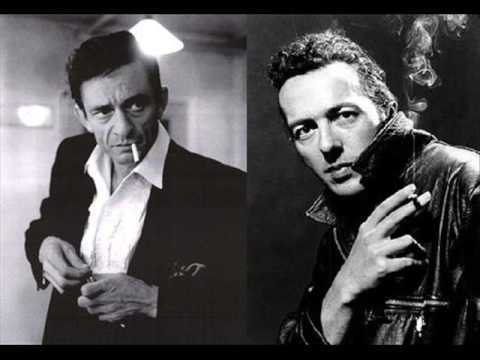
Johnny Cash and Joe Strummer: Redemption Song 

[purchase Streetcore]
[purchase Unearthed]

When Bob Marley wrote “Redemption Song,” one of his masterpieces which was influenced by a Marcus Garvey speech from 1937, he had already been diagnosed with the cancer that would take his life within a few years, and clearly was thinking about his own mortality. It was a rare acoustic track, and was released as a single in 1980, and on the album Uprising. Because Marley didn’t die until 1981,  the song was not released posthumously. 

However, two very fine, and related covers, of “Redemption Song” were released after the performers’ deaths, so I don’t lose any points for theme violations. (Sorry, I've been watching the Olympics.)

In 2002, Johnny Cash was working with producer Rick Rubin on what would become American IV: The Man Comes Around, the last album released during Cash’s life. Joe Strummer, who was on vacation in Los Angeles, decided to hang around the studio, because he was a fan of Cash—he even extended his vacation an extra day to spend time with Cash. During this time, the two men reportedly discussed a wide variety of topics—Cash’s role in the early days of rock and roll, and Strummer’s role in the early days of punk—and their love of Jamaica and its music. Strummer was, of course, a big fan of ska and reggae, and was influential in including it in The Clash’s music, and Cash owned property on the island. 

With some apparent nudging from Rubin, they decided to record a duet of “Redemption Song.” "Originally, the song was supposed to be a duet, and we recorded it as a duet. But, just in case, both Johnny and Joe sang the whole song several times," Rubin recalled. It did not, however, make it on to The Man Comes Around (which is fine, because that album is already incredible) 

In December, 2002, Strummer died due to an undiagnosed congenital heart defect, before he was able to complete Streetcore, his final album with The Mescaleros. The album was pieced together from early takes of songs and subsequent additions by producers Martin Slattery and Scott Shields.  Although it may not have originally been planned for the album, they included one of Strummer’s solo takes of “Redemption Song,” featuring only his vocal and guitar, additional guitar from Smokey Hormel, piano added by Rubin, and atmospheric harmonium added by Benmont Tench. It is spare, rough and affecting.

Rubin and Cash were working on compiling a box set of unreleased songs and alternative takes from Cash’s tenure at American Recordings, when Cash died on September 12, 2003 of complications from diabetes. He was only 71, which frankly shocked me. Unearthed, a five disc set, was released a little over a month later, and it included the duet with Strummer. As good as the solo Strummer version was, the duet—although similarly arranged—is better. Obviously. adding Johnny Cash to a song is likely to improve it, and his voice was filled with the gravitas that only increased as he aged. Second, there’s some great acoustic guitar from Tom Morello. Although I don’t think that this is a case of a cover improving on the original, it gives Marley a run for his money. 

I should add that in or about 2003, some friends of ours got a black dog, and named him Cash, in honor of the recently deceased Man in Black. In 2004, we got our own black dog, and named him Strummer, in honor of Joe (and my family’s love of music) (coincidentally, our Strummer died 7 years ago yesterday). The two dogs did spend time together and probably barked together, but they never figured out how to do “Redemption Song.”

Sunday, July 25, 2021

1971>POSTHUMOUS: Cry of Love


purchase [Cry of Love]

Just before Cry of Love was released in 1971, the Jimi Hendrix Experience was over, and Jimi was doing a fair amount of collaboration with an expansive cast of musicians you might not have been aware of (Stephen Stills? Steve Winwood? Chris Wood? Well, yeah. Both Wood and Winwood were together in Traffic at that time.) Sadly, when Cry of Love was released, not only was the Experience finished, but so was Hendrix's life.

One issue with a posthumous production is how close to the musician's intentions the final release is - to what extent have external influences colored the work in a way the artist might not have done? On this count, the score appears to be that Cry of Love is pretty likely close to what Hendrix would have aimed for. Band member Billy Cox points out that while Hendrix had a fair amount of leeway in the studio, the final product was ultimately not his call. Further, band member Mitch Mitchell was one of the team involved in the mixing and track selection. For that matter, the public seems to have regarded the album as an authentic Hendrix album rather than a posthumous work. I know I certainly did, and that may be partly because it came out relatively soon after his death.

So, Cry of Love doesn't end up in the official Henrix discography, but IMHO, it is the culmination of his art and style. Are You Experienced shattered my awareness of what music could be. Axis refined it. Electric Ladyland perfected it, (let's leave out Band of Gypsies). Cry of Love is Hendrix matured.

My preference is for the melodic Hendrix, as in Burning of the Midnight Lamp and 1983 ,,, A Merman I Should Turn to Be , so it fits that I also like this (the clip appears to be the only one available here that isn't a cover)

And maybe Freedom (this version from John Findlay - I did mention: the originals are nigh on inaccessible at YT)


Saturday, July 24, 2021

1971: Aqualung


purchase [ Aqualung ]


My parents were serious amateur musicians. My dad directed a vocal choir of 40+ and an orchestra of 25+ in twice yearly concerts of religious music (The Dutch Chapel Choir). They  took voice lessons and, of course, got their progeny started on the right path: starting the four of us off with recorder (=blockflut) lessons for all starting at about age 7. It meant I could at least rudimentarily "read" music. I moved on the the "regular" flute and made a stab at the trombone before I segued to the guitar.

With a portable reel-to-reel tape device, I recorded a few improvizational flute and clarinet pieces with a classmate back in '69. (Wish I had them to look back on! I recall they werent too bad for a 14 year od)

'69 turned to '71 - finding me now in boarding school 1000's of miles away from parental supervision - but music was still at the forefront of my mind. One of my first independant actions was to buy a "stereo". But, owning and operating a record player involves feeding the beast. As such, I was lucky to be at the end of a Reading Railroad line that landed me about 2 blocks away from the train station in Philly- I want to think it was Tower Records that was right next to the station but my memory is hazy and it doesnt really matter. It was a 60 minute train ride, the place was stocked with everything and the prices were... competitve (I recall ~$10.00 per album in 1971). My collection grew rapidly.

As I noted previously, my first LP came with the stereo I purchased: Who's Next. (also 1971) I would be hard pressed to lay out the sequence of the expansion of my collection, but Aqualung must certainly have followed soon after. More likely it would have been Benefit first. Flute and rock, after all. By this time, I had all but lost interest in furthering my flute skills. I was more into listening than performing.

In general, Jethro Tull - for me - was and is still a little too grungy. In fact, the imagery associated with Aqualung calls up a fair amount of disgust (snot running down his nose .. Ian Anderson's strandy matted hair ...) But Benefit and Aqualung  contain some of the best of 71's music. While Ian Anderson may be the better known face/name of the band, as an amateur musician who has since gravitated to the guitar, I wouldn't want to overlook Martin Barre's sizable contribution.

Aqualung, in some ways in alignment with my remarks about 1971's Yes and Genesis, is conceptual and a reaction/disillusionment with a crumbling belief in traditional religion (ah.. back to my parents again). Barre himself has commented that Anderson got credit despite their collaboration: "I've done bits and pieces on albums.Sometimes it's a riff, sometimes it's a little segment of music..." Mark Knopfler, Joe Satriani and Steve Vai credit him as an influence.

Aqualung


Locomotive Breath


Thursday, July 22, 2021

1971: ALISON KRAUSS

Right, Seuras, some positive stuff today, if you will, put a spin into a 1971 we can celebrate rather than bemoan. And, you know, that much I think I can do, having the very idea for a cracker! Less who died in '71, more who was born! Good, eh? So then, musicians born 1971, Siri, what you got for me? Oh, dear. Oh, very dear, with apologies to those who appreciate the sounds of rap, it seeming a very good year for those wrapped in that flavour, with legions of artists emerging from the wombs of their mothers that year, if seldom of the same name. Mrs Dogg? As well as, dauntingly, a fair few who haven't made it this far. Here's one I covered previously. But, there is one artist I am only too keen to showcase, 49 until today. So, happy birthday, Alison Krauss!!

The above song was the first I ever heard by this superlative performer, remembering both the Foundations original and the one by Clive Gregson's Any Trouble, that being sufficient to have me order the excellent early retrospective collection of Ms. Krauss, 'Now That I've Found You; a Collection'. From then I was well near hooked, as she pumped out solo albums and Union Station albums, the alternation being written into her contract, as well as popping up on any number of side projects and guest appearances. 'O, Brother Can You Spare a Dime'? Of course. Tributes to the Louvin Brothers, the Everly Brothers and, FFS, the Moody Blues? Check. Soundtracks? Come on down, 'Bambi II' and, perhaps a tad more memorably, 'Cold Mountain'. Couping, along the way 17 Grammy awards, the highest of any female performer, the 4th highest of any sex. All this despite a bout with dysphonia, that pervasive condition usually only affecting the partners of Fairport Convention players, perhaps brought on by her most widely known work, 2007's 'Raising Sand', that being alongside Robert Plant, known to like a bit of Richard Thompson.

OK, that was a pretty contrived way to draw the smoke toward 'Raising Sand', especially as it was the Krauss free "follow-up", with Patti Griffin,  that included a RT song, but, any which way. this was an astonishing record, bringing her to the attention of an audience unfamiliar with her voice, her name or her preferred genre. Their voices meshed in together with wonder, and the follow up remains on the cards, when the busy pair can find the time.

In this paean of praise, I think it important also to raise the flag for the rest of the band, in those band projects, as Union Station, the band,  are no shrinking violets, with premier league members, notably Dan Tyminski and dobro giant Jerry Douglas, the head honcho, along with Shetland fiddler, Aly Bain, of the yearly celebration of the Transatlantic Sessions. Indeed, given Krauss has little to no songwriting presence, it is often to members of the band, present and erstwhile, she has turned to for material, past and present members coming up trumps.


HB2U, Ms. Krauss.
Treat yourself.


Wednesday, July 14, 2021

1971: WHAT IF

Ever the fly on the corpse, this theme immediately had me think of those unable to take up the challenge of looking back to 1971. Mainly from the standpoint of those who actually died that year, losing whatever future potential they may have been able to offer subsequently. Of course, nobody ever really dies in music, and many a career has been kickstarted on the premature visit of the grim reaper. Record companies often make a mint from a death: just look at the charts after the death of David Bowie, let alone the torrent of posthumous releases from his legacy. I wonder how much profit ever makes it back, if not to the artist, but to their dependents, the answer always precious little, I suspect. And, with the parlous state, allegedly, of the recording industry, is the death of all the septuagenarian, and older, boomers on their books all they have to look forward to? (Told you I'd cheer you up!)

1971, for all the touting of it being the year amongst all others, well, how was it for me? I turned 14 that year, and the records of that year and that have become classics were in my tunnel vision, or many of them, it being around the time I started hoovering up anything and everything to do with long hair hippies and their music; mainly because I was a short-haired school boy, I should add. Flip through the pages of venerable rock writer and broadcaster David Hepworth's tome to that year, 'Never a Dull Moment: 1971, The Year That Rock Exploded', and much of my then listening is actually detailed. He defined it as the year the 1960s ended, if a year late, and he lists 100 of the most influential albums. I was too wet behind the ears for many of them, but certainly I had my ears around The Yes Album, like kkafa, Tarkus and Pictures at an Exhibition by E.L.P., LA Woman by the Doors, Aqualung by Jethro Tull, the Allman Brothers Band's Live At the Fillmore. Plus, of course, Led Zeppelin IV, Killer by Alice Cooper, many more, even, Please To See the King by Steeleye Span. I had to be older for the likes of Carole King, John Prine and Shuggie Otis: see the list here.


But two names ring out on that list, the Doors and the Allman Brothers, as each lost an integral member that year, with both Jim Morrison and Duane Allman failing to greet the future that was beckoning. Others, of course, died that year, Louis Armstrong and Gene Vincent for two, but neither featured in 1971s year zero, and one was old-ish, the other with chronic health issues. Morrison and Allman were both in their 20s, which is desperately wrong.


The above is a computer generated image of how Jimbo may have looked, had he attained his 65th birthday, itself which would have been a remarkable 13 years ago. Mind you, the theories still abound as to his not actually dying back in Paris, 1971, it all being an elaborate ruse for him to slip under the radar for a quieter life, presumably in cahoots with Elvis Presley. To be fair, the evidence for that is thin, but tell that to the crowds who still throng to the cemetery for selfies at his grave, the real question being whether he died of natural causes, of an OD or whether, oo-ee-oo, he was murdered. There has been plenty written about each, and I am not going to link, go look yourself. My own feel is that his death was likely natural, if punishing your body with industrial amounts of booze, on a daily basis over years, counts as 'natural'. 


Had he lived, how would he now be faring? Would he back within the bosom of the Doors? Yes, perhaps, but bearing in mind he had left the band. But, let's be honest, without him they were pretty thin fare, never again reaching much acclaim until signing up Ian Astbury to play Jim, and ditching John Densmore, and riding out as The Doors of the 21st Century, or Manzarek-Krieger, or even Ray Manzarek & Robby Krieger of the Doors, with Densmore having, not unreasonably, taken substantive legal umbrage on the name they might call themselves. Astbury, frontman of UK leather and kohl rockers The Cult,  didn't last much beyond one, admittedly major, tour, ahead of a revolving door (SWIDT) of B team singers. Drums, initially offered to ex-Policeman, Steward Copeland were an even harder stool to fill, Copeland breaking a tactical leg ahead the tour's launch. Even if declining any initial suggestion, I cannot believe Morrison would not have leapt back in like Larry, if not for the megabucks, then to avoid the embarrassment of these pale shadows of the original band. That would have meant Densmore would be back in, too, and I would have loved the opportunity to capture that legacy live. 


I'm a fan. L.A. Woman was one of my first purchases, and like many of contemporaries, I never grew out of it or the Doors. This much you know. I enjoy the idea of Morrison remaining in Europe, had he lived, becoming a latter-day sage to the acolytes who now flock around his extinguished flame. Perhaps ahead and since the golden ticket reunion tour, not least as compatriot Ray Manzarek has himself died, more age appropriately and of natural cause. Maybe slim volumes of poetry, maybe music, it maybe of impenetrable form and nature. Think Scott Walker, himself spending most of his post 60s career in Europe, if England is still allowed to consider itself part thereof.


Duane Allman is a whole different matter. A slightly more facetious possible current appearance above will hopefully not offend. Arguably at his peak at the time of his accidental death, motor cycles and his eponymous Brothers Band never seeming a good choice. Having shown himself to be a premier league session guitar for the whole stable of southern blues, soul and rock music, his band with bro' Gregg had cemented their reputation, barely months earlier at the legendary Fillmore, (hi, Jordan), with, still, one of the best ever live LPs ever, period. And that is also without mentioning his star turn, frankly eclipsing "Derek" Clapton, guesting on the and the Dominos debut. Such remarkable talent. How would it be had he survived? The Band was seemingly able to carry on, if not regardless, certainly by polishing his laurels, with any number of wannabe Duane duplicates. Not a put down, again I like very much and admire the changing iterations of the band, probably even only officially on hiatus, following Gregg's rather more timely death. (That he should live an allotted, with his earlier lifestyle choices, is itself an irony worth considering.....) But returning to my theme, had Duane lived, would young Derek Trucks, himself the nephew of deceased fellow band member, Butch (2017) of that name, have been so tempted to take on the crown of the king of slide guitar? Can you imagine the pair of them duelling? Now that would be something.


Had Duane lived, I doubt he would ever have stopped being in the band, or even whether he would have been allowed to. But, had he, what then? I can imagine him as a perennial guest and star session man, wheeled out to give gravitas to any recording he became associated with. A bit like how Steve Cropper still conducts his career. Nice thought, ain't it?


So, 1971, great year and all, but imagine how greater today might be had these two icons, no small word, but undoubtedly apt, were still on the earth?

Tuesday, July 13, 2021

1971: Fillmores

Allman Brothers: Whipping Post
[purchase Don't Fight the Feeling - the Complete Aretha Franklin & King Curtis Live at Fillmore West ]
[purchase Allman Brothers Live at Fillmore East Deluxe Edition]
[purchase Mothers Fillmore East-June 1971]
[purchase Humble Pike Performance Rockin’ The Fillmore

1971 saw the closing of both the Fillmore West and the Fillmore East, the legendary venues operated by the equally legendary rock impresario Bill Graham. The original Fillmore Auditorium was located in a San Francisco building originally built in 1912, and Graham began booking shows there in 1965. It eventually became the center of the San Francisco music scene, with incredible musical performances and famous light shows. But in 1968, because of the increasing deterioration of the neighborhood and the insufficient size of the space, Graham moved his focus to the newly christened “Fillmore West.” That venue, formerly the Carousel Ballroom, was briefly run in 1968 as a cooperative venture by the Grateful Dead, Jefferson Airplane, Quicksilver Messenger Service and Big Brother and the Holding Company, before Graham took ownership and began booking shows there. (The original Fillmore was, for a while, operated by a different company as the “New Old Fillmore.”) 

The name “Fillmore West” was chosen because earlier in 1968, Graham had taken over a derelict space in New York City originally built for the Yiddish theater in the mid-1920s, and opened it as the Fillmore East. That venue, like its West Coast sibling(s) became hugely popular and influential, with shows on multiple nights a week, typically triple bills at 8 and 11 pm. The Fillmore East also featured elaborate light shows. 

However, by1971, the economics of the music business was changing in favor of stadium and arena shows (boo!), and Graham decided to shutter both venues. The last concert at the Fillmore East was an invitation-only affair on June 27, 1971, featuring The Allman Brothers Band, The J. Geils Band, Albert King and special surprise guests (Edgar Winter's White Trash, Mountain, The Beach Boys, Country Joe McDonald). The Fillmore West closed on July 4, 1971, after five nights of concerts by 14 bands, mostly from the San Francisco area, including Santana, the Grateful Dead, Hot Tuna, Quicksilver Messenger Service, and the New Riders of the Purple Sage. 

The Fillmore West eventually became a Honda dealership, before becoming a music and event venue called SVN West. The Fillmore East went through a few other iterations as a music venue before becoming The Saint, a gay nightclub in the 1980s. The former lobby of the venue is now a bank, and the auditorium was demolished to build an apartment building. 

The original Fillmore became a punk venue, The Elite Club, before reopening under Graham’s management. It was damaged in an earthquake, and after Graham died in 1991, it was repaired and reopened as The Fillmore. Live Nation operates the venue and has rebranded a number of theaters around the country with the Fillmore name, although in some cases, most notably at New York’s Irving Plaza, it didn’t take. 

Although 1971 was a bad year for the Fillmores West and East, it was a good year for albums recorded at the venues. On May19, 1971, Aretha Live at Fillmore West was released. It had been recorded there in March, and included a number of covers of current popular music. It’s pretty great, featuring, in addition to the amazing Franklin, King Curtis on sax, leading a band that included, among others, Billy Preston, Cornell Dupree, Bernard Purdie, and the Memphis Horns. And there’s a duet with Ray Charles. During the same shows, King Curtis’s band, which was also the opening act, recorded its performances (mostly covers), and they were released as Live at Fillmore West in August. Tragically, a week after its release, Curtis was stabbed to death in New York. 

If there’s one album that rock fans associate with the Fillmore East, it is the Allman Brothers’ At Fillmore East, recorded there in March, 1971 and released on July 6, 1971. I’m not really sure what else to say about this album that hasn’t been said better by others. Suffice to say that it is one of the greatest live rock albums of all time, and probably just one of the best rock albums of all time (which is why when I picked one song to feature above, it was from that album). In 2004, the album was selected for preservation in the Library of Congress, deemed to be "culturally, historically, or aesthetically important" by the National Recording Registry. 

In June, 1971, The Mothers (formerly known as The Mothers of Invention, led by Frank Zappa) recorded performances at the Fillmore East (and some additional performances in May in Michigan), for Fillmore East-June 1971, released in August. It is raunchy and juvenile, and while it has some good music, really hasn’t aged well. 

Humble Pie, which featured Steve Marriott and Peter Frampton, recorded performances at the Fillmore East in May, 1971, and released Performance Rockin’ The Fillmore in November, 1971. I can’t say that I’m at all familiar with it, although I have a vague sense that I’ve heard the single from it, “I Don’t Need No Doctor.” Before the album was released, Frampton left the band for a few years of minimal success before he came alive, briefly.