Sunday, August 1, 2021

POSTHUMOUS: DUETS WITH THE DEAD

Ain't technology wonderful? Want to do a duet with the deceased? No problem, and there is a rich seam of grave-robbing for profit, the still living plundering the coffins of, often, better performers, craving some kudos by association. And a hit. To be fair, the majority of these are terrible, the ghoulishness of the exercise all too apparent, but sometimes, just sometimes, there is at the seed of a good intent, of mining a mawkish opportunity to do what had never been possible in life. These are often by relatives, who may, maybe, have more leeway to have this considered potentially OK. Or not. Hell, some are called into service and put back on tour, long after the ashes are cold, something, I confess, I am in no hurry to witness. (Yes, I do know it isn't actually the corpse that struts the stage, it being all the 3D trickery of holograms, but would even Colonel Tom Parker be up for this degree of exploitation?)


My idea for this piece was to find some good ones, something I swiftly found might be too hard an ask. So let's settle for the least worst, with the odd stinker thrown in for good measure. Let's start with one of the latter.

I'll be honest, as I started typing, I couldn't remember whether Barry Manilow was still with us, needing a quick google, just in case. But he is, and it is his 2014 album, 'My Dream Duets' that is the lodestone of this genre, being a whole album of songs, 11 in all, pairing Manilow with the likes of Louis Armstrong, Andy Williams, Judy Garland and G.G. Allin. (No, that was a joke, not G.G. Allin, but that could have been different, doncha think?) All the songs chosen weren't even supposed to be duets, so it seems a little hard that some of these performers may not, in their lifetime, have necessarily have been Fanilows. But, then again, looking down the list, most were such media tarts and divas as to have bitten his arm off to appear alongside. I wonder then, what drew Barry toward this particular list? Intriguingly, of all the people to offer an opinion on the record, David Byrne, the onetime Talking Head, who sums up the dynamic best, here. 

I think I am slightly happier with the concept behind one of the late Patsy Cline's later albums, Duets, in 1999, 39 years after her death, in a plane crash, aged only 30. In fact, the records full name is Duets Volume 1, but, thus far, the 2nd volume has yet to appear. Rather than being pillaged by, say, Garth Brooks, the idea was that a whole host of singers, would sidle in on existing duets, replacing the original partner. (I wonder how that affected the royalties?) Willie Nelson was one of those inveigled, as well as being also a contemporary of Cline, writing perhaps her most famous song, Crazy. But what she would make of him now would be anyones guess. As in, whatever happened to that fresh faced kid, with his flat top redhead and beaming smile? What's that, you want his version too?

Let's stick with country music, the most celebrated name therein being that of Hank Williams. Tough shoes to fill mind, as both Hank Williams Jr. and III have found, if not without some appeal of their own. I actually rather enjoy this Senior/Junior "collaboration", the video being a sly mix of tongue in cheek and paterfamilial reverential. Will Hank III splice himself in when his own Daddy too departs the building?

Sometimes it is the demand for lost material that drives the projects, however much of a beady eye remains on the cash-register. There cannot be an act more covetable than the Beatles, with any and every studio scrap hoovered up for posterity and profit. So, when some tapes of part finished demos emerged, the deaths of John and George were considered mere supportive detail to the rest of the band polishing them up and giving a sheen of respectability to the songs. That is, until it became apparent the reason John had failed, at the time, to get them added to the repertoire in his lifetime and that of the band, that being they being pretty thin fare. Rumours remain as to a number of other lost songs in a similar vein, ready for future box sets. Remember, you need but one "new" song to make the die-hards shell out, all over, for all the others they have before, so as to fulfilling completist mode. The song above is drivel, to my ears, sounding like a song that even the rest of E.L.O. would refuse to play.

I'd like to find something good to end with. I'd like to, but I can't. But, I can end with a slightly different trick, the old band in heaven idea. This was taken to sterling effect by a singing postman from Belfast, who sidelined as an Elvis impersonator. Not duets. Rather, he came up with the idea that Elvis Presley, on leaving this side of the curtain, might continue his career on the other side, perhaps performing the hits of those similarly lost from active service. A brilliant deceit, and there have been two iterations of this, 'Gravelands' and 'Retun to Splendor', with Elvis, through the medium of Jim Brown, as 'The King', sings the songs of the dead. I love them, and this is the highlight. Or lowliest, as you may see it. And, like the clip from Bladerunner 2049 at the start, ends where we began. With Elvis.

RIP to all of the mentioned and featured, living and dead.


Saturday, July 31, 2021

Posthumous: Remembering Chris LeDoux


The late country singer and rodeo rider Chris LeDoux spent the last few weeks back in the saddle as his name was honored on two fronts. The singer, who passed away in 2005, had a bronze statue dedicated to his memory in Cheyenne, Wyoming. Country superstar Garth Brooks, one of LeDoux’s biggest champions in life, attended the dedication ceremony. Meanwhile, his record label released a new greatest hits compilation aptly titled Wyoming Cowboy.  

LeDoux was a rarity in country music. He did not just play a cowboy in concert, he actually spent several decades as a rider on the rodeo circuit, winning a world championship for bareback riding in 1976. Alongside his riding, he developed his singing career, often putting on concerts at the rodeos after risking his neck in the ring. His lyrics were populated with tales of cowboys, county fairs, frontier living and his affections for the chewing tobacco brand Copenhagen.  

LeDoux’s abilities as a storyteller and his energetic live shows served as a major source of inspiration for Brooks. On his debut album, Brooks famously mentioned LeDoux in the track “Much Too Young (To Feel This Damn Old).” 

The burst of publicity from this lyrical homage helped LeDoux secure a major label record deal in the early ‘90s. Over the next 15 years he released multiple studio albums, compilations and a live album. He recorded a duet with Brooks, “Whatcha Gonna Do with a Cowboy,” which became LeDoux’s highest charting single. LeDoux later teamed up with Jon Bon Jovi to record a new version of the Jersey rocker’s solo cut “Bang a Drum.” 

Sadly, LeDoux died of cancer at the age of 56 in 2005. After his death, he was inducted into the ProRodeo Hall of Fame. 

I still recall my first encounter with LeDoux’s music. It was in the spring of 1998 when the video for his live version of “This Cowboy’s Hat” became part of the rotation on Country Music Television (aka CMT), back when it still regularly showed videos. The song tells the story of a cowboy at a roadside diner who encounters a group of bikers who begin mocking him for his hat. He responds with a series of stories about the hat’s history, emphasizing why they’d be better not to mess with it. The tune features some guitar picking, a power chord crescendo and a thunderous guitar solo. 

The video itself is prototypical ‘90s country pizzazz, like an update of an ‘80s hair metal video. It featured slow-motion images from a live show, complete with pyrotechnics, tight jeans, big belt buckles, beautiful women and cowboy hats. I found it so engaging that I went out and found a used copy of LeDoux’s live album, which had the unremarkable title Live. Talking to another country fan, he said “It’s probably worth buying the album just for that tune.” And it was. 

In honor of LeDoux’s life and music, check out “This Cowboy’s Hat” and bask in the ‘90s country glory. 

If you’re still intrigued, watch the video he made with Jon Bon Jovi for “Bang a Drum.” 


Thursday, July 29, 2021

POSTHUMOUS: LOVE WILL TEAR US APART

A little over two years ago I wrote this, about the band New Order, proclaiming little love for their earlier incarnation as Joy Division, feeling unable to accommodate the spiky rhythms, spikier vocals and, spikiest of all, the odd St Vitus dance habitus of their late vocalist, Ian Curtis. (It is that easy, in my house, to build a prejudice: watch a couple of dodgy you-tubes and, pshh, gone from my life. Often forever.) Thankfully, I was taken to task for my self-imposed blanket ban on this much mythologised band, the mythology being there for good reason. A sound ticking off was administered, and I was sent to bed with copies of Unknown Pleasures and Closer to listen to, until I saw my senses. 

Of course, I had been earlier aware, and liked, the featured song. How could I be unfamiliar with it? I may not have necessarily heard the original, but the song had swiftly become a covers staple, a song reproduced across innumerable genres and by artists good, bad and indifferent. And, back when I did first hear the original, it seemed a poor relation, with too much treble and a droning monotone of a vocal, sung in a basement grumble. My poor cloth ears couldn't accommodate it, and it is only since that damascene night that have I been able to find the context to put it into a truer perspective.

Joy Division had come together almost as a whim. Bernard Sumner and Peter Hook, childhood friends, had attended a Sex Pistols show in Manchester. Invigorated by the anyone can be a star ethos, they reflexly decided to form a band, Hook borrowing money from his mother to buy a bass guitar the following day, Sumner a guitar not long after. At that stage there were other candidates for drums and vocals, the band getting through a run of drummers. The pencilled in original singer was offered a proper job and declined, leading to the time honoured british solution, an advert in the newsagent's shop window. Read by Ian Curtis, who knew of the others, he applied and was taken on in such good faith that an audition wasn't even required. At this stage the band were called Warsaw, in homage to David Bowie's Warszawa. Drummer issues continued and again the shop window posted their requirement, again with a single applicant, a school chum of Curtis's named Steven Morris. Thankfully this line-up gelled, and they were off, with a change of name becoming necessary to avoid confusion with the similarly named Warsaw Pakt, of whom little was ever heard again.

Whilst the band have a seemingly inextricable history with Tony Wilson's Factory Records, in fact it was less straightforward, with initial forays into work with other companies, with their debut, An Ideal For Living, having to be self-released. In the meantime, Curtis had approached Wilson, a prominent Manchester mover and shaker, whose day job was as a local TV news correspondent, and near goaded him into agreeing to showcase them on his music show. When he did, fulfilling that promise on 'So It Goes', his music show, he had them then contribute to Factory's first release, an EP, A Factory Sampler, produced by Martin Hannett.

Unknown Pleasures, their first LP, came out in 1979, with Hannett again on production duties, preceded, as was their usual, by the non-album single, Atmosphere. He jettisoned the sounds that they had previously been unhappy with, in earlier recordings, and gave them their signature sound, sparse and spare, with an air of clattering menace, where the spaces between were as important as the notes and rhythms. They were off the blocks running, selling out the first pressing, playing to increasing numbers of increasingly intense young men. A second record was to follow in the following year, recorded between tours that were beginning to draw a toll on the health of Curtis. He had sustained his first epileptic fit two years earlier, after a gig, Gradually the frequency and intensity had accelerated; by the tour of schedule of 1979/1980 they were near daily and often on stage, often unrecognised by the audience, his wild and flailing stage movements blurring and blending into his seizures. That his marriage was also in trouble, and he was conducting an affair, could not have helped his mental health, itself deteriorating alongside. 

The night before the band were due to start their debut US tour, he was found alone, having hung himself. This was the 18th of May, 1980, numbing his bandmates, who had never taken seriously the threats he had earlier made. Love Will Tear Us Apart was released a month later, the second album, Closer, a month later still. Each were successful, number 13 in the UK singles chart and 6 in the album chart, seen then and subsequently as a fitting memorial to the deceased singer. Inevitably, it being the way that premature death and distress can add only lustre to the career of troubled musicians, it set the residual band on their feet, if mindful of their responsibility towards him. That much was demanded of them by his fans. Intriguingly, Steven Morris has since admitted that, had Curtis not died, then the band would not, could not have continued. In turn suggesting, therefore, that the band the trio became, along with Morris's partner then wife, Gillian Gilbert, New Order, would not have existed. And they never stopped playing it.....

Love Will Tear Us Apart was re-issued on a couple of occasions, in1983 and again in 1995. On each occasion it performed well, scraping into the top 20 on each occasion, at 19.

There are a number of longer reads, many by Curtis's bandmates. This is the best, by Morris. A film about the life of Ian Curtis is due any time soon.

12"

Wednesday, July 28, 2021

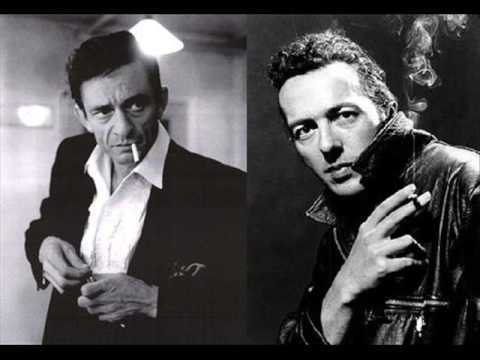
Posthumous: Redemption Song (Strummer and Cash)


Joe Strummer: Redemption Song
Johnny Cash and Joe Strummer: Redemption Song 

[purchase Streetcore]
[purchase Unearthed]

When Bob Marley wrote “Redemption Song,” one of his masterpieces which was influenced by a Marcus Garvey speech from 1937, he had already been diagnosed with the cancer that would take his life within a few years, and clearly was thinking about his own mortality. It was a rare acoustic track, and was released as a single in 1980, and on the album Uprising. Because Marley didn’t die until 1981,  the song was not released posthumously. 

However, two very fine, and related covers, of “Redemption Song” were released after the performers’ deaths, so I don’t lose any points for theme violations. (Sorry, I've been watching the Olympics.)

In 2002, Johnny Cash was working with producer Rick Rubin on what would become American IV: The Man Comes Around, the last album released during Cash’s life. Joe Strummer, who was on vacation in Los Angeles, decided to hang around the studio, because he was a fan of Cash—he even extended his vacation an extra day to spend time with Cash. During this time, the two men reportedly discussed a wide variety of topics—Cash’s role in the early days of rock and roll, and Strummer’s role in the early days of punk—and their love of Jamaica and its music. Strummer was, of course, a big fan of ska and reggae, and was influential in including it in The Clash’s music, and Cash owned property on the island. 

With some apparent nudging from Rubin, they decided to record a duet of “Redemption Song.” "Originally, the song was supposed to be a duet, and we recorded it as a duet. But, just in case, both Johnny and Joe sang the whole song several times," Rubin recalled. It did not, however, make it on to The Man Comes Around (which is fine, because that album is already incredible) 

In December, 2002, Strummer died due to an undiagnosed congenital heart defect, before he was able to complete Streetcore, his final album with The Mescaleros. The album was pieced together from early takes of songs and subsequent additions by producers Martin Slattery and Scott Shields.  Although it may not have originally been planned for the album, they included one of Strummer’s solo takes of “Redemption Song,” featuring only his vocal and guitar, additional guitar from Smokey Hormel, piano added by Rubin, and atmospheric harmonium added by Benmont Tench. It is spare, rough and affecting.

Rubin and Cash were working on compiling a box set of unreleased songs and alternative takes from Cash’s tenure at American Recordings, when Cash died on September 12, 2003 of complications from diabetes. He was only 71, which frankly shocked me. Unearthed, a five disc set, was released a little over a month later, and it included the duet with Strummer. As good as the solo Strummer version was, the duet—although similarly arranged—is better. Obviously. adding Johnny Cash to a song is likely to improve it, and his voice was filled with the gravitas that only increased as he aged. Second, there’s some great acoustic guitar from Tom Morello. Although I don’t think that this is a case of a cover improving on the original, it gives Marley a run for his money. 

I should add that in or about 2003, some friends of ours got a black dog, and named him Cash, in honor of the recently deceased Man in Black. In 2004, we got our own black dog, and named him Strummer, in honor of Joe (and my family’s love of music) (coincidentally, our Strummer died 7 years ago yesterday). The two dogs did spend time together and probably barked together, but they never figured out how to do “Redemption Song.”

Sunday, July 25, 2021

1971>POSTHUMOUS: Cry of Love


purchase [Cry of Love]

Just before Cry of Love was released in 1971, the Jimi Hendrix Experience was over, and Jimi was doing a fair amount of collaboration with an expansive cast of musicians you might not have been aware of (Stephen Stills? Steve Winwood? Chris Wood? Well, yeah. Both Wood and Winwood were together in Traffic at that time.) Sadly, when Cry of Love was released, not only was the Experience finished, but so was Hendrix's life.

One issue with a posthumous production is how close to the musician's intentions the final release is - to what extent have external influences colored the work in a way the artist might not have done? On this count, the score appears to be that Cry of Love is pretty likely close to what Hendrix would have aimed for. Band member Billy Cox points out that while Hendrix had a fair amount of leeway in the studio, the final product was ultimately not his call. Further, band member Mitch Mitchell was one of the team involved in the mixing and track selection. For that matter, the public seems to have regarded the album as an authentic Hendrix album rather than a posthumous work. I know I certainly did, and that may be partly because it came out relatively soon after his death.

So, Cry of Love doesn't end up in the official Henrix discography, but IMHO, it is the culmination of his art and style. Are You Experienced shattered my awareness of what music could be. Axis refined it. Electric Ladyland perfected it, (let's leave out Band of Gypsies). Cry of Love is Hendrix matured.

My preference is for the melodic Hendrix, as in Burning of the Midnight Lamp and 1983 ,,, A Merman I Should Turn to Be , so it fits that I also like this (the clip appears to be the only one available here that isn't a cover)

And maybe Freedom (this version from John Findlay - I did mention: the originals are nigh on inaccessible at YT)


Saturday, July 24, 2021

1971: Aqualung


purchase [ Aqualung ]


My parents were serious amateur musicians. My dad directed a vocal choir of 40+ and an orchestra of 25+ in twice yearly concerts of religious music (The Dutch Chapel Choir). They  took voice lessons and, of course, got their progeny started on the right path: starting the four of us off with recorder (=blockflut) lessons for all starting at about age 7. It meant I could at least rudimentarily "read" music. I moved on the the "regular" flute and made a stab at the trombone before I segued to the guitar.

With a portable reel-to-reel tape device, I recorded a few improvizational flute and clarinet pieces with a classmate back in '69. (Wish I had them to look back on! I recall they werent too bad for a 14 year od)

'69 turned to '71 - finding me now in boarding school 1000's of miles away from parental supervision - but music was still at the forefront of my mind. One of my first independant actions was to buy a "stereo". But, owning and operating a record player involves feeding the beast. As such, I was lucky to be at the end of a Reading Railroad line that landed me about 2 blocks away from the train station in Philly- I want to think it was Tower Records that was right next to the station but my memory is hazy and it doesnt really matter. It was a 60 minute train ride, the place was stocked with everything and the prices were... competitve (I recall ~$10.00 per album in 1971). My collection grew rapidly.

As I noted previously, my first LP came with the stereo I purchased: Who's Next. (also 1971) I would be hard pressed to lay out the sequence of the expansion of my collection, but Aqualung must certainly have followed soon after. More likely it would have been Benefit first. Flute and rock, after all. By this time, I had all but lost interest in furthering my flute skills. I was more into listening than performing.

In general, Jethro Tull - for me - was and is still a little too grungy. In fact, the imagery associated with Aqualung calls up a fair amount of disgust (snot running down his nose .. Ian Anderson's strandy matted hair ...) But Benefit and Aqualung  contain some of the best of 71's music. While Ian Anderson may be the better known face/name of the band, as an amateur musician who has since gravitated to the guitar, I wouldn't want to overlook Martin Barre's sizable contribution.

Aqualung, in some ways in alignment with my remarks about 1971's Yes and Genesis, is conceptual and a reaction/disillusionment with a crumbling belief in traditional religion (ah.. back to my parents again). Barre himself has commented that Anderson got credit despite their collaboration: "I've done bits and pieces on albums.Sometimes it's a riff, sometimes it's a little segment of music..." Mark Knopfler, Joe Satriani and Steve Vai credit him as an influence.

Aqualung


Locomotive Breath


Thursday, July 22, 2021

1971: ALISON KRAUSS

Right, Seuras, some positive stuff today, if you will, put a spin into a 1971 we can celebrate rather than bemoan. And, you know, that much I think I can do, having the very idea for a cracker! Less who died in '71, more who was born! Good, eh? So then, musicians born 1971, Siri, what you got for me? Oh, dear. Oh, very dear, with apologies to those who appreciate the sounds of rap, it seeming a very good year for those wrapped in that flavour, with legions of artists emerging from the wombs of their mothers that year, if seldom of the same name. Mrs Dogg? As well as, dauntingly, a fair few who haven't made it this far. Here's one I covered previously. But, there is one artist I am only too keen to showcase, 49 until today. So, happy birthday, Alison Krauss!!

The above song was the first I ever heard by this superlative performer, remembering both the Foundations original and the one by Clive Gregson's Any Trouble, that being sufficient to have me order the excellent early retrospective collection of Ms. Krauss, 'Now That I've Found You; a Collection'. From then I was well near hooked, as she pumped out solo albums and Union Station albums, the alternation being written into her contract, as well as popping up on any number of side projects and guest appearances. 'O, Brother Can You Spare a Dime'? Of course. Tributes to the Louvin Brothers, the Everly Brothers and, FFS, the Moody Blues? Check. Soundtracks? Come on down, 'Bambi II' and, perhaps a tad more memorably, 'Cold Mountain'. Couping, along the way 17 Grammy awards, the highest of any female performer, the 4th highest of any sex. All this despite a bout with dysphonia, that pervasive condition usually only affecting the partners of Fairport Convention players, perhaps brought on by her most widely known work, 2007's 'Raising Sand', that being alongside Robert Plant, known to like a bit of Richard Thompson.

OK, that was a pretty contrived way to draw the smoke toward 'Raising Sand', especially as it was the Krauss free "follow-up", with Patti Griffin,  that included a RT song, but, any which way. this was an astonishing record, bringing her to the attention of an audience unfamiliar with her voice, her name or her preferred genre. Their voices meshed in together with wonder, and the follow up remains on the cards, when the busy pair can find the time.

In this paean of praise, I think it important also to raise the flag for the rest of the band, in those band projects, as Union Station, the band,  are no shrinking violets, with premier league members, notably Dan Tyminski and dobro giant Jerry Douglas, the head honcho, along with Shetland fiddler, Aly Bain, of the yearly celebration of the Transatlantic Sessions. Indeed, given Krauss has little to no songwriting presence, it is often to members of the band, present and erstwhile, she has turned to for material, past and present members coming up trumps.


HB2U, Ms. Krauss.
Treat yourself.


Wednesday, July 14, 2021

1971: WHAT IF

Ever the fly on the corpse, this theme immediately had me think of those unable to take up the challenge of looking back to 1971. Mainly from the standpoint of those who actually died that year, losing whatever future potential they may have been able to offer subsequently. Of course, nobody ever really dies in music, and many a career has been kickstarted on the premature visit of the grim reaper. Record companies often make a mint from a death: just look at the charts after the death of David Bowie, let alone the torrent of posthumous releases from his legacy. I wonder how much profit ever makes it back, if not to the artist, but to their dependents, the answer always precious little, I suspect. And, with the parlous state, allegedly, of the recording industry, is the death of all the septuagenarian, and older, boomers on their books all they have to look forward to? (Told you I'd cheer you up!)

1971, for all the touting of it being the year amongst all others, well, how was it for me? I turned 14 that year, and the records of that year and that have become classics were in my tunnel vision, or many of them, it being around the time I started hoovering up anything and everything to do with long hair hippies and their music; mainly because I was a short-haired school boy, I should add. Flip through the pages of venerable rock writer and broadcaster David Hepworth's tome to that year, 'Never a Dull Moment: 1971, The Year That Rock Exploded', and much of my then listening is actually detailed. He defined it as the year the 1960s ended, if a year late, and he lists 100 of the most influential albums. I was too wet behind the ears for many of them, but certainly I had my ears around The Yes Album, like kkafa, Tarkus and Pictures at an Exhibition by E.L.P., LA Woman by the Doors, Aqualung by Jethro Tull, the Allman Brothers Band's Live At the Fillmore. Plus, of course, Led Zeppelin IV, Killer by Alice Cooper, many more, even, Please To See the King by Steeleye Span. I had to be older for the likes of Carole King, John Prine and Shuggie Otis: see the list here.


But two names ring out on that list, the Doors and the Allman Brothers, as each lost an integral member that year, with both Jim Morrison and Duane Allman failing to greet the future that was beckoning. Others, of course, died that year, Louis Armstrong and Gene Vincent for two, but neither featured in 1971s year zero, and one was old-ish, the other with chronic health issues. Morrison and Allman were both in their 20s, which is desperately wrong.


The above is a computer generated image of how Jimbo may have looked, had he attained his 65th birthday, itself which would have been a remarkable 13 years ago. Mind you, the theories still abound as to his not actually dying back in Paris, 1971, it all being an elaborate ruse for him to slip under the radar for a quieter life, presumably in cahoots with Elvis Presley. To be fair, the evidence for that is thin, but tell that to the crowds who still throng to the cemetery for selfies at his grave, the real question being whether he died of natural causes, of an OD or whether, oo-ee-oo, he was murdered. There has been plenty written about each, and I am not going to link, go look yourself. My own feel is that his death was likely natural, if punishing your body with industrial amounts of booze, on a daily basis over years, counts as 'natural'. 


Had he lived, how would he now be faring? Would he back within the bosom of the Doors? Yes, perhaps, but bearing in mind he had left the band. But, let's be honest, without him they were pretty thin fare, never again reaching much acclaim until signing up Ian Astbury to play Jim, and ditching John Densmore, and riding out as The Doors of the 21st Century, or Manzarek-Krieger, or even Ray Manzarek & Robby Krieger of the Doors, with Densmore having, not unreasonably, taken substantive legal umbrage on the name they might call themselves. Astbury, frontman of UK leather and kohl rockers The Cult,  didn't last much beyond one, admittedly major, tour, ahead of a revolving door (SWIDT) of B team singers. Drums, initially offered to ex-Policeman, Steward Copeland were an even harder stool to fill, Copeland breaking a tactical leg ahead the tour's launch. Even if declining any initial suggestion, I cannot believe Morrison would not have leapt back in like Larry, if not for the megabucks, then to avoid the embarrassment of these pale shadows of the original band. That would have meant Densmore would be back in, too, and I would have loved the opportunity to capture that legacy live. 


I'm a fan. L.A. Woman was one of my first purchases, and like many of contemporaries, I never grew out of it or the Doors. This much you know. I enjoy the idea of Morrison remaining in Europe, had he lived, becoming a latter-day sage to the acolytes who now flock around his extinguished flame. Perhaps ahead and since the golden ticket reunion tour, not least as compatriot Ray Manzarek has himself died, more age appropriately and of natural cause. Maybe slim volumes of poetry, maybe music, it maybe of impenetrable form and nature. Think Scott Walker, himself spending most of his post 60s career in Europe, if England is still allowed to consider itself part thereof.


Duane Allman is a whole different matter. A slightly more facetious possible current appearance above will hopefully not offend. Arguably at his peak at the time of his accidental death, motor cycles and his eponymous Brothers Band never seeming a good choice. Having shown himself to be a premier league session guitar for the whole stable of southern blues, soul and rock music, his band with bro' Gregg had cemented their reputation, barely months earlier at the legendary Fillmore, (hi, Jordan), with, still, one of the best ever live LPs ever, period. And that is also without mentioning his star turn, frankly eclipsing "Derek" Clapton, guesting on the and the Dominos debut. Such remarkable talent. How would it be had he survived? The Band was seemingly able to carry on, if not regardless, certainly by polishing his laurels, with any number of wannabe Duane duplicates. Not a put down, again I like very much and admire the changing iterations of the band, probably even only officially on hiatus, following Gregg's rather more timely death. (That he should live an allotted, with his earlier lifestyle choices, is itself an irony worth considering.....) But returning to my theme, had Duane lived, would young Derek Trucks, himself the nephew of deceased fellow band member, Butch (2017) of that name, have been so tempted to take on the crown of the king of slide guitar? Can you imagine the pair of them duelling? Now that would be something.


Had Duane lived, I doubt he would ever have stopped being in the band, or even whether he would have been allowed to. But, had he, what then? I can imagine him as a perennial guest and star session man, wheeled out to give gravitas to any recording he became associated with. A bit like how Steve Cropper still conducts his career. Nice thought, ain't it?


So, 1971, great year and all, but imagine how greater today might be had these two icons, no small word, but undoubtedly apt, were still on the earth?

Tuesday, July 13, 2021

1971: Fillmores

Allman Brothers: Whipping Post
[purchase Don't Fight the Feeling - the Complete Aretha Franklin & King Curtis Live at Fillmore West ]
[purchase Allman Brothers Live at Fillmore East Deluxe Edition]
[purchase Mothers Fillmore East-June 1971]
[purchase Humble Pike Performance Rockin’ The Fillmore] 

1971 saw the closing of both the Fillmore West and the Fillmore East, the legendary venues operated by the equally legendary rock impresario Bill Graham. The original Fillmore Auditorium was located in a San Francisco building originally built in 1912, and Graham began booking shows there in 1965. It eventually became the center of the San Francisco music scene, with incredible musical performances and famous light shows. But in 1968, because of the increasing deterioration of the neighborhood and the insufficient size of the space, Graham moved his focus to the newly christened “Fillmore West.” That venue, formerly the Carousel Ballroom, was briefly run in 1968 as a cooperative venture by the Grateful Dead, Jefferson Airplane, Quicksilver Messenger Service and Big Brother and the Holding Company, before Graham took ownership and began booking shows there. (The original Fillmore was, for a while, operated by a different company as the “New Old Fillmore.”) 

The name “Fillmore West” was chosen because earlier in 1968, Graham had taken over a derelict space in New York City originally built for the Yiddish theater in the mid-1920s, and opened it as the Fillmore East. That venue, like its West Coast sibling(s) became hugely popular and influential, with shows on multiple nights a week, typically triple bills at 8 and 11 pm. The Fillmore East also featured elaborate light shows. 

However, by1971, the economics of the music business was changing in favor of stadium and arena shows (boo!), and Graham decided to shutter both venues. The last concert at the Fillmore East was an invitation-only affair on June 27, 1971, featuring The Allman Brothers Band, The J. Geils Band, Albert King and special surprise guests (Edgar Winter's White Trash, Mountain, The Beach Boys, Country Joe McDonald). The Fillmore West closed on July 4, 1971, after five nights of concerts by 14 bands, mostly from the San Francisco area, including Santana, the Grateful Dead, Hot Tuna, Quicksilver Messenger Service, and the New Riders of the Purple Sage. 

The Fillmore West eventually became a Honda dealership, before becoming a music and event venue called SVN West. The Fillmore East went through a few other iterations as a music venue before becoming The Saint, a gay nightclub in the 1980s. The former lobby of the venue is now a bank, and the auditorium was demolished to build an apartment building. 

The original Fillmore became a punk venue, The Elite Club, before reopening under Graham’s management. It was damaged in an earthquake, and after Graham died in 1991, it was repaired and reopened as The Fillmore. Live Nation operates the venue and has rebranded a number of theaters around the country with the Fillmore name, although in some cases, most notably at New York’s Irving Plaza, it didn’t take. 

Although 1971 was a bad year for the Fillmores West and East, it was a good year for albums recorded at the venues. On May19, 1971, Aretha Live at Fillmore West was released. It had been recorded there in March, and included a number of covers of current popular music. It’s pretty great, featuring, in addition to the amazing Franklin, King Curtis on sax, leading a band that included, among others, Billy Preston, Cornell Dupree, Bernard Purdie, and the Memphis Horns. And there’s a duet with Ray Charles. During the same shows, King Curtis’s band, which was also the opening act, recorded its performances (mostly covers), and they were released as Live at Fillmore West in August. Tragically, a week after its release, Curtis was stabbed to death in New York. 

If there’s one album that rock fans associate with the Fillmore East, it is the Allman Brothers’ At Fillmore East, recorded there in March, 1971 and released on July 6, 1971. I’m not really sure what else to say about this album that hasn’t been said better by others. Suffice to say that it is one of the greatest live rock albums of all time, and probably just one of the best rock albums of all time (which is why when I picked one song to feature above, it was from that album). In 2004, the album was selected for preservation in the Library of Congress, deemed to be "culturally, historically, or aesthetically important" by the National Recording Registry. 

In June, 1971, The Mothers (formerly known as The Mothers of Invention, led by Frank Zappa) recorded performances at the Fillmore East (and some additional performances in May in Michigan), for Fillmore East-June 1971, released in August. It is raunchy and juvenile, and while it has some good music, really hasn’t aged well. 

Humble Pie, which featured Steve Marriott and Peter Frampton, recorded performances at the Fillmore East in May, 1971, and released Performance Rockin’ The Fillmore in November, 1971. I can’t say that I’m at all familiar with it, although I have a vague sense that I’ve heard the single from it, “I Don’t Need No Doctor.” Before the album was released, Frampton left the band for a few years of minimal success before he came alive, briefly.

Sunday, July 11, 2021

2021-50=1971: Yes


purchase [The Yes Album and Fragile ]

I don't recall having ever seen an album production credit for "bank loan arrangement" before. It equally stikes me as strange considering that the album where I saw it was produced immediately on the heels of an apparently successful tour supporting the release of The Yes Album that same year. Woulda thought they had made some money? One explanation is that they needed money to buy equipment for their newly added keyboard player, a man named Rick Wakeman.

So, in February, Yes released The Yes Album, in the summer, keyboardist Tony Kaye is removed from the band, Wakeman joins, and in November, they release >Fragile<.

The addition of Wakeman accomplished the band's intentions to give more prominence to electronic keyboards, and it was Kaye's reluctance to go down that path that led to his departure. 

Of these two 1971 albums, my personal preference is for The Yes Album - Fragile, perhaps because it was a bit rushed into completion, perhaps because Wakeman was still new to the group - doesn't seem to have the cohesion of a "band", but a band that does actually come together on their next album, Close to the Edge. The Yes Album is the product of a group that is working together and on the verge of defining the prog rock genre. The Yes Album is the band's third and the first with guitarist Steve Howe (who appears above at far right in the photo on the album cover of the 2nd album without having actually played on it). 

Shades of Genesis?


Thursday, July 8, 2021

Opposites: Awake/Asleep

purchase [the band]

"A tad obvious" says our own Seuras, speaking of feathers and lead in his heavy/light post a few days back. The same holds true for any of the opposites we have poked at in this theme - "a tad obvious". My choice of awake/asleep is no less obvious, once we say it outloud, it is: "but, of course."

That said, I think I can say I now have a favorite song from The Band's oevre. I mean, there are several fine tunes over the 10 years from '68 to '78 that included Robertson in the band. But I particularly like the  - I'm going to call it a jangle - of the song. Maybe it's the semi-ragtime keyboards in the original recording? I like the sound almost as much as I like the lyrics. Just a few of them that are stuck bouncing around my head:

you will be hangin' on a string from your when you believe

you will relieve the only soul that you were born with to grow old and never know

I could wake up in the morning dead

And if I thought it would do any good I'd stand on the rock where Moses stood 

But then I came across a version that Rick Danko (the vocals on the original) shared, and -for me - the song gained further respect.


Another awake. I confess I have never really felt a reason to follow Katy Perry's music. I can see why some folks do and did, however. But when I see that she, too, has an awake song, I guess it's time for me to dig a little deeper than knowing that she's done some American Idol stuff. Her <Wide Awake> from 2012 sounds to me like most of what I have heard of her music/style ("...anthemic and often sexually suggestive...electro-pop...", per britannica)


As for the other side of the coin ("ah", he says a little belatedly, "another pair of opposites we have here"), let's go back to Abbey Road, 1969, pretty much the end of the Beatles as a band.

Golden Slumbers is one of eight short songs that make up the 16 minute track titled <Medley>. You know the song. It's the one that begins "Once there was a way ... to get back home ... sleep pretty darling do not cry ..."


Let's continue sleeping with a listen to the better known version of Mbube, the song originally from Solomon Linda back in 1939 - the one that you've probably heard the version of from The Lion King as well as this one from The Tokens. It's not particularly going to put you to sleep, but maybe you don't want to spend the night near a sleeping lion, whether you "hush my darling" or not.


And we'll wrap it up, although there's plenty more to cover, with an appropriately named band (that I again really don't know much about except their name, which fits the subject): Asleep At The Wheel. They've got a coupla songs that - besides their name - touch on sleep: Midnight in Memphis, and an album titled <Keep Me Up Nights> plus more, for sure (In My Dreams ...)


Sunday, July 4, 2021

OPPOSITES: LIGHT/HEAVY

Hmm, a third week, a third challenge. Silly? Serious? Low-brow? High-brow? Light-weight? That’s it! Avoirdupois! Weight. Of course, as a nominally music appreciation site, it can also be your difference twixt Sabbath and Sweet Thursday, so, well, just so. 

Traces (Light and Weight)/Enigma

Me, I am going for weight, going for the compare and contrast between a ton of feathers and a ton of lead. (And, believe me, I toyed with what you’re thinking, feeling it a tad obvious…..) So, for the sake of the songs, light and heavy. And if you fancy a drink with that, be my guest, whether it be a light and bitter or a pint of heavy. More anon.

Lighter Than Air/Christine Collister

It is the glorious voice of Christine Collister that kicks us off, she possibly better known as half of Clive Gregson and...., it being in that duo she made her name.I recall I had heard about the cassette only debut by Clive and Christine, persuading my wife to get me a copy for Christmas. Clive Gregson I already knew of, from his band, Any Trouble, featured here. Anyhow, shortly before that Christmas, we toddled off to see the Richard Thompson Band, playing at Birmingham Odeon. Imagine my glee as, not only were Gregson and Collister the opening act, they were also in Thompson's line-up as well, a state of affairs that lasted a few years. As a duo they were also regulars at the Red Lion Folk Club, also in Birmingham, and we caught them a number of times. A couple in life as well as art, differences arose and they split, with there also developing some sort of rift between Gregson and Richard Thompson, with a snarky RT review, penned by the former, appearing in Mojo, after he was no longer in the band. Legend suggests the Thompson song, 'Put It There, Pal', was the riposte. 

Both Collister and Gregson went onto solo careers, each continuing to this day, if never quite attaining the accolades of their joint work. This song, a rare co-write by Collister, appears on her 2005 outing, 'Love', which actually had origins in showing off the capabilities of the then wilting format of vinyl, and is designed as a showpiece for her vocals, actually better in her earlier solo output, or, at least, with more sympathetic arrangements. But it is still a powerful instrument, irrespective.

Light and bitter, the drink, is, or was, the popular combination of a half of bitter, draft english ale, the kind best served at room temperature, for any philistine readers from afar, and a small bottle of light ale, which was, I guess, slightly lighter, both in colour and volume, bottled variant of the same. (Here's the science.)

He Ain't Heavy (He's My Brother)/Rufus Wainwright

Apologies for posting the Rufus rather than the better known 'original', which of course it wasn't. It was a cover version. Ahead of the Hollies having their 1969 smash with it, something they were in sore need of, Graham Nash having jumped ship a year or so before, it had earlier failed to set the charts alive in versions by Kelly Gordon (no, me, neither), or, Lord help us, Neil Diamond. Written by a pair of jobbing songwriters Bobby Scott and Bob Russell, I bet you want to hear the Diamond version, don't you? My sole reason for posting this version is that I have always liked the timbre of Rufus's voice, something I gather many don't, and he has a quite a decent way with covers. This strays little from the original, and I have half an idea that the producers of 'Zoolander', the film in which it features, did not have the rights for the Hollies version. 

Two interesting things I learnt about the song for this piece. Firstly referring to the lyric, I had previously assumed heavy was as in heavy, man, thus a description of seriousness, or sternness, and that brother was meant as in a friend or colleague in dudedom. The original phrase comes from a sermon delivered by the Moderator of the Church of Scotland, in the 1890s, wherein a young peasant girl was being asked how she could be possibly be managing to carry a young man on her back. Her response, maybe minus the ain't, was the basis of his Sabbath message and, latterly, of the song. And secondly, the session pianist on the Hollies' version was one Elton John!

Returning to this version, surely nobody can be unaware of the fact that Rufus is the son of acerbic singer -songwriter, Loudon Wainwright and of the late Kate McGarrigle, but here's the back story if you are not. Somewhat of a theatrical talent, shall we say, drawn a little to musicals and the like, it is his simpler and less exotic fare I enjoy the better.

Heavy is what the Scots drink, or order, in preference to bitter, and, by and large, it is a slightly heavier and darker brew than the English style, although the two terms mean more or less the same. It can get confusing. Mind you, ordering a beer in Glasgow has always been confusing and not for the timid. Lagers are as popular, strangely, here as much as south of the border, and if you were to hear someone asking for a pint of Mick, it would be that they were after, an example of best Weegie* rhyming slang, where lager rhymes with the be-lipped Stones frontman.

*Weegie = Glaswegian.


Saturday, July 3, 2021

Opposites: Summer/Winter

It's on my bucket list to someday get to Australia and/or South Africa, where winter is in the summer and vice-versa. A kind of proof that everything is relative.

Last week, I started with the idea of picking two separate musicians - one for each of my opposites, and then veered off when I realized that I had my terms covered in one man: Jesse Colin Young. So, I began this Summer/Winter pair with the assumption that I would focus on a musician who again had them both covered. There are a number of options,  but for this week, we go back to the 60's: The Doors.

Jim Morrison and The Doors may not be on heavy rotation in 2021, but they won't need much introduction, so a simple shout out and a reminder that they were responsible for ...

Wintertime Love. Jim Miller's review of the album laments (back in 1967) how the Doors had become a Morrison show, when band members such as Manzarek could "do some nice things". If you see a video not available, watch on YouTube, take the jump.


and Summer's Almost Gone


Not only do the two songs appear on the same album (Waiting For the Sun), but the tracks are back-to-back.

But this, too:

Donna Summer (who doesn't appear to have ever appeared here at SMM):


Johnny Winter (who has popped  up a few times and I think that's Doug Brockie also on guitar):


purchase Waiting for the Sun

Sunday, June 27, 2021

Opposites: Southern Man/Girl From The North Country

Neil Young: Southern Man
[
purchase]

Bob Dylan: Girl From The North Country
[
purchase]

Bob Dylan w/Johnny Cash: Girl From The North Country
[purchase] 

Watching the Trump Party and its propaganda outlets whip themselves into a frenzy over what they are mischaracterizing as  “Critical Race Theory,” either due to political calculation or ignorance (or both), when what they are really afraid of is not the actual theory, but the “Truth,” could easily send me spinning off into a discussion, centered around Neil Young’s 1970 song, “Southern Man,” about institutional racism, the Civil War, and the Lost Cause myth, but I’ve written about that before. 

Instead, let’s (mostly) talk about the two songs I’ve chosen for the Opposites theme which are basically double opposites—one about a southern man, the other about a northern woman (although, if gender is really a spectrum, are they really opposites?) But there are even more things about the songs that are opposites. 

Young’s “Southern Man,” as most readers of this blog probably know, was released in 1970, at the height of the anti-war and civil rights unrest in the country. It is an angry song, about racism and slavery, and features harsh, searing electric guitars. (It also famously inspired, at least in part, Lynyrd Skynyrd’s “Sweet Home Alabama,” but there really wasn’t any sort of rivalry between Young and Skynyrd, who were mutual fans of each other. Really.) 

Bob Dylan’s “Girl From The North Country,” on the other hand, released in 1963, is a wistful, acoustic love song, maybe about one of Dylan’s actual former girlfriends, or some of them, or all of them, or none of them. While it didn’t inspire a response song, it did inspire Dylan to record a duet version of the song with Johnny Cash, which was released in 1969, about a year before “Southern Man.” 

Despite the Opposite features of the songs, there was great mutual respect among Young, Dylan and Cash. They’ve performed together and covered each other’s songs, and Dylan and Young were both on Cash’s TV show (where Cash and Dylan sang “Girl From The North Country” together—you can read more about it, and watch the video here.). The Young performance was part of a a special episode of Cash’s show, shot at Vanderbilt University. It focused on students’ issues, including drugs, and Cash openly discussed his own problems, before introducing Young at the Ryman Auditorium, where he performed “The Needle And The Damage Done” and another song. 

I’m guessing that was pretty much the opposite of what many of Cash’s country music fans would have expected. 

A small footnote—after the Ryman performance, Young and his guests, Linda Ronstadt and James Taylor, hit the studio and worked on songs for the forthcoming Harvest album.

Saturday, June 26, 2021

OPPOSITES: APPLES/BANANAS

Apples are the opposite of bananas, right? Certainly little in common, what with colour, shape, taste, let alone the skin or the peeling. Yes, I know some folk peel an apple, but with their fingers? I think not, and they are as weird as those that eat a banana, skin on. (Smoking a banana skin I have heard of, it being a sure fire 4th form guarantee of a hit, something only being at a boarding school can have you believe.....) But there are loads of songs about these staples of a fruitarian diet. here's two of the best.

"I like to eat bananas

'Cos they got no bones
I like marijuana
'Cos it gets me stoned"

I bloody love this song. I may have mentioned this before, but I don't care, this being the finest and truest statement about bananas laid down in rock and roll. The sheer truth of it is an epiphany, even something may have never appreciated. The reason bananas are so darn accessible and appreciable is because they have no bones. Who knew? OK, we all knew, but, and here's the rub, who realised? Exactly. Who here can honestly say they had ever considered a banana might have a bone in it? I guess, yes, to be fair, most of their audience were less interested in bananas, keen to move on to the next couplet. Me? I was at said boarding school and that was stuff of fantasy, to be dreamt of and imagined. 

How many songs explore the world of banana? Not so many. Most famous, and ubiquitous, is the Banana Boat Song, aka Day-O, as beloved of Beetlejuice, the signature tune of Harry Belafonte, and enough to give every banana a bad name. A song meeting derision in this woke age, to be parodied in adverts and similar, it has some merit, with it needing sage and seer George Clinton to give the mislaid credibility.


So how come apples get all the good cred, all the good press? Let's not forget what got ate in the Garden of Eden, at a stroke denoting the base nature of man and casting us, conceptually, into the abyss of the everyday. So, let's ask what Damien Dempsey, erstwhile boxer and bruiser, now singer and songwriter of evocatively bruising lyrics has to say:

He's good, innee? Big fan am I, since he first found his voice, a decade or so, probably further, back. And I think the Irish, with their catholic guilt, are entirely within their right to diss the apple more than do us lily-livered protestants. Hell, with extreme free church presbyterianism, the Free Church of Scotland, you probably aren't allowed to eat an apple, or a banana, of a Sabbath day. (Disclaimer: these are the guys that ran, and maybe still do, the Outer Hebrides where my Mother grew up, not that even apples grow in the harsh treeless climes. Or bananas.)

Here the Wainwright (half) sisters get the gist, apples and sex, well, love, paired irrevocably in fruity union. Both daughters of Loudon of that surname, the third, Martha and Lucy sing as delectably as they should, as scions of the McGarrigles and Roches respectively. An album of, largely, lullabies, the underbelly of the subject matter lies just beneath the surface.

Finally, in an effort to link all this disparate nonsense together, who finer than the Cocteau Twins to muddy the water indelibly, throwing yet more fruit into the bowl, as Elizabeth Fraser sings about oranging the apple. Or the other way round. As you do.

Pip pip!

Bananas........

Apples..........


Thursday, June 24, 2021

Opposites: Light & Dark #2


purchase [ choose one (or two) ]

Like Seuras, my thoughts gravitated to the quintessential, original pair of opposites. Unlike him, no car travel this year, so the music has been in home and headphones in the dark closet that has become my office, my classroom and most of my life for the past 17 months.

I had started off with the idea that I would find a "light" from one musician and a "dark" from someone else. Until I took the first step with a visit to jessecolinyoung.com - because I had already decided that I would include the Youngblood's <Darkness Darkness>. It seemed like it had been quite some time since I listened to the song. The songfacts web site notes that part of the inspiration for the song stemmed from Young's terror related to a friend dying in the Vietnam war (the year was 1969). That's just one of the revelations I gleaned. Another is that my man David Lindley plays the opening fiddle. Yet another is that Charlie Daniels produced much of the Elephant Mountain album that the song first appeared on. And then I recall that way back in the dark days of November, we visited Darkness in our <Empty> theme, so up top here we get a different recording of the song:

And yet another crossing of the paths - that I had forgotten in all the passing years - is that Young also wrote <Sunlight>. Doh! Hmm ... I guess we can drop the search for that "someone else" who wrote a song about our opposite of <dark>.


Our own Seuras could have told me, if I had asked, that Young also recorded <Light Shine>. 

And with a little stretch, there seems to be room in all this search for opposites for a way to bring the opposites together, another Jesse Colin Young classic: Get Together. Now, while the Youngbloods appear to have made the song famous, it was written by a Chet Powers (a.k.a. Dino Valenti and as songwriter Jesse Oris Farrow), who was a lead singer for Quicksilver Messenger Service. What a lot of coincidental revelations in one swell foop.


And away back in 2012 our Mt Vernon Mike posted about Get Together, so we need a different recording of that one too


Monday, June 21, 2021

OPPOSITES: LIGHT & DARK

 Too obvious? Maybe, but surely they are the original pair of opposites, as in in the beginning was and all that. And you can play around a little with either of the polarities and steer a path down the middle, embracing dusk and/or twilight, trying to work out if they are the same or come from the opposite starting points. Light is a bit of a tinker, though, as it can also have an opposite with heavy, which I personally try to avoid, in any musical sense, if less successfully in my own life. Dark doesn't have any such, unless we talk chocolate, as milk chocolate is hardly the opposite of dark, or plain, as some will have it. Where would that leave the vile heresy of white chocolate? These, however, must be concerns for another day.

I thought this the opportunity to indulge my occasional pecadilloe into non guitar based music, into electronica, in fact. Or techno, as the music today featured probably was thought of. At least when both bands featured were just starting. I loved John Peel's putdown of Emerson, Lake and Palmer, arguably whose travails with synthesisers set the scene for the wider genre, road testing the prototype models. "A waste of electricity", the venerable DJ called them. Strangely, as synthesisers begat drum machines and sequencers, and computers became more prominent than keyboards, he became quite keen. Funny that. Anyhoo, be that as it may, I too was quite keen on techno. Reading the definition of the genre makes for daunting reading, so I guess I was no early adopter. Indeed, if Kraftwerk were trailblazers, with the Detroit and Chicago scenes picking up the influences and running, or dancing, with it, I was decidedly sceptic. I thought it was all a bit disco, especially the rooms and fields chokka with e-infused teenagers, blissfully off their heads, that I found distinctly off-putting. But then I caught Orbital at the Glastonbury Festival in the early 90's. Literally caught: we were making an early Sunday evening getaway, for work in the morning, getting caught up in the similar traffic jam of weekend only revellers. And, in the stationary car, heard the set and could see the lightship in the sky. Quite a formative moment. I suddenly saw the light. (See what I did there!)

Funnily enough, the car has remained my place of preference for listening to this genre, lapping up the associated, in my mind, and similar bands and musicians: the Prodigy, Chemical Brothers, Moby and, of course, given this piece, Leftfield and Underworld. Sometimes to the extent of attracting alarmed glances cast my way, as I drive along, rhythmically thumping the driver side window in time. I recommend it.

So then, Light is here brought to you by the splendour of Leftfield, the track entitled 'Alternative Light Source', the title also of their 2015 long player. I think they were/are probably my darlings of the scene, with, especially, the remixes version of 'Rhythm and Stealth' being my all time leader of this pack, not unentirely associated that my wife being a huge fan. We met relatively later in life, with music our main comparator on the dating site(!) we both frequented, and she, a massive Faithless aficionado, liked a good bit of my tastes in this direction. (The rest, the folk, the country, the blues, the jazz, less so.)  Leftfield were also the first live band of this ilk I dared go see, in 2015, for the tour that promoted this album. I didn't know quite what to expect, somehow assuming an army of flare carrying floppy fringed fops, finding, instead, an audience not so different from me. And plenty my age or older, too. It was terrific, even if the "show" was just the three, I think, of them, tucked near invisibly behind abstract geometric sheets, through which coloured lights were shone, concentratedly beavering away on their hardware. The bass was extreme, subterranean rumbles that had me fearing that fabled note, over which no bowel has control. Thankfully it didn't come, and I forgave them the missed last train and taxi-ride home. So Light for the Light (as we call our good ladies round here.)

Dark comes, appropriately, from Underworld, the underworld supposedly lightless. 'Dark and Long' the track, from their inventively entitled 1994 debut, 'dubnobasswithmyheadman'. I came to them via the joyous lager lager lager of 'Born Slippy' on the 'Trainspotting' soundtrack. I confess I sort of went off them a bit after watching them on a BBC at Glastonbury filmed performance. And for silly reasons like the 'singer' dancing and having dyed hair, while the anonymous fella with him had to do all the IT heavy lifting. (Thank goodness I never saw the Prodigy, eh....) But I grew out of such daft prejudice, or, rather, my wife told me to, and they too continue to produce work of no small value, keeping the flame alive.

Opposites? Hmm, actually, if nothing else, I seem to have proven Dark and Light can be broadly much of a muchness. Am I bothered? Well, given dark light seems actually to be a thing.....

Light.

Dark.


Saturday, June 19, 2021

Feet/Feat: Fats Waller


purchase [ Centennial Collection ]


I've spent a good part of the past week putting together a one-off special lesson about The Western, so maybe there is an historical commonality in this choice.

Fats Waller (1904-1943) apppears to have been amazingly talented and incredibly productive (something like 400 songs, compsed the score for the first Broadway musical written by an African American and more). Apparently, many of the 400 or so songs he sold to others and so ended up without being credited.

He was already playing the piano at age 6 and added the organ to his toolkit at 10, playing in his father's church. His success and fame was such that he toured Europe in the '30s.

There are several accounts of the night in 1926 when Fats was kidnapped at gunpoint and taken to a birthday party, where he was forced to play. The birthday boy was Al Capone. Waller's son said that the party went on for several days with Waller sleeping at his piano, and earning $100 for each song he played. Other accounts relate that he could sit down at his piano and easily finish off a gallon of bootleg whiskey and still keep playing. One account I read notes that he and Al probably got along just fine at that party.

I think you'll agree when you listen to the songs I have chosen that you can't keep your feet from tapping in time.


Tuesday, June 15, 2021

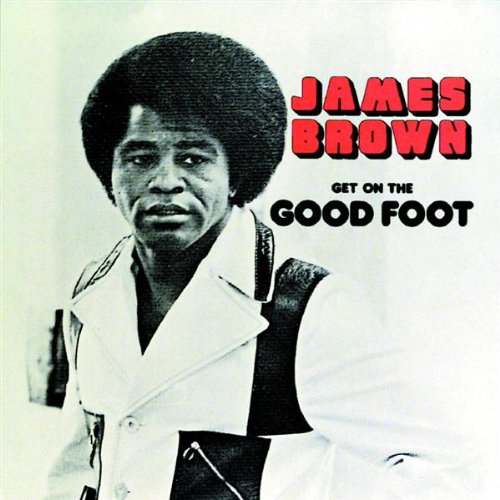
Feet/Feat: Get On The Good Foot


James Brown: Get On The Good Foot
[purchase]

I don’t like to dance, mostly because I look like an uncoordinated tub of Jello, and it has never been one of the things that I go out of my way to do. (Except at Princeton Reunions, at least since 2012) But if James Brown tells you to get up and dance, you get up and dance. I mean, the man is the Godfather of Soul. 

Brown had been performing since the 1950s, but starting in the mid- to late-1960s, he began to pioneer what came to be called “funk” music, featuring danceable grooves, with lots of soul and R&B influences, and performing it with a big band and lots of intense dancing. Often the songs included a social message in between the dance breaks. As I read that, I’m thinking to myself that the words don’t do the music justice. How’s this: It’s the kind of music that you feel in your gut and makes you want to move your butt. To steal a title from another band popular at the time, Funkadelic, “Free Your Mind….and Your Ass Will Follow.” 

A couple of years after that Funkadelic song came out, Charles released “Get On The Good Foot,” a song about dancing and partying to forget the hard parts of life. Originally released as a two sided single, which meant, for you young’uns, that you’d have to flip the 45 (just go with it..) over to play the second side. Apparently Brown, who owned Augusta, GA, radio station WDRW, interrupted the programming to introduce the unreleased “Get On The Good Foot,” because he thought it was going to be a big hit, and he called it—the song topped the R&B chart and reached 18 on the pop chart. Later that year, Brown released an album of the same name, featuring the full track, so that there was no need to turn it over (although being a double album, you’d have to flip it twice to hear the whole thing on your record player). 

And because we at SMM believe in uninterrupted funk, it’s the album version that you can check out, above.