Saturday, October 30, 2021

Rock Hall Snubs: Dick Dale


purchase [ Miserlou ]


In a way, Seuras' post about the UK Music Hall of Fame belatedly informed me about my choice, causing me to question the point of our snub selections. There is an authoritative, well-linked site named futurerocklegends.com that has a list of snubs. From the handfull of back and forth checks I did with musicians I was curious about the official rockhall.com and futurerocklegends agree: Dick Dale has never been nominated and the snub count stands at 34 years. But before taking off on lambasting the Rock Hall for their omission, it is worth pointing out that Dick Dale did not leave this world unrecognized for his contributions and that Rock Hall of Fame is but one of many: elected to the Library of Congress Hall of Records, the Hollywood Rock Walk of Fame, the  Musicians Hall of Fame and the Surfing Walk of Fame, that collection of recognition of that sort doesn't include accolades such as working with Leo Fender to help develop electric guitar sounds in the early 60s.


I confess that if I had ever heard of Dick Dale before this week's posting began, the name was lost in the fog of a fading memory. His online bio is cause for me to hide my tail between my legs. As someone who calls himself a guitar player (mind you - never more than amateur) I really should have known at least a little about the man who is/was known as the King of the Surf Guitar. That is the guitar style of the classic Beach Boys as well as an influence for Hendrix and Townshend.


Influence or not, the technique he developed and played just about right up to his death 2 years back is - as the 'pedia says "unmatched"


Thursday, October 28, 2021

ROCK HALL SNUBS: JETHRO TULL

Still puzzling over the R&RHoF shindig and the hotness under the collar as to who and who hasn't been elected. I even read a little about the electoral college that issues the shortlist for the great and good to then dissect. And, yeah, disquiet and discomfort as to how and why the great and good are deemed so, and how much they have, or not, a clue. It sort of wants me wishing I had paid attention during the brief life of the UK equivalent, that you missed reading about here. I would love to be railing and rallying at those nameless visigoths, as they revive the career of some long forgotten bar band from Birmingham with one sweep of their Sharpies, simultaneously forgetting the contribution of some once mighty dinosaur, now deemed uncool and forgettable. There is a terrific site I found, dedicated to this very state of affairs in the US hall: www.notinhalloffame.com/rock-and-roll . The name sort of gives it away, but it gives an exhaustive list, with commentary, of those forsaken and left to moulder in the roadway. I shall ignore how many in the first few pages of the list seem to come from as far away from rock as I can see; Eminem, Willie Nelson and John Coltrane, FFS, irrespective of their undoubted capabilities elsewhere, commending them otherwise on the thoroughness of their exhortations. (Plus, for those inclined, they do the same for other halls of fame, such as Country, where Willie surely must be and belongs, Hockey, Baseball and Bubble Gum. (OK, not bubble gum.) And where I learnt what a chum of mine calls The Mighty Tull have many times been proposed and never yet inducted. Which seems, um, odd.

The "real" Jethro Tull, agriculturist and doyen of crop rotation, 1664 - 1741

Let's get this straight, I am not the greatest fan of this band, I only have a few of their albums, a phrase that must instantly mark me down as a music nerd. But, for any lack of overt love, I have a ton of admiration: you don't get to be one of the biggest draws, both sides of the atlantic, have 11 discs go at least gold, 13 if you include live outings, based on luck and timing alone. Especially when that timing covers from 1968 to today. (Yup, you may have thought the band dead, but a bun is in the oven for next year, so hold your (heavy) horses, I'll get to that.)

Starting off as just another blues rock band at the tail end of the 60s, the UK being an incredible fertile breeding ground for that style at that time, exporting container loads of coal from their british roots to Chicago, Memphis and all the other homes of the blues. But they had a secret weapon, in the maverick flute wielding frontman, Ian Anderson, a manic scarecrow, wobbling on one leg in the spotlight, all billowing hair and beard, gurning, grimacing and gesticulating like the man possessed he seemed to be. Plus he could play, tootling barrages of notes out his instrument, hardly, Canned Heat notwithstanding, a usual instrument for the genre. Or, indeed, in rock music then much at all. Which isn't then to say he didn't have a crack band behind him, with Mick Abrahams amongst the more accomplished guitar wranglers of the day. But that first iteration didn't break much beyond the clubs and halls of London, Abrahams seeking a more authentic delta plough to furrow, whilst the wildly ambitious Anderson had folk, classical and prog-rock ideas aplenty in his head. Abrahams went his separate way, only ever achieving moderate acclaim with Blodwyn Pig and his eponymously named band, defiantly and definitively blues, blues, blues. And not half bad. The Tull, meanwhile, regrouped, coming to the attention of a 12 year old boy on the south coast of England, who found the single below right up his street, the first he ever bought with his own money. Martin Barre was now on guitar and would remain as Anderson's right hand man for many a long year.

Living in the Past 1969

Over the next few years they remained, for me, a singles band, with an unblemished run over the next decade. The albums, sort of, passed me by, but I couldn't help but hold a soft spot for 1971's 'Aqualung', a favourite amongst my school chums, not least for the dirty old man persona of the title track, the image of which seemed to fit so well the streetsleeping appearance of Anderson at the time. To be fair, it is only that and 'Locomotive Breath' I can readily bring to mind from then, but I will defend the right to call it a classic. I sort of lost interest in the albums thereafter, having other infatuations to delve into, but they remained good guys. Later still, as Dave Pegg, from and contemporaneously in Fairport Convention, a band I really did adore, joined, my appreciation from afar went up a further notch, even if I couldn't hum you a single tune.

Aqualung 1971

Throughout the last century they were just always there, one of THE bands, guaranteed to sell out a tour and to be making waves both sides of the ocean. Members came and went, dozens of members, actually, came and went. Strangely, I don't think I ever caught them live, bar Anderson, Barre and sometime drummer Doane Perry appearing at a Cropredy Festival. This yearly shindig, hosted and curated by Fairport, always ends in a Saturday night finale, where the band and members past and present parade for up to four hours, guest called in to add to the glamour. Robert Plant is one such regular guest, Ian Anderson another, and, that year, the augmented Fairport nailed a triumphant 'Locomotive Breath'. (Sadly I can't find a clip....)

A bizarre star of affairs arose in 1989, with the Grammys inaugurating a recognition of hard rock and/or metal, with Metallica pump primed for the award. Some consternation, thus, when Tull won this, their most recent material neither heavy nor metal, if anything, having a tang more of Dire Straits. But it kept them in the spotlight.

Crest of a Knave 1987

Into this century and new material has slowed right down. Indeed, in 2011/2, the b(r)and was officially put to bed and the band broke up. The b(r)and has been kept alive by each of the original discs of their heyday being released, in glorious and garish boxsets, remixed, with added oceans of offcuts and demos. Ian Anderson has toured and made records, in his own name, but tell that to the promoters, as the words Jethro Tull invariably appear, in as big or bigger fonts than does his own name, in th publicity. Next years 'The Zealot Gene' bows to the inevitable and revives the Jethro Tull name. Meanwhile, in a parallel universe, Martin Barre, after his decades of service, has found himself a useful career, where he too can tour, if again finding the JT words always getting equal billing.

Spiral 1999

The above is the opening track from their last full album of new material, 'J-Tull Dot Com', in 1999, but a Christmas selection of traditional and rejigged old material did appear later. Anderson has said he has no interest in the artifice of the Hall of Fame. I say give Jethro Tull a place and see if he changes his tune.

Discography.

Rock Hall Snubs: Joe Cocker


First there’s the organ and drums, followed by the gut-busting notes from the electric guitar, then everything slows down and you hear the raspy words, “What would you do if I sang out of tune.” So begins Joe Cocker’s epic cover of the Beatles’ “With A Little Help From My Friends.” This track always makes me think of the ‘60s, specifically the flower-power era that everyone has spent the last five decades trying to relive or completely forget.  

The reason for this strong association is, of course, because the track was used as the theme song for the nostalgic T.V. show The Wonder Years, set in that tumultuous time. But it also conjures images in my head of a very sweaty Cocker belting out the song at the Woodstock Festival.  


I was surprised to learn that Cocker is not a member of the Rock & Roll Hall of Fame. I found out by accident while fact checking a blurb about the tribute album Two Rooms: Celebrating the Songs of Elton John & Bernie Taupin. I noted how multiple artists on the record were inductees. When I did my initial count I automatically included Cocker in my tally. When I rechecked everybody’s name against the official site, I discovered Cocker was not listed. Even now, as I write this, I find myself rechecking multiple times just to make sure he’s still not there.   


It was a surprise on multiple levels. For one, Joe Cocker is a white British guy who spent his entire career emulating the sound of black American artists. That’s the essence of what rock n’ roll and the Hall itself are all about, for better or for worse. 


But it’s his body of work that deems him worthy of inclusion. He’s a multi-platinum artist who scored hit songs and albums across multiple decades from the ‘60s through the ‘90s. Tracks such as “Feelin’ Alright,” “The Letter,” and his Beatles covers “With A Little Help From My Friends” and “She Came In Through the Bathroom Window,” are staples of classic rock radio. Then there’s his ballads “You Are So Beautiful” and “Up Where We Belong,” which both received extensive airplay on adult contemporary format radio.  


It’s possible that time has simply moved on. These days the Hall is focusing on second and third generation artists. One of this year’s inductees, the Foo Fighters, formed in 1994, thirty years after Cocker released his first single.  


Since Cocker died in 2014 he could not lobby for himself or offer to appear at the induction concert. If the Hall won’t consider him on his merits, then a very strong argument can be made for including him in the early influencer category. Rock Hall inductees Tupac Shakur and Dr. Dre famously sampled Cocker’s  “Woman to Woman” for their smash hit “California Love.” With friends like those, he at least deserves another look.


Rock Hall Snubs: Richard Thompson and Los Lobos

Richard Thompson: The Poor Ditching Boy
Los Lobos
: Will The Wolf Survive?


[purchase Henry The Human Fly]
[purchase How Will The Wolf Survive

When I posted my first piece in this theme, about King Crimson, I posted it in a King Crimson fan group on Facebook, hoping to draw some readers to the blog (and it seemed to work! One point for Facebook, although with the news the last few weeks, I think that its score is below water). I was heartened to receive a number of positive comments and likes, but I was also not surprised to also get a different reaction—essentially that the Rock and Roll Hall of Fame is rubbish, just a tourist attraction, and really, who cares if Crimson isn’t in? It was a combination of disdain for an organization that while going out of its way to induct lesser known artists, many of color (particularly in the Early Influences and “Sidemen” categories), is also filled with commercially successful shlockmeisters, and a Groucho Marxist feeling of not wanting to be in a club that would admit them as a member. 

I get it. Really—in fact, as an acknowledged Rock Snob, I mentioned in my original piece that I have trouble taking seriously an organization that inducted Bon Jovi, but not King Crimson, as a musical arbiter, and add to that, just as a few more examples, Def Leppard, Journey, and Depeche Mode, none of which would be in my HOF (much less in my collection). On the other hand, a pretty good case can be made for most of the inductees based on a combination of popularity and influence, even if I don’t particularly care for their music. The same way that when looking at the Baseball Hall of Fame, I can appreciate the talent of most of the players, even if some of them were Yankees, or Ty Cobb.

With all that extraneous background, as the theme heads towards its conclusion and we likely turn to something Halloween related, I wanted to briefly recognize two members of the Jordan Becker Rock Hall who have been unjustly snubbed by the bigger, more famous one in Cleveland, Richard Thompson and Los Lobos, a Brit best known for his folk based music, songwriting prowess and incredible guitar playing, and a band whose music has expertly spanned many genres, but is firmly rooted in their Mexican-American heritage. Showing the breadth of the “Americana” genre, both have won Americana Music Association Lifetime Achievement Awards (Thompson for Songwriting and for his entire career; Los Lobos for Performance), and they’ve even done a song together

I’m going to try to keep this short. But you know how hard that is for me to do. 

Thompson, whose first schoolboy band included his friend Hugh Cornwell, later of the Stranglers, first became known as one of the founders of Fairport Convention. He was all of 18, and already his guitar playing was remarkable enough to convince producer Joe Boyd to sign the band. Eventually, Fairport Convention became a major musical force in Britain, first covering mostly American folk artists such as Bob Dylan, but later focusing on originals, many written by Thompson, that had strong British folk music influences (as well as covers of traditional songs). Thompson left Fairport in 1971, and began releasing solo albums and work with his wife Linda Thompson, until their marriage collapsed publicly and spectacularly, but also led to Thompson writing some incredible songs. 

Thompson has continued to release solo albums, participate in the occasional collaboration, including with his extended family, and tour regularly, as a solo artist and with bands of various sizes. He’s even covered 1000 years of popular music, and recorded sea chanteys. Renowned as a guitarist and songwriter (particularly for dark-themed songs), he’s also become a more than capable singer. I’ve seen him a bunch of times, have never been disappointed, and have usually been blown away by his talent, his encyclopedic knowledge of music, and his humor. In addition to his AMA awards, he has won guitar playing awards, and often appears on lists of the greatest guitarists of all time. Considering all of this, and the number of years that he has been performing at an astoundingly high level, RT deserves to be in the R&RHOF. 

Los Lobos grew out of the high school friendship of David Hidalgo and Louie Perez, who bonded over music, including Fairport Convention. They formed a band with some other friends, Los Lobos del Este de Los Angeles, releasing their self-titled first album, of mostly traditional Mexican songs, in 1973. Playing numerous live shows, including weddings and dances, they forged a sound that mixed American popular songs with Mexican music, and also began to incorporate influences from punk bands popular in Los Angeles in the late 1970s. 

Throughout the 1980s, they released a string of well-regarded and increasingly commercially successful records that continued to add influences to their sound. Of course, their recording of “La Bamba,” (and other songs) for the soundtrack of the Ritchie Valens biopic, La Bamba, shot them to greater prominence. Rather than follow up a No. 1 single with more of the same, they released an album of Mexican music, for which they won a Grammy, if not more English language airplay. After that, they’ve continued to release excellent albums, including a few that were a little experimental, while touring regularly. 

In addition to writing great songs and being pioneers of Latino rock music, they are one of the best cover bands, participating in various cover projects, including contributing a great version of “Bertha,” to Deadicated, and Disney covers. Not to mention a cover of “Down Where The Drunkards Roll,” on a Richard Thompson tribute album. In fact, their most recent album, created during the pandemic, is a cover album, focusing on California bands (with one original), 

Back in 2014, I wrote about Los Lobos for Cover Me, describing them as having 

demonstrated that not only can they play pretty much any style of music, they can play it very well. They have excelled with albums that have included blues, rock, R&B, experimental sounds, numerous styles of Mexican folk music, American folk music, Americana, and Tex-Mex, all performed and played brilliantly. They play acoustically and electrically. Their songs can be simple rockers, sinuous jams, complex sound collages, or heartbreaking stories of life on the margins. 

I then said that it is “sinful” that they are not in the Rock Hall, and I still believe that (despite the one time I saw them live, and they were having a rare off night). 

OK, not so short, but it’s really a twofer.

Saturday, October 23, 2021

ROCK HALL SNUBS: UK MUSIC HALL OF FAME

Always a bit baffled by the annual shebang of the Rock Hall of Fame, not least as it cuts so little ice over this side of the pond. Or maybe it's sour grapes cos we don't have the equivalent. It isn't really the style, especially in the arts, or, more to the point, the standard style of UK arts critique; we don't like success very much, with most British music journalism based on cutting tall poppies down to size. Whilst things are slowly changing, many, like me, are of a vintage where were we lapped up the vitriol of the inky music papers, bigging up new bands and new sounds, ahead of then slashing them to the ground with a sneer of derision. Even now, if a band or musician I like is on a run or roll of success and adulation, there comes the stage where I refuse to buy, or even listen to, their latest, for fear they get cocky and feel they can just rely on my patronage. Ha, say I, that'll learn you, with all your gold discs and sellout tours.Something that must cause them no end of tears and lost sleep, I'm (not so) sure!

There is also a hefty slab of the Groucho Marx in my personal frame of reference, vis à vis "I refuse to join any club that would have me as a member". Possibly why my address book is so slim, but it is an aphorism I sort of adhere to.

But then I read that we actually had had a UK Music Hall of Fame! It was set up in 2004, to celebrate the lifetime contribution any particular musician had made, regardless of their own country of origin, to music in the UK. Rather than being a bricks and mortar building or, even, a bona fide institution, it was actually a TV show. With the idea being that (pop) music began in the 1950s, electoral colleges were split into the then completed decades, 50s to the 90s. The first five founding members were enrolled automatically, presumably by the show's producers, with further membership up to the public, who would vote from a shortlist, again prepared by the show. The 50's shoo-in was Elvis Presley, the public offered Cliff Richard. For the 60's it was the Beatles by default and the Stones by virtue, with the perhaps brave decision to appoint Bob Marley for the 70's, the public vote going to Queen. Madonna and Michael Jackson got the 80's, Michael Jackson, perhaps surprisingly, the voted rather than the de facto, with U2 and Robbie Williams rounding off the selection, again in appointed and awarded order. I would argue less with the earlier years than the later, which is perhaps why, at the time, I gave it a miss and can't even remember it.

Queen with Paul Rodgers in 2004

2005 changed the format. This time a panel of sixty industry pundits were responsible. Looking to see who made the grade for this panel prove challenging, but the list of memberships awarded is an intriguing mix of the expected, with a few odd randoms chucked in for good measure. Aretha, Hendrix, Dylan, sure, who's quibbling, with the Who and Pink Floyd not any great surprise. Eurythmics, even, huge in their day, but solo Ozzy Osborne? Of course, there was a bumper awards ceremony, aping the US model, with initiates inducted by a gushing sponsor, and some musical interludes either involving inductees or lavish tributes thereto. Interestingly, the show was sold to and shown on US TV that year, with the award, induction and performance by New Order cut from the schedule. Presumably they cut too little traction with the US audience, but, taking the award for both Joy Division and New Order, I think them worthy contenders for the honour. I admire the courage of inducting them as much the cowardice of pretending otherwise.

Joy Division/New Order in 2005

2006 was altogether a glitzier one still, even if the nominees were still stuck mainly on the side of predictable. So Rod Stewart, Led Zeppelin, James Brown, Brian Wilson, Prince. And Bon Jovi. (I have no issues with the band, but mind this is ahead of individuals like Bruce Springsteen, Paul Simon, and Neil Young. Surely, even they were pretty darn big stars in the firmament of fifteen years ago.) That years curveball went to Dusty Springfield, another pleasing surprise.

A possibly refreshed Rod Stewart in 2006

For no particular or obvious reason, there were no awards and no show in 2007, and, in the following year, Channel 4, who had been responsible, quietly dropped it. So the snub, for the purposes of the theme, was to the Hall of Fame itself, and never more has it been heard of again.

(In similar circumstances and, in the same sort of vein, the UK also had a museum of pop and rock, the National Centre for Popular Music, a big and glitzy purpose built project, located in Sheffield. It opened, with much fanfare, on 1st March 1999, closing down, in some ignominy, a mere fourteen months later. I think the failure of each of these ventures represents not a failure of a vibrant music culture on these shore, far from it, but maybe just a combination of snootily not taking such populist culture seriously, and the aforementioned hatred of any of those darn tall poppies..........)

Random link.

Friday, October 22, 2021

Rock Hall Snubs: King Crimson


King Crimson
: The Court of the Crimson King
[purchase The Condenced 21st Century Guide to King Crimson 1969-2003

I think that it was in the Bill James Historical Baseball Abstract that I read, years ago, something like the only definition of who belongs in the (baseball) Hall of Fame is who gets elected. In other words, even in a statistically driven sport such as baseball (which has become even more so due to the work of James and fellow sabermetricians), there’s no formula to decide who belongs. James, and others, have created various predictive formulas, but they are not an attempt to determine who deserves to be in the Hall, but rather to predict whether the player’s statistics are the type that would convince the voters to vote them in. 

This type of determination is even harder to do with the Rock Hall, because there are no stats, really, other than maybe sales, or streams, or concert attendance-but I think most people (at least most people who read this type of blog) are unwilling to equate popularity with quality. Although it is nice when it happens. For the Rock Hall, it sort of just comes to down to gut feelings, considering some objective, but mostly subjective factors—plus a fan vote. Of course to be fair, it is hard to take the Rock Hall all that seriously when it inducted Bon Jovi a few years ago. 

My pitch today is for King Crimson, which based on the number of times I’ve written about them, their music or their members (see here, here, here, here, here, here, here, here, here, here, here, here, here, and most recently, here), you might assume are my favorite band. They aren’t (don’t ask me what is, though). But when you look at the quality and variety of their work, the length of their career, even with all of the interruptions, and most notably, the influence of the band on so many genres of music, it is hard to justify their exclusion. There is one full member of King Crimson who is a Rock Hall inductee (and another performer who sang one song for Crimson who is in the Hall……the answer will be at the end of this piece). 

It is hard to argue that King Crimson did not influence, among other genres, progressive rock, hard rock, various forms of metal, jazz/rock fusion, punk, new wave, grunge, math rock, jam bands, noise rock, and even hip-hop. There’s a nice summary of some of this in Wikipedia, or just Google “King Crimson influence” and fall down the rabbit hole. 

Also, arguably, Robert Fripp belongs in the Hall individually for his solo guitar work/"Frippertronics" and collaborations with Brian Eno, David Bowie, Peter Gabriel and others. 

That’s it. Show me a band or artist that is more influential than King Crimson that hasn’t already been inducted. 

The answer to the question is that drummer Bill Bruford was inducted into the Rock Hall as a member of Yes, as was Jon Anderson, who sang “Prince Rupert Awakes” on Crimson’s third album, Lizard.

Tuesday, October 19, 2021

Rock Hall Snubs: Little Feat


purchase [ The Best of Little Feat ]

Do we need a little background on the HoF before we explore why a band/artist who "rightly" belongs in the list has never been voted? There's a  committee who decide on a yearly list of nominees, and then a cadre of experts votes. Musicians are eligible 25 years after their first recording has been released. As of 2021, 351 have been inducted in one of several categories, such as performer or early influence, non-performer and sideman. The number of inductees varies by year. Awards may be given posthumously; 7 such were given in 2020.

So ... is there bias? Well ... if your favorite band has been eligible for years and still hasn't made the list, you're likely to think there is bias. Does this constitute "snub"? Hard to say, but I've got one that belongs but isn't, and the band seems to tick all the necessary checkboxes, but ... and here is one possible catch ... they aren't particularly relevant to many people any longer. Back in the 70s they were; today - not so much. That said, Rolling Stone magazine readers voted them #2 deserving but snubbed a few years back and they still have not been voted in.

Except ...  their best music is timeless. And their lead guitarist and vocalist was the best of the best - until he died an early death. And while the band has more or less hung in there ever since, it's never been the same. And now, without Paul Barrere, who co-wrote this one below (and passed in 2019), joining the list may be a dream.


Saturday, October 16, 2021

What If: Andy Summers joins the Rolling Stones


purchase [ Under My Thumb ]


In our <Cops> theme, I must have Googled "police" and <rolling stones> while I was considering a take on "Heartbreaker" - you know, "..the police ...put a bullet through his heart..". Then I remembered that I had already written that story a while back. One of the links that that search brought up was "Andy Summers for the Rolling Stones".

No, really. It's not an article from Rolling Stone magazine. It's a genuine <What If> that is backed up with a modicum of fact. The article even asks the reader to consider what that alternative future might have brought.

From today's perspective the two don't seem like a natural match: to me, Summers croons a bit too much for the rocking stones. Not outrageous, but unlikely. The article I refer to is pretty short on detail: MickTaylor had decided to leave the Stones and they need a replacement. That much checks out. Another online article uses the term "mooted" to describe this relationship.

There is yet another story about the pairing, where the Stones were back stage and one of the stage crew burst in shouting "the police are here!". Apparently, in a rush, all the illegals were flushed down the toilet, upon which Summers and crew walked in. But there is nothing in this about performing together, and beyond that ... there are no youtube clips that I can find of the Police and the Stones at the same venue.

That leaves us with slim pickins - aside from our imagination. Could have been ... unreal. 

Now... I've been collecting mashups off and on and I have posted about Avicii here, but my collection of professionally produced mashups doesnt include any with both Summers and the Stones. Each, yes, but none together. I'm not sure I have a budding career here, but, for lack of better to cover my choice, here's my stab at it (Keep in mind, I have a 7-5 job plus nightly homework that limits the time I have for re-mixing)

listen here (hopefully works for you)


Wednesday, October 13, 2021

What If: Jason Isbell Never Left Drive-By Truckers

[purchase Live at the Shoals Theare

If you know me, or have read my blog posts (and frankly, there are too many to link to), you probably know that I’m a huge fan of both Jason Isbell and Drive-By Truckers. I first became aware of both of them when I received a copy of the Truckers’ album Decoration Day as a bonus from a record club. That serendipitous freebie helped to change my musical tastes, and led me to a number of bands and musicians that are now amongst my favorites. It’s a great album, and it was hard not to be impressed by the two songs written and sung by Jason Isbell, “Outfit” and “Decoration Day.” I later discovered that Isbell was new to the band, and was only in his mid-20s, younger than the other songwriters in the group, Patterson Hood and Mike Cooley. Although Isbell was only in the band for three albums, I think that many fans consider this to be one of their best periods, and possibly their best. 

It has been reported that Isbell had been asked to take a break from the band because his alcoholism and drug use had made him unreliable; when he refused, he was forced out of the band. Isbell began a solo career, sobered up, and eventually released Southeastern, a masterpiece, which, along with his subsequent albums, has solidified him as one of the best, if not the best, singer-songwriter in the Americana field, and he has the awards to justify that. 

After the departure of Isbell, the Truckers went through a period of lineup changes, and the release of a number of albums whose quality varied, but all of which were good, until the release of a run of fine, politically charged albums, the best of which, in my opinion, was 2016’s American Band. The Truckers, particularly Hood, were at the vanguard of a reassessment of southern identity, what Hood had called “the duality of the Southern thing,” in interviews and in articles in the press and online.

Isbell, too, hasn’t shied away from political statements on his albums, and on analyzing what being from the South means, and he recently became the poster child for artists insisting that venues require COVID testing for admission. 

So, what would have happened if Isbell had stayed a member of the Truckers? I’ll try to keep it simple, and when I post this in some fan groups on Facebook, I’m sure that people more knowledgeable about the people and situations involved will have their own ideas, but that’s sort of the point of alternative history, right? 

The darkest, saddest, timeline would have had Isbell clean up just enough to stay in the band, but never truly get clean and sober. While he continues to write great songs, and play great guitar, at some point, he gets in too deep with his addictions, never marries Amanda Shires, and like his close friend Justin Townes Earle, overdoses. 

I’d hope, though, for a better outcome—pressured by the members of the Truckers and other friends, Isbell cleans up and becomes an equal songwriting partner in the band, which goes on to greater success, as the 3-4 Isbell songs per album replace some of the weaker cuts, and albums such as American Band, which have little or no filler, become epic double CDs that receive both commercial and critical acclaim. Maybe, at some point, while the band is on a hiatus, Isbell releases a solo album or two, which highlight his individual talent. Maybe he eventually decides to leave the band to go solo, or maybe he’s happy in the band setting, with the occasional solo release or collaboration. 

Luckily, in the real world, Isbell and the Truckers reconciled. Back in 2013, right around the time that Southeastern came out, I went to the Clearwater Festival where both Isbell and Hood were scheduled for solo sets, and they sat in with each other for a song. In 2014, Hood, Cooley and Isbell performed at a benefit at the Shoals Theatre in Florence, Alabama, and there have been a few other instances of Hood and Isbell popping on stage during gigs. 

A couple of weeks ago, Isbell curated a two day festival, ShoalsFest, where both his band, the 400 Unit, and the Truckers, were scheduled to perform. So, if you want a sense of what it might have been like had Isbell had never left the Truckers, the video above is a performance of (most of) the song “Outfit,” featuring Hood and Cooley joining Isbell and the 400 Unit {the original video, of "Decoration Day," was taken down). But maybe an even better example is the video below, from the night after ShoalsFest, where Isbell joined the Truckers for a couple of songs. The sound isn’t great, but, damn. Just damn.

Saturday, October 9, 2021

WHAT IF: BIG DADDY

Woah, such a tough project, this one, trying to come up with a theme with teeth, thinking my way through what if electricity had yet to be invented, what if Elvis were a vegetarian or what if Lynyrd Skynyrd went everywhere by train, all these imponderables begging to be answered, with nothing to write in response. And then I remembered that there were already a whole group of projects out there, who had already done their own spin on the question. These would often thinly drawn plots about lost valleys, of remote communities, adrift from the modern world, catching a glimpse of the outside world, and applying their own template thereto, with whatsoever was to hand. So we get Hayseed Dixie, supposedly Appalachian farmhands, who, having chanced upon a car crashed in their home hamlet (of Deer Lick Holler), and which contained a stack AC/DC records, they scrupulously set to absorbing and replicating the music thereof, albeit with the only instrumentation to hand. But ahead of them came Big Daddy.

The back story is that the band, whilst touring U.S. army bases in 'Nam, were kidnapped by Laotian guerrillas and kept in captivity until their rescue, in 1983. Thus, bypassing all the trends and tropes of musical styles for the two decades before. So, by the time they were able to restart their career, as a covers band, they only had the chops to play in the styles of the 1950's through early 60's. In truth, this meant splicing more modern material into the distinctive manifestations of much older songs. A studio trick in the first instance, ultimately they became a performing act, with any number of members passing through their ranks, most gainfully otherwise employed as voiceover artists, and capable of any amount of mimicry. 

The Safety Dance/Big Daddy (Meanwhile, Back in the States)

To all intents and purposes their first album, in 1985, was the (well titled) 'Meanwhile, Back In The United States', with a stack of 80s songs, encompassing any number of genres, all put through a 50's filter and regurgitated with some skill and attention to detail. Sure, as a novelty act, maybe not something you would find yourself returning to time and time again, but a good album to have by, and to chuck the odd song from onto mixtapes and playlists. 'What Really Happened to the Band of 59', three years later, took the conceit a step further and ran a little more knowingly with some of the juxtapositioning. By 'Cutting Their Own Groove', another three years later, it was becoming a little shaky, with sometimes the original 1980s source material lost in action, as the grooves of some arcane 1958 rockabilly hit were faultlessly recreated. The way around this developing diminishment of return was a masterstroke, by applying their brilliantine and bobbysocks to a single album, namely 'Sgt. Pepper's Lonely Hearts Club Band. This really was their flash in the pan, arguably opening up the market for similar projects, which have since become accepted twists of the route to steering yourself a novelty hit album. The Easy Star All-Stars have taken this to heart, with their dub-reggae tributes, also to Sgt Pepper, but also to Dark Side of the Moon and Radiohead.

Hotel California/Big Daddy (What Really Happened to the Band of '59)

I Want Your Sex/Big Daddy (Cutting Their Own Groove)

Lucy In the Sky With Diamonds/Big Daddy (Sgt. Pepper's Lonely Hearts Club Band)

Whilst a version of Big Daddy nominally play on, the idea continues to attract attention. One could say the the UK a capella band, the Flying Pickets, operating at much the same time as Big Daddy, were hitting on the same sort of thing, if limited by the smaller mutability of doo-wop. Perhaps the most implicit acceptance of this as a valid art(?!) form came as Pat Boone, one of the archetypal 50's into 60's crooners, returned the favour, interpreting metal hits of the 70's and 80's for his 1997 album, 'In a Metal Mood: No More Mr Nice Guy', but in more his style. This idea, or similar, was replicated again by Paul Anka for his 'Rock Swings', in 2005. All of this proving, in a way, that you just can't keep a good song down. Or, indeed, many a bad one, either. If you dislike the style, or the genre, pick another and just do it again.

Go fer it!!

Afterword: Following the success of Big Daddy, the team behind the band attempted another slice of the pie, deciding on Gregorian Chant as being untapped for the covers market. What do you think?

Theme From the Monkees/The Benzedrine Monks of Santo Domonica (Chantmania)


Thursday, October 7, 2021

What If: Buddy Holly Lived?

Buddy Holly: Crying, Waiting, Hoping (Apartment Tapes version)
[purchase]

This may be the hardest theme we’ve tackled here, and I’ll take responsibility for it, for better or worse. As a history major in college, and general history buff, I’ve also been a fan of “alternative history,” where one historical fact changes, and you speculate on how things might have been different. One good recent example of this was the HBO series, The Plot Against America (and the 2004 Philip Roth novel that it was based on), which launches from the premise that Charles Lindbergh defeats Franklin Roosevelt in the 1940 election. I’ve also read a ton of “what if the South won the Civil War” fiction, which shouldn’t surprise anyone who knows me or has read my writing

But, as I often have to remind myself, this is a music blog, so we are going think about what would have happened if Buddy Holly’s plane hadn’t crashed on that cold February morning in 1959 in Iowa. I’m no Holly expert (although I’ve done some reading about his career), so I’m under no impression that this might be a “definitive” discussion. And because I’m not writing a piece of speculative fiction, and have to therefore pick one path and follow it, we’ll look at a few possibilities, focused more on Holly’s potential career than his potential effect on music as a whole (or the effect of the deaths of the others who were on the plane that day). 

In "American Pie," Don McLean famously referred to the crash that killed Holly, Ritchie Valens, the Big Bopper (J.P. Richardson, Jr.), and pilot Roger Peterson, as the “day the music died,” but while that’s a great and memorable lyric, of course, it wasn’t. Most notably, two big Holly fans in Liverpool had recently formed a band named after an insect, in tribute to Holly’s band, the Crickets, and had Holly not died that day, I’m pretty confident that Beatlemania still would have swept through the world a few years later, changing the musical landscape forever, and pushing aside the type of “rock ‘n’ roll” music that Holly and his ilk had made popular (even as the Beatles covered Holly’s songs live and on record). In fact, I’d wager that had Holly lived, he would have been a fan of the Beatles, and even worked with them in some form—maybe writing songs with or for them or performing with them, or releasing his own Beatles covers (everyone else did). But probably not producing the Beatles, since they already had a pretty fair producer. (And don’t forget that the Rolling Stones covered “Not Fade Away” on their first album.) 

Another huge Holly fan was Bob Dylan, who actually saw Holly on the ill-fated Winter Dance Party tour in Duluth, MN, about 3 days before the crash, and referenced Holly as his first musical influence in his Nobel Prize lecture. So, again, Holly’s death wouldn’t have prevented Dylan’s rise and influence on music, and again, I’d bet that they might have collaborated—or at least, become acquainted—particularly after Dylan began to perform regularly in New York. You can easily imagine Holly, with Maria Elena, and maybe a friend like Phil Everly or Waylon Jennings, trying to watch the young Dylan incognito from the back of the club, and being impressed by his talents. 

But I’m getting a little ahead of myself. 

One way of looking at this question is by starting by analyzing Holly’s life and music before he died. In late 1958, Holly and wife Maria Elena, moved to Greenwich Village, in part to get a new start, but also to get involved in the New York music scene of the time. Holly, who was not only a musical genius, but appeared to have a more sophisticated business sense than many of his contemporaries, wanted to start his own label and open his own studio. So, maybe, part of Holly’s future would have been as a music executive and producer of other acts. 

During this period, Holly explored his love for jazz, regularly frequenting jazz clubs in the Village and elsewhere in the city. And he would go down to Washington Square Park and play with the other musicians hanging out there. The last formal recording session that Holly participated in was in New York, in collaboration with the Dick Jacobs Orchestra, recording four songs with heavy string orchestration. So, by some analyses, at this point, Holly was moving away from the stripped down rock ‘n’ roll that made him famous to a more sophisticated, smooth pop sound. For example, one of these songs, Paul Anka’s “It Doesn’t Matter Anymore,” might have presaged a future career for Holly as another Anka-style pop singer. 

At the same time, though, Holly was recording himself in his living room—what have later become known as the “Apartment Tapes,” and from these, you can hear Holly working both on his songwriting and lyrical craft, but also experimenting with tempo and styles. (Many of these demos were later overdubbed and released posthumously.) Add to this the reports that Holly planned to record with black artists such as Ray Charles, Mahalia Jackson and other soul singers (he was, memorably, the first white act to play Harlem’s Apollo Theater), and the prospect of Holly as a pop crooner becomes less likely. Nor do I see him turning to Vegas, like his friend Elvis Presley.

Another way to look at it is to consider the careers of two other musicians who were on the Winter Dance Party tour, but declined to get on the plane—Waylon Jennings, who was Holly’s bass player on the tour and gave up his seat to the Big Bopper, who was sick, and Dion DiMucci, who didn’t want to spend the extra money. There are some who think that Holly’s future, had he survived, would have been to move more toward country music, like Jennings, considering his Texas roots and twang. But I don’t think that Holly would have wanted to be so limited, because his musical tastes were so broad. Dion, of course, had early success, but when that faded, changed his sound to a more mature folk/pop approach, before moving through a Christian music phase, and more recently, focusing on blues, and I suspect that Holly, too, would have kept trying different things. 

Ultimately, I don't think that Holly would have become an “oldies” act, performing versions of his hits to aging fans. Instead, I think that Holly would have gone on to a varied career—writing songs for himself and others, in various styles that would have reflected his curiosity, interests and the new sounds that were developing in the 1960s and 70s, producing and nurturing artists, and continuing to perform new music for years.

Saturday, October 2, 2021

COPS: OF THE WORLD

I thought there was another week in this theme, so ye'll be spared one of my monster posts of obtuse verbiage and arcane detail: this is, therefore a short piece of obtuse verbiage and arcane detail. The song featured above is not new and may be little known, but says as much as us today, nearly sixty years on, as it did then. 

Sadly, despite the suggestion it might, the lyrics are not actually spoonfed out to you in the video, and will need a listen. Thankfully, that is not so hard, given the clear singing diction of the singer, and writer, Phil Ochs. Can you guess what it's about? Who might be the Cops of the World he refers to? The flag, of course, is the giveaway, the term a derogatory phrase attached to Uncle Sam and his finest, dispatched at a moments notice to prop up democracy and the free world, whenever it looks as if trade may be hindered by the actions of nasty foreign types. To be fair, it has been a model that largely seemed to work arguably well, only of late running into the awkward detail that other nations have sussed how it works, and then play differently. Modern warfare just is what it wasn't, with armies and all that a little redundant, as the model morphs into different values and different strategies. That sort of emerged as Vietnam ended rather than was won, with Afghanistan altogether more embarrassing. At least Korea is still undecided, the astonishing fact that, officially, the war is still ongoing. Still, I'll shut up now about the politics. As a Brit, and a goddam pinko one at that, what do I know?

Phil Ochs, who wrote the song, was probably another goddam pinko, although he described himself more as a left social democrat, and was had aims to be a journalist ahead of becoming known as a singer; he later called himself a singing journalist. As the son of a war-scarred doctor, he had a peripatetic childhood, his father struggling to find permanent placements, as his mental health declined. As, initially, a prodigy on clarinet, Ochs developed an interest in politics, and gravitated toward the folk scene in the 1960s Greenwich Village. Guitar was a more appropriate weapon and he swiftly made a name for himself with his songs, laden with a sardonic wit that fitted well with that of his contemporaries, including the young Bob Dylan. Unfortunately, like his father, he suffered with his mental health, eventually taking his own life in 1976, his later years marred by alcoholism and bipolar disorder, itself undiagnosed for some time before, which explained his increasingly bizarre behaviour. Now he is little more than a name, a remnant of the past and of his Dylan associations, like a loopier Rambling Jack Elliott. But he has an interesting legacy: with around 200 songs to his name, many cast a shadow longer than his memory, with lyrics just as prescient as this featured song. Worth checking out, together with this biography.

Above is the version of the song that led me to Ochs and this piece, the song being covered by Michael Weston King, an all round good egg and, currently, one half, with his wife, Lou Dalgleish, the other half, of the retro country duet celebrants, My Darling Clementine. Once also of the coals to Newcastle (UK) americana outfit, the Good Sons, in 2010 he released a song of seven covers and five songs of his own, all protest songs in the best sense of the word, which included, also, songs by Tim Hardin, Bob Dylan and Bobby darin. It's called 'I Didn't Raise My Boy To Be a Soldier', the Ochs song a highlight.

Ochs

King


Cops: Fela Kuti - Sorrow Tears and Blood


purchase [ Sorrow Tears and Blood ]


Fela Ransome Kuti.  The name is enough to make you want to Google it. 

Fela Kuti (although he was using Ransome in his name when I first heard him, he stopped using it in the 80s, saying it smacked of slavery), appears to have been well aquainted with the police. His mother likely had visits from the authorities: she was an outspoken activist until she wasn't. Fela on more than one occasion had run-ins with the authorities: his Kalakuta Republic/studio was burned down and destroyed in a raid by the Nigerian authorities during which his mother was thrown from a window and died.

His music gained popularity shortly after a period of time spent in the US at the end of the 60s. Back in Africa, his admirers and collaborators included - among others - Ginger Baker, just out from a stint with Cream (hey ... isn't that part of the focus of my previous post here?)

As I said, I first heard Fela "Ransome" Kuti on vacation in 1979, courtesy of a fellow teacher who had worked in Africa, probably Peace Corps, the music mesmorised me - a genuine mix  with its own African style, The song above seems to me to be a perfect example. And the clip has the added benefit of numerous appearances of the cops in Nigeria in addition to the police themed lyrics.


Friday, September 24, 2021

COPS: POLICE AND THIEVES/JUNIOR MURVIN

I can't think of cops without robbers, the pairing being as intrinsic as salt and pepper, fish and chips and rock and roll. So, for me, the no brainer is this iconic song from the 1970s. Given, too, it is barely a month since the producer, one Lee 'Scratch' Perry, departed this earth, it seems as good a time as any to give it centre stage.

Police and Thieves/Junior Murvin (1976)

A supreme distillation of both reggae and dub, anyone unfamiliar with either couldn't fail to appreciate and understand the complex simplicities at work here. A beautiful melody, sung in a delightful falsetto without an an ounce of strain or grating, the sturdy skanking undercurrent, a perfect storm of controlled concern. But burbling in the middle distance is the stuff of genius, Perry fading aspects of the backing so subtly in and out, the barest hint of echo raising a presence intermittently. Sometimes dub is so full on and so frightening as to scare a first time rider: this is surely the song for sceptics to listen to. Of course, if you want and need a little more, there is the full on dub version: check in at about 4 minutes here, where all the studio shenanigans gets the full treatment, yet still leaves the majesty of Murvin's vocal intact. However, this is neither the time of the place to celebrate Perry, this is Murvin's gig. (Check back in to our yearly Obituary thread, at the end of the year, for that pleasure.)

Solomon/Junior Soul (1972)

Murvin, too, is no longer with us; he died, at the age of 67, in 2013. But 'Police and Thieves' was certainly not all he left behind him, even if most of his other hits were local only to the West Indies. Like so many on these islands, he was influenced by black American soul music, and, given the timbre of his voice, it is little surprise that it was Curtis Mayfield who most floated his boat. Trying, unsuccessfully, to get in with the bigger JA studios, he first found some recognition, as Junior Soul, with 'Solomon', above, in 1972. It was clear he had a stand out voice, even if the song is a little weak and generic. Four years later he again auditioned for greater attention, this time being picked up by Perry's Black Ark studio, and with whom he together wrote the set of songs released as the 'Police and Thieves' album. This was 1976, and it was released worldwide on Chris Blackwell's Island records. Hindsight places it as at the pinnacle of Perry's productions, with the ultimate backing musicianship of the Upsetters, the Black Ark houseband, with stalwarts such as Sly Dunbar, Boris Gardner and Ernest Ranglin contributing. Anyone unfamiliar and beginning to be intrigued by the dub reggae palette could do a lot worse than to invest in this LP. Should invest, rather. It actually took until 1980 for the titular song to become a major hit, based, in part, on soundtrack appearances. Murvin then continued to work with Perry, moving on to work with other producers and with other studios, if never quite repeating this earlier success. Here are a couple of later gems, tho', each with their respective dub workouts. Wise Man was his last recording, in 1998.

Cool Out Son/Junior Murvin (1979)

Wise Man/Junior Murvin (1998)

By now, I dare say some may be itching for their vague recollections of where else they know the featured song from, perhaps, in part, prompted by Jordan's recent post here. I refer, of course, to the Clash, seminal punks turned musical roots polymaths, who, on hearing the song in its original format in 1976, took it to heart and included it on their eponymous 1977 debut album. Eschewing the term white reggae, they categorised it as punk reggae. Murvin, apparently, loathed it: "they have destroyed Jah's work". Nevertheless, if intriguingly, it became the inspiration for Bob Marley to write his song, 'Punky Reggae Party'. Almost included by accident and an afterthought, 'Police and Thieves' became one of the band's most popular songs.

Police and Thieves/The Clash (1977)

And that wasn't the end of the song, there having been a plethora of subsequent covers, although the quality has been, let's say, variable. One of the more interesting was when the Orb, the UK psy-ambient electronica outfit, got together with Lee Perry. Their joint 'Orbserver in the Star House' project is, on occasion, an unwieldy and indulgent piece of work, but has a number of moments where their disparate worlds collide in alignment, and the revisioning of 'Police and Thieves' is certainly one of those moments.
(Well, it's different, but I always love this crazy shit.)

Police and Thieves/The Orb with Lee 'Scratch' Perry (2012)

The original and best. (Yup, get the whole album, you know you want to.......)


Thursday, September 23, 2021

Cops: The Clash Covered


The Clash
: Police & Thieves

The Clash
: I Fought The Law

The Clash: Police On My Back 

[purchase The Clash]
[purchase Sandinista!

When I thought about responding to this theme, I realized that the Clash covered three songs (that I could think of) about police, and was going to write about them. But then I saw that Seuras was working on a post about their cover of Junior Murvin’s “Police & Thieves,” so I won’t say anything more about that one, and direct you to Seuras’ piece, when it is posted. Although I will engage in some self-promotion by referring to my earlier article about the punk/reggae connection that the Clash was very much involved in, and which mentioned how “Police & Thieves” in part inspired Bob Marley’s “Punky Reggae Party.” 

Although the Clash’s self-titled first album was released in the UK (and elsewhere) in 1977, it didn’t get released in the USA until 1979. In 1978, while working on their second album, Give ‘Em Enough Rope, Joe Strummer and Mick Jones went to San Francisco to do some overdubs at the Automatt studio, where they heard, for the first time, the Bobby Fuller Four song, “I Fought The Law.” Originally written by Sonny Curtis, the song was recorded in 1959 by Curtis and the Crickets, after Buddy Holly died, to little notice. The song was recorded by other musicians, including Bobby Fuller, with minimal success. But when Fuller re-recorded the song in 1965 with the Bobby Fuller Four, the song became a top-10 hit, and since then has been often covered. Only a few months after the song charted, Fuller was found dead from asphyxiation in his mother's car in a parking lot near his Los Angeles apartment. 

The Clash’s cover was added to the US release of The Clash and was instrumental in getting the band airplay in the US. It’s a great version of the song, to the point that I think that many people (not anyone reading this, of course) think it is an original. And that’s not to take anything away from the Bobby Fuller Four version, which is also great. Although it is interesting to think about the fact that the Clash’s version was released less than 15 years after the Bobby Fuller version, when I think about them as being from such completely different eras. If you'd like to read more about the song, from the Financial Times, of all places, go here.

London Calling is my favorite Clash album, and is actually one of my all-time favorites, and while it has a few cover songs on it, none are explicitly police related (I don’t think). Their next album, Sandinista! was a sprawling three-disc release, and some critics thought it was better than London Calling, while others, including me, thought that it had a little too much filler, and might have made a killer double album. But they do get points for ambition. There was a strong reggae and dub influence all over Sandinista!, and one of the covers on that album was “Police On My Back,” written by Eddy Grant (probably best known for his early-1980s hit, “Electric Avenue”) for his group the Equals in 1967. The Equals may well have been the first popular racially mixed band in the UK, and their version of the song, while sounding very consistent with British pop of the era, had a definite ska undertone. Interestingly, the Clash’s version is a straightforward rocker, with, to my ears, no real reggae or ska influences. And if you want to read a 29 page analysis, “Police On My Back and the Postcolonial Experience,” go here.

Sunday, September 19, 2021

Woodwinds: Jack Bruce & Wheels of Fire Again


purchase [Fresh Cream]


I really, honestly had not planned it so that it would so coincidental, but  .. back to Wheels of Fire because Jack Bruce was so multi-intrumental that he also played woodwinds on the album.

As a kid, my first instrument was the recorder; we had a quintet or maybe even a setext of alto, soprano and even one tenor recorders in the fanily at one point (I still have posession of my father's tenor recorder - looks like a clarinet in size - definitely not your typical school recorder)

The instrument most commonly used in the classroom setting is the soprano. Available in plastic, of course. Yamaha notes that there are 6 sizes, from sopranino down to great bass, although perhaps "down" isn't quite appropriate: the great bass is approximately the size of a human.

Although I think I can identify its presence/sound, I'll take Ginger Baker's word for it when he identifies the song where Jack Bruce plays the recorder as <Pressed Rat and Warthog>. From gingerbaker.com:

On “Pressed Rat and Wart Hog” Jack plays two basses. The second bass comes in at the end and it’s a six string. Eric’s on three times. I’m on twice with trumpet and tonette. When I played tonette, Jack played recorder.

Here's a more contemporary rendition, but there's no recorder.


Sunday, September 12, 2021

WOODWINDS: FLUTE LOOPS

 Flutes tend to get a lot of stick these days, whether hewn from a stick or crafted in the finest bamboo, brass or even bone. They just aren't seen as cool anymore. Even in folk music, for long the mainstay of this edge blown aerophone(!), there is a danger it is being surreptitiously supplanted by the low whistle, that new usurper on the scene. (The low whistle, whilst based on the simple "penny" instrument, probably only became an entity when Finbar Furey, the Irish Uillean piper asked Brian Overton to fashion a "big" whistle from, legend has it, a piece of surplus plumbing. However, culture vultures, it likely existed before in the format of a fipple flute, an instrument that then later lost favour.)

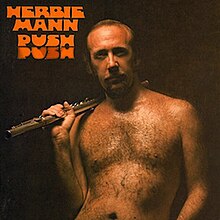
But the flute isn't yet history and has life beyond ridicule, however hard Ron Burgundy has tried. Jazz flautists have a small yet important page in the history of that music, if often more an extra trick up the sleeve of saxophonists, than necessarily the main deal. Herbie Mann came closest to making the jazz flute cool, if also, by that dreadful album cover, near inventing the parody above. In the 1970s he had even enough crossover appeal to be seen as cool to have a copy of any other of his works under your arm. I especially liked Memphis Underground, from 1969. Other notable jazzers with a taste for tooting, sorry, fluting, as many many jazz musicians allegedly had a penchant for tooting, would include Eric Dolphy and Rahsaan Roland Kirk, who could switch effortlessly between any number of saxes and flute. He could play more than one at a time, but am uncertain if that were ever possible between saxophone and flute. And, yes, that was nose flute at one stage in that clip, sparing having to mention it later.....

Rock flute had a very narrow window, beginning and near ending with Ian Anderson's manic persona in Jethro Tull. But, ahead of their folk-prog prime, they were a more straight ahead blues band, and the blues-rock scene was littered with flute solos. If were a band I was particularly fond of, with their vibe a mix and match of jazz, blues, rock and r'n'b. Both their reedmen, Dick Morrissey and Dave Quincy, were adept on the instrument. Of course, prog rock was awash with flute, much appreciated in whimsical and pastoral interludes in sidelong epics about dragons and princesses. Early Genesis were enthusiasts, as Peter Gabriel could play a bit, something he has kept distinctly quite about since going solo.


Folk flute has had two distinct rotes, in trad. inspired music and in fey singer-songwriter, of which the former has tended to date better. The list of Irish and Scottish bands able to whip out a flute, amongst all the all other panoply of pipes and fiddles are legion, with the name Michael McGoldrick perhaps standing out. Initially with Capercaillie, he has a successful solo career alongside working with and in Mark Knopfler's band, as well as in the house band for Transatlantic Sessions. His name, and that of Brian Finnegan, are two names that can act as a guarantee of classy playing, should you ever spot either on a CD  cover. Before Capercaillie, they actually played together, in the same band, Flook, along with a third flautist, Sarah Allen. Here's an old clip, followed by some early John Martyn, who was certainly anything other than fey, even if this example may be. The flute is by estimable jazz parper Harold McNair, often alongside Donovan in his early recordings also.


Country flute? Blues flute? Well, not a lot. I suppose Marshall Tucker Band might (just) about fulfil the first and Canned Heat, arguably, the latter, but that isn't all there is to this to this piece as I have to include a nod to more modern forms of music. A clip or two, even, from this century might help give some semblance of my not being some ancient dinosaur, even if I am. So, with a leap and a bound it is, oh, still only 1994, but the Prodigy, hey, kids, Granpa's gone all hepcat, daddio. Actually before they hit their chart topping prime, I remember hearing this and being absolutely astonished, and unable to get the ear worm flute melody out my head. I still can't.

Is 2010 near enough for you? Ever heard of Shpongle? I love 'em, that weird hinterland of dance and world musics, bundleed up into a somewhat lysergic trance like state, not that I have any experience of that particular trip, and placed into the somewhat niche genre of psybient: psychedelic ambient. Whilst it is true that one of the duo, flautist Raja Ram, actually kickstarted his career as far back as the late 60s, as a member of Ladbroke Grove raga-rock stoners, Quintessence, his, um, diet, has clearly done little harm, and he continues to ply his chosen path with no little wizardry. Whilst Ram is still upright, flute still has a place.

Too much here to pint you to all their product, so let's just go here, for something completely different. Keep them flutes a tooting!!