Saturday, February 5, 2022

Boss: Big Boss Man


purchase [ Jimmy Reed ]

Thinking over the word <boss> and its connotations, it occured to me that the word probably came into the English language via Dutch. A little research and ... voila .. "boss is Dutch in origin"... it  comes from base or bass or baas. However, being the polyglot that I am, I can't help surmising that there is more to this than that. The Turkish word for "put pressure on" (as in oppress a worker, or force) is <bas>. I am going to go one step further than Collins and Oxford dictionaries and posit that the root goes back further than the Dutch - back to the Ottomans,  in fact. It's just an observation, but it makes an awful lot of sense. (You heard it here first.) bas=baas=boss.

So... who's the boss? Well, even that phrase, popularized in many forms, has a somewhat murkey provenance. A 1914 Oliver Hardy film

The boss is "the person that other people have to obey". That could also take us down a rabbit hole of what it means "to obey", but it also conveys "authority and expertise", and with this we have a more accessible value to the word as it applies to musicians like Springsteen (known as "the boss" for some reason.)

I'll try to take a cue from our own Jordan Becker (and in the process confess that I too often paste information you can find in your own searches - tho'  I generally say as much). This week it''s not Springsteen . although it could have been. Not bossanova (tho, again, I love Carlos' music in any form, and thanks Seuras).  And not Blue Cheer who were also on my list of potentials on account of their "Summertime Blues"  (wherein we have the <I hate my boss> theme).

Pardon me while I provide some freely accessible Wiki data as I assume you haven't yet been there nor know it. Big Boss Man is a Luther Dixon/Al Smith song first recorded by Jimmy Reed - and you would be excused for not knowing the names. That said, some of Dixon's songs were recorded by the Beatles, the Jackson 5 and more.

Sing  "You ain’t so big, you’re just tall, that’s all."[

Above it's the Grateful Dead's version and below we have Jimmy Reed, then B.B. King and Elvis.


Monday, January 31, 2022

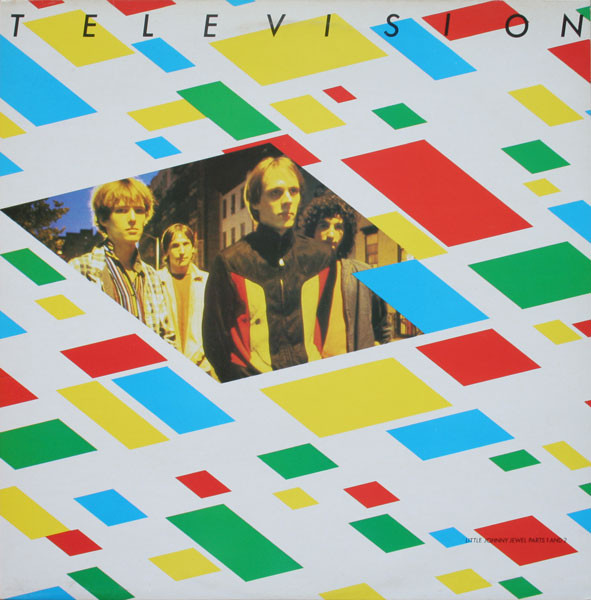
Boss: Little Johnny Jewel

Television: Little Johnny Jewel
[purchase

I scanned my list of potential subjects for this theme (read my last post if you don’t know what I’m talking about) and decided again to write about a band that I hadn’t discussed before—Television. I’ve written about small-t television many, many times, here and elsewhere (not going to link, since there are too many), because watching TV is probably how I spend more of my leisure time than anything else, but I’ve never written about the band. While Todd Rundgren’s failure to ever be discussed in this space was very surprising, it is almost as surprising that Television has only been discussed twice—back in 2008 and 2009—and both times about the same song, “Marquee Moon.” Which happens to be an excellent song, but we’re going back to Television’s first release, “Little Johnny Jewel,” a single on their manager’s label, released in 1975. 

Although Television came up out of the same C.B.G.B. scene as the Ramones, Blondie, Patti Smith, Talking Heads, Richard Hell and the Voidoids and the Heartbreakers, among others, who I often played on the radio back in the 1979-1982 period when I was doing college radio, I had trouble connecting with the band then. As someone who grew up on classic rock and prog, I (eventually) came to understand the hard, fast ethos of punk that those other bands followed (although for some, that changed over time) as a rejection of the older forms of rock.  While I still loved what I grew up on, I also learned to love punk (and new wave). But Television’s meandering jams and guitar solos and stream of consciousness lyrics, sung by Tom Verlaine in a yelping voice that, to my ears at least, made David Byrne sound great in comparison, somehow didn’t fit in to the slots that I had in my head at the time. I couldn’t understand how they were in the same category as the Ramones, whose simple two-minute songs done at breakneck speed were nothing like the long songs that Television produced. 

Because of their timing, and their identification with the downtown NYC music scene, and because of the rough sound of their music, Television is usually lumped in with the punks, but interestingly, I’ve seen them referred to as both proto-punk and post-punk, which seems impossible without some sort of time machine. And yet, it makes sense, when you look closely. Television presaged punk both temporally and in their attitude, but their sound was not “punk” in the way that word is commonly used, so like “post-punk” bands, they embraced the brashness of punk, but not all of the sound. 

In my old(er) age, I’ve come to appreciate Television more and more. Maybe it is my more mature approach to music that is less interested in putting artists and their music in genre slots, so that I enjoy the connections that artists that seem very different actually have. I know, for example, that the first time that I heard “Impossible Germany,” by Wilco, one of my favorites, I was struck by how the intertwined guitar parts played by Nels Cline and Jeff Tweedy reminded me of Television’s Verlaine and Richard Lloyd. 

As mentioned above. “Little Johnny Jewel” was the first song released by Television, its 7 plus minutes split into two parts on a 45, and it’s an odd one. Opening with a bass line (from Fred Smith, who had replaced Richard Hell), before Billy Ficca’s drums and the guitars enter, the instrumental eventually resolves into a groove before the vocals begin. The song may be about Iggy Pop, whose real name was James Newell Osterberg, Jr., but his middle name is sometimes listed as “Jewel.” There’s a long instrumental guitar section featuring Verlaine soloing in the middle that sounds closer to psychedelia or even jazz than punk before the groove returns, along with the lyrics: 

Oh, Little Johnny Jewel
He's so cool
But if you see him looking lost
You ain't gotta come on so boss


Verlaine recalled in an interview: “Lou Reed asked me, ‘Why’d you put out this song? This is not a hit.’ I said, ‘What band playing a bar in New York, issuing their own single, is gonna have a hit?’” However, the single sold surprisingly well, and arguably kickstarted the New York punk movement.

Saturday, January 29, 2022

BOSS:ANOVA

Sorry, guys, going out on a Springsteen free limb here, eager to see if there is any love for the bossa. To folk of a certain age, myself included, that can open up a vista over one of the most over-exposed and ubiquitous songs of the last century, the cloying Girl From Ipanema, but don't go, stick around. It isn't actually a bad song, you've just heard it too many times.

The Girl from Ipanema/Amy Winehouse

Anyway, this isn't about the song, it's about the style. Arguably no more than a variation on the Brazilian life-source, the samba, it swept in on a wave of innovation in the late 1950's, a condensation of the intrinsic rhythmic shuffle to the minimal, buoyed by off kilter chords and progressions, all syncopated to the max. The splendidly named Milton Banana was probably the originator, the drummer/percussionist for Joao Gilberto. Gilberto's Chega de Saudade (1958) was the first record recognised within this new form, the style then breaking in the film, Black Narcissus, a year later.

Manhā de Carneval (from Black Narcissus)/Elizete Cardoso

That's about as far down that historical alley I want to go, even bypassing the superb contributions to the genre gifted by celebrated saxman Stan Getz, who blows the breathiest whisper that instrument can manage and still be audible. A glorious tone. Because I've got you here to catch what has been happening to the style since the 60s. The enthusiasm actually fell away in the homelands, the breezy music sitting uncomfortably with the political frictions occurring in Brazil, even if every jazzer and his dog in the US was tearing Ipanema to shreds in supper clubs and hotel lobbies across the nation. As latin rhythms determined a more streetwise and funky uplift, courtesy Carlos Santana, so the cool jazz lite of the 'nova was on the fade.

Wild Horses/Karen Souza

It was actually my love for cover versions, an unceasing quest of mine these past two or three decades, that lead me back to Bossanova, let alone many another arcane and forgotten style. The Rolling Stones, always a favourite band of mine, have attracted versions across the musical map, encompassing blues, reggae and zydeco, all these having been avidly devoured. So when I discovered a label, PMB, originally based in Argentina, seemingly hellbent of exploiting the emergent love for chilled beats, and morphing this with the sounds and style of Bossanova, I was made up. As well as the Stones, there are also volumes devoted to Bob Marley, the Ramones and Madonna, the bandwagon then drifting to other labels, quick to produce similar Beatles renditions. OK, not all of this is good and some is a good deal even less than good, but, when it hits base, it is perfect. Well worth a punt, as easy to pick up cheap second hand copies.

Love Will Tear Us Apart/Nouvelle Vague

Meanwhile, over in France, Oliver Libaux and Marc Collin were having similar revelations, as they set up the band/collective Nouvelle Vague, which translates roughly both as New Wave, which is one of the possible translations also for Bossa Nova. Since 2004 they have produced a sizeable body of work, largely slightly kitschy covers of New Wave artists in the anglophone sense of the word. And, yes, I have most of their work too. But surely the style should be more than for smart arse copyists?

Essa Moça Tá Diferente/Bossacucanova

I'm afraid, as tends to happen, the worm hole of bossa covers led me to new artists and new material. Bossacucanova are amongst those who consider the format still keeping alive, and have injected a little more electronica to sit alongside. I can't say it grabs me as much as I hoped, so it is gratifying to round this piece off with something that really does bestride the decades, managing to keep the delicate angularity of the original songs, with a heft of 21st century credibility. Unsurprising, therefore, to realise she is second generation Bossa. Her father was Joao Gilberto, who wrote and sang the original Girl From Ipanema. Tanto Tempo was her big breakthrough album in 2000, and I can thoroughly commend it. But I had thought her a spent force, until I learnt of Agora, an album that came out during lockdown, in 2020, and which rapidly became one of my records of that year. 

Teletransportador/Bebel Gilberto


Thursday, January 27, 2022

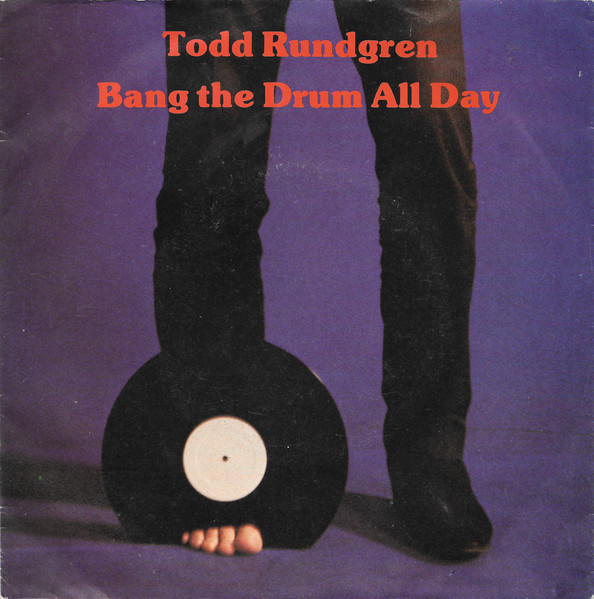
Boss: Bang The Drum All Day


Todd Rundgren: Bang The Drum All Day
[purchase

Unless a song immediately jumps into my head when our theme is announced (or if I had one in mind when I suggested a theme), my first move is to do searches of my iTunes library. Yes, I’m an owner, not a renter. I was unimpressed by the songs that had the word “Boss” in the title (and didn’t want to write about a Bruuuuuuuuce song). You may know that there’s a site called lyrics.com, where you can search for words in lyrics, and narrow by genre and other filters.  It's a godsend for music bloggers, believe me. 

I powered through the filtered list (you are welcome to speculate as to what genres I chose, and which I excluded) and came up with a bunch of really good songs to write about. And because in situations like this, I like to write about artists who I haven’t posted about before, one song became the obvious choice—Todd Rundgren’s “Bang The Drum All Day.” Not only is it a great, fun song, but as I’ve mentioned here, I’m a bad drummer, and frankly would prefer to bang on a drum than work, most of the time. Since banging on drums is unlikely to make it possible to pay my bills, sadly I still have to work. 

Another thing that made me want to write about this song is that, it appears, since SMM’s founding back in 2008, no one has written a post about one of Rundgren's songs. He’s been mentioned and his production work has been referenced, but despite the fact that the guy has written a bunch of serious classic rock songs in a career that started in the late 1960s and has included more than three dozen solo and band albums, as well as being a true innovator, none of the many former or current SMM writers have written about him. 

Now, if you read my stuff, at this point, you’d probably expect the next line to be, “Born in Philadelphia in 1948, Rundgren….” followed by a long discussion of his career mostly pilfered from Wikipedia or Allmusic, with the occasional snarky aside. But I’m not going to go there. If you want to know more about Rundgren’s life and career, click on one of those links. Or both. Because you don’t want to work, either.

It may be that “Bang The Drum All Day” will end up being Rundgren’s most enduring song, although “Hello It’s Me” and “Can We Still Be Friends” might give it a run for its money. ("I Saw The Light," too.) It was, initially, a throwaway song that Rundgren claims came to him mostly in a dream, and since he had a home studio, was able to roll out of bed and record it-he plays all the instruments on the song. Rundgren has said that his record company didn’t see the song as a single from his 1983 album The Ever Popular Tortured Artist Effect, but eventually it was released and topped out at 63 on the Billboard Pop Singles chart, and 39 on the Billboard Mainstream Rock chart. 

But it had legs. 

What makes the song fit our theme, of course, are the lyrics: 

Every day when I get home from work
I feel so frustrated
The boss is a jerk
And I get my sticks and go out to the shed
And I pound on that drum like it was the boss's head

But what made the song popular was its fun message and the catchy music. Rundgren explained

I like the idea that I've written a song that is well known to a broad segment of the population…and they have no idea why they know it! In the same sense that everybody knows 'Happy Birthday,' but they can't remember the first time they heard it, and they have no idea who wrote it. But you've penetrated the cultural consciousness in a way that transcends the typical pop song, and what it means is that if I never have another hit record on the radio again, that song is still going to be around likely twenty-five years from now. 

And although Rundgren also claims that he hates playing the song because it makes him feel “ape-like,” he also considers it his most impactful song, “because I made so much money off of it.” Not only through sales and airplay, but because it has been used in many commercials, TV shows and movies, at football games (most notably Green Bay Packers games) and as a theme song. 

Despite making all that money from “Bang,” it still seems that Rundgren still wants to work (or maybe has to.)

Saturday, January 22, 2022

Done: All My Life


purchase [ One by One ]


For someone who for many years had one foot in Seattle, I know relatively little about the local music scene. My excuse being that I have only ever been a transitory visitor even though my legal US residence is still WA state. That said, among the handful of live concerts I have attended in the US is Blind Faith and again Eric Clapton about 50 years later - both in Seattle.

But Nirvana? Pearl Jam? Alice in Chains? Sound Garden? Green River? All Seattle bands. The best I can say in my favor on this count is that I have listened to a little of them. And I keep saying it's time I did some more. In the late 60s and early 70s I listened to a fair amount of what then passed for "heavy", such as Led Zeppelin, Mountain, Grand Funk Railroad, Deep Purple  .. And for all that, following a little search at SMM archives, I see that I have actually  touched on the Foo Fighters more than once. And still don't know much of their music. 

This post would be one that our sometime itinerant/irregular writer Andy La Raygun might have chosen, he being much more knowledgable about this sound and style. And considering that they were just inducted to the Rock and Roll Hall of Fame this year (which see), there are a lot of other folk who like their music. 

I could become a convert if I listened to more. Maybe. Dave Grohl is a name I am somewhat familiar with, but I know squat about the rest of the band, and that would be yet another trail to follow and improve myself.

Grohl says the song is a little dirty. You can search that one yourself. He also notes that it really isn't that heavy, for his taste. Mmmm. Heavy enough for me but harmonic enough that I can enjoy it more than I do with most of its ilk. No really. I'm not a  grunge listener and in spite of my off and on resolutions to widen my horizons, I probably never will be.

But I do appreciate the <drive> incorporated in this piece. Oh, and "done"? It's the lyrics: 

Done, done. I'm on to the next one (again and again)

Friday, January 21, 2022

Done: Nothing Can Be Done


purchase [ Night Ride Home]

A tip of the hat to our own Seuras Og, who undoubtedly would have given you a different take on this one, but left it for me while probably wondering by this time if I would ever get around to the task.

A lot of the music I like to listen to comes from the Laurel Canyon crew. Never having delved too deeply into the historic records of that scene, I find myself scrolling through photos taken by Henry Diltz and amazed at the shallowness of my knowledge of that bit of history. There's so much more to learn but the photos provide a lot of fodder for a wandering mind.

I had ended up at that page following a trail about Jackson Browne and Joni Mitchell - and trying to come to grips with my ambivalence about Joni Mitchell. Due to my age and cultural exposures, I certainly heard Joni Mitchell, but always felt her music was a little too Blue for my taste. I certainly have had respect for her unique style - even play my own interpretation of Both Sides Now, just one of her many excellent songs. But, well ... too often melancholy. Even the seemingly ever-present pout carries that same sensibillity to me.

This digging has also lead me to question my lack of interest in female musicians of the type. Yes, Joni is unique, but in my mind she has been associated with Joan Baez for some reason. And much of the above pertains to her as well: gifted but not my bag, whereas Bonnie Raitt, Stevie Nicks, Billie Elish (just to name a few) - I can listen to again and again. So it's not gender related dis-interest.

So ... "done" and Joni Mitchell: When I first heard "Nothing Can Be Done" - yes, just the other day - my ambivalence shriveled a bit. This isn't the Joni Mitchell I thought I knew. Well ... the lyrics fall into the category of stories she might tell. But the music doesn't. At all. But then my aversion means that I haven't listened to all that many Mitchell works.

While the lyrics are Mitchell's, the music is credited to Larry Klein. And again, writing here at SMM takes me to places I should but don't know about as I learn that Klein and Mitchell were married for some time and continued collaborating afterwards. And that Klein also has had a rather eclectic musical background.

It's a song of sadness, growth, skeletons and wisdom gained. It's not "I'm done", but rather, since nothing can be done about the smoking gun of my heart, it's time to learn a lesson and move on wisened by the experience.

Thursday, January 20, 2022

DONE: RUST (WHAT'S DONE IS DONE)

Nothing like a bleak and misty January morn to instil a sense of hopelessness. No, scratch that, not hopelessness, more inevitability. Hopeless is a a state of feeling, an ur-idealism, whereas inevitability carries at least a tint of realism, an acceptance possibly,  rather than the blanket sense of fear. Which may have you thinking to skip this one, for fear of contagion. But don’t go, I’m OK and this gets lighter. Well, not the song. Clearly.

Rust (What's Done Is Done/Therapy?

A confession. I originally planned this post around a different song altogether, that being the Joni Mitchell deep cut, Nothing Can Be Done. But I discovered my compadre, KKhafa of this parish, was planning on doing the same song, getting his dibs in first. That needed some swift recalibration, and another song to convey a similar mood. Digging around in various lyrics search engines I eventually came across this, by Therapy?, the metalheads from N'orn, a band I have never knowingly heard or investigated. But their name, ahead of listening to the track, gave a semblance of also being able to address the full mental health of my current. Plus, for all I knew, maybe listening to them would prove good medicine. (Intriguingly, a scan through their song titles gave me no small joy, as they contain some evident wit and a fair amount of apparent self-deprecation. Jude the Obscene certainly grabs the eye, as a title, as does Stark Raving Sane and Perversonality, each title suggesting some experience on one side or other of a white coat or padded cell.)

Stories (cello version)/Therapy?

So, I listen, bemused. Not really heavy metal as I know or ever knew it, smacking more of punk in the pace and the attitude. Do I like it? Not sure I'd go that far, but it has a certain angular graceless charm. It comes from the band's 7th album, High Anxiety, in 2003, with wiki telling me the sound, my bad, is actually melodic punk, rather than metal, heavy or otherwise. Sometimes a four piece, as on this record, more often they have been a trio, my interest piqued by the fact that cello featured amongst their available instrumentation. Sure, it isn't really evident in Rust, but the other track, above this paragraph, displays this better. Clearly a wormhole needing exploring!

Peek-a-boo/Siouxsie & the Banshees

Martin McCarrick is the cellist, and was a member of Therapy? between 1996 and 2004, doubling also on guitar. I confess to being unfamiliar with his name, so decided to do a bit of a search, discovering him to be quite the journeyman, with time spent in, or attached to, a number of bands, with quite an illustrious career. Possibly better known as a Banshee, he featured on several of their records, between 1984 and 1995. Starting off as their string arranger, for the Thorn EP, he was later contributing keyboards, as well as playing cello. This includes the accordion in Peek-a-boo, above. But even ahead of that he was a Mamba, Marc Almond's backing band of the early 80s, and with whom he has maintained a lasting link. At possibly the same time he joined Therapy?, he was also integral to any number of looser knit collectives, including This Mortal Coil and Dead Can Dance. He would also add the strings to records by Kristin Hersh and, later, Skunk Anansie. Diversity clearly his middle name, it seems almost strange he spent so much time in the less than rarified atmosphere of the Belfast rockers. Unless it is just me? Unsurprisingly, he has since become a well known soundtrack composer, as well as working with his wife, Kimberlee, as/in the McCarricks, she playing violin to his cello.

Letter From Nagoya/The McCarricks

My final clip shows him, back with Marc Almond, back on accordion and playing live, in 2020, ahead the pandemic. Let's truly hope he isn't done.

Hymn of Love/Marc Almond


(And I no longer feel hopeless, btw.)


Monday, January 17, 2022

Done: The Biggest Thing That Man Has Ever Done


Woody Gurthrie: The Biggest Thing That Man Has Ever Done
[purchase

I’m staying in the political song area again, but this time something more overt, Woody Guthrie’s “The Biggest Thing That Man Has Ever Done.” The song takes the form of recollections of an “historical bum,” present at great moments in human history (real or imagined), sort of like a folk song version of Zelig

It turns out that Guthrie borrowed the idea from earlier songwriters—the template (and even some of the lyrics) come from an 1894 song called “I’m A Highly Educated Man,” a version called “When Abraham And Isaac Rushed The Can,” was recorded in 1924 by “Fiddlin’ John Carson,” Grand Old Opry stars Uncle Dave Macon, Charlie Poole and Vernon Dalhart each did a version called “I’m The Man Who Ride The Mule Around The World,” (as has Loudon Wainwright III), and it has been recorded by many others, including Elvis Presley (in 1970), as “I Was Born About Ten Thousand Years Ago.” (And if you look hard, you might be able to find a version of the song by Jerry Garcia and Robert Hunter from 1961, before the Grateful Dead was formed). 

Guthrie took the bones of the song and grafted on to it the populist, pro-labor, probably small-c communist politics that he espoused (and yes, I know that the evidence shows that Guthrie was probably a member of the Communist Party at some points, but also that he really wasn’t a “Party” kind of guy.) So, he’s present at the creation, worked in the Garden of Eden (as a member of the apple pickers union), worked on the Pyramids and the Tower of Babel, fought in battles, beat Romans, Turks, and other great powers, helped win the American Revolution and the Civil War before moving on to the issue that was directly on Guthrie’s mind in 1944, when the song was recorded: World War II. 

There was a man across the ocean, I guess you knew him well,
His name was Adolf Hitler, goddam his soul to hell;
We kicked him in the panzers and put him on the run,
And that was about the biggest thing that man has ever done. 

There's warehouse guys and teamsters and guys that skin the cats
Guys that run my steel mill, my furnace and my blast
We'll stop the Axis rattlesnakes and thieves of old Nippon
And that will be the biggest thing that man has ever done.


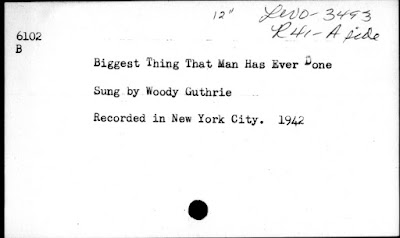
I know that the card that I used as an image indicates that it was recorded in 1942, and it may well have been—the record is vague—but the version above was probably from 1944, which makes sense, because by then, Hitler was more “on the run” than he would have been in 1942. But it is clear that Guthrie is also giving credit for winning the war to the workers, as well as the soldiers. 

Guthrie ends this version of the song (and if you’re interested, here’s a set of lyrics that has many more, and different verses, but I haven’t been able to find a recording of this version): 

Well I better quit my talking 'cause I told you all I know
But please remember pardner wherever you may go
The world is digging Hitler's grave and when the job is done
This'll be the biggest thing that man has ever done. 

And, in 1944, that probably was right (and it still might be right, today.) 

I’ll confess that the first time I heard this song, it was being sung by Dan Bern, and I didn’t know that it was a Woody Guthrie song until I did a little poking around. Bern, a family favorite who I’ve written about a few times, and seen even more times, is a folksinger in the Guthrie tradition, mixing politics with nonpolitical songs (and, like Guthrie, writing children’s songs and Hanukkah music). Bern released his version in 2004, and it included a few of the verses from the longer version linked to above (modified a bit). But he also updated it a little, adding a verse about the moon landing, and then the verse that probably was the impetus for the release: 

There's one big thing we must do when shove comes to push
Defeat the so-called President by the name of Bush
Vote early and vote often, November 2 not 1
And that will be the biggest thing Man has ever done
That'll be the biggest thing Man has ever done 

Now, that didn’t work, sadly, but it is nice to know that the Guthrie tradition of political songwriting carries on (and yes, Bern has written anti-Trump songs).  

Dan Bern: The Biggest Thing That Man Has Ever Done
[purchase]

Friday, January 14, 2022

Done: You Haven’t Done Nothin’

Stevie Wonder: You Haven’t Done Nothin’ [purchase

I’m still trying to wrap my head around this theme—“Done” would have made sense to me at the end of 2021, although the year-end here at SMM is filled with traditional themes, like our post-Thanksgiving “Leftovers,” some holiday-related theme(s) around Christmas, and the post-Christmas “In Memoriam.” So, if we had kicked off 2022 with “Beginning,” which we did in 2016, or “Fresh Starts” (2012), I’d get it. But maybe I protest too much, since our first theme of 2021 was “Over,” but I think that tied into the end of the Trump Error, and not the end of the also crappy 2020. 

Anyway, even though, so far, there’s no evidence that 2022 is going to improve on 2021 in any way, my choice of song for this theme is unrelated to the definition of “Done” as an adjective meaning “over,” but rather in its role as the past participle of the verb “do.” (Yes, we here at SMM are grammar nerds). And after the somewhat disappointing view totals of my In Memoriam piece about Larry Harlow, not exactly a household name outside of the Harlow household (and, of course, the salsa world, which doesn’t appear to overlap too much with our readership), I’m going to write about a big hit for a massively famous musician, Stevie Wonder’s “You Haven’t Done Nothin’” which was a No. 1 pop and soul hit for Wonder.

I’ve probably mentioned more than a few times here (and maybe at some of my other blogging homes) that one of the joys of writing these pieces is that I often learn things about the song or artist that I didn’t know, and that’s what happened here. “You Haven’t Done Nothin’” was released as a single in 1974, and I probably heard hundreds of times over the years. But what I did not know, until I began researching this piece, was that it was directed at Richard Nixon, who resigned two weeks after the album it was on, Fulfillingness’ First Finale, was released, and one day after the single was released. Thanks for making that happen, Stevie. (I still remember the joy that my 13-year-old self felt when I heard, while working as a junior day camp counselor, that Nixon had decided to step down, which is maybe why this is my second Watergate related post in recent weeks.) 

I also didn’t know that the background vocals on the song were sung by the Jackson 5—despite the fact that Wonder literally sings “Jackson 5 join along with me” during the song. Or that all of the instruments on the song (other than bass) were played by Wonder, including the horn parts on synthesizer. 

Wonder is, of course, amazing, which was brought home to me this summer when, during that brief period when we thought COVID was on the ropes, my wife and I went to an actual movie theater to see the brilliant documentary, Summer of Soul, about the mostly forgotten Harlem Cultural Festival that took place in 1969, featuring an incredible roster of talent. Questlove, the director, made the decision to open the film with 19-year-old Stevie Wonder playing an amazing drum solo (!). You can see a bit of it (and hear a little more of it) in this trailer for the film (it’s on Hulu, and you really should just see the whole film because it is mind-blowing)


I also found this interesting essay from the Arkansas Democrat Gazette that discusses Wonder’s performance, including speculation as to why Wonder chose to include the drum solo in a cover of the Isley Brothers’ “It’s Your Thing,” which was considered to be a “kiss-off” to Motown Records, Wonder’s label, and it’s a worthwhile read.

Thursday, January 13, 2022

DONE: ANOTHER GOOD MAN DONE GONE

 I think it probably the garbled syntax that attracted me first to this song, having always a love for the vagaries of language and how it can devolve. (Yes, devolve.) Especially in the southern states of the US, where there seems often gratuitous joy in treading roughshod over any concept of grammatical fluency. But it seems I am wrong to poke fun or criticise, as the good folk of Yale have looked into all of this, and more, in some depth. I give you the Yale Grammatical Diversity Project, which addresses the use of english in north America. Done gone is what is called a "perfective done". Good, innit!? And I refer and recommend you to the whole of the rabbit warren that clicking on that site can open up, but not right now, we have a song to discuss.........

You may know this song from other versions, which may be touched on, but it is hauntingly and stunningly gaunt in this presentation, a lone voice of lamentation that burns through any need for accompaniment. The singer is one Vera Hall, she acknowledged as, if not the author, certainly the owner, via possession being  9/10 of the law. For, when John Avery Lomax, the ethnomusicologist began collating the songs of America in the 1930s, it was Hall he wooed more asiduously than many, recording as many songs as she could sing for him. This is the one that stuck the hardest, with it being recorded for the Library of Congress in posterity. Lomax's son, the slightly better known Alan, who continued in the same stock of trade, later presented her in concert at Columbia University's American music Festival of 1948. 

But what of those other versions? Perhaps the most well known is that by Johnny Cash. In a spare call and response with Anita Carter, his sister in law, it remains a striking call to arms, solitary vocal tracks drenched in echo. So what or why was the subject done gone? It seems the song refers to the death of a man, a black man, on a chain gang, the unsaid implication that his presence in said chains was down to some trivial misdemeanour, such as within the context of such times. (Such times? This article opens a not so distant eye to the practice I had thought long since, along with Paul Muni, been confined to history.) Still, my new year resolution is be to avoid outraging myself as much I can, so, rather than progressing this as any diatribe, have another, final version, this time with backing.

In 1974 Jorma Kaukonen was probably still better known as the shit hot electric guitarist in Jefferson Airplane, although he had dropped stellar hints around his fabulous acoustic technique as well, courtesy the Hot Tuna side project he and JA bassman Jack Casady set up five years earlier, and which still survives, if only from time to time. Quah was a solo album he dropped that year, nominally in cahoots with his friend, Tom Hobson on additional guitar and occasional vocals. 45 years on it is a record to which I frequently turn, the pervasive mood of melancholy something I find uplifting. His picking and the spectral hollowness of his voice is just perfect for this song.

And that's all I done got to say.

Done Vera, Done Johnny and Done Jorma (a later live version).


Saturday, January 8, 2022

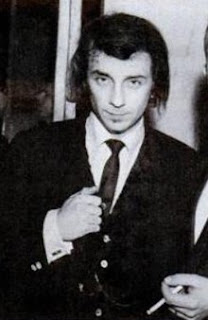
In Memoriam: Phil Spector


Phil Spector left behind a number of things he'll be remembered for.

For most people who follow music, the first would be the Wall of Sound. The Wall of Sound method is in itself an interesting study. Wikipedia enlightens us: combine and discretely mix acoustic, electric and ninstruments poreviuously unconventional in rock music  so they sound as if they are a single instrument to provide a fuller tone: a wall of sound.

There are of course, the many musicians who he produced - despite his mostly unproductive last 30 years. This first 30 years included production credits with Ike and Tina Turner, the Ronettes and the Beatles.

What most of us don't know (or choose not to) is his demise in prison serving a 19 year murder sentence. Maybe a murder conviction is not so outrageous for a man who lived what was essentially an outrageous life: an immigrant family, mother working as a seamstress after his father's suicide, a move to LA where he began to immerse himself in music.

Also known for his in-house Wrecking Crew band of LA session musicians who played on hundreds of hits in the 60s and 70s - backing anything from the Monkees to Cher to Bing Crosby. A side trip into members of the band is an education in itself (Barney Kessel, Dr John, Leon Russell, Jim Keltner, Glen Campbell and many more)

The Lana Clarkson murder in 2003 put him in prion for the rest of his life (he died in prison this past year). The evidence and circumstances were not very clear  but the jury convicted him - after several trials- of  second degree murder.

As an aside, Spector's Wall of Sound is not to be confused with the Grateful Dead's wall of the same name: a wall created literally by a wall of equipment (amps and speakers) that was devised by Owsley Stanley.


Wednesday, January 5, 2022

IN MEMORIAM: GEORGE FRAYNE

George who? Well, you might have known him better as the Commander, Cody, that is, the laconic, cigar chomping leader of his Lost Planet Airmen, that ragggle taggle collective of country memes and influences that beguiled and bemused many an otherwise country music loathing audience across the swathes of the 20th century's last three decades. I loved 'em, but you might have known that


Frayne started the band back in Ann Arbor, Michigan, as a way of getting some beer money whilst pursuing his studies, first a BA in design, topping that with a masters in sculpture and art, two years later, in 1968, before an initial foray into teaching. However, sensing an audience for the manic fusion of country, rockabilly and western swing, he and his like minded compadres did a bunk to Berkeley, during 1969, which is where they stayed, making forever there a little home of red necked hippies in Southern California. A bandleader in the old sense, he was unafraid of the others stealing his thunder, confident and competent enough to give the limelight to the rest of the band, if then to wrest back the crown for one of his idiosyncratic sung-spoken updates of vintage classics. Every album would contain one or two such pieces, like the song above, Hot Rod Lincoln, and the paean to nicotine, Smoke, Smoke, Smoke (That Cigarette). The rest of the booty would be shared out amongst the other front men of the band, Billy C. Farlow, vocalist for the rockier fare, toting a big and unplugged red guitar, and the mighty Bill Kirchen, who could write and croon a country weepy like no other, tongue in cheek, as tears fell down it. Kirchen also possessed an uncanny talent with a telecaster, going later on to have a career of his own, lasting to this day, the self-styled King of Dieselbilly. Having a bevy of ace musicians in the backline can't have hindered either, the likes of Bobby 'Blue' Black on steel and Andy Stein on fiddle and saxophone guaranteeing the chops were as sound as the influences, with second guitar John Tichy, bassist 'Buffalo' Bruce Barlow and drummer Lance Dickerson no small talents either. 


Successive record companies, Paramount and then Warner Brothers, had seemingly hoped for some cali country rock to file alongside the Eagles or Poco, which, if nothing else, showed how wrong they had assessed the cut of the band's jib. But, whilst 1971's Lost In the Ozone may have been defiantly different from quite anything else around at the time, it did at least have some minor chart action courtesy Hot Rod Lincoln. Which gave them that extra foot hold to keep doing what they did best. Meanwhile, an ocean away, in the UK, the teenaged me was discovering the pleasures of honky tonks and steel guitar, if only aurally, through the works of Gram Parsons' Flying Burrito Brothers, and I chanced upon a copy of their second album, as entranced by the cover painting as the anticipation off what may lay inside, buying it on spec. Hot Licks, Cold Steel and Trucker's Favorites delighted me and disarmed me in equal doses, the heavy hit of some of the songs initially too "and western" for my untutored ears. Mama Hated Diesels, a brilliantly bittersweet fable from the pen of Kevin 'Blackie' Farrell, had my jaw drop to the ground in horror, momentarily at least, ahead of bouncing swiftly back into a fixed rictus of joy as it progressed. Hook, line and sinker, this was my kind of band, that then cemented by the Live From Deep in the Heart of Texas album. OK, it's true, I was less taken by Country Casanova and Tales From the Ozone, which seemed a little too busily wacky and less authentic, but remember being delighted as a friend picked up the latter, able to further eulogise their earlier works to him.


Which is how, in the spring of 1976 we found ourselves at London's Hammersmith Odeon, the two of us ready and eager for a taste of the live show ourselves. Unbeknownst then, it was from this show that provided the live tapes for (some of) later that years second live recording, We've Got a Live One Here, a double album I had to dig out and play, as I prepared this piece. Surpassing any of my expectations, the band were on fire, the line-up augmented by harmonica maestro, Norton Buffalo. Plus, given both he and Kirchen were also adept trombone players, this gave an opportunity for the Ozone Brass to make their debut, the two 'bones and Stein's sax, for exuberantly OTT takes on western swing staples like San Antonio Rose and Milk Cow Blues. I was in heaven, transported back there by my recent revisiting of the vinyl record.


That was sort of it, the band imploding a not so long thereafter. Frayne kept the Commander Cody title on into a number of lesser bands, but the tide had turned, for me anyway, my ears more keenly attuned to the new wave of artists like Elvis Costello and Joe Jackson. This tended to put my country music aside for a while. Or, actually, until Costello brought it all tumbling back into focus, as he nailed his flag to that mast with Almost Blue. Many, many years later I was lucky enough to have some of my Commander Cody favourites reprised, including, at my request, Mama Hated Diesels, when Bill Kirchen made one of his irregular small club and bar tours of the UK. I was able to chat with him in the interval, as he manned the merch stall, mentioning the tour of all those years before. He said he kept in some touch with the Commander, and had fond memories of those days. Me too. (Here's my review from then.)

Here's a great interview, from 2018, with Frayne, where he too comments on keeping links with Kirchen. And reveals that John Tichy, after the band folded, became a professor of physics. It makes for a more reflective read than the somewhat more effervescent Rolling Stone article of some near 40 years earlier.

R.I.P., George, thanks for the music and all those fond memories.

Monday, January 3, 2022

In Memoriam: Larry Harlow

[purchase

On New Year’s Eve, my wife and I watched Being the Ricardos, the new film about Lucille Ball and Desi Arnaz, directed by Aaron Sorkin, which we enjoyed greatly. At one point, I began to wonder about the popularity in the US of the Latin music that Desi Arnaz (and Ricky Ricardo) performed in the 1950s. And yes, it appears that in the 30s, 40s and 50s, Latin dance music of various styles, including the tango, samba, and rhumba, was popular in dance halls, essentially because it was fun to dance to. And some have ascribed the popularity of Latin music in the United States during the 40s in part as an attempt to escape the horrors of World War II. Arnaz was part of a mambo boom that started in the 40s with, among others, Xavier Cugat and later included Tito Puente, Pérez Prado (the “Mambo King”), and Carmen Miranda. 

During this period, the bandleader at the Latin Quarter nightclub in New York was Buddy Harlowe, whose birth name was Nathan Kahn. Nathan’s young son Larry (born in Brooklyn in 1939) often hung around, listening to the music with club owner Lou Walters’ daughter Barbara (yes, that Barbara Walters). Larry, whose mother Rose was an opera singer, was a musical prodigy who could play many instruments at a young age, and he soon focused on the piano. While attending the High School of Music and Arts in Harlem, he became fascinated by the music of Cuba that he heard coming from the buildings he passed walking the streets.  Harlow studied music in Cuba in the 1950s but didn’t finish his degree, though, because of the Revolution, so he returned to New York. 

Using a truncated version of his father’s stage name, Larry Harlow and his orchestra played the Borscht Belt hotels in the Catskills, where Latin music was extremely popular and other Jewish and actual Latino musicians performed the music. (The number of Jews playing Latin music during this era was surprisingly large). Once the US Government embargoed Cuba, it became impossible for Cuban musicians (and their recordings) to come to the States, so an American label for Latin music was needed. Fania Records was founded by lawyer Jerry Masucci (who Harlow had met in Cuba and bonded with over their common Brooklyn roots and love of the music) and Dominican-born musician Johnny Pacheco. Fania’s first signing was Larry Harlow, and it went on to be referred to as the “Motown of Salsa,” for its influence in the style of Latin music that arose in the 1970s. 

Harlow became one of the most prolific artists for Fania, recording more than 200 albums by various artists and 50 of his own, including Hommy, inspired by the Who’s Tommy. He was the first to develop the front line of two trumpets and two trombones that most salsa bands use today and explored Latin music’s African roots. When Arsenio Rodriguez, an influential blind Afro-Cuban musician died in obscurity in 1970, Harlow recorded a tribute album. Rodriquez had been nicknamed “El Ciego Maravilloso,” “The Amazing Blind Man” — and Harlow would soon be known as “El Judio Maravilloso.”—"The Amazing Jew.” As a less amazing Jew, I found that amusing when I learned about it. 

In 1974, Harlow was instrumental in collecting over 100,000 signatures for the recognition of Latin music by the Grammy Awards and led a protest at the awards, resulting in the creation of a Latin Grammy Award. Three decades later, in 2008, Harlow would receive the Trustees Lifetime Achievement Award from the Recording Academy, which runs the Grammys. (That category no longer exists, but there's now a whole separate Latin Grammy Awards.  You can decide for yourself if that is better or not.) And while constantly affirming his Jewishness, Harlow became a Santeria priest in 1975. 

Despite the fact that my parents are basically the same age as Harlow and are also from Brooklyn (and went to high school with another well-known Jewish salsa musician, Harvey Averne, who played and worked with Harlow), I’m not well-versed in Latin music, and was utterly unaware of Harlow until my son became a fan of the Mars Volta, which was made up primarily of Latino musicians, but whose sound, in general, had very little in common with salsa. However, Omar Rodriguez-Lopez, of the Mars Volta, is of Puerto Rican descent, and was a fan of Harlow’s. Through the friendship of Harlow’s son Miles (who now runs a cannabis company named “Buddy’s” in honor of his grandfather) and the lawyer for the Mars Volta’s label, Harlow appeared on two songs on the band's album, Frances the Mute, "L'Via L'Viaquez" and "Cassandra Gemini." I saw Harlow perform “L’Via” with the Mars Volta a bunch of years ago, and you can read about that (and hear the performance) here

The clip above is from a film, Our Latin Thing, released in 1972, featuring the Fania All-Stars, which, as you probably can guess from their name, was an all-star collection of Fania bandleaders, sidemen and singers. You can see Harlow in the recording studio directing an overdub vocal sweetening session with vocalists Ismael Miranda, Adalberto Santiago and Cheo Feliciano, who sang lead on the tune “Anacaona,” as well as playing an amazing piano solo.

Saturday, January 1, 2022

Top Posts of 2021


We interrupt the annual In Memoriam theme for our seventh annual listing of the most viewed posts of the prior year.

Through our (usually) two-week long themes, our international roster of writers address many different kinds of music, and bring different perspectives to their pieces. This year, we had a lot of jazz songs, due to the surprising popularity of our Jazz Covers theme (from the middle of the year).  In addition to all that jazz, our top 11 (due to the fact that number 11 missed out by 1 view), includes a funk classic, a post that discussed, among other artists, the Band and Katy Perry (and the Beatles), famous music venues, alternative history about two acclaimed Americana acts, classic punk rock, songs about the so-called most important meal of the day, and a pairing of legends with songs about the north and south,

Every year, when I go through this exercise, I'm always surprised by which posts get lots of views and which don't.  Each year, some of my favorite contributions don't come close to making the cut, and the popularity of the artist or song written about seems to have little correlation to popularity on this site. So, take it away, Dave Brubeck, and everyone else....

1.  Jazz Covers--Take 5
2.  Feat/Feet--Get on the Good Foot
3.  Jazz Covers--Golden Brown
4.  Opposites--Awake/Asleep
5.  1971--Fillmores
6.  What If--Jason Isbell Never Left Drive-By Truckers
7.  Jazz Covers--Gil Evans and Jimi Hendrix
8.  Fast-Fast Cars
9.  Fast--(Break)Fast
10. Jazz Covers--Spyrogyra
11. Opposites--Southern Man/Girl From The North Country 

Because so many of the most viewed posts are from earlier in the year, which makes sense, since they were available to view on the site for the longest, below are the top posts for each of our themes not represented in the total top 10:

In Memoriam (2020)--Three Crims
Over--Shakin' All Over
Walls/Obstructions--The Walls Came Down
Main--Mainstream
Mr./Ms.--Pitiful
Pat--A-Cake
Passed Over--Passed On
Double Entendres--My Butcher Man
Head--The Lemonheads-It's A Shame About Ray
Muscle Shoals--I'll Take You There
Bigger Strings--Danny Thompson
Woodwinds--Flute Loops
Cops-The Clash Covered
Rock Hall Snubs-Joe Cocker
Candy/Sweets-I Want Candy
Break/Broken--Broken Hearts and Auto Parts
Leftovers-Bigger Strings-Joanna Newsom
Mary and Joseph--Mary of the 4th Form
In Memoriam (2021)--Three Vaguely Prog Musicians

Thanks so much for reading our work this year.  If you are interested in joining our staff, contact information can be found at the top right of the blog.

And we promise more great music and writing in 2022, including our more In Memoriam posts, coming soon!!

Wednesday, December 29, 2021

In Memoriam: Three Vaguely Prog Musicians

Jon Hassell/Brian Eno: Chemistry
[
purchase

Kansas: Cheyenne Anthem
[
purchase]

Brand X: Nuclear Burn
[purchase

Part of it, I guess, comes from the fact that prog rock era musicians are getting to that age, but it seems like almost every year at about this time, I’m writing about some of them. This year, I’m taking a broad view of the genre, with one musician probably best known for ambient music, one for a distinctly American take on prog, and one who is more from the fusion world, but I like to do group In Memoriam pieces, and this is the best excuse I could come up with to write about these three artists together. And for no real reason, I’ll discuss them in the order that they passed. 

For some reason, I assumed that trumpeter Jon Hassell was European, but he isn’t. He was born in Tennessee in 1937, but did study serial music in Germany, where he befriended the future founders of Can, before returning to the US, where he performed on Terry Riley’s first recording of In C. He also was part of LaMonte Young’s Theater of Eternal Music (which also spawned John Cale) and also studied Indian music. 

I first became aware of Hassell when he collaborated with Brian Eno in 1980 on an album called Fourth World Vol.1: Possible Musics (and he also played on Eno’s 1982 album Ambient 4: On Land). Hassell used the term “Fourth World” to describe his work as “a unified primitive/futuristic sound combining features of world ethnic styles with advanced electronic techniques.” Hassell used lots of electronic processing and effects on his trumpet, leading to strange, otherworldly sounds. He also appeared on the track “Houses In Motion” on Talking Heads’ Remain In Light, on Peter Gabriel’s Birdy and Passion soundtracks, along with a bunch of solo and group recordings, and guest spots with artists as diverse as David Sylvain, Jackson Browne, Ani DiFranco, Ry Cooder, Tears For Fears, Lloyd Cole and the Commotions, and k.d. lang. 

Hassell had been in bad health for about a year before dying on June 26, 2021 of natural causes. 


I’d argue that Kansas was, during their strongest period, the best American prog rock band (I also love Happy The Man, but most people have never heard of them). Kansas fused the mostly European prog sound with American music, fitting for their origin in the country’s heartland. Most reviews of the band refer to them mixing prog with “boogie,” and I’m not sure I can really describe what that is, but you know it when you hear it. Their albums Leftoverture and Point of Know Return were staples of FM radio during my high school years and one key to the band’s sound was violinist/vocalist Robby Steinhardt

Steinhardt was born in Chicago in 1950, but grew up in Lawrence, Kansas, where he started violin lessons at age 8, and was classically trained both in the US and Europe. In 1972, he joined a band in Topeka, White Clover, which eventually became Kansas. Steinhardt was mostly known for his violin work, but sang harmony on most of the band’s songs, and lead on more than a few. He also acted as the “MC” during live performances. 

I started losing interest in Kansas after 1979’s Monolith, after which the band turned toward a strong Christian influence and began to splinter. Steinhardt left the band in 1982 for “personal reasons,” although one article I read referred to his substance abuse during this time. He was part of a band, Steinhardt-Moon, and performed with other acts until rejoining Kansas in 1997, but tired of the pace of touring, and left for good in 2006. In 2013, Steinhardt suffered a heart attack and underwent quadruple bypass surgery but began making guest appearances with Stormbringer (which had formed from Steinhardt-Moon). 

In 2020, Steinhardt began work on a symphonic prog-rock project that included contributions from, among others, Ian Anderson, Steve Morse, Billy Cobham, Patrick Moraz, Chuck Leavell, Liberty Devitto, Pat Travers, and Lisa Fischer. Unfortunately, the album, Not In Kansas Anymore, was not released until October, 2021, a few months after Steinhardt died on July 17, from complications of acute pancreatitis. 


Back in 2014, I wrote a short piece about Brand X for our “Side Projects” theme, because it was, for Phil Collins, a side project from Genesis. But one of the few consistent members of that band, and one of its founding members, was guitarist John Goodsall. Goodsall was born in 1953 in England and picked up the guitar at age 7. He went pro at age 15, touring with a few bands, including Atomic Rooster (which also included drummer Ric Parnell, who later played Mick Shrimpton in This Is Spinal Tap, the drummer who spontaneously combusted, and then toured with the Tap as Mick’s twin brother Rick). Brand X performed and recorded from 1975-1982, and to my ear produced a great deal of interesting music. 

Starting in 1979. Goodsall moved to Los Angeles, and also worked as a session musician, appearing on albums with Peter Gabriel, Bill Bruford, Bryan Adams, and yes, even on Toni Basil’s hit “Mickey.” He was a member of Zoo Drive in the mid-1980s, and after that, the Fire Merchants, before reforming Brand X in 1992. Later, he appeared with various combinations of musicians and recorded music as a leader and session musician. According to Wikipedia, Goodsall appeared on a few soundtracks, ranging from mainstream films such as No Small Affair, Can’t Buy Me Love, and Point Break, and the somewhat less mainstream Anal Intruder 9

Goodsall died on November 11, 2021, possibly of complications from pneumonia.

Tuesday, December 28, 2021

IN MEMORIAM: MICHAEL CHAPMAN

When I wrote this piece, a little over 3 years ago, I had little inkling I would be now having to pen this one, so well did appear the near 80 year old I had marvelled at on stage only a few months before. And saw again, a year or so later, still in the same small Birmingham venue, once more marvelling at his dexterity, nimble fingers all over his guitar, and his voice, like ashes on a shovel, fresh out a furnace. 

So many have said so much about him, since his sudden and unforewarned death in September that it seems insidious to try and say anything more or to add anything. His obituary in the Guardian newspaper says enough. I was a fan, especially of his late life renaissance, and his last two records sit as proudly on my shelves as his first two, despite the near half century between their making. I had bought his first two releases, way back in the day, taken by his odd way with words, his strangely sibilant tones and his clearly masterful guitar play. Rainmaker came out in 1969, followed by Fully Qualified Survivor a year later, with 50 coming out in 2017 and True North just two years later. Sure, there were a host of releases in between, as he fell from his initial recognition, plugging away regardless, an increasingly lone voice, ahead of being "discovered" by a bevy of americans half his age, drawn back into a limited centre stage. He seemed to thrive on their acclaim, if also a little mystified. Which made for a delightful stage presence, as his self-deprecating tales of the road introduced his timeless songs and tunes, the old and the new entwined seamlessly. It was, frankly, a privilege to witness.

The SMM post I link to in my introduction contains, within its own body, a link to  a review I wrote, for a private members music platform I am a member of, of his 2017 show. Rather than to regurgitate that piece in full, I thought it may be apt to reproduce the addendum, following the show two years later:

"OK, so here I am again, 2nd time in a week, again revisiting an act already reviewed, a year or so ago, so tacked on here. This time Michael Chapman was with his band, who, minus the rhythm section, absent tonight, were the folk from his latest LP, True North. Namely Bridget St John on vocal and occasional 2nd guitar, Sarah Smout on cello and the incomparable B.J. Cole on pedal steel. Now the album is good, as good if not better than 2017’s North, but live this was a doozy. Despite a heavy cold, Chapman was on impeccable form, Smout and Cole incandescent. I was sitting perhaps a foot away from the side of Cole, watching his playing over his shoulder. :Phenomenal, and the bonkers freeform shimmers and chicanery he contributed was just stupendous, adding rather than detracting from the sense of wonder, evident aplenty all about the densely packed room of grizzled hipsters. 2 shortish sets, maybe 40 minutes apiece, each with about 5 or 6 long expositions based around, mainly, songs from these 2 albums. At one stage I wonder why St John, until a fabulous song where she sang lead, accompanied only by her own playing and of Chapman’s, getting it, and her, in a moment. (This was the song she does so well on the Chapman tribute album of a few years back, and which I commend.)

What a wonderful way to spend a monday night in, just, April. Michael Chapman is 78."

That was written in April of 2019. The song below could be his epitaph: 'Sometimes You Just Drive'.


R.I.P., Michael. 
And thank you.

Saturday, December 25, 2021

Mary and Joseph > In Memoriam : Mary, Mary


purchase [ Mary Mary - the Monkees ]


This Mary-Joseph post was begun the day the theme went live. It's been sitting - waiting for inspiration and attention for two weeks. So long postponed that it now qualifies as a bridge between the last and next post. Which was actually part of the initial thought but not the intended outcome. (I've been struggling to keep up with the relentless flow of the SMM timeline. Here's hopng that as the days get longer, I find more time.)

I fess up: back in the 60s, I had a collection of Monkees music. Off the top of my head: I'm  Believer (for sure), maybe Pleasant Valley Sunday, and more than likely, this one.

Since we are now talking about bridging Mary-Joseph and Memoriam, Michael Nesmith is on the table. Not for autopsy here, but for musical contributions to Mary Mary. This is one written by Nesmith. One part of Nesmith's legacy is his working to counter the image generated by the TV version of the Monkees and the background noise that they weren't actually musicians: more than once, he offered up his own work only to have it turned down by the studio bosses.

Nesmith. as you may know, passed away a few weeks ago and thereby qualifies for our upcoming In Memoriam theme.

For many of those of my age, I'm a Believer will remain in the back of our minds as a classic of our teen years.

Aware that Paul Butterfield also released this on his East-West album, to me, the defintive version is the one by the Monkees.


Wednesday, December 22, 2021

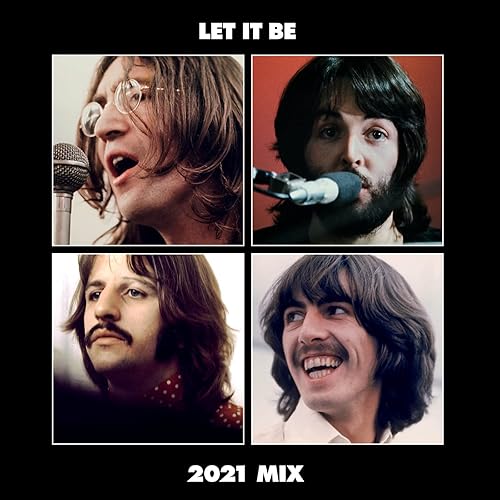
Mary and Joseph: Let It Be

The Beatles: Let It Be
[purchase the basic version]
[purchase the Super Deluxe version

It’s been a crazy couple of weeks, as we move toward year-end. I’ve had a bunch of work (yay!), there’s been tons of holiday prepping and gatherings, and my daughter and her boyfriend are visiting from Barcelona for a couple of weeks. And if that’s not enough, my 94 year-old uncle passed away, after a long, and mostly happy and healthy life, which required my wife and me to jump on a plane on Sunday night to get to Florida for the funeral, returning early Tuesday because, we thought, we had Broadway tickets for my family for that night. Unfortunately, the show got cancelled, because of COVID, which was disappointing.

All of this is in partial explanation of why I didn’t write last week, and why this piece is going to be a little shorter than my average Iliad-length posts. But I hate missing a theme, so I wanted to make sure that I put something up on the site before trying to figure out my [spoiler alert] In Memoriam post subject(s). 

Here’s the gist of what I want to say—if you like rock music, which you probably do because you are reading this, make sure you watch the Beatles documentary, Get Back. It’s worth the 8 hours of time, and you can usually get a free week of Disney+ if you don’t already have a subscription. It’s an incredible document of the four brilliant Beatles, and their world, in 1969. You can see their friendship, strained by their growing creative and other differences, their creativity and talent, their humor, and both their sophistication and naivete. And how much they smoked. Here they are, at the peak of their popularity and power, but clearly contemplating the end of their partnership. And none of them had celebrated their 30th birthday yet. 

I’m far from the biggest Beatles fan, but I was fascinated by the thing—not only the film itself, but thinking about how the director, Peter Jackson, chose what excerpts from the hundreds of hours of film he had available. Most critics have pointed out that the version that Jackson presented was more positive than the general received narrative—that the sessions were filled with bickering, and that Yoko Ono was disruptive. Instead, we see lots of camaraderie and collaboration interspersed with the bickering and nastiness, and mostly Yoko kept to herself and looked bored. What really happened? I don’t know, and unless you watch all of the raw film, there are really very few living people who actually do know. 

So, there’s a moment in the film where Paul McCartney sits down at the piano and starts playing what would become “Let It Be.” When I was watching, it seemed like he was creating it on the spot, but a little research turned up the fact that it was something he had been playing around with for a little while. Still, it was pretty cool to hear the song, which references McCartney’s mother Mary, in its embryonic stages. 

In addition to suggesting that you watch the whole documentary, I recommend that you read some of the many articles about the film and our feature song written by people who know much more about the Beatles than I do, and who are better writers. Use that Google thing—there are lots out there, discussing the film from many angles and points of view. Although I particularly liked this one, featuring a number of well-known songwriters discussing how they felt watching it. I mean, Jeff Tweedy said that he burst into tears a few times while watching it. And if that’s not an incentive to watch, what is?

Monday, December 20, 2021

MARY AND JOSEPH: NO MORE GUNS (HEY JOE REDUX)

I may have said this before, here if not here, but Hey Joe is my favourite song and has been for as long as I recall. The simplicity of the chord progression, allied to to the characteristics that make it immediately recognisable from the merest of snippets. My collection has expanded exponentially over the years, my i-tunes telling me I now have 70 versions, which is, arguably, plain daft, but it is still exciting to discover new takes on it. So, no contest, it had to be the Joseph that would be my go-to Joe. (The featured is a slight conceit, being a meandering extemporisation on the theme, actually entitled No More Guns, the Hey Joe Redux being in parentheses.) For those eager to acquire the source material, it comes from the New York based piano jazz maven, Vijay Iyer, on his 2003 opus, Blood Sutra. Here is what Thom Jurek of AllMusicGroup had to say, repeated as it makes me chuckle, being both so pretentious and prescient at once: 

 "Blood Sutra only adds more luster to Iyer's presence on the short list of forward-looking jazz creators these days. His muse still tends towards the severe but there's no denying the individuality and the fact he doesn't make the listening easy is also precisely what makes it so rewarding"

Much as I would love to leave it at that , wish you compliments of the season and move on, as ever, of course, I am unable, never appreciating the benefits of brevity, when I can have you languish in my longeur a bit longer. So, Joe, any more Hey to make this year?

Bitzen Trapper seep a glorious stoned insouciance into their slightly ramshackle country honk of a version. Blitzen Trapper, the band, I know little about really, beyond the couple of tracks I appear to own, but they sound folk I would appreciate to hear a little more of. Over on one of the other platforms I scribble on, I recently discovered they had performed Neil Young's Harvest as a live project, and, frankly, anyone who describes themselves as an "experimental country/folk/rock band" has only the barest of bumps to climb to whet my interest. 


Is it blues, is it reggae? Seamlessly bringing the two together, Mel Brown is just the sort of old blues man genetically programmed for songs like this, muscle memory delivering on of the finest I have and that you possibly don't. OK, it goes on a bit, but never too long. Indeed, it seems he can stretch it to twice the length, when in the mood, as youtube seems able to offer. Who he? Well, the first thing to know is that he died in 2009, which is a bit of a shock, but it seems his biggest claim to fame was as Bobby "Blue" Bland's favoured guitarslinger, although his wiki page shows he was also a sideman for, amongst others, Lightin' Hopkins, John Lee Hooker and two of the Kings, B.B. and Albert, as adept on keyboards as on the guitar.


So soporific is this, that I can't imagine Joe ever managed to lift the gun, let alone aim it and fire. Invoking a I don't know what she had, but I''ll have some of that vibe, it does eventually kick off, even if you question whether it actually is the full Billy Roberts. And, of course, it isn't, being one of those filing issues, whereby a well known song has had someone lift the same name for something quite different. Which, I think you'll agree, this was. So, I only have 69 versions. Os Mutantes were, arguably, the prog/psychedelic big hitters of the Sao Paulo scene in the 60's and 70's, if never then quite going away either, reforming after a 40 year gap in 2006. 


Or, actually, 68, as, yup, you got me bang to rights, that seeming such a good wheeze that I'm going to repeat that trick/mistake. This Liz Green song is likewise a completely different song. Or is it? (Yes, but, the lyrics sort of suggest it could have been a preamble to the homicide, perhaps even the context that led to the murderous act.) Liz Green I know, or, rather knew, nothing about until this piece, uncertain even how I cam to have this song in my collection. I have since learnt she is a singer and songwriter from Manchester, U.K., and was the "Emerging Talent" winner at the Glastonbury Festival of 2007. A couple of albums followed, in 2011 and 2014, but largely little has emerged since. Which seems a shame.

By now any other avid Hey Joe-ers are going to be feeling short changed, thinking this one of the more half-hearted of contrivances I have offered this year, with only a total of 3 versions offered. So be it, life can be disappointing. 

Merry Christmas and have some Jimi: