OK, so a bit of international licence here, an entente cordiale to fit the subject, which, like a kinky boot, it does, très snug. I love a bit of foreign, do I, so it was with some disappointment and frustration I have felt it wise to cancel a forthcoming jaunt to Paris. Little to bear, in comparison to our friends in Ukraine, but Putin can go sit on one. OK, as he could before, but this biscuit has been well and truly taken, the birds of his political interferences in US and UK governments now arguably coming home to roost, as "we" struggle to work out what is and isn't justified in return. Bad and sad days.
Endeavouring to remain upbeat, let's pursue the arena of pop in translation. Yé-yé, as our french cousins say. One rule, mind, that being an avoidance of where an anglophone artist simply translates their song into french, and copycats it, so none of this, no Bowie or Blondie. (Strangely, this is a trick the Beatles never pulled off, even if tried a bit of Deutsch.)
Africain à Paris/Tiken Jah Fakoly
The above is an extraordinary piece of translation, changing both the words and the locations, succeeding in an impressive alchemy. And, musically, is it any less wrong to suggest the Parisian music scene is to Africans that New York might be to an Englishman? The number of artists from that continent in the French capital, making there their music, is immense, belying a concept that Paris could well be the home of African culture.
Hey Joe/Johnny Hallyday
I'm uncertain if the translated lyric has actually, name apart, anything to do with the original, but, it being my favourite song, possessing dozens of versions of it, yes, of course, this I already have and was so already well familiar with. Fond of, less. Having said that, it was a song he never stopped playing, with this considerably later version even quite edgy, in a poundshop Keith Richards way.
L'Amour C'Est Comme Une Cigarette/Sylvie Vartan
Well, if we are going weird, we have to go here. Ms. Easton's paean to the early morning commute seems clearly a whole different concept through a French lens, this song stealing only the tune, as it, well, as you do, compares love to a cigarette. A Gauloise, I assume. I will avoid smutty allusions around sucking on it and watching it turning slowly to ash.
D'En Haut de la Tour de Guet/Francis Cabrel
Another of my favourite songs in coverland, the translation itself a labour of love. Indeed, so wordy is most of his work that you forgive all the continentals who sang on, regardless, in English, rather than wrestle long and hard, as clearly had the performer here. It comes from an entire album's worth of similar fare, and I tip my chapeau his way.
Hôtel de Californie/The Cat Empire
Is this cheating? I suspect it is, but it is such a delightfully gallic take on the song to ignore the fact it was cobbled together in Australia by Melbourne ska-punkers The Cat Empire. And what better place to end this reverie.
Every now and then I forget my audience (!?!) and revert to type, with arcane and counter-intuitive posts that, often, involve injudicious use of the F word. F for f***in' folk, FFS, catnip to dogs everywhere, and, what's more, not even in the watered down transatlantic meaning of the word, being the full on, bang on of trad. So, gather round, enjoy.
A history lesson first. General George Monck, 1608 - 70, was quite the journeyman soldier, assiduously applying his colours to the prevailing flags of the day. Acclaimed as a brutally efficient suppressor of rebellion, he made his name crushing the Irish in 1641. Returning in time for the English Civil war, he, in turn, fought for the Royalists, was captured and spent two years in gaol, becoming then Cromwell's lead in Ulster and Scotland. When Cromwell died and his short lived republican Commonwealth was faltering, he reattached support to the Monarchy and, with the throne restored, Charles II rewarded him with senior position. The tale always told was that he satiated any conflicts of loyalty by purposefully marching his army so slowly int battle as to often miss the skirmish altogether. (Hmmm, a good man for NATO right now, then.....)
The tune, Monck's March, is a staple of the English Morris Cotswold tradition, emanating from the village of Sherborne. It celebrates the good general by offering a heel and toe step, sort of one step back for each two steps forward. I have it on good faith that this was the inspiration for Michael Jackson's "moonwalk", the entire Jackson family strong aficionados of English Country Dance. I suspect I have before mentioned my own forays into this energetic prelude to the drinking of much ale, thus delighted when the dance became absorbed into our repertoire. As a huge lifelong fan of all things Fairport, I had been drawn to the offshoot noodlings of Ashley Hutchings and friends in the Morris On project, followed up, in succession, by Son of Morris On, Grandson of Morris On and so on. It was a short step from dinner party dance time with napkins to actually join a side. My knees eventually called time on me, together with the gradual loss of other like minds: you don't ever see many Morris men under 60 these days, and so it is now a fond memory rather than much else. Thankfully, Mr Hutchings has never lost his enthusiasm, and Morris On, as a project, continues. Here is a clip from their live show, at Fairport's Cropredy Festival a few years back.
But there are other ways of presenting the tune. Here's a full orchestral version for Symphonic Wind Orchestra:
Lute, I think:
Or a medieval version, all sackbuts and crumhorns:
Finally a jolly country band version, that I can imagine going down a storm at a ceilidh.
Although the month of March is named after the Roman god of war, Mars, while the English verb “to march” is derived a different source, the Old French “marcher,” meaning "to stride, march, walk," we here at SMM seem to insist on tying the two together, which is why most of the songs that would have marched into my consciousness for this theme already did so inprioryears, leaving me not without options, but without options that I cared to write about.
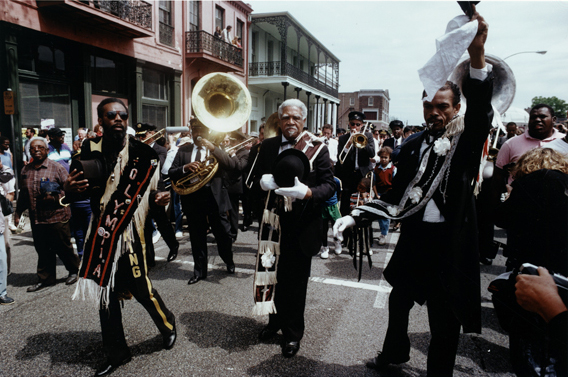
But one of the things about being among the last remaining regular writers on this site, which has gone through dozens since it started back in 2008, is that it is important to try to write at least once, if not more, for each theme, so I realized that Mardi Gras was just over a week ago, and therefore a discussion of “When The Saints Go Marching In” would work.
And, in a tip of the hat to another of the other remaining regular SMM contributors (and recent birthday boy), Seuras Og, I’m going to model my post on one of his regular formats.
Like many standards, the origins of the song are unclear. It seems that there were a number of gospel/spiritual songs with similar titles, but in 1923, the Paramount Jubilee Singers recorded a song similar to the one we all know and love, titled, “When All The Saints Go Marching In:”
Other recorded versions of the song, with varying lyrics, were recorded throughout the the 1920s and 30s, often becoming less hymn-like and more uptempo, but the song’s popularity really started when Louis Armstrong recorded a version in 1938, which also cemented the song’s identification with New Orleans:
There are probably thousands of covers of this standard, especially if you include every Dixieland or brass band that does it live (and on video....), but we will look at a few notable ones, in roughly chronological order:
Here’s a peppy, folk approach from The Weavers in 1951:
Not surprisingly, Mahalia Jackson returned the song to its gospel roots in 1955:
Elvis Presley, and the rest of the “Million Dollar Quartet (Jerry Lee Lewis, Carl Perkins and Johnny Cash), did a loose rockabilly version that wasn’t released to the public until 1990:
In 1956, Sister Rosetta Tharp started turning “The Saints” into a rock ‘n’ roll song:
And Fats Domino finished the transformation in 1958:
Judy Garland and Liza Minnelli took a more pop approach when they performed the song in 1964:
The following year, Lester Flatt & Earl Scruggs, not surprisingly, took “The Saints” in a bluegrass direction:
Jumping forward a few decades, here’s a traditional take by New Orleans’ Preservation Hall Jazz Band from 1983:
In the mid-2000s, Bruce Springsteen regularly performed the song, in a pretty subdued arrangement, on his Seeger Sessions tour, with this version from 2006 being released on the Live in Dublin album:
Look, I could go on forever, and some of you may think I already have, so I’ll close this out with a version from New Orleans’ great Dirty Dozen Brass Band from 2012 that is pretty traditional (and a bit funky) and loads of fun:
There is a
Turkish saying about the month of March that goes like this: it'll make you
look (longingly) out the door and cause you to burn your (wooden) shovel and
pick handles.
March 1st
here was a balmy 50 degrees F; March 3rd it snowed.
Myself, I feel the weather
all day long since my workplace is required to leave all the doors and windows
open to mitigate the virus. But it will soon pass. The cold weather, that is.
The weather?
... we have no control over it. Or do we? You want to get into climate change,
do you? After COVID mitigation, you say you want to take on weather patterns?
Well,OK ...
I'm not a
climate data scientist but I do believe that we don't have (and likely never
will have) the long-term data to prove human-caused climate change - there are
just too many factors). But I still believe I carry some responsibility for my use of the resources I consume. Guilty until proven innocent.
But
without fruitless worrying, we *can* start by making a (limited) list of
weather issues:
too much
rain
too cold
too hot (kind of off the mark - except that it is Hot Tuna and Jorma is hot)
Do note that the Weather report intro solo at the top is played on a bass guitar
Well, I had to, really, a no-brainer and no choice, having displayed one side of the coin so recently.... If Edinburgh is the yin to Glasgow's yang, Leith has the gritty reputation, historically at least, to be the yangiest part of Edinburgh, all dockyards, razor cuts and the worst toilet in the Scotland. And the home to Craig and Charlie Reid, aka the Proclaimers.
I guess most people associate the duo with their most widely known song, the anthemic 500 Miles, or, to give its full title, I'm Gonna Be (500 Miles), which, when included in the 1993 film, Benny and Joon, propelled the twins to worldwide acclaim, a full 5 years after it was initially released, hitting the Billboard number 3. (To be fair, it had been a hit in the UK at the first time around, and in other countries with a sizeable ex-pat Scottish population: number 1 in Australia and in New Zealand!) Where's the link? Sorry, but I cannot stand the song, seeing it little more than a lazy rewrite of Mammy, and enough to ban the brothers from my house for a number of years thereafter. I have since mellowed, but I still ain't playing it!
I much preferred their debut record, the single, Letter From America, an anguished thrash through the effects of post industrialism on the Scottish central belt, and the subsequent deprivation, comparing the effects to the Highland Clearances of the centuries before. So harsh and unaffected was their singing, with no concessions to an easier listening English on the ear, it was a breath of righteous indignation that sat proudly in my heritage. I was delighted to learn that one of those responsible for the boys getting a contract was one Kevin Rowland, of Dexy's Midnight Runners, who helped record their demo songs.
Their second album, which gives its name to the title of this piece, was called Sunshine on Leith, pairing the acoustic sounds with a full band. As well as that song I don't like, this also included I'm On My Way, and they were. And if that had a hint of Roger Miller, why then, little surprise what came next, as and on an EP:
Third album, Hit the Highway, had them hit a speed bump in the road, near stalling their career, although, again, a movie, Dumb and Dumber, came to the rescue, featuring their inspired cover of the Temptations' Get Ready.
A seven year gap ensued before they were ready again to rock, with Persevere being their first album to be recorded in the US. Bolstered then by a Greatest Hits collection, they seemed back on their feet. With Edwyn Collins, of Orange Juice fame, then brought in for production duties on their next album, whilst lauded as a return to their roots, it failed to set the charts alight. This time, it was the UK charity show, Comic Relief, that came to their rescue, with a reprise of that song, with "humorous" guest vocals. It's even worse than the original, but spawned another hit, this time to the top of the UK charts. OK then, if I must.......
(I'm sorry.)
The Proclaimers have never actually stopped. They continue making new music and tour regularly, being especially popular on the UK summer festival circuit, at least ahead the pandemic. Albums have followed every couple of years, trying to add more than the lazy trope of the heritage oldies circuit. 2012's Like Comedy was a particularly good effort, if largely unlauded, furthering their excursion into a caledonian blue-eyed soul direction. Their last release came out in 2018.
But, back to our featured song, in another quirk, in 2007 Dundee Playhouse put on a musical of the same name, using the songs of the Reid brothers as the narrative link. Winning top prize in the UK Theatre Awards for that year it has continued to be a popular staple of repertory theatre, with several tours. Such was the acclaim that, in 2013, a film version was made, featuring an against type Peter Mullan and Jane Horrocks. Having read this far, I think you would be surprised to have me either rating musical theatre or musical film of any sort, each being anathema to me. And you'd be right, it is garbage, but nonetheless did well enough to please the easily pleased. I'm not going to sour that pretty decent song, offering, instead, a further bite of the bad apple, 500 Miles.
I’ve been having trouble with this theme (and, based on the lack of posts, I’m not the only one)—not that there is a lack of appropriate songs, because there are tons, but for me, there has to be some reason to write about the song—like a personal story, a political connection, or just because I want to write about the artist or song. So, when this song came up in a search, and I listened to it again (after many years), I realized that this song could actually have worked for our “What If” theme that I enjoyed. Plus it has been nearly two months since I’ve delved into the world of prog-rock obscurity, so why not?
This song sort of answers the burning question, “What if Anthony Phillips had never left Genesis?”
I’m pretty sure that I’ve discussed the origins of one of my favorite bands somewhere—original members Peter Gabriel, Tony Banks, Mike Rutherford, Anthony Phillips and Chris Stewart all met in the 1960s at the Charterhouse School in England. Eventually connecting with older Charterhouse alum, the singer, songwriter, producer and convicted child abuser Jonathan King, who named the band and got them signed. Stewart left and was replaced by another Charterhouse alum, John Silver, who was later replaced by John Mayhew. After recording their second album Trespass, Phillips, the guitarist, quit, due to bad health and stage fright, and was eventually replaced by Steve Hackett; Mayhew was sacked and replaced as drummer by Phil Collins.
So, let’s say that Phillips never left, so Hackett never joined. In the short term, there probably wouldn’t have been much difference because both guitarists, who became good friends, acknowledge that their sound and sensibilities were very similar, but our featured song gives you a sense of what the band might have sounded like after Gabriel left, and Collins stepped up as lead singer.
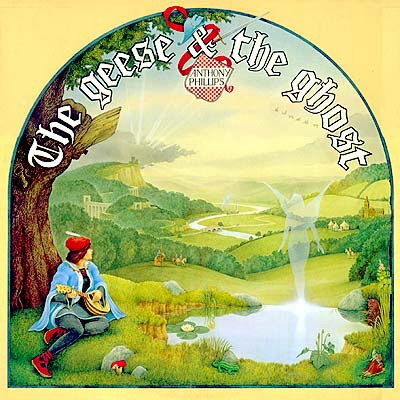
After Phillips left Genesis, he wanted to continue a project he had been working on with Rutherford but first decided to expand and improve his musical knowledge and ability, studying classical music, orchestration and harmony, and taking lessons in guitar and piano. Eventually, Phillips and Rutherford returned to their project, which was slowed by the fact that Rutherford’s commitments to the increasingly popular Genesis were taking up more and more time. A push to finish the album came in fall 1974, when Steve Hackett injured his hand, delaying a Genesis tour, and allowing Phillips and Rutherford time to complete the bulk of the recording. In addition to bringing Collins in to sing on two tracks, Hackett’s younger brother John contributed flute on some of the songs.
The album, The Geese and the Ghost, was finally finished in 1976, but Genesis’ label Charisma refused to release it, so it sat in the vaults until March 1977, just as punk was on the rise, and the sort of lyrical classical/folk influenced prog rock of the album was falling out of favor, and it was a commercial failure. Compare that to Hackett’s first solo album, Voyage of the Acolyte, which was mostly recorded around the same time, and also included contributions from Collins on vocals (and drums), Rutherford and John Hackett, but was released in 1975, and charted in the UK and (just barely) in the US.
Our featured song, “Which Way The Wind Blows,” is a quiet ballad featuring Phillips, Rutherford and Collins, and would not have sounded at all out of place on Trick of the Tail, the first Genesis album on which Collins served as lead vocalist, released in 1976. Compare it, for example, to “Ripples,” from that album.
Phillips tried to move toward a more pop direction, but that also was unsuccessful (although I found this track fun), and while he has released other solo albums, Phillips’ focus was more on soundtracks and “library music,” and occasionally guesting on projects with Rutherford, Camel, and Hackett.
If you can take the weather with you, why can't you take it away again? I guess it depends who you are, but the idea has no traction with me, as whichsoever bugger delivered three storms on the trot to UK this last week can do one. Thankfully, the weather has now abated and the sun is shining, a wispy sun on an early spring day. Give or take the maelstrom and mayhem of Ukraine, all might seem to be well with world, even if, as a result, it isn't.
Raining In Glasgow
Doesn't it always rain in Glasgow, you might, and not unreasonably, say? It can feel that way, the streets and building deigned, if not designed, to always look that way. I love the city, preferring it's gritty humanity over the sometime surcoat and no knickers of the capital, Edinburgh. Our featured artist this week, Dean Owens, straddles the two cities, his father a son of Leith, where he was also raised, and Glasgow his current home. (Leith, should you need reminding, is the setting for Trainspotting, giving a false semblance as to the safety of this dockside suburb of Edinburgh. Sure, dodgy and dicey as hell in the day, but fast a'gentrifying to the disgust and dismay of the longterm locals, finding Michelin starred seafood bars an affront to their hauf 'n' haufs.) Owens, who has been playing his brand of "Weegiana", that Scottish infused take on country and americana, for a touch over 25 years. Or Celtabilly, as he calls it himself.
Shine Like the Road After the Rain/The Felsons
Sticking with weather, or, more accurately, rain, the above song comes from his one of his first recordings, in 1996. As the frontman, singer, guitarist and songwriter for the Felsons, they made more of a critical impact than in sales, producing a couple of well-received albums, and a tour support slot with the Mavericks, then at the peak of their European acclaim. (Before that he had found short lived local fame, with the group Smile, and a Scottish top 20 hit, at number 20, in 1992. But I can't find the song anywhere, and don't think I have ever heard it. Over to you!) Two and a half records later the Felsons folded, Owens now striking out on his own.
Miss You, Ca (Scottish Summer Song)
Since 2001 he has made a number of albums, usually in the US, his music affiliating there with more traction than at home. Making ripples, if not waves, he has more recently hooked up with Calexico, the collective tex-mex desert noir band helmed by Joey Burns and John Convertino. This led to a number of collaborative EPs trickling out over the years of the pandemic, three in total, four songs apiece: The Desert Trilogy. This is where I first learnt of him and came aboard, enthused and enthralled from the start. I was then lucky enough to catch him playing live, at a niche americana festival, held in the wilds of England's East Anglia. He was my highlight of that weekend.) Then, at the beginning of this year came a more formal record of the project, with Sinner's Shrine, a set of some of the same songs, alongside others made during the same sojourn. (Here's a review of that I wrote elsewhere.) And, of course, there is a(another) song about the rain.......
After the Rain
I hope you can catch quite the blast of my drift, appreciating the blend of his honeyed whisky vocal and plaintively sad songs make for a stunning combination.
Here's an excellent primer to get you started. Ahead of an acoustic version of the featured song.
The Lovin' Spoonful name has an "interesting" provenance - according to some sources. Not quite as the name might appear on the surface. That said, this appears open to interpretation, as yet a different source credits a Mississippi John Hurt song Coffee Blues in which the man is singing about a cup of coffee with just the right spoonsful of what makes it good. In the best tradition of good art, it's best lleft to you to decide which story you prefer to believe. The vocalist for the Lovin' Spoonful apparently intimated in most concerts that it was the first, drawing out the references to loving more than to the coffee he was drinking on stage.
Although the band had broken up by the time the original Woodstock festival rolled around, John Sebastian preformed solo. There are several different recollections as to just when he appeared, but none disputes the fact that he was unscheduled, having arrived as a spectator, but when the rain made an electric performance (probably by Santana) if-fy, he took the stage for an acoustic set.
Considering that - during their rather short mainstream career - they were contemporaries of the Beatles' hottest years, for them to have as many hits as they did is fairly impressive. Their contributions were recognized with a 2000 induction to the Rock Hall of Fame.
To jog your memory/introduce you, depending on your age:
Are You Loving' Me More, But Enjoying' It Less/The Electric Prunes
The Electric Prunes must be one of the best names for a band ever. Or worst. I'll bet some of you may even have heard of the band, and most of that familiarity will be from watching Easy Rider, the film. (Even) older readers may conceivably have already been familiar with the band, before 1970, with their single, arguably more memorable for the title than the melody.
I Had Too Much To Dream (Last Night)/The Electric Prunes
'I Had Too Much to Dream (Last Night)' was a prime slice of garage rock, clearly hitting a chord somewhere, as it attained a number 11 and 49 on the US and UK chart of 1966/7 respectively. A heady whiff of psychedelic fuzz guitar, cheesy organ and clattering drums, it is the face of the fella on the right of the video still that gives me most pleasure, the epitome of the lights on yet no-one at home. Yup, thought a thousand and one prototype freaks and hippies, I'll have some of what he's dreaming. That would, could and should have been that, a song and style more destined for cult status and bargain bins, up there with ? and the Mysterians. Indeed, when 'Nuggets', that groundbreaking compilation of all things equivalent, subtitled 'Original Artyfacts From the First Psychedelic Era, 1965-68', came out, in 1972, it was deemed significant enough to open side one. (Incidentally, the compiler of said project was a mild-mannered writer, who also worked at the Village Oldies record shop in New York, a fella by the name of Lenny Kaye. Yup, the one that became, a little later, that Lenny Kaye.)
Ain't It Hard (1st single)
The band have an interesting and unfortunate story. Formed out of the remains of L.A. surf group, the Sanctions, their core was James Lowe, on vocals, and Mark Tulin, on bass, the aim to provide a form of free form garage rock. With various additional members coming and going, eventually enough buzz was made to catch the ears of one Dave Hassinger, an RCA records producer. He also got them to adopt the name he had come up with, something less than loved by the band at first exposure. After the unsuccessful 'Ain't it Hard', still under Hassinger's supervision, they were signed to Reprise. In much the same way as their own name was dispatched, so too then were their songs, with the songwriting team of Annette Tucker and Nancie Mantz drafted in to write them song new songs. When their debut album dropped, Tucker had had a hand in eight of the songs, including the one at the head of this piece and 'Dream', scuppering the wishes of the actual band members for a greater involvement. Arguably, what impression the actual musicians made was more upon the sound than the content; such was the response to the heavy distortion on IHTMTD(LN), that Vox, the makers of the Continental amplifier, signed them up as ambassadors, with the expectation of even greater sonic distortions built into the future direction plotted on their behalf. A second album did manage some escape from Hassinger's grip, allowing the band to submit more of their own material. However, with yet more changes in the membership, the reliance on effects over melody largely failed to trouble the chart. But a high profile European tour put their name on the map.
Agnus Dei/Mass In F Minor
Kol Nidre/Release of an Oath
Returning to the USA somewhat high and dry, Hassinger again sold them a concept to get them a greater appeal, a bizarre concoction whereby gregorian chant and psychedelia could be wed. Enter David Axelrod, a classically trained musician, who wrote the complex and complicated score for, first, Mass in F Minor, sung in ancient greek and latin, drawn from the Catholic litany, with a few equivalent nods to the Orthodox church. Lowe, Tulin et al were up for it but were sadly not up to it, it proving beyond their instrumental prowess and capacity. OK, Lowe, Tulin and Quint Weakley, the drummer, appeared on the album, most of the performance actually came from a team of hired hands. When it came to the live replication, try as they might, it was a disaster, a single live show in Santa Monica. That should have been that. But, do you recall, who idea was the name of the band? Correct, Hassinger thus also owning the rights to the use, setting up a new Electric Prunes, again convening with Axelrod, for a reprise of sorts, this time built around the Jewish prayer, Kol Nidre. This album, Release of an Oath, contained absolutely zilch input from the old band. It failed to gain the acclaim of the Mass in F Minor, so the raggle taggle of new musicians went back on the road as just another rock band, still free of any connection to the band that had begat them, bar the idea and their svengali's name. That version lurched on until 1970, before calling it quits.
You Never Had It Better/Stockholm '67
Meanwhile, Nuggets had been released, gaining some restored interest in the original iteration. Plus their earliest demos had at last seen the light of day, and, with the trickle out of re-releases of both their initial records and the Axelrod years, they were becoming quite the cult favourite. In 1997, the Stockholm '67 LP was released, 30 years on after the European tour, and the four original members, Lowe, Tulin, Weakley and Ken Williams, the fuzz guitar provider, were available. Reconvening in 1999, after a couple of years they dropped an album of new material, Artifact, the spelling a careful play on the word, a whisper shy of the spelling of the Nuggets subtitle, and of the correct spelling. But an artefact it was, a more balanced and mature take on their psychedelia, and led to tours and further studio work. Of course, as is now the law, the band still play on, even though the aged original core have largely passed on or over; Tulin died in 2011, with Williams and Weakley only intermittent participants anyway. James Lowe remains at the helm, with the rest of the band relative newcomers of between 8 and 18 years standing. Not bad for a band effectively finished in the 1960s.
Lost Dream/Artifact
Finally, a live 'Dream', from 2008.
I Had Too Much To Dream (Last Night)/Live performance
Every once in a while, I’m struck when something that seems so incredibly wrong still existed in my lifetime. Like the fact that married women couldn’t get credit cards in their own name until the 1970s, or that people of the same gender couldn’t get married until a few years ago. But it really is incredible that in my lifetime there were places in this country where it was still illegal for blacks and whites to get married, until the Supreme Court unanimously ruled, in 1967, that such laws were unconstitutional in the landmark case of Loving v. Virginia. And yes, that was their last name, which couldn’t have been more perfect. (And no, I haven't seen the movie yet, but it's on my list.)
That it took just over 100 years from the end of the Civil War (and just under that from the ratification of the Fourteenth Amendment which, by its clear and unambiguous terms, prevents states from making or enforcing “any law which shall abridge the privileges or immunities of citizens of the United States;” and which prevented any state from depriving “any person of life, liberty, or property, without due process of law; nor deny to any person within its jurisdiction the equal protection of the laws”) to have the Supreme Court make such a ruling, is incredible, unless you have any knowledge of American history, and its inherent racism. (And whether the Supreme Court, as currently constituted would do the same, unanimously, actually seems unlikely to me.)
Even with the Supreme Court ruling, Alabama continued to enforce a similar law until 1970, when the—wait for it—Nixon administration went to federal court to stop it. And Alabama actually kept the law on its books until 2000, when 60% of its voters approved a constitutional amendment to remove it. Which means that 40% of the voters still wanted to keep it.
In 1958 (a few years before my lifetime), Mildred Jeter, a woman of Native American, European and African American heritage from Central Point, Virginia married Richard Loving, a white man (and descendant of a Confederate soldier), who was a friend of Mildred’s brothers and who reportedly had many close black friends, after Mildred became pregnant. They were married in Washington, D.C. and returned to Virginia, where their marriage was illegal. Remarkably (or, maybe not so remarkably), they were ratted out to the sheriff, who arrested them. They pleaded guilty, were convicted on January 6, 1959 and sentenced to one year in prison, suspended for 25 years on the condition that they leave the state. So, they moved to Washington, DC, but missed their hometown, despite the whole being snitched on and arrested for being married thing.
In 1964, Mildred wrote to Bobby Kennedy, the Attorney General, who referred her to the ACLU, which filed a motion to vacate the conviction and set aside the sentences. When the state court sat on the motion for a year, the ACLU brought suit in federal court, prompting the state court judge to deny the motion, stating, remarkably (or, maybe not so remarkably):
Almighty God created the races white, black, yellow, malay and red, and he placed them on separate continents. And but for the interference with his arrangement there would be no cause for such marriages. The fact that he separated the races shows that he did not intend for the races to mix
In 1966, the Virginia Supreme Court, hearing the appeal of this ignorant and racist decision, upheld the state ban on interracial marriage, using an extremely convoluted interpretation of the Fourteenth Amendment (which had been endorsed previously by the U.S. Supreme Court). It was that decision that was rejected by the United States Supreme Court, which found that the law really, really, really violated the Constitution (and reversed its prior, totally wrong, interpretation of the Fourteenth Amendment).
Mildred and Richard moved back to Virginia and lived there for the rest of their lives. Richard was killed by a drunk driver in 1975; the accident cost Mildred an eye. She lived on until 2008, when she died of pneumonia.
One person who read Mildred’s obituary was Nanci Griffith, who wrote “The Loving Kind,” about the Lovings and their case, and released it in 2009 as the title song of an album. It’s a good story song and does not sound at all like a law school casebook.
Of course, it wasn’t until 2015 that the Supreme Court, in Obergefell v. Hodges, extended the logic and holding of Loving to prevent bans on same-sex marriage. These cases, and others, used to give me hope that our country was making social progress, which the Supreme Court (eventually) caught up to. But that hope does not seem justified at this time.
My father loved this song. He grew up in Brooklyn during the heyday of doo-wop, and I remember him singing this song, loudly and badly, when I was a kid. It’s a great song, and a fun song, and it provides a very simple primer for love:
Chapter One says to love her
You love her with all your heart
Chapter Two you tell her
You're never, never, never, never, ever gonna part
In Chapter Three remember the meaning of romance
In Chapter Four you break up
But you give her just one more chance.
As someone who has been in love for decades, I think that it’s pretty good advice, although I’m pretty sure that there are many more chapters in the book that weren’t discussed in the song (and in my case, it was me who was given that extra chance….)
If Ted Lasso, one of my favorite TV shows from the last couple of years, can have been inspired by a series of NBC soccer promos, then why can’t a doo-wop classic be inspired by a Pepsodent jingle? According to Monotone Charles Patrick, he was in a store looking at sheet music for a different song called "Book Of Love" when the jingle, “You'll wonder where the yellow went when you brush your teeth with Pepsodent," came on the radio. He got the idea to combine the title with the melody from the jingle, turning "You'll wonder where the yellow went" into "I wonder, wonder who." Patrick completed the song with his fellow group members, and the rest is music history, with the song hitting No. 5 on the Billboard pop chart and No. 3 on the R&B chart in 1958. That story may be apocryphal.
One of the most memorable parts of the song is the heavy drum beat at the end of the first line, which was a fortuitous mistake—when the band was recording the song, a kid outside the studio threw a ball that hit a window just as they finished singing the line. They liked the way it sounded, so they decided to put a drum hit in that spot. That story also may be apocryphal.
The Monotones were formed in 1955 by seven residents of the Baxter Terrace housing development in Newark, New Jersey: Warren Davis, George Malone, Frank Smith, John Ryanes, and Warren Ryanes, in addition to Patrick (Charles' brother James Patrick, the seventh member, left the group before “Book Of Love” was recorded). All of the future Monotones began singing, presumably not in monotone, with the New Hope Baptist Choir, which included Cissy Houston and Dionne and Dee Dee Warwick, all of whom were related to the Patrick brothers.
Unfortunately, after “Book Of Love” the band’s releases were not successful, although as a resident of Tarrytown, and parent of two proud alumni of Sleepy Hollow High School, I was pleased to discover that they recorded a song called “The Legend of Sleepy Hollow.”
The Monotones disbanded in 1962, although there were reunions to revive “Book Of Love,” and over the years, new members replaced members who had died or retired. For decades, a version of the Monotones were regulars on the oldies circuit.
The song also lives on—it was in the soundtrack to American Graffiti and other movies, was performed by Sha Na Na at Woodstock, used as the theme in a version of The Newlywed Game in the late 1980s, was sung in an episode of Who’s The Boss, and has been used in video games.
You possibly or, more likely, probably don't know the song. It would be great if you do, and there may be some, but I fear the band of aficionados is more select and smaller than I would prefer. And, who knows, this may alert new ears to both the singer and the song, and I hope it can. The singer you may have heard of. Or at least, heard his voice. So who he?
Strange Kind Of Love
James Grant, or the James Grant you will be more familiar with was the guiding force behind and in Glasgow white soul and white socks band, Love and Money, something I confess to finding a bit of a surprise. I mean, they were OK, but a bit sort of generic. Or so I thought then, pleasantly surprised by my currently designated dip in their repertoire, finding, instead, a smooth and rich sound redolent of, of all people, Jackie Leven. The song above, from their second and "breakthrough" album, "breakthrough" in that it produced their first chart appearances, in the lower reaches of the UK singles top 80, has an interesting pedigree, in that their drummer had left the band, necessitating some substitution. With big name producer Gary Katz having been signed to buff up their sound, he drafted in Jeff Porcaro from Steely Dan, the band he was better known as the producer for. Sloopy/Edgar Winter man, Rick Derringer, the 70s guitar ace, also appeared, as did an uncredited Donald Fagen. (And you thought he smooth sound seemed familiar....) Hindsight reveals this, Strange Kind of Love, to be a terrific album and I feel their memory, based more on their eponymous earlier single, Love and Money, has been wronged by my failure to give them a second go. Plus, if I am honest, the, um, mismatch between the dark brown honeyed voice and the somewhat gangly youth projecting it. (And he has, I can say, grown into his vocal timbre with appropriate grace and gravitas.)
Having failed to set the world alight, Love and Money lurched on to a further couple of albums, bedogged by issues with record companies: their 3rd album was initially rejected, ahead of coming out, substantively altered, on another label, the 4th then being, to all intents and purposes, self-released. Despite all this, that difficult 3rd album, when finally released, as Dogs in the Traffic, was seen fit to gather a number 30 in the Scotsman newspaper's all time top 100 Scottish rock and pop albums. they split up in 1994.
My Love Lives In A Dead House
Grant embarked on a solo career. Given he had now hooked up with the husband and wife, Donald Shaw and Karen Matheson, both of Capercaillie, this unsurprisingly is a rootsier effort, with strong country and folk flavours to the anthemic melodies. Sawdust in My Veins came out in 1998, and in the same year he was included as a guest in the prestigious Transatlantic Sessions. My Thrown Glory followed in 2000, with an album of other writer's poetry set to his music, I Shot the Albatross, bridging the gap ahead the album that produced the song that heads this piece. His high water mark, I would say, with the song also the name of the record, a splendid record of truly celtic soul, and well worth searching out. The song itself, despite the title, is neither religious nor sanctimonious, being more a spiritual ode to love, using the analogy of love being a higher force. I think. It uses holy in the same way as is, say, Steve Winwood's evocative Holy Ground, his hymn to the planet.
If You Love Me, Leave Me Alone
Blue Train
During these same years he also returned the favour, working on Karen Mathesons's solo albums, writing four songs for her first record, six for her second and two for her third, as well as providing instrumental ballast to the backing throughout. Indeed this has continued to the present, with her most recent album, 2021's Still Time, containing another four.
The Dreaming Sea
His own solo career continued with Strange Flowers, in 2009, ahead of a reunion concert of Love and Money, for the yearly Celtic Connections festival, in 2011, led to new work and an album, Devil's Debt, a year later.
Strange Kind Of Love
If his profile has seemed subsequently low, let's just hope it a hiatus. As the new songs with Karen Matheson have shown, his muse is still within him. He remains a loved figure on the Scottish live scene: a live solo disc of his 2016 Celtic Connections (again) gig showed updated and invigorated songs from throughout both his band and solo career. whilst it did not, sadly, include Holy Love, there is at least this glorious retread of Strange Kind of Love, the second song I featured earlier up the thread. Indeed, whilst I was researching this piece I learnt he has a couple of shows arranged for later in the year, in London and Edinburgh, details through his website. (This also reveals the possible enticing option of having him write a bespoke song with and for you........ )
Thinking over the word <boss> and its connotations, it occured to me that the word probably came into the English language via Dutch. A little research and ... voila .. "boss is Dutch in origin"... it comes from base or bass or baas. However, being the polyglot that I am, I can't help surmising that there is more to this than that. The Turkish word for "put pressure on" (as in oppress a worker, or force) is <bas>. I am going to go one step further than Collins and Oxford dictionaries and posit that the root goes back further than the Dutch - back to the Ottomans, in fact. It's just an observation, but it makes an awful lot of sense. (You heard it here first.) bas=baas=boss.
So... who's the boss? Well, even that phrase, popularized in many forms, has a somewhat murkey provenance. A 1914 Oliver Hardy film?
The boss is "the person that other people have to obey". That could also take us down a rabbit hole of what it means "to obey", but it also conveys "authority and expertise", and with this we have a more accessible value to the word as it applies to musicians like Springsteen (known as "the boss" for some reason.)
I'll try to take a cue from our own Jordan Becker (and in the process confess that I too often paste information you can find in your own searches - tho' I generally say as much). This week it''s not Springsteen . although it could have been. Not bossanova (tho, again, I love Carlos' music in any form, and thanks Seuras). And not Blue Cheer who were also on my list of potentials on account of their "Summertime Blues" (wherein we have the <I hate my boss> theme).
Pardon me while I provide some freely accessible Wiki data as I assume you haven't yet been there nor know it. Big Boss Man is a Luther Dixon/Al Smith song first recorded by Jimmy Reed - and you would be excused for not knowing the names. That said, some of Dixon's songs were recorded by the Beatles, the Jackson 5 and more.
Sing "You ain’t so big, you’re just tall, that’s all."[
Above it's the Grateful Dead's version and below we have Jimmy Reed, then B.B. King and Elvis.
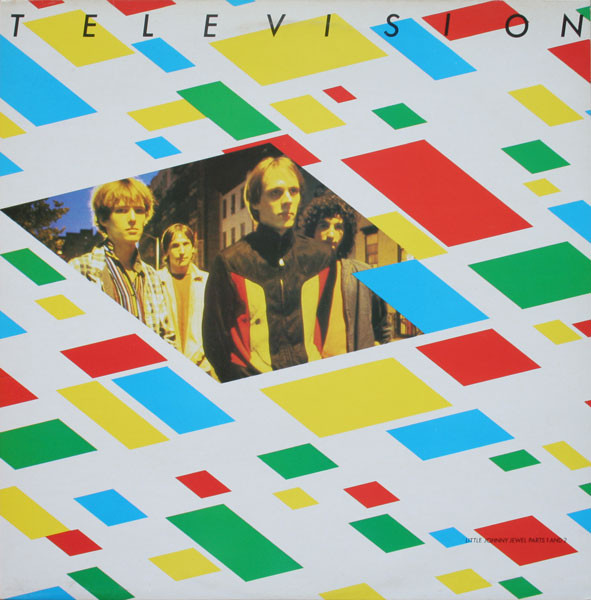
I scanned my list of potential subjects for this theme (read my last post if you don’t know what I’m talking about) and decided again to write about a band that I hadn’t discussed before—Television. I’ve written about small-t television many, many times, here and elsewhere (not going to link, since there are too many), because watching TV is probably how I spend more of my leisure time than anything else, but I’ve never written about the band. While Todd Rundgren’s failure to ever be discussed in this space was very surprising, it is almost as surprising that Television has only been discussed twice—back in 2008 and 2009—and both times about the same song, “Marquee Moon.” Which happens to be an excellent song, but we’re going back to Television’s first release, “Little Johnny Jewel,” a single on their manager’s label, released in 1975.
Although Television came up out of the same C.B.G.B. scene as the Ramones, Blondie, Patti Smith, Talking Heads, Richard Hell and the Voidoids and the Heartbreakers, among others, who I often played on the radio back in the 1979-1982 period when I was doing college radio, I had trouble connecting with the band then. As someone who grew up on classic rock and prog, I (eventually) came to understand the hard, fast ethos of punk that those other bands followed (although for some, that changed over time) as a rejection of the older forms of rock. While I still loved what I grew up on, I also learned to love punk (and new wave). But Television’s meandering jams and guitar solos and stream of consciousness lyrics, sung by Tom Verlaine in a yelping voice that, to my ears at least, made David Byrne sound great in comparison, somehow didn’t fit in to the slots that I had in my head at the time. I couldn’t understand how they were in the same category as the Ramones, whose simple two-minute songs done at breakneck speed were nothing like the long songs that Television produced.
Because of their timing, and their identification with the downtown NYC music scene, and because of the rough sound of their music, Television is usually lumped in with the punks, but interestingly, I’ve seen them referred to as both proto-punk and post-punk, which seems impossible without some sort of time machine. And yet, it makes sense, when you look closely. Television presaged punk both temporally and in their attitude, but their sound was not “punk” in the way that word is commonly used, so like “post-punk” bands, they embraced the brashness of punk, but not all of the sound.
In my old(er) age, I’ve come to appreciate Television more and more. Maybe it is my more mature approach to music that is less interested in putting artists and their music in genre slots, so that I enjoy the connections that artists that seem very different actually have. I know, for example, that the first time that I heard “Impossible Germany,” by Wilco, one of my favorites, I was struck by how the intertwined guitar parts played by Nels Cline and Jeff Tweedy reminded me of Television’s Verlaine and Richard Lloyd.
As mentioned above. “Little Johnny Jewel” was the first song released by Television, its 7 plus minutes split into two parts on a 45, and it’s an odd one. Opening with a bass line (from Fred Smith, who had replaced Richard Hell), before Billy Ficca’s drums and the guitars enter, the instrumental eventually resolves into a groove before the vocals begin. The song may be about Iggy Pop, whose real name was James Newell Osterberg, Jr., but his middle name is sometimes listed as “Jewel.” There’s a long instrumental guitar section featuring Verlaine soloing in the middle that sounds closer to psychedelia or even jazz than punk before the groove returns, along with the lyrics:
Oh, Little Johnny Jewel He's so cool
But if you see him looking lost
You ain't gotta come on so boss
Verlaine recalled in an interview: “Lou Reed asked me, ‘Why’d you put out this song? This is not a hit.’ I said, ‘What band playing a bar in New York, issuing their own single, is gonna have a hit?’” However, the single sold surprisingly well, and arguably kickstarted the New York punk movement.
Sorry, guys, going out on a Springsteen free limb here, eager to see if there is any love for the bossa. To folk of a certain age, myself included, that can open up a vista over one of the most over-exposed and ubiquitous songs of the last century, the cloying Girl From Ipanema, but don't go, stick around. It isn't actually a bad song, you've just heard it too many times.
The Girl from Ipanema/Amy Winehouse
Anyway, this isn't about the song, it's about the style. Arguably no more than a variation on the Brazilian life-source, the samba, it swept in on a wave of innovation in the late 1950's, a condensation of the intrinsic rhythmic shuffle to the minimal, buoyed by off kilter chords and progressions, all syncopated to the max. The splendidly named Milton Banana was probably the originator, the drummer/percussionist for Joao Gilberto. Gilberto's Chega de Saudade (1958) was the first record recognised within this new form, the style then breaking in the film, Black Narcissus, a year later.
Manhā de Carneval (from Black Narcissus)/Elizete Cardoso
That's about as far down that historical alley I want to go, even bypassing the superb contributions to the genre gifted by celebrated saxman Stan Getz, who blows the breathiest whisper that instrument can manage and still be audible. A glorious tone. Because I've got you here to catch what has been happening to the style since the 60s. The enthusiasm actually fell away in the homelands, the breezy music sitting uncomfortably with the political frictions occurring in Brazil, even if every jazzer and his dog in the US was tearing Ipanema to shreds in supper clubs and hotel lobbies across the nation. As latin rhythms determined a more streetwise and funky uplift, courtesy Carlos Santana, so the cool jazz lite of the 'nova was on the fade.
Wild Horses/Karen Souza
It was actually my love for cover versions, an unceasing quest of mine these past two or three decades, that lead me back to Bossanova, let alone many another arcane and forgotten style. The Rolling Stones, always a favourite band of mine, have attracted versions across the musical map, encompassing blues, reggae and zydeco, all these having been avidly devoured. So when I discovered a label, PMB, originally based in Argentina, seemingly hellbent of exploiting the emergent love for chilled beats, and morphing this with the sounds and style of Bossanova, I was made up. As well as the Stones, there are also volumes devoted to Bob Marley, the Ramones and Madonna, the bandwagon then drifting to other labels, quick to produce similar Beatles renditions. OK, not all of this is good and some is a good deal even less than good, but, when it hits base, it is perfect. Well worth a punt, as easy to pick up cheap second hand copies.
Love Will Tear Us Apart/Nouvelle Vague
Meanwhile, over in France, Oliver Libaux and Marc Collin were having similar revelations, as they set up the band/collective Nouvelle Vague, which translates roughly both as New Wave, which is one of the possible translations also for Bossa Nova. Since 2004 they have produced a sizeable body of work, largely slightly kitschy covers of New Wave artists in the anglophone sense of the word. And, yes, I have most of their work too. But surely the style should be more than for smart arse copyists?
Essa Moça Tá Diferente/Bossacucanova
I'm afraid, as tends to happen, the worm hole of bossa covers led me to new artists and new material. Bossacucanova are amongst those who consider the format still keeping alive, and have injected a little more electronica to sit alongside. I can't say it grabs me as much as I hoped, so it is gratifying to round this piece off with something that really does bestride the decades, managing to keep the delicate angularity of the original songs, with a heft of 21st century credibility. Unsurprising, therefore, to realise she is second generation Bossa. Her father was Joao Gilberto, who wrote and sang the original Girl From Ipanema. Tanto Tempo was her big breakthrough album in 2000, and I can thoroughly commend it. But I had thought her a spent force, until I learnt of Agora, an album that came out during lockdown, in 2020, and which rapidly became one of my records of that year.
Unless a song immediately jumps into my head when our theme is announced (or if I had one in mind when I suggested a theme), my first move is to do searches of my iTunes library. Yes, I’m an owner, not a renter. I was unimpressed by the songs that had the word “Boss” in the title (and didn’t want to write about a Bruuuuuuuuce song). You may know that there’s a site called lyrics.com, where you can search for words in lyrics, and narrow by genre and other filters. It's a godsend for music bloggers, believe me.
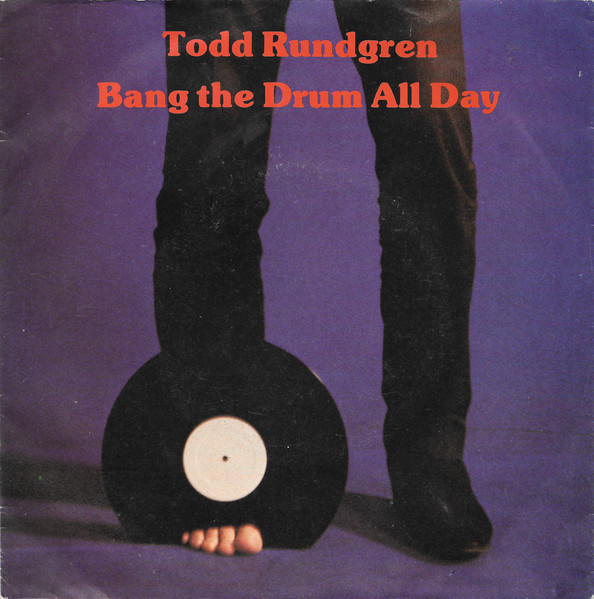
I powered through the filtered list (you are welcome to speculate as to what genres I chose, and which I excluded) and came up with a bunch of really good songs to write about. And because in situations like this, I like to write about artists who I haven’t posted about before, one song became the obvious choice—Todd Rundgren’s “Bang The Drum All Day.” Not only is it a great, fun song, but as I’ve mentioned here, I’m a baddrummer, and frankly would prefer to bang on a drum than work, most of the time. Since banging on drums is unlikely to make it possible to pay my bills, sadly I still have to work.
Another thing that made me want to write about this song is that, it appears, since SMM’s founding back in 2008, no one has written a post about one of Rundgren's songs. He’s been mentioned and his production work has been referenced, but despite the fact that the guy has written a bunch of serious classic rock songs in a career that started in the late 1960s and has included more than three dozen solo and band albums, as well as being a true innovator, none of the many former or current SMM writers have written about him.
Now, if you read my stuff, at this point, you’d probably expect the next line to be, “Born in Philadelphia in 1948, Rundgren….” followed by a long discussion of his career mostly pilfered from Wikipedia or Allmusic, with the occasional snarky aside. But I’m not going to go there. If you want to know more about Rundgren’s life and career, click on one of those links. Or both. Because you don’t want to work, either.
It may be that “Bang The Drum All Day” will end up being Rundgren’s most enduring song, although “Hello It’s Me” and “Can We Still Be Friends” might give it a run for its money. ("I Saw The Light," too.) It was, initially, a throwaway song that Rundgren claims came to him mostly in a dream, and since he had a home studio, was able to roll out of bed and record it-he plays all the instruments on the song. Rundgren has said that his record company didn’t see the song as a single from his 1983 album The Ever Popular Tortured Artist Effect, but eventually it was released and topped out at 63 on the Billboard Pop Singles chart, and 39 on the Billboard Mainstream Rock chart.
But it had legs.
What makes the song fit our theme, of course, are the lyrics:
Every day when I get home from work
I feel so frustrated
The boss is a jerk
And I get my sticks and go out to the shed
And I pound on that drum like it was the boss's head
But what made the song popular was its fun message and the catchy music. Rundgren explained:
I like the idea that I've written a song that is well known to a broad segment of the population…and they have no idea why they know it! In the same sense that everybody knows 'Happy Birthday,' but they can't remember the first time they heard it, and they have no idea who wrote it. But you've penetrated the cultural consciousness in a way that transcends the typical pop song, and what it means is that if I never have another hit record on the radio again, that song is still going to be around likely twenty-five years from now.
And although Rundgren also claims that he hates playing the song because it makes him feel “ape-like,” he also considers it his most impactful song, “because I made so much money off of it.” Not only through sales and airplay, but because it has been used in many commercials, TV shows and movies, at football games (most notably Green Bay Packers games) and as a theme song.
Despite making all that money from “Bang,” it still seems that Rundgren still wants to work (or maybe has to.)
For someone who for many years had one foot in Seattle, I know relatively little about the local music scene. My excuse being that I have only ever been a transitory visitor even though my legal US residence is still WA state. That said, among the handful of live concerts I have attended in the US is Blind Faith and again Eric Clapton about 50 years later - both in Seattle.
But Nirvana? Pearl Jam? Alice in Chains? Sound Garden? Green River? All Seattle bands. The best I can say in my favor on this count is that I have listened to a little of them. And I keep saying it's time I did some more. In the late 60s and early 70s I listened to a fair amount of what then passed for "heavy", such as Led Zeppelin, Mountain, Grand Funk Railroad, Deep Purple .. And for all that, following a little search at SMM archives, I see that I have actually touched on the Foo Fighters more than once. And still don't know much of their music.
This post would be one that our sometime itinerant/irregular writer Andy La Raygun might have chosen, he being much more knowledgable about this sound and style. And considering that they were just inducted to the Rock and Roll Hall of Fame this year (which see), there are a lot of other folk who like their music.
I could become a convert if I listened to more. Maybe. Dave Grohl is a name I am somewhat familiar with, but I know squat about the rest of the band, and that would be yet another trail to follow and improve myself.
Grohl says the song is a little dirty. You can search that one yourself. He also notes that it really isn't that heavy, for his taste. Mmmm. Heavy enough for me but harmonic enough that I can enjoy it more than I do with most of its ilk. No really. I'm not a grunge listener and in spite of my off and on resolutions to widen my horizons, I probably never will be.
But I do appreciate the <drive> incorporated in this piece. Oh, and "done"? It's the lyrics:
Done, done. I'm on to the next one (again and again)
A tip of the hat to our own Seuras Og, who undoubtedly would have given you a different take on this one, but left it for me while probably wondering by this time if I would ever get around to the task.
A lot of the music I like to listen to comes from the Laurel Canyon crew. Never having delved too deeply into the historic records of that scene, I find myself scrolling through photos taken by Henry Diltz and amazed at the shallowness of my knowledge of that bit of history. There's so much more to learn but the photos provide a lot of fodder for a wandering mind.
I had ended up at that page following a trail about Jackson Browne and Joni Mitchell - and trying to come to grips with my ambivalence about Joni Mitchell. Due to my age and cultural exposures, I certainly heard Joni Mitchell, but always felt her music was a little too Blue for my taste. I certainly have had respect for her unique style - even play my own interpretation of Both Sides Now, just one of her many excellent songs. But, well ... too often melancholy. Even the seemingly ever-present pout carries that same sensibillity to me.
This digging has also lead me to question my lack of interest in female musicians of the type. Yes, Joni is unique, but in my mind she has been associated with Joan Baez for some reason. And much of the above pertains to her as well: gifted but not my bag, whereas Bonnie Raitt, Stevie Nicks, Billie Elish (just to name a few) - I can listen to again and again. So it's not gender related dis-interest.
So ... "done" and Joni Mitchell: When I first heard "Nothing Can Be Done" - yes, just the other day - my ambivalence shriveled a bit. This isn't the Joni Mitchell I thought I knew. Well ... the lyrics fall into the category of stories she might tell. But the music doesn't. At all. But then my aversion means that I haven't listened to all that many Mitchell works.
While the lyrics are Mitchell's, the music is credited to Larry Klein. And again, writing here at SMM takes me to places I should but don't know about as I learn that Klein and Mitchell were married for some time and continued collaborating afterwards. And that Klein also has had a rather eclectic musical background.
It's a song of sadness, growth, skeletons and wisdom gained. It's not "I'm done", but rather, since nothing can be done about the smoking gun of my heart, it's time to learn a lesson and move on wisened by the experience.
Star Maker Machine does not accept music submissions from artists or promoters. However, most of the contributors here do accept submissions for our own blogs, listed below. Please visit our blogs, take the time to listen to what we post, and then feel free to contact us if you feel that your music would be a good fit.